
Contents
Manufacturing Insight: 4 Axis Milling Machine
Manufacturing Insight: 4-Axis Milling at Honyo Prototype
Four-axis milling represents a significant advancement over standard three-axis CNC machining, enabling the production of complex geometries with enhanced efficiency and precision. By incorporating a rotational axis—typically the A-axis (rotating around the X-axis)—into the standard X, Y, and Z linear movements, 4-axis machines allow the workpiece to be indexed or continuously rotated during machining. This capability eliminates the need for multiple manual setups on many parts, drastically reducing handling errors, cumulative tolerances, and overall lead times. Crucially, it facilitates the machining of intricate features such as undercuts, helical profiles, and contoured surfaces in a single operation, which are either impossible or highly inefficient on 3-axis equipment. The primary advantage lies in simultaneous interpolation between the rotary axis and linear axes, ensuring smooth tool paths for superior surface finishes on complex organic shapes common in aerospace components, fluid dynamics parts, and精密 enclosures.
At Shenzhen Honyo Prototype, we leverage state-of-the-art 4-axis vertical machining centers to deliver high-integrity prototypes and low-to-mid volume production runs. Our fleet includes precision machines specifically selected for rigidity, thermal stability, and advanced control systems capable of true continuous 4-axis contouring. We specialize in machining a wide range of engineering materials, including aerospace-grade aluminum alloys (7075-T6, 6061), stainless steels (303, 304, 17-4 PH), titanium (Grade 5), and high-performance plastics (PEEK, Delrin). Our engineering team meticulously programs and verifies all 4-axis operations using industry-leading CAM software, ensuring optimal toolpath strategies, collision avoidance, and adherence to stringent geometric dimensioning and tolerancing (GD&T) requirements. This integrated approach guarantees part accuracy and repeatability critical for functional testing and validation.
Key technical specifications of our standard 4-axis machining platform are detailed below. These parameters reflect our commitment to delivering components meeting demanding industry standards.
| Parameter | Specification | Honyo Prototype Standard |
| :——————– | :——————— | :———————– |
| Axes Configuration | X, Y, Z, A (Rotary) | Continuous 4-Axis Contouring |
| Typical Work Envelope | X: 800mm, Y: 500mm, Z: 500mm | Optimized for Prototyping Scale |
| Rotary Axis (A) Range | 0° to 360° Continuous | ±0.001° Positional Accuracy |
| Spindle Speed | 8,000 – 24,000 RPM | High-Speed Capability for Finishing |
| Positioning Accuracy | ±0.005 mm | Verified per ISO 230-2 |
| Repeatability | ±0.002 mm | Verified per ISO 230-2 |
| Common Materials | Metals, Plastics, Composites | Full Material Certification |
This technology is particularly advantageous for manufacturing components like impellers, turbine blades, complex brackets, valve bodies, and ergonomic housings where features wrap around a central axis. The reduction in setups directly translates to faster time-to-part for our clients without compromising on the dimensional fidelity essential for prototype validation. Furthermore, our integrated quality assurance process includes in-process probing for critical feature verification and final inspection using calibrated CMMs, ensuring every 4-axis machined component meets the specified tolerances and surface finish requirements. Partnering with Honyo Prototype for your 4-axis milling needs guarantees access to advanced technology, deep process expertise, and a relentless focus on delivering precision-engineered solutions that accelerate your product development cycle.
Technical Capabilities
4-Axis CNC Milling Capabilities at Shenzhen Honyo Prototype
At Shenzhen Honyo Prototype, our 4-axis CNC milling services are engineered to deliver high-precision components for industries requiring complex geometries and tight tolerances. Our advanced machining centers integrate rotary indexing along the A-axis (rotation around the X-axis), enabling the machining of features on multiple faces of a part without manual repositioning. This capability significantly enhances accuracy, reduces cycle times, and supports the production of intricate components used in aerospace, medical, robotics, and industrial automation applications.
Our 4-axis milling machines are built on robust CNC platforms with high-speed spindles, rigid tooling systems, and real-time tool monitoring. These machines operate with a maximum travel of X: 700 mm, Y: 400 mm, Z: 500 mm, and A-axis rotation from 0° to 360° indexing. The integration of fourth-axis automation allows for continuous 3+1 axis milling, where the rotary table positions the workpiece for optimal tool access while maintaining high rigidity during cutting operations.
We specialize in machining a wide range of engineering materials, including aluminum alloys (6061, 7075), stainless steels (303, 304, 316), titanium (Grade 5), brass, and high-performance engineering plastics such as PEEK and PTFE. Our toolpath strategies are optimized for material removal efficiency and surface finish quality, with spindle speeds up to 24,000 RPM and feed rates tailored to part geometry and material characteristics.
One of our core strengths lies in achieving tight tolerances consistently across production runs. Standard tolerances are held to ±0.005 mm, with critical features machined to ±0.002 mm when required. Surface finishes can be controlled down to Ra 0.8 µm, with optional polishing or texturing available post-machining. Our in-process inspection protocols, including touch-probe measurements and CMM validation, ensure dimensional conformity throughout the manufacturing cycle.
Below is a summary of our typical machining tolerances and compatible materials:
| Feature | Standard Tolerance | Tight Tolerance Capability |
|——–|——————–|—————————-|
| Linear Dimensions | ±0.005 mm | ±0.002 mm |
| Hole Diameter | ±0.005 mm | ±0.003 mm |
| Positional Accuracy | ±0.005 mm | ±0.002 mm |
| Surface Finish (Ra) | 3.2 – 1.6 µm | 0.8 µm (achievable) |
| Angular Features | ±0.1° | ±0.05° |
| Material Category | Examples | Machinability Notes |
|——————|———|———————|
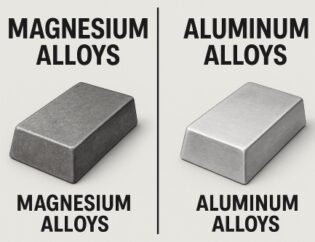
| Aluminum Alloys | 6061, 7075, 2024 | High machinability, excellent for complex parts |
| Stainless Steel | 303, 304, 316, 17-4 PH | Moderate to difficult, requires optimized tooling |
| Titanium Alloys | Grade 5 (Ti-6Al-4V) | Low thermal conductivity, precision cooling required |
| Engineering Plastics | PEEK, PTFE, Delrin | Low melting point, specialized cutting parameters |
| Brass & Copper | C36000, C11000 | Excellent finish, high chip volume |
Our 4-axis milling capabilities complement our full suite of 3-axis and 5-axis CNC services, as well as CNC turning with live tooling, allowing us to offer hybrid solutions for turned-milled components. All programs are verified using industry-standard CAM software with simulation and collision detection to ensure error-free execution.
At Honyo Prototype, we combine advanced machinery with deep process expertise to deliver precision-machined parts that meet the most demanding technical requirements.
From CAD to Part: The Process
From CAD to Finished Part: 4-Axis Milling Workflow at Honyo Prototype
At Shenzhen Honyo Prototype, our 4-axis CNC milling process transforms digital designs into high-precision functional prototypes and low-volume production parts through a rigorously defined workflow. This integrated sequence ensures manufacturability, accuracy, and efficiency from initial inquiry to final inspection, specifically leveraging the rotational capabilities of 4-axis machining for complex geometries impossible with 3-axis alone.
The process initiates with the AI-Powered Quoting System. Upon receiving a client’s CAD model (typically STEP, IGES, or native formats), our proprietary AI engine performs an instant preliminary analysis. It identifies core features, material requirements, estimated machine time based on part volume and complexity, and potential challenges related to 4-axis indexing or fixture needs. This generates a rapid, data-driven cost and lead time estimate, providing immediate transparency while flagging elements requiring deeper engineering review before formal commitment. This step significantly accelerates the initial client engagement phase.
Following quote acceptance, the project enters the critical Design for Manufacturability (DFM) Review. Our senior manufacturing engineers conduct a hands-on analysis of the CAD model, focusing specifically on 4-axis machining constraints. We assess optimal part orientation for the A-axis rotation, evaluate the feasibility of required undercuts and complex contours achievable through rotational movement, scrutinize thin wall stability during machining, and verify tolerance stack-ups across indexed positions. Crucially, we collaborate directly with the client’s design team to suggest modifications—such as adjusting draft angles, simplifying deep pockets, or repositioning critical features—that enhance machinability without compromising function, ultimately reducing cost and lead time while ensuring yield.
With DFM sign-off, the project moves to Production. The approved CAD model is imported into our Mastercam CAM software. Programmers generate optimized toolpaths, meticulously defining the sequence of 3-axis movements synchronized with precise A-axis rotations (0° to 360° continuous or indexed). This includes selecting appropriate cutters, setting optimal RPM and feed rates for the material (e.g., aluminum, steel, titanium, engineering plastics), and programming secure fixturing solutions like custom vises or rotary tables to hold the part rigidly during rotation. The CNC program undergoes rigorous simulation to eliminate collisions and verify path accuracy. On the shop floor, skilled machinists load the material, precisely set work offsets referencing the 4th axis centerline, and execute the program. Real-time monitoring ensures dimensional compliance, followed by final CMM inspection against the original CAD model. Complex features like helical contours, impeller blades, or parts requiring machining on multiple faces are efficiently produced in minimal setups.
Key 4-Axis Milling Capabilities at Honyo Prototype
| Parameter | Specification | Significance for Prototyping |
| :—————– | :——————————– | :———————————— |
| Axis Configuration | X, Y, Z + Continuous A (Rotary) | Enables complex contours & undercuts |
| Travel (X/Y/Z) | 500mm / 400mm / 350mm | Accommodates medium-sized prototypes |
| A-Axis Range | 360° Continuous Rotation | Smooth helical & organic features |
| Spindle Speed | 24,000 RPM | Fine finishes on diverse materials |
| Positioning Accuracy | ±0.005mm | Critical for tight-tolerance features |
| Typical Materials | Aluminum, Steel, Titanium, Plastics | Broad prototyping applicability |
This seamless integration of AI estimation, collaborative DFM, and precision 4-axis execution ensures Honyo Prototype delivers complex, high-integrity parts rapidly, minimizing iterations and maximizing client success in the prototyping phase.
Start Your Project
Start Your Project with Precision 4-Axis CNC Milling at Shenzhen Honyo Prototype
At Shenzhen Honyo Prototype, we specialize in high-precision CNC machining services tailored to meet the demanding requirements of modern engineering and product development. Our 4-axis milling capabilities enable us to deliver complex, multi-faceted components with exceptional accuracy, consistency, and efficiency. Whether you’re developing functional prototypes, low-volume production parts, or intricate tooling, our advanced manufacturing infrastructure ensures your design intent is fully realized.
4-axis milling extends the capabilities of traditional 3-axis machining by incorporating rotational movement around the X-axis (A-axis), allowing for more complex geometries, reduced setup times, and improved part accuracy. This is particularly advantageous for components requiring features on multiple sides or contoured surfaces that cannot be efficiently machined using conventional methods. Our experienced engineering team leverages this technology to optimize toolpaths, minimize human intervention, and maintain tight tolerances—typically within ±0.005 mm—across a wide range of engineering materials including aluminum, stainless steel, titanium, brass, and engineering plastics.
We understand that every project begins with a vision. That’s why we offer a seamless onboarding process designed to transition your concept from CAD model to physical part with minimal friction. Our team provides expert design for manufacturability (DFM) feedback, material selection guidance, and rapid quoting to accelerate your development cycle. With state-of-the-art 4-axis CNC machines, rigorous quality control protocols, and a commitment to on-time delivery, Honyo Prototype is your trusted partner in precision manufacturing.
To ensure your project starts on the right foot, we recommend submitting your 3D CAD files in STEP, IGES, or native SolidWorks format, along with any specific tolerance requirements, surface finish specifications, or assembly instructions. Our engineers will conduct a comprehensive review and provide actionable feedback to optimize your design for performance and manufacturability.
Below are the key technical specifications of our 4-axis milling platform:
| Parameter | Specification |
|——————————|——————————————-|
| Axis Configuration | X, Y, Z, and A-axis (rotary) |
| Maximum Work Envelope | 800 mm × 600 mm × 500 mm |
| Spindle Speed | Up to 24,000 RPM |
| Positioning Accuracy | ±0.005 mm |
| Repeatability | ±0.003 mm |
| Supported Materials | Aluminum, Steel, Stainless Steel, Titanium, Brass, Plastics (e.g., PEEK, Delrin) |
| Typical Surface Finish | Ra 1.6 μm (standard), down to Ra 0.4 μm (precision) |
| Lead Time | 5–10 business days (varies by complexity) |
Starting your next project with Honyo Prototype is simple. Contact Susan Leo directly at info@hy-proto.com to discuss your requirements, request a quote, or submit your design files for review. Our team is ready to support you from concept to completion with responsive communication, technical expertise, and a focus on quality that defines the Honyo standard. Let us help you turn precision into performance.
🚀 Rapid Prototyping Estimator
Get a rough estimate for CNC/3D Printing costs.