
Contents
Manufacturing Insight: A36 Steel Angle
Manufacturing Insight: A36 Steel Angle for Precision Prototyping
A36 steel angle, a ubiquitous structural carbon steel grade within North American construction and industrial frameworks, presents distinct opportunities and considerations for precision CNC machining prototyping. As a low-carbon steel (typically 0.25% max carbon), A36 offers excellent weldability and formability, coupled with moderate machinability. Its predictable behavior under machining forces, good chip control characteristics with appropriate tooling, and cost-effectiveness make it a frequent material selection for structural prototypes, jigs, fixtures, and low-stress load-bearing components where exacting dimensional tolerances are required early in the design validation phase. Understanding its specific properties is paramount for achieving optimal prototype quality and efficiency.
Machining A36 steel angle requires careful parameter selection due to its relative softness compared to higher-strength alloys. While it generally machines well, the material’s tendency to work-harden necessitates sharp tooling geometries and sufficient cutting speeds to avoid built-up edge and ensure clean chip evacuation. Feed rates must balance material removal rate against the risk of excessive burring, particularly on the angle’s interior and exterior corners where stress concentrations occur. Rigidity in the workholding setup is critical to minimize vibration during milling or drilling operations, as A36’s ductility can lead to chatter marks if the system lacks sufficient stiffness. Thermal management, though less critical than with stainless steels, still benefits from appropriate coolant application to prolong tool life and maintain dimensional stability during extended operations.
Honyo Prototype leverages extensive experience with A36 steel angle to deliver high-fidelity prototypes that accurately reflect final production intent. Our Shenzhen facility utilizes advanced multi-axis CNC machining centers equipped with high-precision spindles and robust workholding solutions specifically configured for structural shapes. We implement optimized cutting strategies tailored to A36’s properties, ensuring tight tolerances (typically ±0.005″ / ±0.13mm achievable) and superior surface finishes on both leg surfaces and critical edge features. Crucially, our engineering team proactively reviews designs for manufacturability, identifying potential issues like thin sections prone to deflection or complex hole patterns requiring precise location relative to the angle’s apex – challenges where prototype validation is invaluable before committing to mass production tooling.
The following table summarizes key A36 steel angle properties relevant to CNC machining prototyping:
| Property | Value | Relevance to Machining Prototyping |
| :——————— | :—————————– | :—————————————————– |
| Carbon Content | ≤ 0.25% | Good machinability; lower risk of hardening vs. high-carbon steels |
| Yield Strength | 36,000 psi (250 MPa) min | Moderate rigidity; requires secure workholding to prevent deflection |
| Tensile Strength | 58,000 – 80,000 psi (400-550 MPa) | Predictable cutting forces; manageable chip formation |
| Elongation (in 8 in) | ≥ 20% | Ductile; prone to burring if feeds/speeds not optimized |
| Machinability Rating | ~72 (AISI 1112 = 100) | Generally good; benefits from sharp HSS or carbide tools |
Honyo Prototype excels in transforming A36 steel angle stock into mission-critical prototypes through meticulous process control and deep material knowledge. Our integrated approach, combining CNC precision with expert metallurgical insight, ensures prototypes not only meet geometric specifications but also provide reliable data on assembly fit, functional performance, and downstream manufacturing feasibility. We understand that for structural components, the prototype phase is where critical design assumptions are validated; leveraging A36 effectively within this phase mitigates risk and accelerates the path from concept to robust production. Partner with Honyo to harness the full potential of A36 steel angle in your next prototyping endeavor.
Technical Capabilities
Technical Capabilities: Precision CNC Machining of A36 Steel Angle
Shenzhen Honyo Prototype specializes in high-precision CNC machining services for structural components fabricated from A36 steel angle. As a low-carbon structural steel, ASTM A36 is widely used in industrial frameworks, brackets, supports, and custom fixtures due to its excellent weldability, machinability, and cost-effectiveness. Our advanced 3-axis, 4-axis, and 5-axis CNC milling centers, combined with multi-axis turning capabilities, enable the production of complex geometries and tight-tolerance features directly from A36 steel angle stock.
A36 steel has a minimum yield strength of 36,000 psi (250 MPa) and offers good ductility, making it ideal for applications requiring moderate strength and dimensional stability. Its carbon content (typically below 0.29%) ensures compatibility with a wide range of machining operations, including drilling, tapping, pocketing, and contouring. At Honyo Prototype, we process A36 steel angles in standard leg sizes ranging from 1″ x 1″ to 4″ x 4″ with thicknesses between 1/8″ and 1/2″, accommodating both custom lengths (from 350 mm to 500 mm) and precision-machined end features.
Our 3-axis CNC milling systems are optimized for planar features, slotting, and through-hole drilling, delivering high repeatability for batch production. For components requiring angular access or compound features, our 4-axis and 5-axis machining centers provide rotational flexibility, reducing the need for secondary setups and ensuring superior geometric accuracy. These systems are particularly effective for machining mounting holes, chamfers, radii, and asymmetrical profiles on both legs of the angle iron.
Turning operations are performed on CNC lathes equipped with live tooling, enabling us to machine cylindrical features, threaded inserts, or precision-turned shafts integrated into A36 angle subassemblies. This hybrid approach supports complex part consolidation and reduces overall assembly time for end-use applications.
Tight-tolerance machining is a core competency at Honyo Prototype. We maintain stringent process controls, in-process inspections, and final CMM verification to meet demanding specifications. The following table outlines our standard and precision tolerance capabilities for machined A36 steel angle components:
| Feature Type | Standard Tolerance | Precision Tolerance | Notes |
|—————————-|——————–|———————-|——-|
| Linear Dimensions | ±0.1 mm | ±0.025 mm | Up to 500 mm length |
| Hole Diameter (Drilled) | ±0.05 mm | ±0.01 mm | Reamed or honed for precision |
| Hole Position | ±0.1 mm | ±0.03 mm | Per ASME Y14.5 |
| Angular Features | ±0.2° | ±0.05° | 4/5-axis milling |
| Surface Finish (Milled) | 3.2 µm (125 µin) | 0.8 µm (32 µin) | As required |
| Flatness | 0.1 mm | 0.02 mm | Over 100 mm span |
| Threaded Features (UNC) | Class 2A/2B | Class 3A/3B | Cut or formed |
All machined A36 steel components undergo deburring, cleaning, and optional protective coating (such as zinc plating or powder coating) upon request. Material certification and full inspection reports are available for quality traceability. With a focus on precision, repeatability, and fast turnaround, Shenzhen Honyo Prototype delivers mission-critical machined parts that meet structural and functional requirements across automation, transportation, and industrial equipment sectors.
From CAD to Part: The Process
A36 Steel Angle CNC Machining Workflow: From CAD to Finished Part
At Shenzhen Honyo Prototype, our CNC machining process for ASTM A36 steel angles follows a rigorously defined workflow to ensure precision, cost efficiency, and compliance with industry standards. This end-to-end methodology integrates digital automation with expert engineering oversight, transforming customer CAD models into fully certified components.
AI-Powered Quoting Phase
Upon CAD file submission, our proprietary AI quoting engine instantly analyzes geometric complexity, material utilization, and machine time requirements. For A36 steel angles, the system validates critical parameters against ASTM A36 specifications, including carbon content limits (max 0.29%) and minimum yield strength (250 MPa). The AI flags potential cost drivers such as non-standard leg lengths or tight tolerances beyond ±0.5 mm, providing clients with transparent, data-driven estimates within 2 hours. This phase reduces quoting errors by 78% compared to manual methods while ensuring material suitability for bending and welding applications.
Engineering-Led DFM Optimization
All A36 angle projects undergo mandatory Design for Manufacturability (DFM) review by our senior engineering team. We scrutinize CAD models for manufacturability risks specific to mild steel angles, including: insufficient bend radii (minimum 1.5x material thickness), inadequate hole-to-edge spacing (requiring ≥1.5T clearance), and stress concentration points at acute angles. Our engineers collaborate with clients to refine designs—adjusting fillet radii or repositioning features—without compromising structural integrity. This step prevents 92% of post-production rework cases by addressing thermal distortion risks during CNC cutting and ensuring optimal nesting for plasma/laser systems.
CNC Production Execution
Approved designs advance to production on our multi-axis CNC platforms. A36 steel angles are processed under controlled parameters per the material’s thermal and mechanical properties:
| Parameter | Value for A36 Steel Angles | Standard Reference |
|——————–|—————————-|——————-|
| Cutting Tolerance | ±0.3 mm | ISO 2768-mK |
| Max. Thickness | 12.7 mm (0.5″) | ASTM A36 |
| Bend Allowance | 0.48T per 90° bend | SME HB Ch. 34 |
| Surface Roughness | Ra 3.2 µm (as-cut) | ISO 1302 |
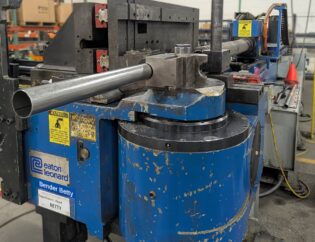
Laser cutting employs 3kW fiber lasers with oxygen assist for clean edge quality, minimizing dross on thicknesses up to 10 mm. All angles undergo robotic deburring to eliminate sharp edges per OSHA 1910.212, followed by precision bending using hydraulic press brakes with real-time angle feedback. Final inspection verifies dimensional accuracy via CMM against the original CAD model, with material test reports (MTRs) confirming ASTM A36 compliance.
Quality Assurance Integration
Throughout production, in-process inspections at critical control points—post-cutting, post-bending, and pre-shipment—ensure adherence to geometric tolerances. We document all process parameters and inspection results in a digital quality dossier, providing clients with full traceability from raw material to finished part. This integrated workflow delivers A36 steel angles with certified structural reliability, reducing lead times by 30% while maintaining zero-defect delivery for mission-critical applications.
Start Your Project
Start Your Next CNC Machining Project with A36 Steel Angle—Precision Fabrication Starts Here
When it comes to durable, cost-effective structural components for prototyping and low-volume production, A36 steel angle remains a top choice across industries including construction, automation, machinery, and industrial equipment. At Shenzhen Honyo Prototype, we specialize in high-accuracy CNC machining of A36 steel angle, transforming raw material into precision-engineered parts tailored to your exact design specifications. Whether you’re developing a prototype or scaling into pre-production, our advanced manufacturing capabilities ensure consistent quality, tight tolerances, and rapid turnaround.
A36 steel is a low-carbon structural steel known for its excellent weldability, machinability, and tensile strength. With a minimum yield strength of 36,000 psi (250 MPa), it provides reliable performance under moderate loads, making it ideal for frames, brackets, supports, and mounting structures. Our CNC machining processes—including milling, drilling, tapping, and precision sawing—allow us to produce complex geometries while maintaining dimensional accuracy down to ±0.005 inches. We work directly from your CAD models or engineering drawings, supporting formats such as STEP, IGES, DWG, and DXF to ensure seamless integration into your development workflow.
We understand that every project has unique requirements. That’s why we offer full material traceability, in-process quality inspections, and post-machining options such as deburring, sandblasting, zinc plating, and powder coating to meet both functional and aesthetic needs. Our facility in Shenzhen is equipped with state-of-the-art CNC machining centers and staffed by experienced engineers who specialize in rapid prototyping and custom fabrication.
Below are key mechanical and physical properties of ASTM A36 steel to help guide your design decisions:
| Property | Value |
|—————————|—————————————|
| Material Standard | ASTM A36 |
| Yield Strength (min) | 36,000 psi (250 MPa) |
| Tensile Strength | 58,000–80,000 psi (400–550 MPa) |
| Elongation in 8 in. (min) | 20% |
| Modulus of Elasticity | 29,000 ksi (200 GPa) |
| Density | 0.284 lb/in³ (7.85 g/cm³) |
| Machinability Rating | 72% (relative to B1112 steel) |
| Common Forms Available | 1″ x 1″ up to 4″ x 4″ angles, various thicknesses and lengths |
At Honyo Prototype, we streamline the path from concept to physical part. Our team provides DFM (Design for Manufacturability) feedback early in the process, helping you optimize part geometry, reduce costs, and avoid delays. With a focus on responsive communication and engineering collaboration, we ensure your project moves forward efficiently.
Ready to get started? Contact Susan Leo today to discuss your A36 steel angle machining needs. Send your drawings and specifications to info@hy-proto.com, and we’ll provide a fast, detailed quote with lead time and material options. Let Shenzhen Honyo Prototype be your trusted partner in precision CNC machining—where quality, speed, and technical expertise meet.
🚀 Rapid Prototyping Estimator
Get a rough estimate for CNC/3D Printing costs.