
Contents
Manufacturing Insight: Best Way To Cut Stainless Steel Sheet Metal
Precision Cutting of Stainless Steel Sheet Metal: Engineering Solutions for Prototyping Excellence
Stainless steel sheet metal presents unique fabrication challenges due to its high strength, work-hardening tendencies, and thermal sensitivity. Achieving clean, burr-free edges while maintaining dimensional accuracy and material integrity requires specialized processes tailored to grade-specific properties. At Shenzhen Honyo Prototype, we leverage advanced digital manufacturing technologies to overcome these challenges, ensuring optimal results for prototyping and low-volume production. Our engineered approach prioritizes minimizing heat-affected zones (HAZ), preventing micro-cracking, and preserving corrosion resistance—critical factors often overlooked in standard cutting operations.
Fiber laser cutting represents the most efficient solution for thin to medium stainless steel sheets (up to 8mm), offering superior speed and precision for common prototyping grades like 304 and 316. The high-intensity beam vaporizes material with minimal thermal distortion, eliminating secondary finishing in 90% of applications. For thicker sections (>8mm) or heat-sensitive alloys requiring zero thermal impact, abrasive waterjet cutting delivers unmatched versatility. Honyo’s 5-axis waterjet systems achieve complex geometries without altering material properties, making them ideal for medical or aerospace prototypes where metallurgical integrity is non-negotiable.
Honyo’s integrated manufacturing ecosystem combines these technologies with proprietary parameter optimization protocols. Our engineers dynamically adjust assist gases (nitrogen for oxide-free edges), kerf compensation, and cutting speeds based on real-time material analysis. This eliminates common pitfalls like dross adhesion in laser cutting or stream lag in waterjet operations. Below is a comparative overview of our core capabilities:
| Technology | Max Thickness | Tolerance (±mm) | Edge Quality (Ra μm) | Lead Time Advantage |
|——————|—————|—————–|———————-|———————|
| Fiber Laser | 8 mm | 0.05 | 1.6–3.2 | 40–60% vs. CO₂ |
| Abrasive Waterjet| 150 mm | 0.10 | 3.2–6.3 | 25% vs. legacy CNC |
Beyond equipment, Honyo’s value lies in our material science-driven workflow. Every stainless steel prototype undergoes:
Pre-cut grain structure analysis to prevent work-hardening defects
Real-time nozzle pressure calibration for consistent kerf width
Post-process deburring verification via optical profilometry
This systematic control ensures first-article compliance with ISO 2768-mK tolerances, reducing iteration cycles by up to 70%. Our Shenzhen facility’s proximity to specialized stainless suppliers further guarantees material traceability and grade verification—eliminating batch inconsistencies that derail prototyping schedules.
For demanding applications where edge integrity impacts functional performance, Honyo’s cutting solutions deliver the repeatability prototyping engineers require. We transform material constraints into competitive advantages through process rigor, not just machinery. Partner with us to convert your stainless steel design challenges into validated, production-ready prototypes—without compromising on speed or precision. Contact our engineering team to discuss grade-specific parameter optimization for your next project.
Technical Capabilities
Stainless Steel Sheet Metal Fabrication: Precision Cutting, Bending, and Welding at Shenzhen Honyo Prototype
At Shenzhen Honyo Prototype, our sheet metal fabrication capabilities are engineered to deliver high-precision, repeatable results for stainless steel components used in aerospace, medical, industrial, and high-end consumer applications. Our advanced manufacturing infrastructure enables us to process stainless steel with tight tolerances, excellent edge quality, and structural integrity through laser cutting, CNC bending, and precision welding.
Laser Cutting
We utilize high-power fiber laser cutting systems to process stainless steel sheets up to 25 mm in thickness. Fiber lasers provide superior edge quality, minimal heat-affected zones, and high cutting speeds—critical for maintaining the corrosion-resistant properties of stainless steel. Our laser systems operate with focused beam diameters under 0.2 mm, allowing for intricate geometries and fine features. All cuts are kerf-compensated in the CAM software to ensure dimensional accuracy. Nitrogen is used as the assist gas for clean, oxide-free edges suitable for welding or cosmetic finishes.
CNC Bending
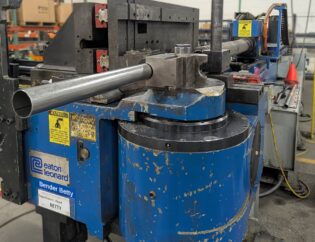
Post-cut, stainless steel parts are formed using state-of-the-art CNC press brakes equipped with automatic tool changers and laser-guided backgauging systems. Our bending capacity covers sheet thicknesses from 0.5 mm to 16 mm, with forming lengths up to 3,000 mm. We apply precision springback compensation algorithms to achieve accurate bend angles, typically within ±0.2°. Tooling is selected based on material grade and bend radius requirements to prevent surface marking and cracking, especially in higher-hardness grades such as 17-4 PH.
TIG and MIG Welding
Our welding processes are performed by certified technicians using TIG (GTAW) for thin to medium sections and MIG (GMAW) for heavier builds. TIG welding is preferred for its arc stability and clean bead profile, especially on visible surfaces. All welding is conducted in controlled environments with inert gas shielding (argon or argon-helium mix) to prevent oxidation. Post-weld treatments such as passivation and electropolishing are available to restore the passive chromium layer and ensure corrosion resistance.
We support a wide range of stainless steel grades, including 304/L, 316/L, 430, 17-4 PH, and 904L, each processed with material-specific parameters to optimize performance. Our integrated workflow from cutting to final assembly ensures consistency and reduces lead times.
Material and Tolerance Specifications
| Process | Material Grades Supported | Thickness Range | Tolerance (Typical) | Max Part Size (mm) |
|——————-|———————————-|—————–|—————————-|——————–|
| Fiber Laser Cutting | 304/L, 316/L, 430, 17-4 PH, 904L | 0.5 – 25 mm | ±0.1 mm (dimensional) | 1500 x 3000 |
| CNC Bending | 304/L, 316/L, 430, 17-4 PH | 0.5 – 16 mm | ±0.2° (angle), ±0.1 mm (linear) | 3000 mm length |
| TIG Welding | 304/L, 316/L, 17-4 PH | 0.8 – 12 mm | ±0.5 mm (joint alignment) | Custom |
| MIG Welding | 304/L, 316/L | 2.0 – 25 mm | ±0.8 mm (bead consistency) | Custom |
All processes are supported by in-house quality inspection using CMM, laser scanners, and visual testing to ensure compliance with ISO 2768 and customer-specific standards. Shenzhen Honyo Prototype delivers fully documented, traceable stainless steel fabrications tailored to demanding engineering requirements.
From CAD to Part: The Process
Stainless Steel Sheet Metal Cutting: Integrated CAD-to-Part Workflow
At Shenzhen Honyo Prototype, our precision stainless steel fabrication begins with a seamless digital workflow designed to optimize quality and efficiency. This process transforms your CAD model into a finished part through three rigorously defined stages: AI-Powered Quoting, Engineering-Driven DFM, and Controlled Production Execution. Each phase integrates material-specific expertise to address the unique challenges of stainless steel, including work hardening, thermal distortion, and edge quality requirements.
The workflow initiates with our AI Quoting Engine, which automatically analyzes submitted CAD files (DXF, STEP, or native formats). This system evaluates geometric complexity, sheet size, material grade (e.g., 304, 316), and thickness to generate instant cost and lead-time estimates. Crucially, it flags potential manufacturability risks such as undersized internal radii or features near minimum bend allowances, providing immediate feedback before formal order placement. This AI layer reduces quoting time by 70% while establishing baseline parameters for subsequent engineering review.
Following quote acceptance, the Design for Manufacturing (DFM) phase engages our senior manufacturing engineers. Here, stainless steel-specific considerations dominate the analysis. Engineers assess kerf width compensation for laser cutting, verify minimum hole diameters relative to material thickness, and validate flat pattern unfold accuracy. Critical checks include: confirming adequate bridge width for nested parts to prevent thermal warpage, evaluating grain direction for post-forming aesthetics, and specifying edge conditioning requirements (e.g., deburring level ISO 1302). Any conflicts with stainless steel’s higher melting point and thermal conductivity versus mild steel are resolved collaboratively with the client, ensuring design integrity without compromising manufacturability.
Production commences only after DFM sign-off, leveraging fiber laser technology calibrated for stainless alloys. Our cutting parameters are strictly governed by material thickness and grade to minimize dross and heat-affected zones. Key settings are maintained in our production control system:
| Material Thickness (mm) | Laser Power (kW) | Cutting Speed (m/min) | Assist Gas | Pressure (bar) |
|————————-|——————|————————|——————|—————-|
| 0.5 – 1.0 | 1.0 | 35 – 28 | N₂ | 18 – 20 |
| 1.5 – 2.0 | 2.0 | 22 – 16 | N₂ | 20 – 22 |
| 2.5 – 3.0 | 3.0 | 12 – 8 | N₂ | 22 – 24 |
Post-cutting, parts undergo automated edge inspection via vision systems to verify dimensional tolerances (±0.1 mm typical) and surface finish. All stainless steel components receive mandatory cleaning to remove residual oxides before secondary operations. This integrated workflow—powered by AI intelligence, engineering rigor, and process-controlled execution—ensures consistent delivery of burr-minimized, distortion-free stainless steel parts that meet aerospace and medical industry standards. By closing the loop between digital design and physical production, Honyo Prototype eliminates rework risks while accelerating time-to-assembly for our clients.
Start Your Project
Start Your Stainless Steel Sheet Metal Project with Precision and Confidence
When it comes to fabricating stainless steel sheet metal, the cutting process is a critical determinant of final product quality, dimensional accuracy, and overall project efficiency. At Shenzhen Honyo Prototype, we specialize in providing high-precision sheet metal solutions tailored to your engineering and design requirements. Whether you’re developing prototypes or scaling into low-to-mid volume production, understanding the best methods for cutting stainless steel is the first step toward achieving superior results.
Stainless steel is valued for its corrosion resistance, strength, and aesthetic finish—making it ideal for applications in medical devices, automotive components, industrial equipment, and architectural elements. However, its hardness and work-hardening characteristics demand the right cutting strategy to avoid deformation, thermal distortion, or compromised edge quality. Our manufacturing expertise ensures that each cutting method is optimized for material grade, thickness, and intended use.
We recommend evaluating three primary cutting techniques based on your project specifications: laser cutting, waterjet cutting, and CNC punching. Laser cutting delivers high precision and clean edges for complex geometries, especially in sheets up to 25 mm thick. Waterjet cutting is ideal for thicker materials or when heat-affected zones must be avoided, offering cold-cutting precision without altering the material’s structural integrity. CNC punching excels in high-speed production of repetitive features such as slots, holes, and louvers.
To help you select the most suitable method, consider the following key parameters:
| Cutting Method | Maximum Thickness (Stainless Steel) | Tolerance Range | Best For |
|——————|————————————-|———————|———————————————–|
| Fiber Laser | Up to 25 mm | ±0.1 mm – ±0.2 mm | High precision, intricate contours, thin to medium sheets |
| Waterjet | Up to 150 mm | ±0.2 mm – ±0.5 mm | Thick plates, heat-sensitive applications |
| CNC Punching | Up to 6 mm | ±0.1 mm | High-volume, repetitive hole patterns |
All processes are supported by advanced CAD/CAM software and strict quality control protocols to ensure repeatability and compliance with international standards. Our facility in Shenzhen is equipped with state-of-the-art machinery, including 6kW fiber laser cutters and high-pressure abrasive waterjet systems, enabling us to handle diverse project scales with consistent accuracy.
Starting your project with the right manufacturing partner minimizes delays, reduces material waste, and enhances overall product performance. At Honyo Prototype, we provide comprehensive technical support—from design review and material selection to prototyping and full production.
Contact Susan Leo today at info@hy-proto.com to discuss your stainless steel fabrication needs. Let our engineering team guide you in selecting the optimal cutting method and streamline your path from concept to completion. With decades of combined experience and a commitment to excellence, we are ready to support your next innovation.
🚀 Rapid Prototyping Estimator
Get a rough estimate for CNC/3D Printing costs.