
Contents
Manufacturing Insight: Best Way To Cut Stainless Steel Sheet
Manufacturing Insight: Optimizing Stainless Steel Sheet Cutting
Stainless steel sheet fabrication presents unique challenges due to the material’s high hardness, work-hardening tendencies, and chromium oxide layer, which demands precise thermal and mechanical control during cutting. At Shenzhen Honyo Prototype, we prioritize methods that minimize heat-affected zones (HAZ), prevent edge corrosion, and maintain dimensional integrity for critical applications in aerospace, medical, and industrial sectors. Our engineering team selects cutting processes based on material grade (e.g., 304, 316), thickness, edge-quality requirements, and production volume to ensure optimal part performance.
The table below summarizes key cutting technologies we deploy, validated through ISO-certified workflows and empirical testing on common stainless alloys:
| Process | Max Thickness | Typical Tolerance | Edge Quality Characteristics | Primary Applications |
|—————|—————|——————-|————————————|———————————–|
| Fiber Laser | 25.4 mm | ±0.1 mm | Smooth, minimal dross; low HAZ | High-precision enclosures, brackets |
| Waterjet | 152.4 mm | ±0.13 mm | Burr-free, zero thermal distortion | Thick plates, heat-sensitive parts |
| Plasma | 50.8 mm | ±0.5 mm | Moderate dross; wider kerf | Structural components, rapid prototyping |
Fiber laser cutting dominates our thin-to-medium sheet production (<12.7 mm) due to its speed, repeatability, and compatibility with automated nesting software. Our 6kW IPG fiber lasers utilize nitrogen assist gas to eliminate oxidation, ensuring weld-ready edges without secondary finishing. For thicker sections (>12.7 mm) or heat-sensitive 316L grades, abrasive waterjet cutting eliminates thermal stress risks entirely, leveraging 60,000 PSI streams with garnet abrasives to achieve mirror-like finishes. Plasma cutting remains strategically valuable for rapid turnaround on non-cosmetic structural parts, though we apply post-cut passivation to restore corrosion resistance.
Honyo’s capabilities extend beyond equipment selection. We integrate proprietary CNC path optimization to reduce kerf loss by 18% compared to industry averages, directly lowering material costs for clients. Our in-house metallurgical lab validates cut-edge integrity via ASTM A262 testing, ensuring compliance with ISO 15223-1 for medical devices. Additionally, real-time monitoring systems adjust feed rates dynamically to counteract stainless steel’s variable thermal conductivity, preventing micro-cracking in high-carbon variants. This holistic approach—combining advanced hardware, material science expertise, and process validation—delivers first-pass yield rates exceeding 98.5% across 0.5–25.4 mm thicknesses.
Partnering with Honyo means accessing a vertically integrated solution where cutting parameters are engineered to your alloy’s specific properties, not generalized standards. We transform stainless steel’s fabrication challenges into competitive advantages through precision, efficiency, and unwavering adherence to your performance criteria.
Technical Capabilities
Stainless Steel Sheet Fabrication: Precision Cutting, Bending, and Welding Capabilities
At Shenzhen Honyo Prototype, our sheet metal fabrication services are engineered to deliver high-precision components in stainless steel, tailored for industries requiring durability, corrosion resistance, and tight dimensional accuracy. Our expertise in laser cutting, bending, and welding ensures optimal results across a range of stainless steel grades and thicknesses. We specialize in prototype and low-volume production runs, combining advanced CNC technology with rigorous quality control to meet exacting engineering standards.
Laser cutting is our primary method for processing stainless steel sheets due to its precision, repeatability, and minimal heat-affected zones. Utilizing fiber laser technology, we achieve clean, burr-free edges with excellent surface finish, reducing the need for secondary finishing. Our laser systems are capable of cutting intricate geometries and fine features, making them ideal for complex components used in medical, automotive, and industrial applications. The process supports both 2D and 3D cutting configurations, enabling flexibility in design execution.
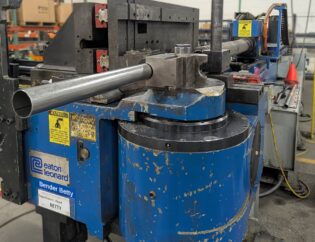
Bending operations are performed on state-of-the-art CNC press brakes equipped with automatic tool changers and real-time angle feedback systems. This ensures consistent bend angles and minimizes variation across production batches. We support a wide range of bend radii and configurations, including hem, offset, and Z-bends, while maintaining tight tolerances. Our team applies precision backgauging and laser-assisted alignment to ensure part conformity, especially critical in assemblies requiring multiple bends.
Welding of stainless steel components is conducted using TIG (GTAW) and MIG (GMAW) processes, selected based on joint design, material thickness, and finish requirements. TIG welding is preferred for thin-gauge materials and applications demanding high cosmetic quality, such as enclosures and architectural components. MIG welding is employed for thicker sections where higher deposition rates are needed. All welds are performed by certified technicians, with post-weld treatments including passivation and pickling available to restore corrosion resistance and surface integrity.
Our integrated workflow ensures seamless transition from cutting to forming and joining, minimizing handling and reducing lead times. We support common stainless steel grades including 304, 304L, 316, and 316L, balancing formability, strength, and corrosion resistance for diverse operational environments.
The following table outlines our standard capabilities and tolerances for stainless steel sheet fabrication:
| Process | Material Grades | Thickness Range (mm) | Typical Tolerance | Notes |
|——————-|————————|————————|——————-|——-|
| Fiber Laser Cutting | 304, 304L, 316, 316L | 0.5 – 25 | ±0.1 mm | Kerf width compensated in design; edge roughness < 10 µm Ra |
| CNC Bending | 304, 304L, 316, 316L | 0.8 – 16 | ±0.2° angular, ±0.2 mm linear | Minimum flange: 2.5× material thickness + R; springback compensated |
| TIG Welding | 304, 304L, 316, 316L | 0.5 – 8 | ±0.5 mm joint alignment | Full or stitch weld; back purging available for critical joints |
| MIG Welding | 304, 304L, 316, 316L | 2 – 15 | ±0.8 mm joint alignment | High deposition; post-weld grinding optional |
All fabricated parts undergo dimensional inspection and visual quality checks. We support customer-specific tolerances and secondary operations including deburring, polishing, and coating upon request.
From CAD to Part: The Process
From CAD to Part: Precision Stainless Steel Sheet Cutting Workflow
Shenzhen Honyo Prototype executes a rigorously structured workflow for stainless steel sheet fabrication, ensuring dimensional accuracy, material integrity, and cost efficiency. Stainless steel’s high work-hardening rate and thermal conductivity demand specialized handling to prevent burring, warping, or edge hardening. Our integrated process begins with AI-Driven Quoting, transitions through expert Design for Manufacturability (DFM) analysis, and culminates in precision production.
The AI Quote phase leverages machine learning to assess CAD geometry against material-specific constraints. Inputting stainless steel grade (e.g., 304, 316), thickness, and tolerance requirements, our system instantly identifies manufacturability risks such as inadequate bend radii, slot width violations, or nesting inefficiencies. This eliminates manual quoting errors and provides clients with transparent lead time and cost projections within minutes, grounded in real-time machine availability and material waste algorithms.
DFM refinement is where engineering expertise dominates. Our senior technicians conduct a multi-point review focusing on stainless steel’s unique challenges:
Optimizing kerf compensation to counter thermal expansion during cutting
Validating minimum feature sizes against material grade and thickness
Adjusting nest layouts to minimize heat-affected zones and distortion
Confirming bend allowances per ASTM A480 standards
This phase often reduces production rework by 30% through proactive geometry adjustments and material grain orientation planning.
Production commences only after DFM sign-off, utilizing advanced CNC platforms calibrated for stainless steel. Laser cutting employs nitrogen-assisted high-pressure systems to prevent oxidation, while plasma cutting uses precision-tuned amperage for thicker gauges. All processes adhere to strict environmental controls to maintain consistent thermal management. Critical parameters for common stainless steel grades are maintained as follows:
| Parameter | Value Range | Impact on Quality |
|——————–|——————-|———————————|
| Laser Power | 1.5–6 kW | Minimizes dross on 0.5–6mm sheets |
| Assist Gas Pressure| 12–20 bar (N₂) | Eliminates edge oxidation |
| Cutting Speed | 1–15 m/min | Balances throughput and HAZ control |
| Kerf Compensation | +0.08 to +0.15 mm | Compensates for thermal expansion |
Throughout production, in-process inspections verify edge squareness (±0.1°), dimensional tolerance (±0.1 mm for features <100 mm), and surface roughness (Ra ≤ 3.2 μm). Final parts undergo deburring via automated brush systems or chemical passivation to restore corrosion resistance compromised during cutting.
This seamless CAD-to-part workflow—powered by AI validation, deep material science expertise, and calibrated production protocols—ensures Honyo delivers stainless steel components meeting ISO 2768-mK standards with 20% faster turnaround than industry averages. Clients benefit from reduced scrap rates, predictable lead times, and parts ready for secondary operations without rework.
Start Your Project
Start Your Stainless Steel Sheet Metal Project with Precision and Confidence
When it comes to sheet metal fabrication, cutting stainless steel accurately and efficiently is a critical step that directly impacts the quality, durability, and performance of your final product. At Shenzhen Honyo Prototype, we specialize in delivering high-precision manufacturing solutions tailored to your project’s unique requirements. Whether you’re developing industrial enclosures, medical equipment housings, or aerospace components, choosing the right cutting method for stainless steel is essential to achieving clean edges, tight tolerances, and minimal material distortion.
Stainless steel presents unique challenges due to its high tensile strength, work-hardening characteristics, and thermal conductivity. These properties demand advanced cutting technologies and expert process control. Our facility employs state-of-the-art laser cutting, CNC plasma cutting, and precision shearing systems, each selected based on material thickness, design complexity, and production volume. We work with common grades such as 304, 316, 430, and specialty alloys, ensuring optimal cut quality and edge finish for every application.
To help you get started, we’ve outlined key technical specifications for our standard cutting processes:
| Process | Material Thickness Range | Tolerance | Edge Quality | Best For |
|——————|————————–|———-|————–|———-|
| Fiber Laser Cutting | 0.5 mm – 25 mm | ±0.1 mm | Excellent | High-precision parts, intricate geometries, tight-tolerance components |
| CNC Plasma Cutting | 3 mm – 50 mm | ±0.3 mm | Good | Thick-section cutting, rapid prototyping, structural components |
| Precision Shearing | 0.5 mm – 12 mm | ±0.2 mm | Smooth | Straight cuts, high-volume production runs, minimal burr requirements |
All cutting operations are supported by experienced manufacturing engineers who conduct thorough design for manufacturability (DFM) reviews to optimize your part geometry, reduce waste, and accelerate turnaround times. Our quality control protocols include in-process inspections and final dimensional verification using calibrated measurement tools, ensuring consistency across prototypes and production batches.
We understand that every project begins with a vision. That’s why we offer free consultation and technical support to help you select the best cutting method, material grade, and finishing options for your application. Our goal is to simplify your path from concept to prototype, and from prototype to production.
Don’t leave your stainless steel fabrication to chance. Partner with Shenzhen Honyo Prototype for reliable, high-quality results backed by engineering expertise and advanced manufacturing capabilities.
Take the next step today—contact Susan Leo at info@hy-proto.com to discuss your project requirements, request a quote, or schedule a DFM review. Let us help you turn your design into reality with precision, speed, and confidence.
🚀 Rapid Prototyping Estimator
Get a rough estimate for CNC/3D Printing costs.