
Contents
Manufacturing Insight: Carbon Fiber Cnc Machine
Carbon Fiber CNC Machining: Precision Engineering for Advanced Composites
Carbon fiber reinforced polymer (CFRP) presents unique and demanding challenges for CNC machining operations. Its exceptional strength-to-weight ratio and stiffness make it invaluable across aerospace, automotive, and high-performance industries, yet its abrasive nature, anisotropic properties, and susceptibility to delamination require highly specialized machining strategies. Conventional metal-cutting approaches often lead to rapid tool wear, poor surface finish, fiber pull-out, or catastrophic material damage. Achieving dimensional accuracy and structural integrity in CFRP components demands a holistic approach integrating machine capability, optimized tooling, precise fixturing, and meticulous process control – far beyond standard CNC practices.
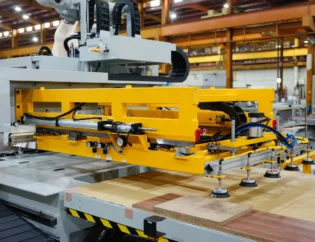
At Shenzhen Honyo Prototype, we have engineered our CNC machining processes specifically for the rigors of carbon fiber. Our dedicated CFRP machining centers feature high-frequency spindles capable of sustained operation at optimal speeds to minimize heat generation and fiber fraying. Crucially, we employ specialized diamond-coated or polycrystalline diamond (PCD) tooling designed to withstand the extreme abrasiveness of carbon fibers, significantly extending tool life and maintaining edge integrity for consistent part quality. Standard vacuum tables are insufficient; our systems utilize high-flow, multi-zone vacuum fixturing with fine-porous surfaces to securely hold thin, flexible laminates without inducing stress or causing blow-out during aggressive cuts, directly mitigating micro-fractures at the part edges.
Process optimization is paramount. Our manufacturing engineers develop custom toolpaths utilizing controlled entry/exit strategies, optimized feed rates, and specialized climb/conventional milling sequences tailored to the specific ply orientation and resin system of the laminate. This minimizes delamination risk and ensures clean, burr-free edges critical for structural performance and subsequent assembly or finishing operations. Comprehensive dust extraction is non-negotiable; our machines integrate high-efficiency, HEPA-filtered vacuum systems operating at precise suction levels to capture hazardous carbon fiber particulates at the source, ensuring operator safety and maintaining a clean machining environment essential for precision.
Honyo Prototype leverages this integrated expertise to deliver complex, high-tolerance carbon fiber components with exceptional surface quality and structural fidelity. We understand that successful CFRP machining is not merely about removing material, but about preserving the composite’s inherent properties through every machining step. Our Shenzhen facility combines advanced equipment with deep process knowledge, enabling us to handle intricate geometries and stringent aerospace-grade tolerances reliably.
Key technical capabilities enabling our carbon fiber machining excellence include:
| Parameter | Specification | Significance for CFRP |
| :———————- | :——————————– | :—————————————- |
| Spindle Speed Range | 24,000 – 42,000 RPM | Enables optimal cutting speeds to minimize heat and fiber fraying |
| Positioning Accuracy | ±0.005 mm | Critical for tight-tolerance features in structural components |
| Vacuum System Pressure | Adjustable 0.6 – 0.9 bar (multi-zone) | Secure hold-down of thin laminates without distortion |
| Max Work Envelope | 1000 x 700 x 500 mm | Accommodates medium to large composite structures |
Partnering with Honyo Prototype ensures your carbon fiber components are manufactured with the precision, consistency, and material integrity demanded by the most demanding applications. Contact our engineering team to discuss your specific CFRP machining requirements and leverage our proven capabilities.
Technical Capabilities
Technical Capabilities: Carbon Fiber CNC Machining at Shenzhen Honyo Prototype
At Shenzhen Honyo Prototype, our advanced CNC machining center is specifically optimized for high-precision manufacturing of carbon fiber composite components. Carbon fiber presents unique machining challenges due to its abrasive nature, layered structure, and sensitivity to delamination and heat buildup. To address these challenges, our facility employs state-of-the-art 3-axis, 4-axis, and 5-axis CNC milling systems, complemented by multi-axis turning centers capable of handling hybrid and complex geometries. These machines are integrated with high-frequency spindles, diamond-coated or solid carbide tooling, and advanced dust extraction systems to ensure clean, precise cuts with minimal material degradation.
Our 5-axis CNC platforms enable full-contour machining of intricate carbon fiber parts without the need for multiple setups, significantly improving geometric accuracy and surface finish. The simultaneous movement across multiple axes allows for optimal tool orientation, reducing tool wear and enhancing edge quality—critical factors when working with carbon fiber’s anisotropic properties. In addition, our 4-axis indexing and continuous rotation capabilities support the production of cylindrical and semi-rotational components such as drone rotors, aerospace brackets, and robotic arms.
For components requiring tight integration of metallic and composite elements, we offer hybrid machining solutions combining carbon fiber milling with precision turning operations on multi-tasking machines. This capability is particularly beneficial for manufacturing assemblies with integrated aluminum or titanium inserts, where dimensional consistency across dissimilar materials is paramount.
Tight tolerance machining is a core strength of our operation. We consistently achieve tolerances down to ±0.025 mm (±0.001″) on critical dimensions, with surface finishes as fine as Ra 0.8 µm achievable through optimized cutting strategies and in-process inspection. Our quality control system includes coordinate measuring machine (CMM) verification, optical scanning, and first-article inspection reports (FAIR) to validate compliance with engineering specifications.
The table below outlines the typical capabilities and material compatibility for our carbon fiber CNC machining services:
| Parameter | Specification |
|——————————-|—————|
| Axis Configuration | 3-axis, 4-axis, 5-axis milling; Multi-axis turning |
| Maximum Work Envelope (mm) | 1200 × 800 × 600 (5-axis) |
| Spindle Speed Range | 24,000 – 40,000 RPM |
| Positioning Accuracy | ±0.005 mm |
| Repeatability | ±0.003 mm |
| Standard Tolerance (milling) | ±0.05 mm |
| Tight Tolerance Capability | ±0.025 mm (achievable with process control) |
| Surface Finish (typical) | Ra 1.6 – 3.2 µm; down to Ra 0.8 µm |
| Compatible Materials | Carbon fiber reinforced polymer (CFRP), prepreg, dry carbon fiber, hybrid laminates with Kevlar or fiberglass, carbon with metallic inserts |
All machining processes are supported by proprietary fixturing solutions designed to minimize vibration and prevent layer separation. We utilize non-clamping vacuum tables and custom soft jaws to secure delicate carbon fiber workpieces without inducing stress or surface damage. Programming is performed using Mastercam and Siemens NX, with simulation-driven validation to prevent collisions and ensure toolpath efficiency.
Shenzhen Honyo Prototype delivers precision, repeatability, and material integrity for carbon fiber CNC projects across aerospace, robotics, medical equipment, and high-performance automotive industries.
From CAD to Part: The Process
Carbon Fiber CNC Production Workflow: From CAD to Precision Part
At Shenzhen Honyo Prototype, carbon fiber CNC machining demands a rigorously controlled workflow to address the material’s anisotropic strength, abrasive nature, and susceptibility to delamination. Our process integrates AI-driven quoting, expert Design for Manufacturability (DFM), and precision production to ensure structural integrity and dimensional accuracy. Unlike metals, carbon fiber composites require specialized tooling, fixturing, and parameter optimization to minimize fraying, fiber pull-out, and thermal damage.
The workflow begins with AI-Powered Quoting, where our proprietary algorithm analyzes the CAD model to generate instant, data-driven cost and timeline estimates. This system evaluates geometric complexity, material volume, required tolerances, and machine resource allocation. By cross-referencing historical production data from 10,000+ carbon fiber projects, it predicts tool wear rates and cycle times with 95% accuracy, eliminating manual estimation errors. Clients receive transparent quotes within 2 hours, including material waste calculations and secondary operation requirements.
Design for Manufacturability (DFM) is non-negotiable for carbon fiber. Our engineering team conducts a mandatory DFM review before programming, focusing on material-specific risks. Key considerations include ply orientation alignment with cutting paths, minimum feature radii to prevent edge chipping, and avoidance of unsupported thin walls prone to vibration-induced fractures. We collaborate with clients to adjust designs that would otherwise cause catastrophic failure during machining—such as sharp internal corners or inadequate tab retention. The table below outlines critical DFM actions:
| DFM Consideration | Carbon Fiber Challenge | Honyo Prototype Solution |
|————————-|————————————————|———————————————-|
| Tool Path Strategy | Unidirectional fibers cause uneven wear | Adaptive spiral paths with constant fiber engagement angle |
| Fixturing Design | Low interlaminar shear strength risks delamination | Vacuum tables with localized pressure zones |
| Minimum Wall Thickness | <1.5mm walls fracture under clamping forces | Integrated sacrificial tabs with staged removal |
| Hole Machining | Exit-side fiber breakout at drill points | Step-drilling with diamond-coated bits at 8,000 RPM max |
Production Execution leverages 5-axis CNC platforms with diamond-coated carbide tooling and 24,000 RPM spindles to maintain chip evacuation and reduce heat buildup. All operations occur in climate-controlled environments (<40% humidity) to prevent resin brittleness. We enforce strict parameter protocols: cutting speeds of 3,000–6,000 mm/min, feeds of 0.05–0.1 mm/tooth, and constant coolant mist to suppress conductive dust. Real-time in-process inspection via Renishaw probes verifies critical dimensions after roughing and semi-finishing stages, ensuring final tolerances of ±0.05 mm are achieved. Rigorous post-machining cleaning in HEPA-filtered stations removes all particulate residues before surface finishing.
This integrated workflow—combining AI efficiency, material-specific DFM expertise, and precision-controlled production—ensures Honyo delivers carbon fiber components that meet aerospace and medical-grade performance standards on schedule. By addressing composite-specific challenges at every phase, we eliminate rework and guarantee first-article success.
Start Your Project
Start Your Carbon Fiber CNC Machining Project with Honyo Prototype
When it comes to high-precision manufacturing in advanced composite materials, carbon fiber stands out for its strength-to-weight ratio, thermal stability, and resistance to corrosion. At Shenzhen Honyo Prototype, we specialize in CNC machining of carbon fiber components for industries ranging from aerospace and automotive to medical devices and robotics. Our expertise ensures that your prototype or production part meets exacting dimensional tolerances while maintaining the structural integrity of the material.
Carbon fiber presents unique challenges in machining due to its abrasive nature and tendency to delaminate if not processed correctly. Standard metal-cutting techniques often lead to frayed edges, tool wear, and compromised surface finish. That’s where Honyo Prototype excels. We utilize specialized CNC equipment calibrated for composite materials, along with diamond-coated cutting tools and optimized feed rates, to deliver clean, burr-free results. Our team applies decades of combined experience to select the right parameters for each project, ensuring minimal material waste and maximum repeatability.
Whether you’re developing a one-off prototype or scaling to low-volume production, our end-to-end service includes design review, material sourcing, precision machining, post-processing, and quality inspection. We support a range of carbon fiber formats, including unidirectional laminates, woven fabrics, and prepreg materials, in various resin systems such as epoxy, vinyl ester, and PEEK. Our facility is equipped with coordinate measuring machines (CMM) and optical inspection systems to validate critical dimensions and surface geometries.
To ensure your project starts on solid ground, we recommend providing detailed CAD files in STEP, IGES, or native formats, along with any tolerance specifications, surface finish requirements, or assembly considerations. Our engineering team will conduct a comprehensive Design for Manufacturability (DFM) analysis and provide actionable feedback to optimize your part for performance and cost-efficiency.
Below are the key technical capabilities of our carbon fiber CNC machining services:
| Specification | Detail |
|————–|——–|
| Maximum Work Envelope | 1200 mm × 800 mm × 200 mm |
| Positioning Accuracy | ±0.01 mm |
| Repeatability | ±0.005 mm |
| Typical Surface Finish | Ra 0.8 – 3.2 µm (adjustable) |
| Supported Materials | Carbon fiber reinforced polymer (CFRP), prepreg, hybrid composites |
| Tolerance Range | ±0.05 mm (standard), down to ±0.02 mm (tight tolerance) |
| Lead Time | 5–12 days (varies by complexity and quantity) |
Starting your project is simple. Contact Susan Leo, our dedicated project manager, to discuss your requirements, request a quote, or schedule a technical consultation. We respond to all inquiries within 24 hours and provide detailed feedback to help you move quickly from concept to physical part.
Email: info@hy-proto.com
Let Honyo Prototype be your trusted partner in precision carbon fiber machining.
🚀 Rapid Prototyping Estimator
Get a rough estimate for CNC/3D Printing costs.