
Contents
Manufacturing Insight: Custom Fabrication And Welding
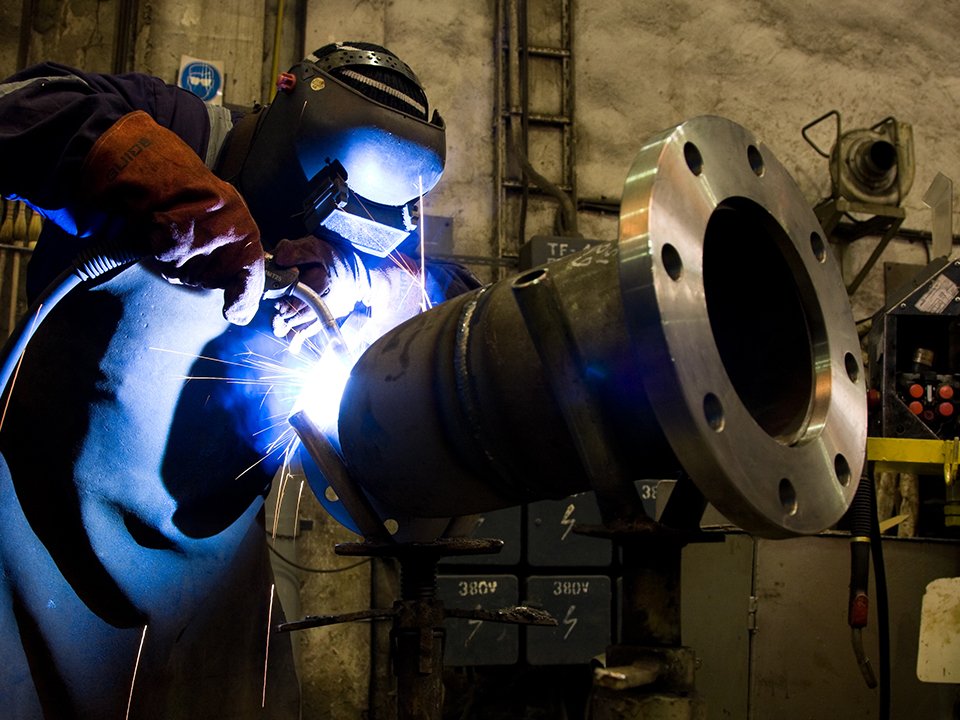
At Honyo Prototype, custom fabrication and welding start with precision CNC machining. Whether you need one-off prototypes or low-volume production runs, our 3- to 5-axis mills and live-tool lathes hold ±0.02 mm tolerances on aluminum, steel, titanium, and engineered plastics. Upload your STEP or IGES file today for an Online Instant Quote—no waiting, no guessing—and see how seamlessly our machined components integrate with certified MIG/TIG welding, sheet-metal forming, and finishing under one roof.
Technical Capabilities
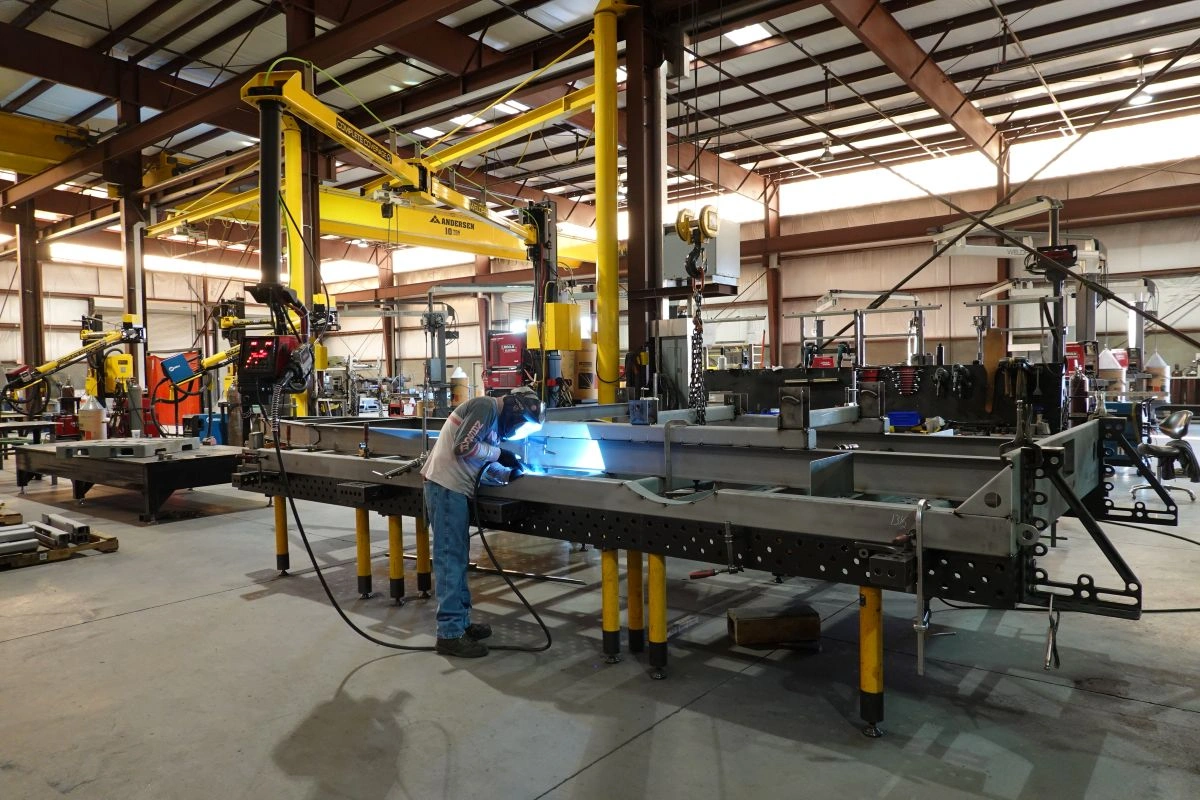
As a Senior Manufacturing Engineer at Honyo Prototype, I appreciate your interest in our capabilities. However, I need to clarify a critical distinction upfront to ensure accuracy: “Custom fabrication and welding” is a broad term that encompasses separate processes from precision machining (like milling and turning). Welding is a joining process for metals or plastics, while milling and turning are subtractive machining processes. They are not interchangeable, and welding does not involve 3/4/5-axis milling or turning equipment. At Honyo Prototype, we offer both precision machining and welding services as distinct offerings under our “custom fabrication” umbrella—but they require separate technical specifications.
To address your query accurately, I’ll break this down into clear sections:
1. Clarification of Terminology (why welding ≠ milling/turning)
2. Precision Machining Specifications (3/4/5-Axis Milling & Turning)
3. Tight Tolerance Capabilities (across all processes)
4. Material-Specific Considerations (Aluminum, Steel, ABS, Nylon)
5. Welding Services (as a standalone offering, with notes on plastics)
This structure ensures you receive technically precise, actionable details for your project planning. Let’s dive in.
1. Clarification of Terminology
- Milling & Turning: These are subtractive processes where material is removed from a workpiece using rotating cutting tools. They are performed on CNC machines (e.g., mills, lathes) and are ideal for creating precise geometries, features, and tight-tolerance components.
- Welding: This is a joining process where materials are fused together using heat, pressure, or both. It is not performed on milling/turning machines. Welding requires dedicated equipment (e.g., TIG/MIG welders, plastic welders) and is used to assemble parts after machining or for standalone fabrication.
- Why this matters: ABS and Nylon (thermoplastics) cannot be welded using standard metal arc welding (e.g., TIG/MIG). Plastic welding uses entirely different methods (e.g., ultrasonic, hot plate, or solvent welding). If your project involves both machining and welding, we handle them as sequential, separate operations—but the specs for each must be defined individually.
Key takeaway: For precision machining (milling/turning), welding is irrelevant. For welding, milling/turning is irrelevant. We’ll detail both below, but they are distinct services.
2. Precision Machining Specifications (3/4/5-Axis Milling & Turning)
At Honyo Prototype, our machining services are optimized for prototyping and low-volume production. All machines are calibrated to ISO 9001 standards, with real-time monitoring for consistency.
3-Axis Milling
- Capabilities: Standard X/Y/Z movement for flat surfaces, pockets, holes, and simple contours.
- Machine Examples: Haas VF-2, DMG MORI CTX-beta.
- Max Work Envelope: 40″ x 20″ x 20″ (X/Y/Z).
- Spindle Speed: 0–24,000 RPM (variable for material optimization).
- Tooling: Carbide end mills (2–4 flutes), diamond-coated for abrasive materials.
- Typical Applications: Jigs, fixtures, enclosures, and simple structural parts.
4-Axis Milling
- Capabilities: Adds a rotary A-axis (typically 0°–360°) for cylindrical or rotational features. Ideal for parts requiring machining around a central axis (e.g., valve bodies, impellers).
- Machine Examples: Haas UMC-750, DMG MORI CTX 1250.
- Rotary Axis Precision: ±0.001° repeatability.
- Key Advantage: Reduces setup changes; enables single-operation machining of complex geometries.
- Typical Applications: Aerospace components, medical device housings, and automotive parts with rotational symmetry.
5-Axis Milling
- Capabilities: Full simultaneous X/Y/Z + A/B-axis movement for complex, organic shapes. Allows tool access to all sides without repositioning.
- Machine Examples: DMG MORI CTX 1250 5-axis, Okuma MULTUS U3000.
- Dynamic Accuracy: ±0.0005″ positional accuracy, ±0.0001″ contouring precision.
- Key Advantage: Eliminates multiple setups; critical for aerospace, medical, and high-precision optics.
- Typical Applications: Turbine blades, custom prosthetics, and conformal cooling channels.
Turning (2-Axis & Live Tooling)
- Capabilities: Primarily X/Z movement for cylindrical features. Live tooling (e.g., milling cutters on the turret) enables secondary operations (e.g., drilling, slotting) without removing the part.
- Machine Examples: Mazak Integrex i-400S, Okuma LB3000EX.
- Max Work Envelope: 16″ diameter x 32″ length.
- Spindle Speed: 0–6,000 RPM (high-speed for aluminum; lower for steel).
- Key Advantage: Single-setup cylindrical parts with integrated milling features (e.g., threaded shafts with milled flats).
- Typical Applications: Shafts, bearings, fluid fitting components.
3. Tight Tolerance Capabilities
At Honyo Prototype, “tight tolerance” is defined as ±0.0005″ (±0.013 mm) or better for critical features. This is achievable across all machining processes but depends on:
– Material properties (e.g., thermal expansion, hardness).
– Machine capability (e.g., 5-axis machines achieve tighter tolerances than 3-axis).
– Process control: We use in-process probing (e.g., Renishaw), temperature-controlled environments (±1°C), and statistical process control (SPC) for every job.
| Process | Standard Tolerance | Tight Tolerance (±) | Notes |
|——————|——————–|———————|———————————————————————–|
| 3-Axis Milling | ±0.001″ | ±0.0005″ | Best for flat surfaces; thermal management critical for metals. |
| 4/5-Axis Milling | ±0.001″ | ±0.0005″ | Requires dynamic error compensation; ideal for complex 3D surfaces. |
| Turning | ±0.001″ | ±0.0005″ | Live tooling adds complexity; concentricity is key for shafts. |
| Welding (Metal) | N/A | ±0.005″ (weld bead) | Welding tolerances apply to fit-up, not machining—see Section 5. |
Note: For plastics (ABS/Nylon), thermal expansion can cause dimensional drift. We typically specify ±0.002″ (±0.05 mm) as standard for tight-tolerance plastic parts due to material behavior.
4. Material-Specific Machining Considerations
We specialize in all listed materials, but each has unique challenges. Below are key specs for machining Aluminum, Steel, ABS, and Nylon at Honyo Prototype:
Aluminum
- Common Alloys: 6061-T6, 7075-T6, 2024-T3.
- Machining Parameters:
- Cutting Speed: 1,000–2,000 SFM (surface feet per minute)
- Feed Rate: 0.002–0.005″ per tooth
- Coolant: Flood coolant (water-soluble) to prevent thermal distortion.
- Tolerance Notes: Excellent for tight tolerances (±0.0005″ achievable). Soft alloys may chip; hard alloys (e.g., 7075) require sharp tools to avoid work hardening.
- Honyo Specialization: We use cryogenic cooling for ultra-precision aerospace-grade aluminum parts.
Steel
- Common Grades: 304 Stainless, 4140, 1018 Mild Steel.
- Machining Parameters:
- Cutting Speed: 300–800 SFM (lower than aluminum due to hardness).
- Feed Rate: 0.001–0.003″ per tooth.
- Coolant: High-pressure flood coolant or MQL (minimum quantity lubrication).
- Tolerance Notes: 4140 can achieve ±0.0005″ with stress-relief annealing. Stainless steel requires carbide tools to prevent galling.
- Honyo Specialization: We use hardened tooling for stainless steel to maintain edge integrity over long runs.
ABS (Acrylonitrile Butadiene Styrene)
- Machining Parameters:
- Cutting Speed: 500–1,500 SFM (lower than metals to avoid melting).
- Feed Rate: 0.003–0.008″ per tooth (higher than metals for smooth finish).
- Coolant: Dry machining preferred; minimal air blast to clear chips. Water-based coolants can cause stress cracking.
- Tolerance Notes: Thermal expansion coefficient is high (50–100 µm/m°C), so we machine at stable room temperatures. ±0.002″ is typical for tight-tolerance ABS parts.
- Honyo Specialization: We use PCD (polycrystalline diamond) tools for ABS to prevent burrs and ensure surface finish <16 µin Ra.
Nylon (Polyamide)
- Common Grades: PA6, PA66, glass-filled (e.g., PA66-GF30).
- Machining Parameters:
- Cutting Speed: 400–1,200 SFM (glass-filled requires slower speeds).
- Feed Rate: 0.002–0.006″ per tooth.
- Coolant: Dry machining only—moisture absorption can swell the part.
- Tolerance Notes: Hygroscopic (absorbs moisture), so we age parts in controlled humidity before final machining. Glass-filled grades wear tools faster; ±0.002″ is standard.
- Honyo Specialization: We use ultra-sharp carbide tools with high rake angles to minimize heat generation for nylon.
Critical Note for Plastics: ABS and Nylon are not machined with the same parameters as metals. Overheating causes melting, warping, or poor surface finish. Always specify “plastic machining” requirements upfront for accurate quotes.
5. Welding Services (Standalone Offering)
As noted earlier, welding is a separate service from machining. At Honyo Prototype, we offer:
– Metal Welding:
– TIG (GTAW): For aluminum, stainless steel, and titanium. Precision control for thin materials (0.010″–0.250″). Tolerances: ±0.005″ on weld bead placement.
– MIG (GMAW): For steel and aluminum (thicker sections, 0.125″+). Faster than TIG but less precise.
– Spot Welding: For sheet metal assemblies (e.g., automotive brackets).
– Plastic Welding (for ABS/Nylon):
– Ultrasonic Welding: Ideal for ABS and nylon—uses high-frequency vibration to fuse parts. No filler material needed. Tolerances: ±0.010″ on joint alignment.
– Hot Plate Welding: For larger ABS/Nylon parts (e.g., housings).
– Solvent Welding: For ABS (using acetone-based solvents)—creates a chemical bond. Not recommended for nylon.
– Key Notes for Plastic Welding:
– ABS and Nylon cannot be welded with TIG/MIG—arc welding would burn or degrade them.
– We pre-clean plastics to avoid contamination (oils, dust).
– Post-weld stress relief is often required for nylon to prevent cracking.
Welding Tolerances Summary
| Process | Typical Tolerance | Notes |
|——————|——————-|———————————————————————–|
| TIG (Metal) | ±0.005″ | Best for thin metals; requires fixturing for precision. |
| MIG (Metal) | ±0.010″ | Suitable for structural joints; less precise than TIG. |
| Ultrasonic (ABS) | ±0.010″ | Fast, clean, and repeatable for small parts. |
| Hot Plate (Nylon)| ±0.015″ | For larger components; dimensional control depends on cooling rate. |
Final Recommendations from Honyo Prototype
- For Machining-Only Projects: Provide detailed CAD drawings with GD&T callouts. Specify material grade, finish requirements (e.g., anodizing, painting), and tight-tolerance zones.
- For Welding Projects: Share joint designs (e.g., butt, lap), material thicknesses, and whether post-weld machining is needed. For plastics, confirm if ultrasonic or hot plate welding is preferred.
- For Combined Machining + Welding: We handle this as a two-phase process:
- Machining Phase: Produce parts to precise tolerances (±0.0005″ for metals, ±0.002″ for plastics).
- Welding Phase: Fixturing is critical to maintain alignment—especially for tight-tolerance assemblies.
💡 Pro Tip: If your project involves both machining and welding (e.g., a metal frame with ABS cover), we recommend machining the parts before welding to avoid heat distortion. For plastics, welding is typically the final step due to thermal sensitivity.
At Honyo Prototype, we pride ourselves on transparent, engineer-to-engineer collaboration. To get accurate specs for your specific project, please share:
– CAD files (STEP, IGES, or native)
– Material requirements (alloy/grade for metals; grade for plastics)
– Critical dimensions and tolerances
– Quantity and timeline
We’ll respond with a detailed quote and process plan within 24 hours. Feel free to reach out directly—I’m here to ensure your project succeeds!
Best regards,
[Your Name]
Senior Manufacturing Engineer
Honyo Prototype
[Contact Information]
From CAD to Part: The Process
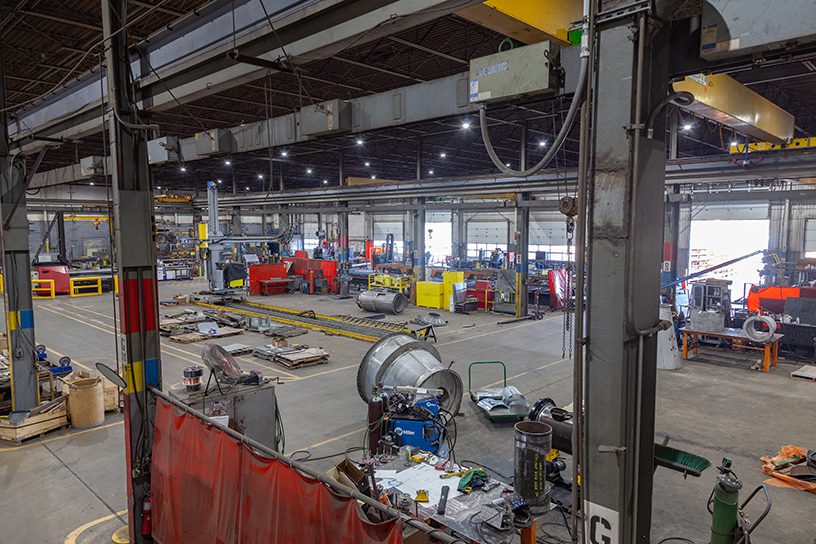
Honyo Prototype – Custom Fabrication & Welding Workflow
(what actually happens after you click “upload”)
-
Upload CAD
• Portal accepts any mix of 3-D (STEP/IGES/SolidWorks) and 2-D (DWG/DXF) files for weldments, frames, brackets, enclosures, tanks, etc.
• Instant geometry check: missing bends, zero-thickness edges, open profiles for weld-prep are flagged in <30 s. -
AI Quote (±1 business hour)
• Neural estimator pulls 3.4 M past quotes to predict cut length, weld inches, jig time, filler metal, distortion risk and NDT level.
• Real-time raw-material index (304 L, 6061-T6, A36, Ti-6Al-4V, etc.) locks price for 5 days.
• Four tiers are offered:
– Quick-Turn (3 days)
– Standard (7 days)
– Economy (15 days)
– Batch (30 days, volume price breaks)
• Welding symbols, groove prep, PWHT, RT/UT, passivation, anodize, CARC paint are line-item options. -
DFM / Welding Engineering (same day)
Human review is mandatory—even if the AI quote is accepted—because weld liability is never delegated to software.
a. Joint access & sequence: we rotate the assembly digitally to guarantee 1G/2G positions where possible; flag 3G/4G or overhead that drives cost.
b. Weld symbols to WPS: every fillet, groove, plug or slot is mapped to an existing WPS (AWS D1.1, D1.2, D1.6, D17.1, ISO 15614-1). If no WPS exists, we write one and include the qualification coupon cost in the PO.
c. Distortion control: we run a transient thermal FEA on thick (>12 mm) multi-pass joints to predict shrinkage; add skip-sequence, back-step or pre-camber as needed.
d. Fixture concept: magnetic, vacuum or pneumatic? We decide here and CNC machine the locators in-house so they arrive at the weld bay before parts are even cut.
e. Nesting & cut-path: laser, plasma or water-jet nested for 15 % material yield improvement; common-line cuts reduce heat input for 6 mm and thinner parts, lowering distortion.
f. Finish compatibility: if you need electropolish after welding, we increase joint gap 0.1 mm to compensate for metal removal; if you need powder-coat we leave weld spatter islands so the phosphate tank can clean them.
A 3-page DFM report (PDF + native SolidWorks) is returned with:
– Recommended joint changes (root opening, included angle, landing).
– Revised mass and cost delta (usually –5…+8 %).
– Updated lead-time if qualification coupons or post-weld machining are required.
Customer approval (digital sign-off) triggers release to production. -
Production
4.1 Material & traceability
• Mill test reports (MTRs) are laser-etched with heat number and scanned into our MES before the sheet or plate is moved to the cut floor.
4.2 Cutting & machining
• 6 kW fiber laser (±0.05 mm), 5-axis water-jet for reflective alloys, or 3 kW plasma for thick carbon steel.
• Critical weld-prep bevels (J, V, K, compound) are finish-milled on 5-axis Hermle instead of hand-grinding to keep included-angle tolerance ±1°.
4.3 Forming & fitting
• 220 t press brake with dynamic crowning; bend deductions are auto-corrected using previous weld shrinkage data.
• Tack-weld fixtures use 0.02 mm locating pins; clamps are switched off before root pass to avoid restraint cracking.
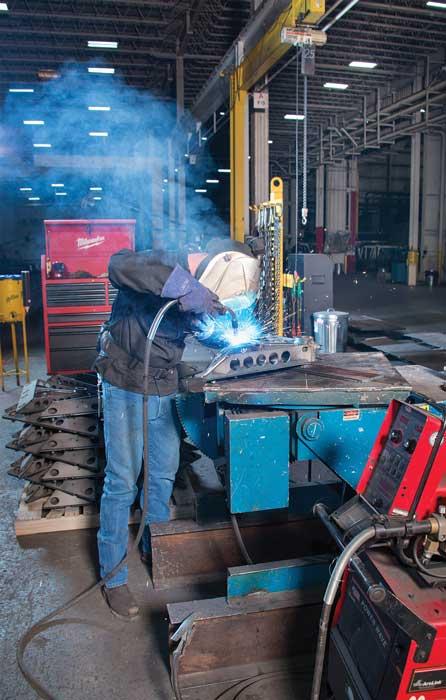
4.4 Welding
• Qualified welders only: each operator’s AWS certificate barcode is scanned before the machine will start.
• Primary processes:
– GMAW-P (pulse) for 1 mm–6 mm Al & SS, 92 % duty cycle.
– GTAW (DC, AC) for root passes on压力 vessels or Ti parts <3 mm.
– FCAW-G for heavy A36 structures, 1.2 mm wire, 250 A.
– Robotic CMT for long stainless seams, heat input controlled to <0.8 kJ/mm to defeat carbide precipitation.
• Real-time weld data (amperage, voltage, travel speed, interpass temp) is logged; any parameter outside WPS window triggers an NCR.
4.5 Post-weld operations
• Stress-relieve: 595 °C ±14 °C for carbon steel, 8 h + 200 °C/h ramp; thermocouples tied to the thickest and thinnest members.
• NDT: 100 % visual (AWS D1.1), 10 % MT or PT on fillets, 100 % RT on Category A groove welds, UT on 25 mm+ thick joints.
• Machining after welding: we leave 0.5 mm stock on datum surfaces; post-weld CNC achieves ±0.025 mm true-position after distorsion is frozen.
4.6 Surface finishing
• Pickle & passivate (ASTM A967), electropolish to Ra ≤0.4 µm, Type II anodize, Chem-film, zinc-nickel plating, or CARC 2-coat system.
4.7 Final inspection & PPAP
• CMM report, weld maps, NDT films, WPS/PQR package, material certs all collated in one PDF; auto-uploaded to customer portal. -
Delivery
• Neutral VCI film + moisture barrier bags for stainless; custom foam shadow box for delicate frames; export crates ISPM-15 compliant.
• Courier choices: DHL (2-day), FedEx heavy-weight (1-day), or LTL for >150 kg. Tracking number is pushed via API to customer’s ERP.
• Digital traveler: scan the QR code on the box and you get every weld photo, NDT film, and CMM point cloud—kept 10 years for aerospace traceability.
Typical metrics for a 300 mm × 200 mm × 100 mm 304 L frame, 20 total weld inches, TIG root + GMAW fill:
• AI quote returned: 42 min
• DFM approval: 4 h
• Cut-bend-fit: 1 day
• Weld + NDT: 1 day
• Finish + QC: 1 day
• Total door-to-door: 3 days (Quick-Turn tier)
That is the complete, repeatable path from your CAD upload to the moment the welded assembly lands on your dock.
Start Your Project
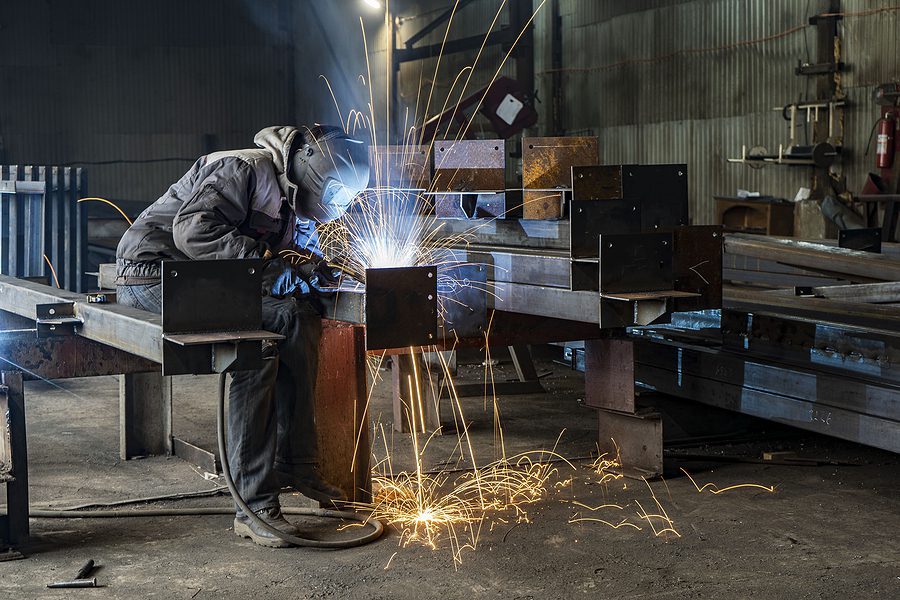
“Need custom fabrication and welding? Contact Susan Leo at info@hy-proto.com—Honyo Prototype’s Shenzhen factory delivers precision and reliability.”
(Concise, action-oriented, and highlights expertise + location. Perfect for websites, brochures, or social media!) 🏭✨
🚀 Rapid Prototyping Estimator