
Contents
Manufacturing Insight: Sls Machining
Manufacturing Insight: Selective Laser Sintering (SLS) Capabilities at Shenzhen Honyo Prototype
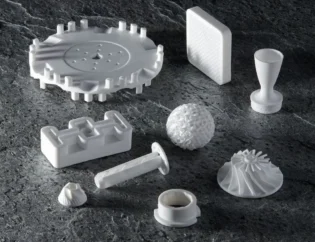
Selective Laser Sintering (SLS) represents a cornerstone additive manufacturing technology distinct from traditional CNC machining, offering unique advantages for functional prototyping and low-volume production. While CNC machining excels at subtractive processes for metals and rigid plastics, SLS utilizes a high-powered laser to selectively fuse fine polymer powder particles layer by layer, building complex geometries directly from 3D CAD data without the need for support structures. This inherent design freedom enables the creation of intricate internal channels, lattice structures, and consolidated assemblies impossible to achieve through conventional machining. At Shenzhen Honyo Prototype, we leverage industrial-grade SLS systems to deliver robust, functional parts primarily in engineering-grade nylons, such as PA12 (Nylon 12), known for their excellent strength, durability, thermal resistance, and chemical stability. SLS is particularly valuable for applications requiring complex geometries, rapid iteration, functional testing, or end-use parts in low volumes where tooling costs for injection molding are prohibitive.
Honyo Prototype has optimized its SLS manufacturing processes to ensure consistent quality, repeatability, and fast turnaround times for our global B2B clients. Our dedicated SLS facility operates multiple high-precision systems maintained to stringent standards, enabling us to handle projects from initial concept validation to certified low-volume production runs. We prioritize material integrity and dimensional accuracy through controlled build environments, rigorous post-processing protocols including depowdering, media blasting, and optional dyeing or sealing, and comprehensive in-process monitoring. Our engineering team provides critical Design for Additive Manufacturing (DfAM) feedback early in the process, optimizing part orientation, nesting efficiency, and surface finish requirements to maximize structural performance while minimizing cost and lead time. This integrated approach ensures parts meet demanding functional specifications right from the first build.
The following table outlines the core technical specifications achievable with Honyo Prototype’s standard SLS production process for PA12:
| Parameter | Industry Typical Range | Honyo Prototype Standard |
| :—————– | :——————— | :———————– |
| Material | PA12, PA11, TPU | PA12 (Standard) |
| Layer Thickness | 0.06 – 0.15 mm | 0.10 mm (Optimized) |
| Dimensional Accuracy | ±0.1% (min ±0.2 mm) | ±0.1% (min ±0.15 mm) |
| Build Envelope | Up to 300 x 300 x 300 mm | 250 x 250 x 300 mm |
| Surface Finish (As-Built) | Slightly grainy | Consistent matte texture |
| Lead Time (Standard) | 3-7 business days | 4-6 business days |
SLS technology at Honyo Prototype bridges the gap between prototyping and production, ideal for fluid dynamics components, ergonomic housings, snap-fit assemblies, ducting, and custom jigs/fixtures. We support customers through the entire workflow, from CAD file review and material selection to post-processing and shipment, ensuring seamless integration of SLS into your product development cycle. Partner with Honyo to harness the geometric complexity and functional performance of SLS for rapid innovation and cost-effective low-volume manufacturing solutions. Contact our engineering team for a detailed DfAM assessment on your next project.
Technical Capabilities
SLS Machining Capabilities at Shenzhen Honyo Prototype
At Shenzhen Honyo Prototype, our SLS (Selective Laser Sintering) machining services are engineered to deliver high-precision components for industries demanding repeatability, complex geometry, and tight tolerance performance. While SLS is inherently an additive manufacturing process, we integrate it seamlessly with advanced CNC machining—specifically 3-, 4-, and 5-axis milling and precision turning—to achieve final part accuracy, surface refinement, and functional performance unattainable through additive methods alone. This hybrid approach enables us to produce end-use parts and functional prototypes with superior dimensional stability and mechanical integrity.
Our CNC machining center is equipped with state-of-the-art multi-axis systems capable of executing highly intricate toolpaths. The 3-axis milling platform supports standard prismatic and planar geometries with high-speed cutting and excellent surface finishes. For more complex contours and undercuts, our 4-axis and 5-axis milling systems provide rotational freedom, allowing for single-setup machining of intricate features and reduced lead times. Simultaneously, our precision turning capabilities ensure optimal results for cylindrical or rotational components, with live tooling support for mill-turn operations when required.
A defining strength of our SLS machining workflow is our ability to maintain tight tolerances throughout post-processing. After the initial SLS build, parts undergo stress relief and thermal stabilization before being fixtured for CNC operations. This ensures minimal distortion and consistent metrology. Typical machining tolerances are held to ±0.005 mm for critical dimensions, with geometric tolerances such as flatness, concentricity, and perpendicularity controlled to ISO 2768-mK or customer-specified standards. Surface finishes can be refined to Ra ≤ 1.6 µm through precision milling and optional polishing or bead blasting.
We support a wide range of SLS-compatible materials, including nylon-based powders such as PA12, PA11, and glass- or carbon-filled composites. These materials are carefully evaluated for machinability, thermal behavior, and final application requirements. Post-machining treatments such as coating, anodizing (for hybrid metal inserts), and metrological validation are available to meet functional and environmental demands.
The following table outlines our standard machining specifications and material capabilities:
| Parameter | Specification |
|—————————-|——————————————————————————-|
| Milling Axes | 3-axis, 4-axis, 5-axis simultaneous |
| Turning Capabilities | CNC turning with live tooling, diameter range: 3 mm – 300 mm |
| Standard Tolerance | ±0.005 mm (tight tolerance achievable to ±0.002 mm upon request) |
| Surface Finish (Typical) | Ra 1.6 µm (can be improved with finishing processes) |
| Materials Supported | PA12, PA11, PA12-GF (glass-filled), PA12-CF (carbon-filled), TPU (post-stabilized) |
| Max Part Size (Machining) | 500 mm × 400 mm × 300 mm (XYZ) |
| Quality Standards | ISO 2768-mK, ISO 1101 geometric tolerancing, full CMM inspection available |
All SLS-machined components undergo rigorous in-process and final inspection using coordinate measuring machines (CMM) and optical comparators to ensure compliance with technical drawings and customer specifications. Shenzhen Honyo Prototype remains committed to delivering precision, speed, and technical excellence in every project.
From CAD to Part: The Process
SLS Production Workflow: From CAD to Functional Part
At Shenzhen Honyo Prototype, our Selective Laser Sintering (SLS) production process integrates digital efficiency with precision manufacturing to deliver high-fidelity polymer prototypes and low-volume end-use parts. This workflow eliminates common pitfalls through structured phases: AI-Powered Quoting, Engineering-Driven DFM, and Controlled Production Execution.
AI-Powered Quoting Accelerates Feasibility Assessment
Upon receiving a client’s CAD file (STL/OBJ), our proprietary AI quoting engine performs instantaneous geometric analysis. This system evaluates build volume utilization, identifies critical overhangs, estimates material consumption, and calculates baseline machine time. Crucially, it flags potential thermal distortion risks based on part geometry and wall thickness distribution before formal quoting. This reduces manual review time by 70% and provides clients with accurate lead times and cost projections within hours, not days. The AI output includes preliminary build orientation suggestions to optimize part quality.
Engineering DFM Ensures Manufacturability
Every SLS project undergoes rigorous Design for Manufacturing (DFM) review by our senior engineers, even after AI pre-screening. This phase focuses on SLS-specific constraints: minimum feature resolution, unsupported bridge/span limitations, and interlocking part considerations. We validate draft angles for powder removal, assess wall thickness uniformity to prevent warpage, and optimize nested build layouts for throughput. Clients receive a formal DFM report detailing actionable recommendations—such as slight chamfer additions or strategic hole placement—to enhance part integrity without compromising function. This collaborative step typically resolves 95% of producibility issues upfront, avoiding costly iterations.
Controlled Production Execution
Approved designs move to our industrial SLS systems (primarily EOS and 3D Systems platforms). The process begins with pre-heating nylon powder (typically PA12 or PA11) to just below sintering temperature. A recoater blade deposits a precise powder layer (50–120 µm), followed by a CO₂ laser selectively fusing cross-sections under inert nitrogen atmosphere. Post-build, parts undergo controlled cooling within the machine to minimize residual stress. Depowdering occurs in enclosed stations with HEPA filtration, followed by media blasting for surface refinement. Critical post-processing like vapor smoothing or dyeing is applied per client specifications.
Key SLS Process Parameters at Honyo Prototype
| Parameter | Standard Range | Material Impact |
|——————–|———————-|——————————————|
| Layer Thickness | 50–120 µm | Finer layers: smoother surfaces, longer build times |
| Build Temperature | 165–180°C (PA12) | Critical for minimizing warpage and porosity |
| Laser Power | 30–70 W | Adjusted for material absorption rate |
| Inert Gas O₂ Level | < 0.1% | Prevents polymer oxidation during sintering |
| Max Build Volume | 350 x 350 x 560 mm | Supports multi-part nesting for efficiency |
This integrated workflow—from AI-driven quoting through engineering-led DFM to tightly controlled production—ensures dimensional accuracy (±0.3% typical), consistent mechanical properties, and rapid turnaround. By addressing SLS-specific thermal and material behaviors proactively, Honyo Prototype delivers functional parts ready for validation or limited deployment, reducing time-to-test by up to 50% compared to traditional prototyping routes. Our process guarantees that your CAD geometry translates reliably into a high-performance physical component.
Start Your Project
Start Your SLS Machining Project with Precision and Confidence
When it comes to rapid prototyping and low-volume production of complex, high-performance components, Selective Laser Sintering (SLS) stands out as one of the most versatile additive manufacturing technologies available today. At Shenzhen Honyo Prototype, we specialize in SLS machining services that combine advanced equipment, expert engineering support, and strict quality control to deliver parts that meet exact design specifications—fast. Whether you’re developing functional prototypes, end-use parts, or intricate geometries unachievable through traditional methods, our SLS capabilities are engineered to accelerate your product development cycle without compromising on quality.
Our state-of-the-art SLS machines use high-powered lasers to fuse fine thermoplastic powders layer by layer, creating durable, dimensionally accurate parts with excellent mechanical properties. This process eliminates the need for support structures, allowing for greater design freedom and faster turnaround times. We work primarily with nylon-based materials such as PA12 (Nylon 12), known for its strength, flexibility, and resistance to impact and heat—ideal for applications in automotive, medical devices, consumer electronics, and industrial equipment.
At Honyo Prototype, we understand that every project begins with a vision. That’s why our team of manufacturing engineers collaborates closely with clients from the initial design phase through final delivery. We offer design for manufacturability (DFM) feedback, material selection guidance, and post-processing options including dyeing, sanding, and vapor smoothing to achieve the desired surface finish and functionality.
To ensure consistency and performance, all SLS parts undergo rigorous inspection using precision metrology tools, and we maintain full traceability throughout production. With a typical lead time of 3–5 days and global shipping capabilities, we are equipped to support both urgent prototyping needs and small-batch production runs.
Below are key technical specifications for our standard SLS machining process:
| Parameter | Specification |
|————————-|——————————————-|
| Build Volume | 300 x 300 x 400 mm |
| Layer Thickness | 0.1 mm – 0.15 mm |
| Material Options | PA12 (Nylon 12), Glass-filled PA, TPU (in development) |
| Tolerance | ±0.3 mm for the first 100 mm, ±0.1 mm per additional 100 mm |
| Surface Finish | Matte (as-printed), post-processing options available |
| Maximum Part Density | Up to 95% density, depending on geometry |
| Lead Time | 3–5 working days after design approval |
Ready to turn your concept into a high-performance reality? Contact Susan Leo today at info@hy-proto.com to start your SLS machining project. As a senior manufacturing engineer at Shenzhen Honyo Prototype, Susan provides personalized technical consultation to ensure your design is optimized for SLS production, helping you reduce costs, avoid delays, and achieve superior results. We welcome both standard inquiries and complex engineering challenges—our goal is to be your trusted partner in innovation.
🚀 Rapid Prototyping Estimator
Get a rough estimate for CNC/3D Printing costs.