
Contents
Manufacturing Insight: 1215 Carbon Steel
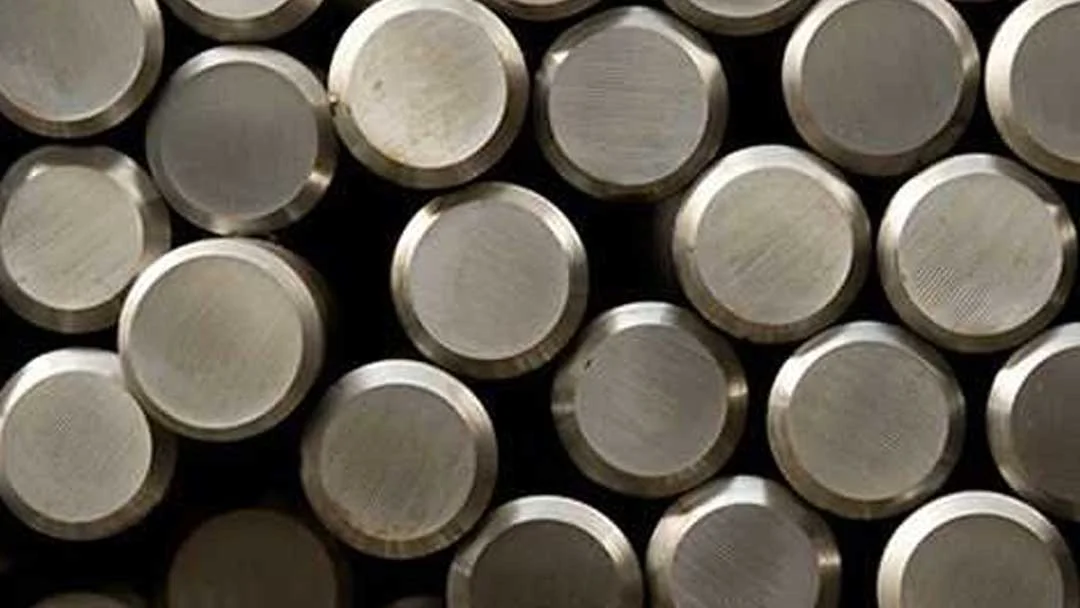
Manufacturing Insight: 1215 Carbon Steel for Precision CNC Machining
1215 carbon steel, a free-machining leaded steel, represents a strategic material choice for high-volume precision components requiring exceptional machinability and tight tolerances within CNC machining operations. Its defining characteristic is the intentional addition of lead (Pb), typically 0.04-0.35%, which acts as a chip breaker and internal lubricant during cutting. This significantly reduces tool wear, allows for higher machining speeds and feeds, improves surface finish, and enhances chip evacuation compared to non-leaded steels like 1018 or 1045. These properties make 1215 the preferred material for complex turned parts, intricate milling operations, and high-production runs of fasteners, fittings, hydraulic components, and shafts where machining efficiency and dimensional consistency are paramount. However, engineers should note its limitations: lower tensile strength than medium-carbon steels, reduced weldability due to lead content, and potential susceptibility to lead-related corrosion in specific environments. Understanding these trade-offs is essential for optimal application selection.
At Shenzhen Honyo Prototype, we leverage our deep expertise in free-machining steels to maximize the inherent advantages of 1215 carbon steel while mitigating potential challenges. Our CNC machining centers, equipped with high-precision spindles and advanced tool monitoring systems, are meticulously programmed to exploit 1215’s superior chip-breaking characteristics. We utilize optimized feed rates and cutting speeds specifically calibrated for this alloy, ensuring consistent surface integrity and dimensional accuracy down to ±0.005mm. Crucially, our process control includes stringent verification of lead distribution uniformity within the bar stock, a factor critical for maintaining predictable machinability and avoiding localized tool chatter or surface defects that can occur with inconsistent lead dispersion. Our quality assurance protocols extend beyond standard dimensional checks to include rigorous surface finish validation and material traceability, ensuring every component meets the demanding requirements of functional prototypes and low-to-medium volume production runs.
Key mechanical and machining properties of 1215 steel are summarized below for reference:
| Property | Typical Value | Significance for CNC Machining |
| :———————- | :———————— | :————————————————- |
| Carbon Content (C) | 0.09% max | Low carbon ensures good machinability, low hardness |
| Lead Content (Pb) | 0.04% – 0.35% | Primary contributor to exceptional chip breaking |
| Tensile Strength | 50,000 – 60,000 psi | Suitable for non-structural applications |
| Yield Strength | 30,000 – 40,000 psi | Adequate for many machined components |
| Brinell Hardness (HB) | 110 – 140 | Soft material reduces cutting forces |
| Machinability Rating | 170% (Relative to 1112) | Significantly faster machining than 1018/1045 |
Honyo Prototype excels in transforming the theoretical benefits of 1215 carbon steel into tangible manufacturing outcomes. We provide comprehensive material certification, expert consultation on design-for-machinability specific to free-cutting steels, and rapid turnaround times without compromising on the precision expected in demanding industrial applications. Partner with Honyo to leverage 1215’s unique properties for cost-effective, high-quality machined components, backed by our commitment to engineering excellence and responsive prototyping-to-production support.
Technical Capabilities

Technical Capabilities: Precision CNC Machining of 1215 Carbon Steel
Shenzhen Honyo Prototype offers advanced CNC machining services tailored for 1215 carbon steel, a free-machining low-carbon steel widely used in high-volume production of precision components. Leveraging state-of-the-art 3, 4, and 5-axis milling centers and CNC turning systems, we deliver complex geometries with consistent accuracy and surface integrity. Our manufacturing processes are optimized to exploit the inherent machinability of 1215 steel, which contains sulfur and manganese to improve chip breakability and tool life, making it ideal for tight-tolerance parts in automation, hydraulics, and mechanical assemblies.
Our 3-axis milling capabilities support prismatic part geometries with high repeatability, while 4-axis (indexing) and 5-axis (continuous) machining enable reduced setup counts and access to complex features such as undercuts, angled holes, and contoured surfaces. For turning operations, we utilize live-tooling lathes to perform mill-turn operations, allowing complete machining of cylindrical components in a single setup. All machines are maintained to stringent calibration standards and operated by experienced engineers who monitor tool wear, thermal drift, and material consistency to ensure dimensional stability.
Tight-tolerance machining is a core strength at Honyo Prototype. We consistently achieve tolerances down to ±0.0005” (±0.013 mm) for critical dimensions on 1215 steel parts. Our quality control system includes pre-process CMM verification, in-process probing, and final inspection using calibrated metrology equipment, ensuring compliance with ISO 2768 and customer-specific GD&T requirements.
Below is a summary of our standard machining capabilities and achievable tolerances for 1215 carbon steel:
| Process | Typical Tolerance (Linear) | Typical Tolerance (Diameter) | Surface Finish (Ra) | Max Work Envelope (mm) |
|——–|—————————-|——————————-|———————-|————————-|
| 3-Axis Milling | ±0.010 mm | ±0.010 mm | 1.6 – 3.2 µm | 1000 x 600 x 500 |
| 4-Axis Milling | ±0.008 mm | ±0.008 mm | 1.6 – 3.2 µm | 800 x 500 x 400 |
| 5-Axis Milling | ±0.005 mm | ±0.005 mm | 0.8 – 1.6 µm | 600 x 400 x 300 |
| CNC Turning | ±0.005 mm | ±0.003 mm | 0.8 – 1.6 µm | Ø300 x 500 mm |
| Tight Tolerance Features | ±0.013 mm (±0.0005”) | ±0.010 mm (±0.0004”) | 0.4 – 0.8 µm | As per process limits |
Material stock for 1215 steel is sourced from certified mills with full traceability. We support bar, plate, and tube forms, and can perform secondary operations including deburring, passivation, and non-destructive testing upon request. All parts are machined under controlled environmental conditions to minimize thermal variation, particularly critical for achieving tight tolerances.
Shenzhen Honyo Prototype combines technical expertise with robust process control to deliver high-precision 1215 carbon steel components that meet the demands of industrial, automotive, and OEM applications. Our capabilities ensure rapid prototyping and low-to-mid volume production with exceptional consistency and quality.
From CAD to Part: The Process
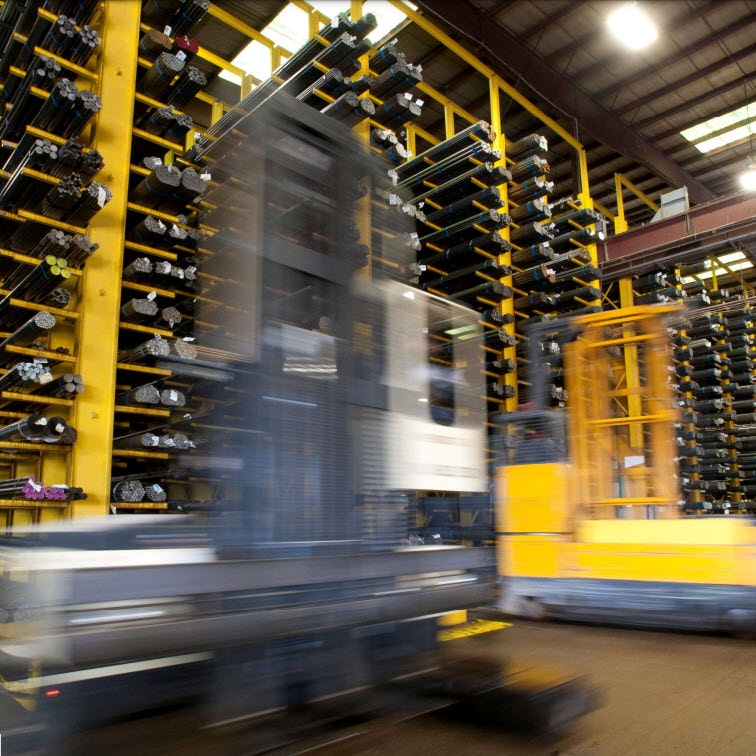
CNC Machining Workflow for 1215 Carbon Steel Components
Shenzhen Honyo Prototype leverages the free-machining properties of 1215 carbon steel (AISI 1215) to deliver high-precision, cost-effective prototypes and low-volume production parts. This sulfur-bearing grade offers significantly improved machinability over 1018 or 12L14, enabling faster cycle times and superior surface finishes critical for functional testing and validation. Our rigorously defined workflow ensures seamless transition from digital design to physical part.
AI-Powered Quoting and Feasibility Assessment
The process initiates when a client submits a 3D CAD model. Honyo’s proprietary AI quoting engine performs an immediate geometric complexity analysis, material utilization calculation, and preliminary manufacturability scan specific to 1215 steel’s characteristics. This system generates a highly accurate time and cost estimate within minutes, incorporating critical factors like the material’s high sulfur content (0.08-0.13%) which enhances chip breaking but necessitates specific tooling strategies. Crucially, the AI flags potential high-risk features early, such as extremely thin walls or deep, narrow slots prone to vibration in this relatively low-strength alloy, preventing downstream delays.
Engineering-Driven Design for Manufacturability (DFM) Review
Following quote acceptance, Honyo’s manufacturing engineering team conducts an in-depth, manual DFM review. This stage is paramount for 1215 steel, focusing on optimizing the design for its unique behavior. Engineers verify all features against the material’s limitations, particularly its notch sensitivity and reduced weldability. Key parameters are scrutinized against established best practices:
| Critical DFM Parameter | Recommended Value for 1215 Steel | Rationale |
|————————|———————————-|———–|
| Minimum Wall Thickness | ≥ 1.0 mm (0.040″) | Prevents chatter, deflection, and breakage during milling |
| Hole Depth to Diameter Ratio | ≤ 4:1 | Ensures chip evacuation and tool stability; deeper holes require peck drilling |
| Internal Corner Radius | ≥ 0.5x feature depth | Mitigates notch sensitivity and reduces tool stress |
| Surface Finish Callouts | Ra 1.6 µm (63 µin) standard | Achievable with optimized speeds/feeds; tighter tolerances increase cost significantly |
Engineers collaborate directly with the client to resolve conflicts, suggesting design modifications like adding relief features or adjusting tolerances where necessary, ensuring the design fully exploits 1215’s machinability advantages while guaranteeing structural integrity.
Precision CNC Production Execution
Upon DFM sign-off, the part enters production. Programmers generate optimized CNC toolpaths using CAM software, applying material-specific parameters. For 1215 steel, this includes moderately high cutting speeds (120-180 m/min for milling), positive rake angle tools with TiAlN coating to handle the sulfur-rich chips, and controlled feed rates to maintain chip thickness for effective evacuation. Machining centers employ high-pressure through-spindle coolant to manage heat and flush fine, stringy chips inherent to free-machining steels. Operators perform rigorous in-process inspections using CMMs and optical comparators, verifying critical dimensions against the CAD model and geometric tolerances. Final parts undergo comprehensive cleaning to remove all machining residue and a dimensional quality assurance check before shipment, ensuring they meet the exact specifications required for the client’s application validation. This integrated workflow guarantees efficient, reliable production of high-quality 1215 steel components.
Start Your Project
Start Your 1215 Carbon Steel CNC Machining Project with Honyo Prototype
When precision, efficiency, and material performance are critical to your component design, 1215 carbon steel stands out as a preferred choice for high-volume CNC machining applications. At Shenzhen Honyo Prototype, we specialize in delivering tight-tolerance, high-quality machined parts from 1215 steel, leveraging advanced CNC technology and decades of metallurgical expertise to ensure your prototypes and production runs meet exacting standards.
1215 carbon steel, also known as free-machining steel, is engineered for optimal machinability. It contains controlled amounts of sulfur and manganese, which enhance chip breakability and reduce tool wear—critical factors in maintaining consistent cycle times and surface finishes. This makes 1215 ideal for complex turned and milled components commonly used in automotive systems, industrial fasteners, hydraulic connectors, and pneumatic fittings.
At Honyo Prototype, we understand that successful machining begins with material integrity and precise process control. Our CNC machining center is equipped with state-of-the-art lathes and milling machines capable of achieving tolerances down to ±0.005 mm. Whether you require rapid prototyping or low-to-mid volume production, our team ensures dimensional accuracy, repeatable quality, and fast turnaround times.
We handle every stage of the machining process in-house—from raw material sourcing and CNC programming to precision turning, milling, deburring, and final inspection. All 1215 steel components are inspected using calibrated CMMs and optical comparators to verify compliance with your engineering drawings and GD&T requirements.
To support your project from concept to completion, we offer comprehensive DFM (Design for Manufacturability) analysis at no additional cost. Our engineering team will review your CAD models or technical drawings to identify opportunities for cost reduction, improved tool life, and enhanced part functionality—ensuring your design is optimized for efficient and reliable machining in 1215 steel.
Below are key mechanical and machining properties of 1215 carbon steel to guide your material selection:
| Property | Value |
|——–|——-|
| Tensile Strength (Ultimate) | 580 MPa (84,000 psi) |
| Yield Strength | 415 MPa (60,000 psi) |
| Elongation at Break | 14% (in 2 in) |
| Brinell Hardness | 160 HB |
| Machinability Rating | 78% (relative to B1112) |
| Typical Applications | Shafts, pins, fasteners, fittings, bushings |
Starting your project with Honyo Prototype is simple. Share your design files or specifications with our engineering team, and we’ll provide a detailed quote within 12 hours. Our responsive communication and transparent workflow ensure you remain informed at every stage.
For immediate assistance, contact Susan Leo at info@hy-proto.com. She will guide you through material selection, lead time planning, and project scheduling to ensure your 1215 carbon steel components are delivered on time and to specification. At Honyo Prototype, we don’t just manufacture parts—we build manufacturing partnerships.
🚀 Rapid Prototyping Estimator
Get a rough estimate for CNC/3D Printing costs.