

Contents
Manufacturing Insight: 3D Printing Wax For Casting

Manufacturing Insight: 3D Printing Wax for Casting
Investment casting, a cornerstone process for producing complex, high-precision metal components, traditionally relies on injection-molded wax patterns. While effective for high-volume production, this method presents significant barriers for prototyping and low-volume manufacturing due to lengthy lead times and high tooling costs associated with mold creation. 3D printing wax patterns directly addresses these limitations, offering a transformative digital workflow. This additive approach enables the rapid fabrication of intricate, one-off, or small-batch patterns without physical tooling, dramatically accelerating the path from digital design to metal casting. The core value lies in its ability to unlock geometries impossible with conventional molding while drastically reducing iteration cycles for design validation and process refinement.
Shenzhen Honyo Prototype leverages industrial-grade wax 3D printing as a strategic capability within our precision manufacturing ecosystem. We specialize in producing investment casting patterns that meet the stringent demands of aerospace, medical device, and high-end jewelry sectors. Our process utilizes advanced material jetting and extrusion-based technologies specifically engineered for casting waxes. These systems deposit proprietary photopolymer or thermoplastic wax formulations with micron-level precision, ensuring the printed patterns exhibit the necessary green strength, dimensional fidelity, and, critically, clean burnout characteristics essential for defect-free metal castings. Pattern integrity during the critical dewaxing stage is paramount, and our material science expertise ensures minimal ash residue and thermal degradation.
Honyo’s integrated service encompasses the entire digital casting pipeline. We begin with rigorous design for additive manufacturing (DfAM) consultation to optimize part geometry for both printability and casting success. Our certified engineers then execute printing using calibrated industrial systems operating within controlled environmental conditions to guarantee repeatability. Post-print, patterns undergo meticulous cleaning, support removal, and surface finishing tailored to the specific casting application. Crucially, we implement comprehensive dimensional inspection against CAD data using coordinate measuring machines (CMM) prior to pattern shipment, providing documented quality assurance. This end-to-end control ensures patterns consistently meet the tight tolerances required for high-integrity castings.
The technical specifications achievable through our optimized wax 3D printing process are detailed below, reflecting our commitment to delivering production-ready patterns efficiently.
| Parameter | Specification Range | Notes |
| :—————– | :———————— | :————————————- |
| Layer Resolution | 25 – 50 microns | Critical for fine feature reproduction |
| Typical Build Volume | 200 x 200 x 150 mm | Scalable for common casting patterns |
| Dimensional Accuracy | ± 0.1% (min ± 0.05 mm) | Verified via CMM post-processing |
| Standard Materials | Castable Photopolymer Wax | Low ash, optimized burnout profile |
| Lead Time (Pattern) | 24 – 72 hours | From approved CAD to shipped pattern |
For manufacturers requiring rapid iteration, complex geometries, or economical low-volume production runs, Honyo’s wax 3D printing service eliminates traditional bottlenecks. We transform digital models into castable reality with speed and precision, directly supporting accelerated product development cycles and reduced time-to-market. Our deep understanding of the interplay between additive pattern fabrication and the subsequent casting process ensures the patterns we deliver are not merely accurate models, but functional enablers of superior metal components. Partner with Honyo to leverage this advanced capability for your next casting project.
Technical Capabilities
Technical Capabilities: 3D Printing Wax for Investment Casting
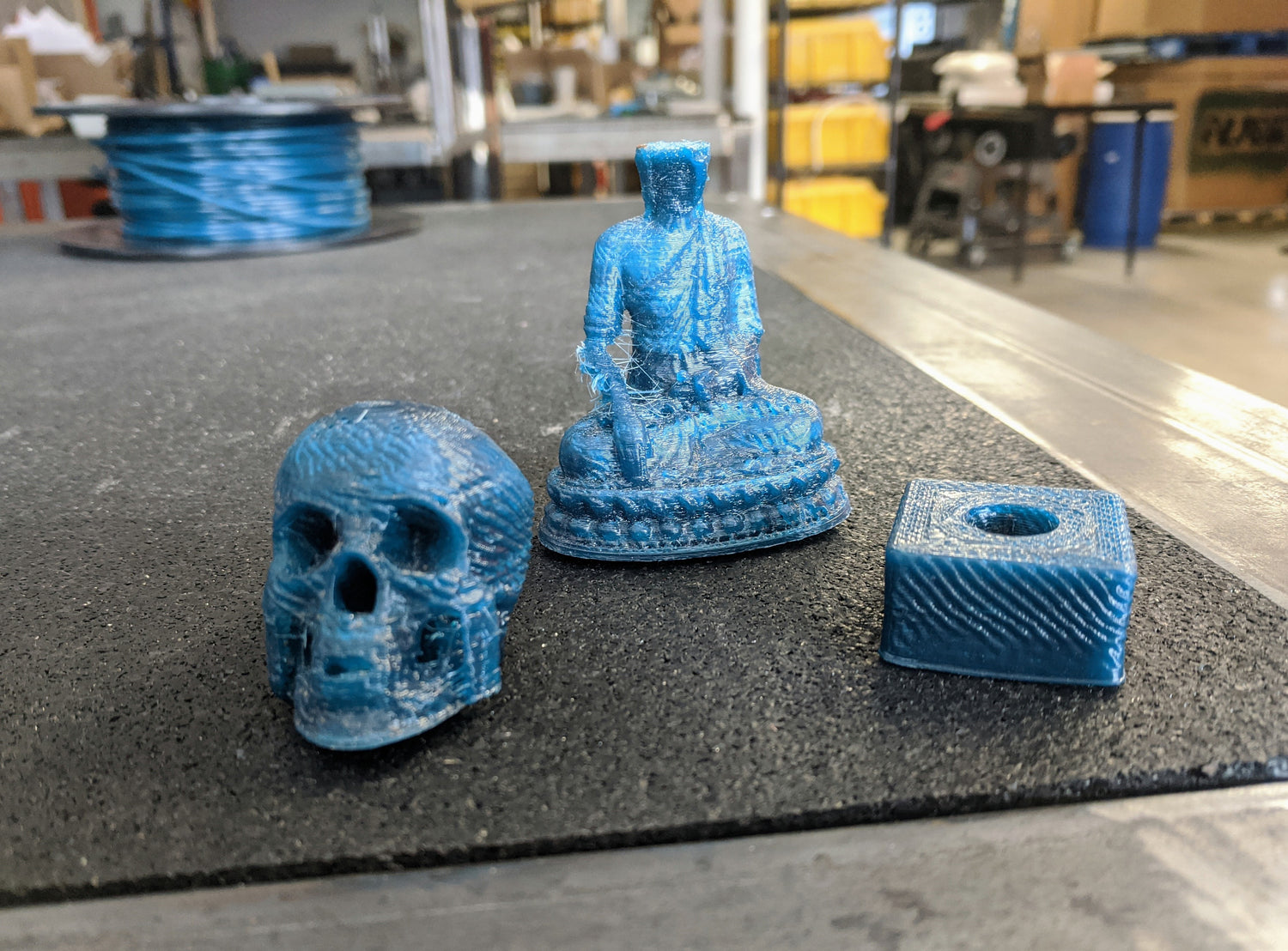
Shenzhen Honyo Prototype specializes in industrial 3D printing solutions for precision investment casting, leveraging advanced additive technologies to produce high-fidelity wax patterns. Our capabilities in Stereolithography (SLA), Selective Laser Sintering (SLS), Multi Jet Fusion (MJF), and Direct Metal Laser Sintering (DMLS) enable the production of complex, dimensionally accurate wax patterns suitable for aerospace, medical, and automotive applications. While DMLS is primarily a metal process, we integrate it into downstream workflows where wax patterns are used in conjunction with metal casting tooling or where hybrid prototyping is required.
Our SLA systems utilize photopolymer resins engineered to mimic the thermal and rheological properties of traditional injection waxes. These resins are low-ash, burnout-clean materials specifically formulated for seamless integration into existing foundry processes. SLA offers the highest resolution among available technologies, making it ideal for intricate geometries and fine surface finishes. Typical applications include turbine blades, dental frameworks, and jewelry masters.
SLS and MJF platforms are adapted for wax-compatible thermoplastic powders that simulate wax behavior during burnout. These technologies provide excellent mechanical stability and are well-suited for medium to high-volume batch production of patterns. SLS delivers robust parts with good dimensional repeatability, while MJF enhances surface consistency and isotropic properties through advanced fusing agent distribution and infrared heating control.
Although DMLS does not directly print wax, it plays a critical role in creating metal molds or tooling used in indirect wax pattern manufacturing. By combining DMLS-fabricated conformal cooling molds with traditional wax injection, we significantly improve cycle times and pattern consistency in high-precision casting workflows.
All wax-equivalent materials undergo rigorous burnout testing to ensure complete pyrolysis without residue, minimizing shell contamination and reducing defect rates in final castings. Post-processing includes support removal, solvent cleaning, and optional vapor polishing to achieve Class A surface finishes.
The following table outlines key technical specifications across our supported technologies:
| Technology | Material Type | Layer Thickness (mm) | Typical Tolerance (mm) | Surface Roughness (Ra, µm) | Max Build Volume (mm) |
|———–|—————|————————|————————–|——————————-|————————|
| SLA | Photopolymer wax-like resin | 0.025 – 0.1 | ±0.1 with ±0.05 per 100 mm | 0.8 – 1.6 | 145 x 145 x 185 |
| SLS | Wax-mimicking thermoplastic powder | 0.1 – 0.15 | ±0.2 | 5.0 – 10.0 | 250 x 250 x 325 |
| MJF | Wax-simulating polyamide-based powder | 0.08 – 0.1 | ±0.2 | 4.0 – 8.0 | 380 x 280 x 380 |
| DMLS | Stainless Steel (for tooling) | 0.02 – 0.05 | ±0.1 with ±0.02 per 100 mm | 10.0 – 15.0 (as-built) | 250 x 250 x 300 |
Each technology is selected based on part complexity, required accuracy, production volume, and downstream casting requirements. Honyo’s engineering team collaborates with clients to determine the optimal process and material configuration, ensuring compatibility with existing foundry infrastructure and achieving first-pass casting success.
From CAD to Part: The Process

From CAD to Casting-Ready Wax Pattern: Integrated Workflow
Honyo Prototype utilizes a streamlined, technology-driven workflow for producing investment casting wax patterns via industrial 3D printing. This process ensures dimensional accuracy, surface finish suitability, and rapid turnaround from digital model to ready-to-cast component. Client-submitted CAD files initiate the sequence, triggering our automated systems for immediate evaluation and production planning.
The workflow commences with the AI-Powered Quotation Engine. Upon secure upload of the.STL or native CAD file to our portal, proprietary algorithms instantly analyze geometry, volume, required tolerances, and material specifications. This AI system cross-references current machine availability, material inventory, and historical production data to generate a precise, binding quote within minutes. Crucially, it flags potential geometric complexities requiring attention during the subsequent Design for Manufacturing review, eliminating manual estimation delays and providing clients with immediate cost and timeline transparency.
Following quote acceptance, the project enters the Critical DFM (Design for Manufacturing) Phase. Our senior manufacturing engineers conduct a rigorous, collaborative review focused specifically on investment casting requirements. Key considerations include optimal sprue and gating system integration within the pattern design, wall thickness analysis to prevent shrinkage or distortion during burnout, strategic support structure placement for minimal post-processing artifact, and verification of critical feature tolerances against the capabilities of our wax printing systems. This stage is not a barrier but a value-add partnership; engineers provide actionable feedback and suggested CAD modifications directly to the client, resolving potential casting defects before production begins, significantly reducing scrap rates and project risk.
Approved designs move directly into Production on Dedicated Wax Printing Systems. Honyo employs industrial-grade material jetting printers specifically engineered for castable wax formulations. These systems deposit micron-precise layers of proprietary low-ash, high-resolution investment casting wax, building patterns with exceptional surface detail (Ra < 15µm) and tight dimensional control essential for high-integrity castings.
| Parameter | Specification | Relevance for Casting |
| :—————– | :——————————– | :———————————- |
| Layer Thickness | 16 – 32 µm | Surface finish, feature resolution |
| X/Y Resolution | 42 µm | Fine detail capture |
| Build Envelope | 200 x 200 x 150 mm | Pattern size capability |
| Material | Proprietary Castable Wax (Low Ash)| Clean burnout, minimal residue |
| Typical Accuracy | ±0.05 mm + 0.1% per 100mm | Dimensional fidelity for casting |
Post-printing, patterns undergo meticulous Finishing and Quality Control. Support structures are carefully removed, followed by vapor smoothing or manual finishing to achieve the required surface quality. Each pattern undergoes 100% dimensional verification against the original CAD using coordinate measuring machines (CMM) or structured light scanning, with critical feature reports provided. Final inspection confirms absence of defects and readiness for the investment shell process. This integrated workflow—from AI-driven quoting through proactive DFM to precision wax printing and validation—ensures Honyo delivers casting patterns that consistently meet the stringent demands of aerospace, medical, and high-end industrial foundries, minimizing iterations and accelerating time-to-cast metal part.
Start Your Project

Start Your Investment Casting Project with Precision 3D Printed Wax Patterns
When it comes to investment casting, the accuracy and surface quality of your master pattern directly influence the final metal component. At Shenzhen Honyo Prototype, we specialize in industrial 3D printing of high-resolution wax patterns designed specifically for seamless integration into traditional and modern casting workflows. Our advanced wax 3D printing technology enables rapid production of complex geometries, undercuts, and fine details that are difficult or impossible to achieve with conventional wax injection tooling—saving time, reducing costs, and accelerating time-to-market.
Whether you’re producing turbine blades, dental prosthetics, jewelry, or aerospace components, our wax printing service delivers consistent dimensional accuracy and excellent surface finish, minimizing post-processing and ensuring a clean burnout with zero ash residue. We use premium casting-grade photopolymer resins engineered to mimic the thermal and flow properties of traditional injection waxes, making them fully compatible with standard shell-building and dewaxing processes.
Our industrial-grade printers offer high throughput and repeatability, allowing us to support both prototyping and low-volume production runs with fast turnaround times. Every pattern is inspected for dimensional compliance and surface integrity before shipment, ensuring you receive only the highest quality output.
To get started, simply provide your 3D CAD file in STL, STEP, or IGES format. Our engineering team will conduct a quick design review to optimize build orientation, support structures, and surface finish parameters—ensuring optimal casting performance. We support batch production of multiple patterns in a single print run, ideal for jewelry tree assemblies or multi-cavity dental frameworks.
Below are the key technical specifications of our wax 3D printing process:
| Parameter | Specification |
|—————————-|———————————————-|
| Layer Thickness | 25–50 μm |
| Build Volume | 140 × 140 × 180 mm |
| Minimum Feature Size | 0.3 mm |
| Surface Roughness (Ra) | 2.5–4.0 μm |
| Dimensional Accuracy | ±0.1 mm (for parts < 50 mm) |
| Material Type | Castable photopolymer (wax-like) |
| Post-Curing | UV and thermal curing for full stability |
| Burnout Performance | Full burnout at 600°C; zero ash residue |
| Common Applications | Jewelry, dental, aerospace, art & sculpture |
All projects are handled with strict confidentiality and adherence to ISO-compliant manufacturing standards. We also offer material certification and first-article inspection reports upon request.
Ready to transform your casting process with advanced 3D printed wax patterns? Contact Susan Leo today to discuss your project requirements, request a quote, or submit your CAD file for a free feasibility assessment.
Susan Leo
Senior Manufacturing Engineer
Shenzhen Honyo Prototype
Email: info@hy-proto.com
🚀 Rapid Prototyping Estimator
Get a rough estimate for CNC/3D Printing costs.