
Contents
Manufacturing Insight: Metal Bending Services
Manufacturing Insight: Precision Metal Bending Services at Shenzhen Honyo Prototype
Metal bending remains a fundamental process within sheet metal fabrication, transforming flat blanks into complex three-dimensional components essential for enclosures, brackets, chassis, and structural elements across industries. At Shenzhen Honyo Prototype, we leverage advanced press brake technology combined with deep engineering expertise to deliver high-precision bending services tailored specifically for prototyping and low-to-medium volume production demands. Our focus extends beyond simple forming; we ensure dimensional accuracy, material integrity, and design feasibility from the initial concept through to the finished part, enabling our clients to accelerate product development cycles with confidence.
Honyo Prototype operates state-of-the-art CNC press brakes capable of handling diverse requirements inherent in rapid prototyping. Our equipment portfolio supports a wide range of material types and thicknesses, critical for validating designs across various applications. Key capabilities are summarized below:
| Parameter | Honyo Prototype Capability Range | Typical Tolerance (Per Bend) |
| :———————- | :————————————- | :————————— |
| Material Thickness | 0.5 mm – 6.0 mm (Mild Steel Equivalent)| ±0.1 mm |
| Max. Bend Length | Up to 3000 mm | ±0.2 mm (Overall Length) |
| Min. Internal Radius | Material thickness (T) dependent | ±0.05 mm |
| Bend Angle Range | 0° – 180° | ±0.5° |
| Common Materials | SS304/316, AL5052/6061, SPCC, SECC, GI | N/A |
Technical execution is where Honyo distinguishes itself in the prototype landscape. Our manufacturing engineers perform rigorous Design for Manufacturability (DFM) analysis on every bending operation before production begins. This proactive review identifies potential issues such as interference, minimum flange lengths, tooling constraints, and springback effects unique to the specified material and geometry. We utilize coining and air bending techniques strategically, selecting the optimal method to achieve required angles and radii while minimizing stress on the material – a critical factor for prototype validation where material properties must remain representative of final production intent. Complex geometries involving multiple bends, offsets, or notches are meticulously sequenced using advanced offline programming to prevent collisions and ensure repeatability, even for one-off parts.
Quality assurance is integrated throughout the bending process. In-process dimensional checks using calibrated optical comparators and CMMs verify critical features against the engineering drawing at defined checkpoints. We strictly adhere to geometric dimensioning and tolerancing (GD&T) callouts, understanding their significance in functional assembly during prototyping phases. Our operators possess extensive experience in compensating for material variance common in smaller lots, applying precise springback adjustments derived from historical data and material certifications. This commitment to precision ensures that prototypes accurately reflect the intended design, providing reliable data for design validation and reducing costly iterations downstream.
Shenzhen Honyo Prototype delivers more than just bending capacity; we provide a critical engineering partnership for your sheet metal development. By combining advanced machinery, stringent process control, and deep fabrication knowledge focused on the unique demands of prototyping, we enable faster time-to-market, reduced risk, and higher quality in your product development journey. Trust Honyo to transform your sheet metal concepts into precise, functional reality.
Technical Capabilities
Technical Capabilities: Precision Metal Bending Services at Shenzhen Honyo Prototype
At Shenzhen Honyo Prototype, our sheet metal fabrication capabilities are engineered to deliver high-precision components for prototyping and low-to-mid volume production. Our integrated manufacturing workflow combines advanced laser cutting, CNC bending, and expert welding techniques to ensure consistent quality, tight tolerances, and rapid turnaround. We specialize in producing complex geometries with repeatability, supporting industries such as electronics, automation, medical devices, and industrial equipment.
Our laser cutting process utilizes high-powered fiber laser technology capable of accurately cutting a wide range of conductive metals. This non-contact method ensures clean, burr-free edges with minimal heat distortion, making it ideal for intricate designs and fine features. Materials processed include cold-rolled steel (SPCC), stainless steel (SUS304, SUS316), aluminum (AL5052, AL6061), and galvanized steel. Laser cutting thickness ranges from 0.5 mm to 3.0 mm, with a positioning accuracy of ±0.03 mm and a repeatability of ±0.02 mm.
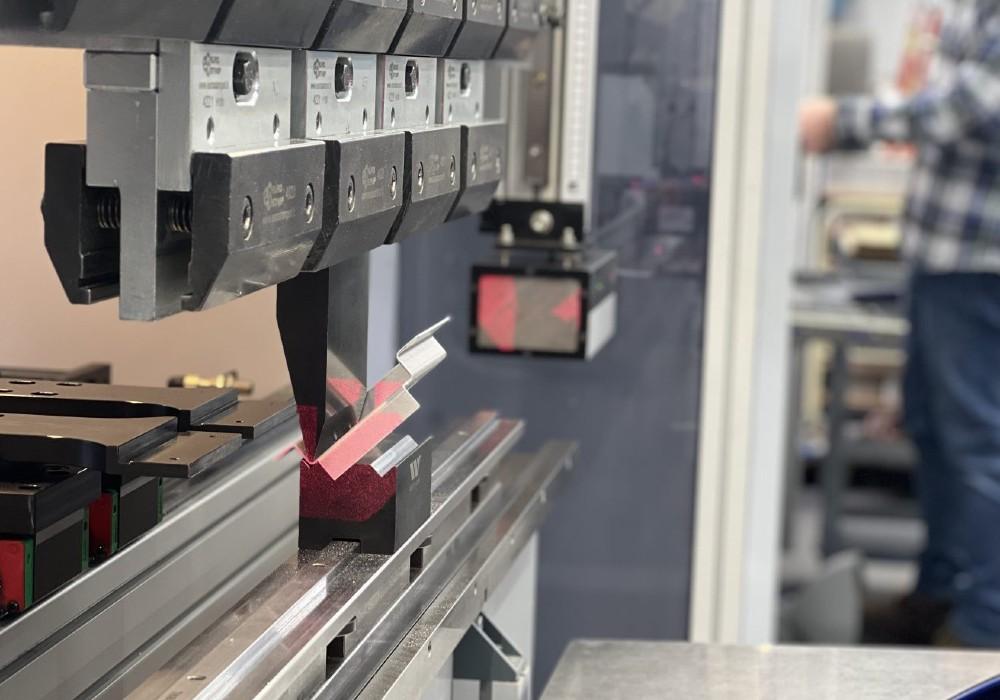
Following cutting, parts proceed to CNC press braking for precision bending. We employ state-of-the-art AMADA and TRUMPF press brakes equipped with automated tool changers and high-resolution backgauges. These systems support bending lengths up to 2,500 mm and accommodate material thicknesses from 0.5 mm to 3.0 mm. Our bending capabilities include standard V-die forming, hemming, and offset bends, with minimum flange lengths as small as 3.0 mm (for 1.0 mm material) depending on geometry and tooling constraints. All bends are performed with real-time angle feedback to maintain angular accuracy within ±0.5°.
Welding operations are carried out using TIG (GTAW) and MIG (GMAW) methods, with spot welding available for sheet assemblies. These processes are ideal for joining dissimilar metals, achieving high cosmetic finishes, and ensuring structural integrity in load-bearing components. All welding is performed by certified technicians following controlled procedures, with post-weld treatments including grinding, polishing, and dimensional inspection as required.
Post-processing options include deburring, tapping, hardware insertion, and surface finishing such as powder coating, anodizing, and plating. All parts undergo first-article and in-process inspections using calibrated CMMs, optical comparators, and laser scanners to verify compliance with engineering drawings.
The table below outlines key tolerances and material specifications for our core sheet metal fabrication services.
| Process | Material Types | Thickness Range (mm) | Typical Tolerance | Key Equipment |
|—————–|————————————|———————-|————————–|——————————|
| Laser Cutting | SPCC, SUS304/316, AL5052/6061, SGCC | 0.5 – 3.0 | ±0.1 mm (cut dimension) | TRUMPF TruLaser 3030 |
| CNC Bending | SPCC, SUS304, AL5052 | 0.5 – 3.0 | ±0.5° (angle), ±0.2 mm (linear) | AMADA HG-1003, TRUMPF TruBend |
| TIG/MIG Welding | Stainless Steel, Aluminum, Carbon Steel | 0.8 – 3.0 | ±0.5 mm (joint alignment) | LINCOLN Electric, PANASONIC |
All processes are supported by in-house engineering review, DFM analysis, and digital work instruction systems to ensure manufacturability and consistency across builds.
From CAD to Part: The Process
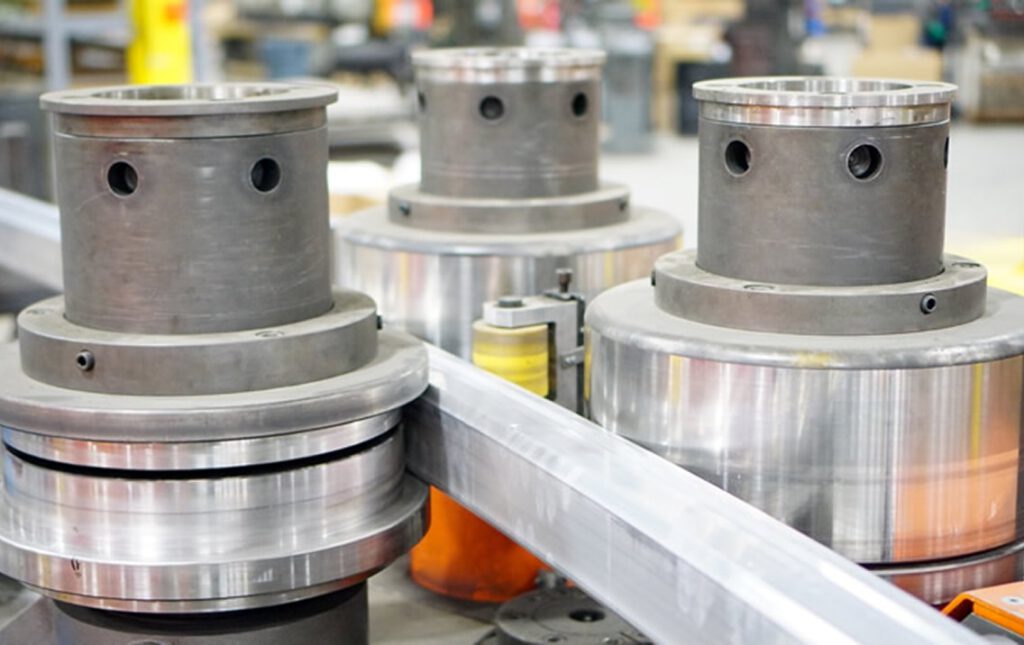
From CAD to Part: Precision Metal Bending Workflow at Shenzhen Honyo Prototype
At Shenzhen Honyo Prototype, our sheet metal bending services integrate advanced technology with engineering expertise to transform CAD models into precision components. This seamless workflow ensures minimal lead times, optimal manufacturability, and consistent quality, critical for B2B clients in aerospace, medical, and industrial sectors. The process begins with an AI-driven quotation phase, progresses through rigorous Design for Manufacturability (DFM) analysis, and culminates in high-accuracy production.
AI-Powered Quoting for Speed and Accuracy
Upon receiving your CAD file (STEP, DWG, or native formats), our proprietary AI engine instantly analyzes geometric complexity, material requirements, and bend sequences. This system cross-references real-time data on material costs, machine availability, and labor rates to generate a precise quote within 2 hours—significantly faster than industry standards. The AI identifies potential high-risk features early, such as acute bend angles or tight tolerances, flagging them for immediate DFM review. This proactive approach eliminates quoting ambiguities and sets clear expectations for delivery timelines and cost drivers.
Collaborative DFM Optimization
Every design undergoes mandatory DFM validation by our senior manufacturing engineers before production. We scrutinize bend radii, flange lengths, and hole-to-bend spacing against material properties and equipment capabilities. Common issues like insufficient relief cuts or springback-induced angular deviation are resolved collaboratively with your design team via annotated reports. For instance, if a specified 0.5mm internal radius exceeds the material’s minimum capability (e.g., for 3mm stainless steel), we propose optimized alternatives that maintain functional integrity while ensuring producibility. This phase reduces prototyping iterations by up to 70% and prevents costly rework.
Precision Production Execution
Approved designs move to our CNC press brake fleet, featuring Amada and Trumpf systems with 100–300-ton capacities and ±0.05mm positional accuracy. Each job begins with digital setup: the CAM software auto-generates tooling sequences and compensates for material springback using validated k-factor libraries. Operators perform first-article inspections against your GD&T callouts, verifying critical dimensions like bend angles and flatness. Statistical process control (SPC) monitors key parameters in real time, with laser micrometers confirming tolerances before batch release. All bent components undergo deburring and optional finishing (e.g., powder coating) within our integrated facility, ensuring end-to-end traceability.
Our bending capabilities support diverse requirements, as summarized below:
| Parameter | Range/Specification |
|————————|—————————|
| Material Thickness | 0.5 mm – 6.0 mm |
| Max. Bend Length | 3,000 mm |
| Min. Internal Radius | 0.8 × Material Thickness |
| Angular Tolerance | ±0.5° |
| Repeatability (SPC) | ±0.1° (3σ) |
This structured workflow—from AI-automated quoting through engineering-led DFM to closed-loop production—ensures your sheet metal components meet exact specifications while accelerating time-to-market. By embedding manufacturability into the earliest design stages, Honyo Prototype delivers bending solutions that balance precision, cost efficiency, and scalability for low-to-mid volume production runs.
Start Your Project
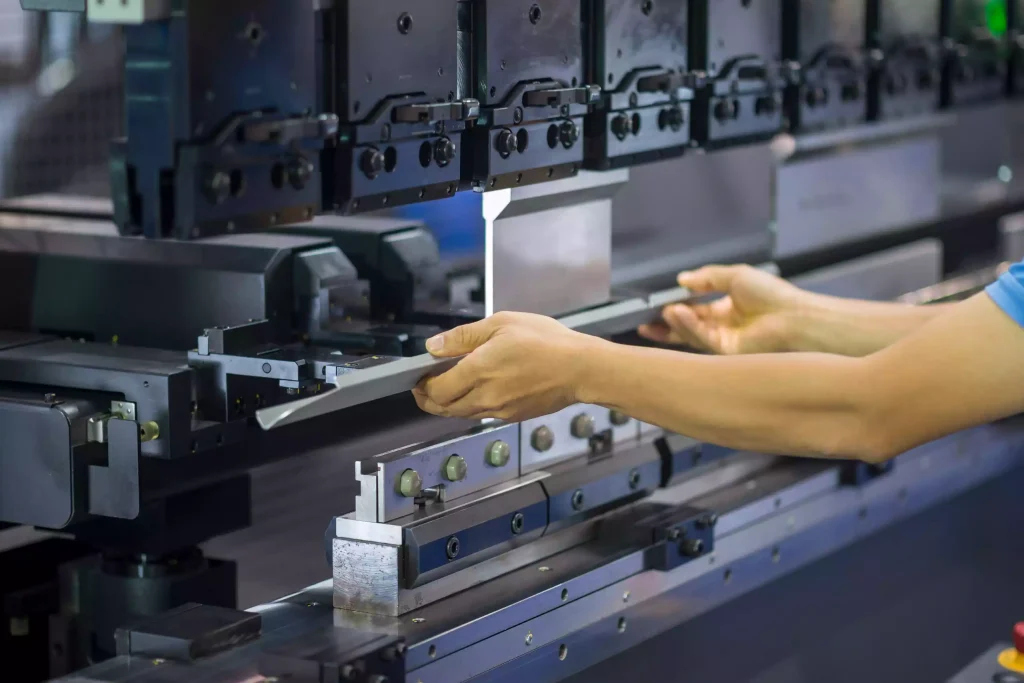
Start Your Metal Bending Project with Precision Engineering from Shenzhen Honyo Prototype
When it comes to high-accuracy metal bending services, Shenzhen Honyo Prototype delivers unmatched quality, speed, and technical expertise in sheet metal fabrication. Whether you’re developing a single prototype or scaling up to low-to-mid volume production, our advanced bending capabilities ensure your components meet exact design specifications with consistent repeatability. Our facility in Shenzhen is equipped with state-of-the-art CNC press brakes, automated tooling systems, and skilled technicians trained in precision forming techniques for a wide range of metals and thicknesses.
At Honyo Prototype, we understand that every project begins with a vision—backed by tight tolerances, material requirements, and delivery timelines. That’s why we offer a seamless onboarding process designed to transition your design from concept to physical part efficiently. Our engineering team collaborates directly with clients during the design-for-manufacturability (DFM) phase to optimize bending sequences, minimize material waste, and ensure structural integrity without compromising on aesthetic or functional performance.
We support a broad spectrum of materials including cold-rolled steel (SPCC), stainless steel (SUS304, SUS316), aluminum (AL5052, AL6061), and galvanized iron, with thicknesses ranging from 0.5 mm to 10 mm. Our bending precision ensures tight angular tolerances of ±0.2° and linear accuracy within ±0.1 mm, meeting the demands of industries such as automation, telecommunications, medical devices, and industrial equipment.
To streamline your project launch, we accept native CAD files including .STEP, .IGES, .DWG, and .DXF formats. Our system automatically performs preliminary geometry analysis to detect potential forming issues before quoting, reducing back-and-forth and accelerating time-to-quote.
Technical Specifications Overview
| Parameter | Capability |
|—————————-|——————————————-|
| Material Types | SPCC, SUS304, SUS316, AL5052, AL6061, GI |
| Thickness Range | 0.5 mm – 10 mm |
| Bend Length Capacity | Up to 3,200 mm |
| Angular Tolerance | ±0.2° |
| Linear Dimension Tolerance | ±0.1 mm |
| Maximum Bending Force | 1,000 tons |
| Supported File Formats | .STEP, .IGES, .DWG, .DXF, .PDF (with notes)|
All bending operations are supported by in-process quality checks and first-article inspection reports upon request. We also offer optional post-bend services such as welding, tapping, countersinking, and surface finishing—including powder coating, anodizing, and plating—to provide fully assembled subcomponents ready for integration.
Starting your project is simple. Share your design files and requirements with Susan Leo, our dedicated manufacturing coordinator, who will guide you through the quoting and production planning process. With fast turnaround times, transparent communication, and a customer-first approach, Honyo Prototype ensures your metal bending needs are met with precision and reliability.
Contact Susan Leo today at info@hy-proto.com to discuss your project and receive a competitive quote within 24 hours. Let Honyo Prototype be your trusted partner in high-quality sheet metal fabrication.
🚀 Rapid Prototyping Estimator
Get a rough estimate for CNC/3D Printing costs.