
Contents
Manufacturing Insight: Anodized Aluminum Service
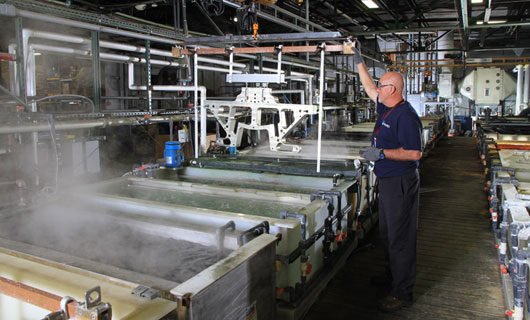
Manufacturing Insight: Anodized Aluminum Service at Shenzhen Honyo Prototype
Anodizing is a critical electrochemical surface finishing process essential for enhancing the performance and longevity of aluminum components, particularly those produced via precision CNC machining. This process transforms the aluminum substrate into a durable, corrosion-resistant, and electrically insulating oxide layer integral to the metal itself. Unlike paint or plating, the anodic layer cannot chip or peel, making it indispensable for aerospace, medical, automotive, and high-end consumer electronics applications where reliability under stress, exposure to harsh environments, or stringent aesthetic requirements are paramount. At Shenzhen Honyo Prototype, we integrate anodizing seamlessly within our end-to-end CNC machining workflow, ensuring geometric precision from raw billet to finished, certified part.
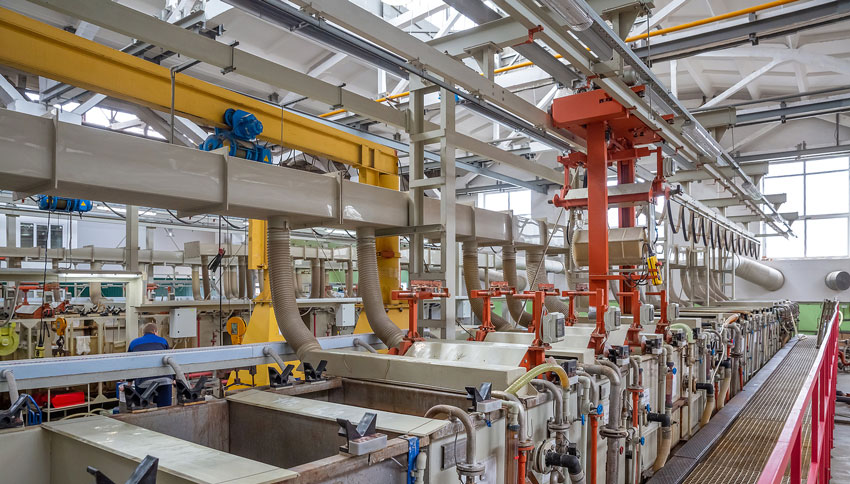
The core anodizing process involves multiple controlled stages following CNC machining. Components are meticulously cleaned and pre-treated to remove contaminants and ensure uniform surface activation. They are then submerged in an electrolytic bath, typically sulfuric acid for Type II (standard anodizing) or sulfuric/organic acid mixtures for Type III (hardcoat anodizing), where a direct current is applied. Aluminum acts as the anode, causing oxygen ions to react with the surface metal, building the porous oxide layer. The layer thickness and density are precisely controlled by voltage, current density, bath temperature, and immersion time. For colored finishes, the porous structure is subsequently sealed in hot deionized water or nickel acetate solutions, locking in dyes if coloration is specified. This sealing step is vital for maximizing corrosion resistance and wear properties.
Honyo Prototype leverages advanced, in-house anodizing capabilities specifically tailored for low-volume, high-mix prototyping and bridge production demands common in our client base. We prioritize process control and material compatibility to deliver consistent, high-integrity finishes that meet exacting engineering specifications without compromising the dimensional accuracy achieved during CNC machining. Our technical expertise spans common aluminum alloys including 6061-T6 and 7075-T6, ensuring optimal results for diverse functional and cosmetic requirements.
Key anodizing specifications supported at Honyo Prototype include:
| Parameter | Type II (Standard) | Type III (Hardcoat) | Notes |
| :—————– | :—————– | :—————— | :————————————- |
| Thickness Range | 5 – 25 μm | 25 – 100+ μm | Custom thicknesses within standard ranges |
| Standard Colors | Clear, Black, Red, Blue, Gold | Primarily Clear/Gray | Custom color matching available |
| Lead Time | 3 – 5 Days | 5 – 7 Days | After CNC completion; expedited options |
| Common Alloys | 6061, 6063, 7075 | 6061, 7075 | Other alloys evaluated per project |
| Quality Standard | ASTM B580, MIL-A-8625 | AMS 2469, MIL-A-8625 | Full material & process certification |
Rigorous quality assurance underpins our anodizing service. We employ standardized testing protocols including adhesion checks per ASTM D3359, coating thickness verification via eddy current or cross-section microscopy, and corrosion resistance validation through neutral salt spray testing (ASTM B117). Every batch undergoes visual inspection against defined cosmetic standards. This disciplined approach ensures the anodic layer provides the expected functional benefits—superior wear resistance, enhanced electrical insulation, and long-term protection against oxidation—while maintaining the exacting tolerances demanded by precision-engineered parts.
Partnering with Honyo Prototype for anodized aluminum components guarantees access to a vertically integrated manufacturing solution where material science, precision machining, and surface engineering converge. We translate complex technical requirements into reliable, high-performance finished goods, accelerating your path from prototype to production with confidence in the integrity of every anodized surface.
Technical Capabilities
Technical Capabilities: Anodized Aluminum Manufacturing at Shenzhen Honyo Prototype
Shenzhen Honyo Prototype specializes in high-precision CNC machining services for anodized aluminum components, serving industries that demand durability, precision, and aesthetic consistency. Our expertise spans 3-axis, 4-axis, and 5-axis milling, as well as precision turning, enabling us to produce complex geometries with tight tolerances and superior surface finishes. These capabilities are optimized for post-machining anodization, ensuring dimensional accuracy and surface integrity are maintained throughout the process.
Our CNC machining centers are equipped with advanced tooling, real-time monitoring systems, and high-speed spindles to deliver consistent part quality across prototyping and low-to-mid volume production runs. We focus on aluminum alloys that are ideal for anodizing, particularly 6061-T6 and 7075-T6, due to their excellent machinability, strength-to-weight ratio, and anodizing response. These materials are widely used in aerospace, medical devices, automotive, and consumer electronics applications where corrosion resistance and wear performance are critical.
Anodized aluminum components require precise control over surface finish and dimensional tolerances prior to the anodization process. At Honyo Prototype, we machine parts to final dimensions, accounting for the minimal growth that occurs during anodizing—typically 0.0002” to 0.0005” per surface for Type II (sulfuric acid) anodizing. This pre-adjustment ensures that post-anodized parts remain within specified tolerance ranges.
We maintain tight process control to achieve tolerances down to ±0.0002” (±0.005 mm) on critical features, especially in multi-axis setups where complex contours and deep cavities are machined in a single setup. Our 5-axis simultaneous machining capability allows for reduced fixturing, improved accuracy, and the ability to machine undercuts and angled features without manual repositioning. Similarly, our CNC turning centers support live tooling and sub-spindles, enabling complete turn-mill operations for fully finished parts in one cycle.
All machined aluminum components undergo thorough deburring, cleaning, and inspection before being sent to our trusted anodizing partners, who follow strict quality protocols for coating thickness, adhesion, and color consistency. We support both clear and colored anodizing (including black, red, blue, and custom colors) with Type II and Type III (hard coat) specifications.
The following table outlines our standard technical specifications for anodized aluminum machining services:
| Parameter | Specification |
|——————————-|————-|
| Material Options | 6061-T6, 7075-T6, 2024-T3, 5052-H32 |
| Machining Processes | 3-axis, 4-axis, 5-axis CNC milling; CNC turning with live tooling |
| Standard Tolerances | ±0.005 mm (±0.0002”) |
| Tight Tolerance Capability| ±0.002 mm (±0.0001”) on critical features |
| Surface Finish (as-machined) | Ra 0.8 μm (32 μin) standard; down to Ra 0.4 μm (16 μin) with fine finishing |
| Anodizing Types Supported | Type II (Standard), Type III (Hard Anodize) |
| Typical Anodize Thickness | 12–25 μm (Type II), 25–50 μm (Type III) |
| Color Options | Clear, Black, Red, Blue, Gold, Custom (via dye) |
| Max Work Envelope (Milling) | 1000 x 600 x 500 mm |
| Max Work Envelope (Turning) | Ø300 mm x 500 mm length |
With integrated quality assurance using CMM, optical comparators, and surface profilometers, Shenzhen Honyo Prototype ensures every anodized aluminum component meets rigorous performance and aesthetic standards.
From CAD to Part: The Process
From CAD to Anodized Part: Honyo Prototype’s Precision Workflow
At Shenzhen Honyo Prototype, delivering high-quality anodized aluminum components requires a rigorously defined workflow that begins long before machining starts. Our process integrates digital efficiency with hands-on engineering expertise to ensure optimal results for precision-critical applications, moving seamlessly from initial inquiry through final anodized part delivery.
The journey initiates with our AI-Powered Quoting System. Upon receiving a client’s CAD file (STEP, IGES, or native formats preferred), our proprietary AI engine performs an immediate preliminary analysis. This system rapidly assesses geometric complexity, material requirements, and initial manufacturability flags, generating a highly accurate preliminary quote within hours. Crucially, it identifies potential high-risk features early, such as excessively thin walls, deep cavities, or critical tolerances that may impact the anodizing process, allowing for proactive client consultation before formal order placement. This stage significantly reduces quoting latency while setting realistic expectations for the subsequent engineering review.
Formal production commences only after successful Engineering-Driven DFM (Design for Manufacturability) Review. Our senior manufacturing engineers conduct a meticulous, hands-on analysis beyond the AI scan. We focus specifically on anodizing implications: verifying adequate racking point locations to ensure uniform current distribution, identifying areas requiring non-conductive masking to preserve critical dimensions or surface finishes, confirming hole diameters and thread depths can withstand the anodizing bath without plugging, and assessing edge conditions to prevent burning. We scrutinize all critical dimensions against achievable anodized growth rates (typically 50% inward, 50% outward) and surface roughness requirements post-anodizing. Client collaboration is essential here; we provide specific, actionable recommendations for design optimization to eliminate potential anodizing defects like uneven color, pitting, or dimensional non-conformance, ensuring the design is truly production-ready.
Only upon DFM sign-off does Precision Production & Anodizing begin. CNC machining employs high-rigidity 3, 4, and 5-axis centers with strict toolpath optimization for aluminum, maintaining tight tolerances (±0.025mm typical) while ensuring optimal surface finish for anodizing adhesion. Machined parts undergo thorough ultrasonic cleaning and precision chemical pre-treatment (de-greasing, etching, desmutting) to create a uniformly reactive surface. Anodizing occurs in tightly controlled electrolytic baths meeting MIL-STD-8625 standards. Key parameters are rigorously monitored:
| Parameter | Type II (Sulfuric) | Type III (Hardcoat) | Standard Tolerance |
|——————–|——————–|———————|——————–|
| Coating Thickness | 5 – 25 µm | 25 – 100+ µm | ±3 µm |
| Operating Temp | 18 – 22°C | 8 – 12°C | ±1°C |
| Voltage Range | 12 – 18 V DC | 24 – 30 V DC | ±0.5 V |
| Color Options | Clear, Black, Bronze, Custom | Primarily Clear/Black | Per AAMA 611 |
Post-anodizing, parts receive hot DI water sealing to close the porous structure, ensuring maximum corrosion resistance and color stability. Final inspection validates dimensions (accounting for coating growth), adhesion, color consistency, and corrosion resistance per ASTM B117 or client specifications before packaging and shipment. This integrated workflow guarantees that every anodized aluminum component leaving Honyo Prototype meets the highest standards of quality and performance.
Start Your Project
Start Your Project with Precision Anodized Aluminum Components from Shenzhen Honyo Prototype
When it comes to high-performance, durable, and aesthetically refined metal parts, anodized aluminum stands out as a preferred choice across industries such as aerospace, medical devices, consumer electronics, and industrial automation. At Shenzhen Honyo Prototype, we specialize in CNC machining services that deliver precision-engineered aluminum components with professional-grade anodizing finishes—ensuring your prototypes and low-volume production parts meet exacting standards.
Starting your project with us is simple, efficient, and backed by over a decade of expertise in rapid prototyping and precision manufacturing. Our integrated workflow combines advanced 3-, 4-, and 5-axis CNC machining with Type II (sulfuric acid) and Type III (hardcoat) anodizing processes, enabling tight tolerances, superior corrosion resistance, and customizable surface finishes in a range of colors including clear, black, red, blue, and gold.
We understand that every project begins with a vision. Whether you’re developing a functional prototype, preparing for pilot production, or scaling up to low-volume manufacturing, our engineering team collaborates closely with clients to optimize part design, material selection, and finishing requirements. Our facility in Shenzhen is equipped with state-of-the-art CNC centers and in-house anodizing lines, allowing us to maintain full control over quality, lead time, and consistency.
To ensure your components meet both performance and aesthetic goals, we adhere to strict quality control protocols. All anodized parts undergo dimensional inspection, coating thickness verification, and adhesion testing per international standards. Our ISO 9001-certified processes guarantee repeatability and reliability, project after project.
Below are key specifications for our anodized aluminum CNC machining service:
| Parameter | Specification |
|——————————|————————————————|
| Material Options | 6061-T6, 7075-T6, 2024-T3, 5052, and custom alloys |
| Anodizing Types | Type II (Standard), Type III (Hard Anodizing) |
| Coating Thickness | Type II: 10–25 μm; Type III: 25–50 μm (custom up to 100 μm) |
| Color Options | Clear, Black, Red, Blue, Gold, Green, Custom |
| Tolerance (Machining) | ±0.025 mm |
| Maximum Part Size | 800 mm × 600 mm × 400 mm |
| Lead Time | 5–7 days (standard), expedited options available |
| Finishes Available | Matte, Smooth, Textured, As-Machined |
| Certifications | ISO 9001:2015, RoHS Compliant |
All projects begin with a comprehensive design for manufacturability (DFM) review, ensuring optimal performance and cost-efficiency from the outset. Our engineering team provides actionable feedback on wall thickness, tolerances, hole depth, and anodizing compatibility—helping you avoid costly revisions and delays.
Ready to bring your design to life? Contact Susan Leo, our dedicated Project Manager, to initiate your anodized aluminum CNC machining project. With her technical expertise and client-focused approach, Susan ensures seamless communication, on-time delivery, and consistent quality throughout the manufacturing cycle.
Email her directly at info@hy-proto.com with your 3D CAD files, technical requirements, and project timeline. We offer free quotations within 4 business hours and welcome both prototype and batch production orders.
At Shenzhen Honyo Prototype, we don’t just manufacture parts—we engineer solutions. Let us be your trusted partner in precision anodized aluminum manufacturing.
🚀 Rapid Prototyping Estimator
Get a rough estimate for CNC/3D Printing costs.