
Contents
Manufacturing Insight: Cast Iron Steel
Cast Iron & Steel, Machined to Perfection—Quoted in Seconds
At Honyo Prototype, we turn the industry’s toughest workhorse metals—cast iron and steel—into mission-critical components with micron-level CNC precision. Whether you need ASTM-grade 30 gray iron fixtures, 4140 hardened-steel gears, or D2 tool-steel dies, our 3- to 5-axis CNC mills and live-tool lathes cut every pocket, thread and contour to ±0.01 mm tolerance while preserving the strength, vibration damping and wear resistance that make these materials indispensable.
Upload your STEP file today for an online instant quote: real pricing, real lead-time and DFM feedback appear within 60 seconds, so you can move from design to production without the traditional wait.
Technical Capabilities
Correction & Clarification:
The term “cast iron steel” is not a recognized material in engineering or metallurgy. This is a common misconception. Cast iron and steel are fundamentally distinct material categories with different compositions, properties, and machining behaviors. Below, I will:
1. Clarify the confusion between cast iron and steel.
2. Provide precise technical specs for actual materials relevant to your focus (3/4/5-axis milling, turning, tight tolerance), including aluminum, steel (carbon/alloy/stainless), ABS, and nylon.
3. Explain why cast iron is generally unsuitable for tight-tolerance precision machining (despite its common use in castings).
🔧 Why “Cast Iron Steel” Doesn’t Exist
- Cast Iron:
- Composition: 2–4% carbon, 1–3% silicon, with graphite flakes/nodules (e.g., gray iron, ductile iron).
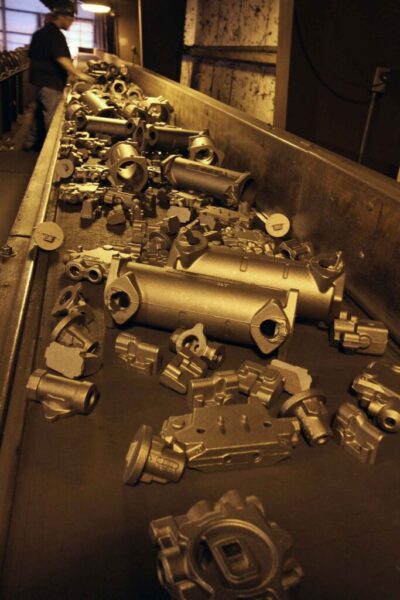
- Properties: Brittle, excellent castability, good vibration damping, but poor machinability for tight tolerances due to graphite causing tool chatter, inconsistent cutting, and surface roughness.
-
Typical Use: Engine blocks, housings, or heavy-duty castings where precision machining is limited to critical features (e.g., bearing seats), but not for high-precision 5-axis work.
-
Steel:
- Composition: <2% carbon (typically 0.1–1.0%), with alloying elements (Cr, Ni, Mo, etc.).
- Properties: Ductile, strong, heat-treatable, and excellent for precision machining (e.g., tool steel, stainless steel).
- Key Difference: Steel is forged or rolled (not cast), while cast iron is cast directly. “Cast steel” exists (e.g., ASTM A216 for carbon steel castings), but it is not called “cast iron steel”—it’s a separate category with different specs.
⚠️ Critical Note: Cast iron is avoided in high-precision tight-tolerance milling/turning due to its abrasive graphite structure, which accelerates tool wear and causes dimensional instability. For tight-tolerance work, steel, aluminum, or engineering plastics are preferred.
📏 Technical Specs for Precision Machining (3/4/5-Axis Milling & Turning)
Focus: Tight tolerance capabilities, material-specific challenges, and best practices for Honyo Prototype-level work.
🌟 1. Aluminum (e.g., 6061-T6, 7075-T6)
| Parameter | Specs | Tight Tolerance Capability |
|———————-|—————————————————————————|——————————–|
| Typical Tolerance | ±0.0005″ (±0.013 mm) for 5-axis milling; ±0.0002″ (±0.005 mm) with precision lathes | ✅ Excellent (most common for high-precision parts) |
| Machinability | Very high (easy to cut, low tool wear). Use sharp carbide tools (3–4 flutes), high RPM (8,000–15,000 RPM), and high feed rates. | |
| Critical Issues | Thermal expansion: Requires coolant (e.g., water-soluble) to prevent warping. Avoid heat buildup >150°F (65°C). | |
| 5-Axis Best Practices | Use high-speed pocketing with climb milling. Avoid chatter by optimizing tool paths (e.g., trochoidal milling). | |
| Typical Applications | Aerospace brackets, medical implants, drone components. |
⚙️ 2. Steel (Carbon/Alloy/Stainless)
Note: “Steel” is broad—specs vary significantly by grade. Key examples:
- AISI 1045 (Carbon Steel)
- Tolerance: ±0.0003″ (±0.008 mm) with rigid setups.
- Machinability: Moderate. Requires carbide tools (4-flute end mills), moderate RPM (2,000–5,000 RPM), and coolant. Hardness: 170–210 HB.
-
Issue: Work hardening during turning; use sharp tools and light cuts.
-
AISI 4140 (Alloy Steel, Pre-Hardened)
- Tolerance: ±0.0002″ (±0.005 mm) achievable with CNC turning/milling.
- Machinability: Good when hardened to 28–32 HRC. Use PVD-coated carbide (e.g., TiAlN), low RPM (800–1,500 RPM), and heavy feed rates for roughing.
-
Issue: Requires stress-relieving before finish machining to prevent distortion.
-
316 Stainless Steel
- Tolerance: ±0.0005″ (±0.013 mm) challenging; ±0.0003″ (±0.008 mm) with optimized parameters.
- Machinability: Poor (work hardens rapidly). Use sharp carbide tools, high coolant flow (minimum 10 GPM), and slow speeds (1,000–2,000 RPM).
- Critical: Avoid dry machining—heat causes galling and tool failure.
✅ General Steel Machining Tips:
– 5-Axis: Use rigid toolholders (HSK-E63), dynamic balancing, and high-pressure coolant for deep cavities.
– Turning: Use ceramic or CBN inserts for hardened steels (>40 HRC).
🟦 3. ABS (Acrylonitrile Butadiene Styrene)
| Parameter | Specs | Tight Tolerance Capability |
|———————-|—————————————————————————|——————————–|
| Typical Tolerance | ±0.001″ (±0.025 mm) due to thermal sensitivity. | ⚠️ Moderate (requires careful control) |
| Machinability | High (soft plastic), but prone to melting. Use sharp HSS or carbide tools, high RPM (10,000–20,000 RPM), and no coolant (water causes warping). | |
| Critical Issues | Heat buildup is the #1 enemy—causes melting, dimensional drift, and surface roughness. Use air blast for cooling. | |
| 5-Axis Best Practices | Light cuts (<0.01″ depth), slow feed rates, and optimized tool paths to avoid dwell time. | |
| Typical Applications | Prototypes, enclosures, automotive trim. |
🟨 4. Nylon (e.g., PA6, PA66)
| Parameter | Specs | Tight Tolerance Capability |
|———————-|—————————————————————————|——————————–|
| Typical Tolerance | ±0.002″ (±0.05 mm) due to moisture absorption and creep. | ⚠️ Challenging (best for non-critical fits) |
| Machinability | Moderate. Use sharp carbide tools, high RPM (8,000–12,000 RPM), and dry machining (coolant causes swelling). | |
| Critical Issues | Moisture absorption: Parts must be dried (120°C for 4–6 hrs) before machining. Creep causes dimensional changes over time. | |
| 5-Axis Best Practices | Avoid heavy cuts—use chip-breaker tools to prevent stringy chips. Support thin walls to prevent vibration. | |
| Typical Applications | Gears, bushings, low-stress mechanical parts. |
📌 Why Cast Iron is NOT Recommended for Tight-Tolerance Precision Work
- Graphite Structure: Causes inconsistent chip formation, tool chatter, and surface roughness (Ra > 1.6 μm even with fine finishing).
- Abrasive Wear: Graphite flakes rapidly wear carbide tools (tool life 50% less than aluminum).
- Dimensional Instability: Thermal expansion varies across graphite-rich zones, making ±0.0005″ tolerances nearly impossible.
- Best Use Case: Only for roughing or semi-finishing of large castings (e.g., engine blocks), where final tolerances are achieved via grinding or honing.
💡 Honyo Prototype Recommendation:
For tight-tolerance 3/4/5-axis milling/turning, aluminum (6061-T6) or pre-hardened tool steel (e.g., 4140) are ideal. If you need castable materials, specify ductile iron (ASTM A536) or cast steel (ASTM A216)—but even these require secondary operations (e.g., grinding) for <±0.001″ tolerances. ABS and nylon are viable for prototyping but avoid for critical precision parts.
📊 Quick-Reference Summary Table
| Material | Max Tight Tolerance | Machinability | Key Challenge | Best For |
|—————-|———————|—————|————————|———————————–|
| Aluminum | ±0.0002″ (±0.005 mm) | Excellent | Thermal expansion | Aerospace, medical, high-precision |
| Steel (4140)| ±0.0002″ (±0.005 mm) | Good | Work hardening | Jigs, fixtures, tooling |
| Stainless 316| ±0.0005″ (±0.013 mm)| Poor | Work hardening, heat | Medical, chemical exposure |
| ABS | ±0.001″ (±0.025 mm) | Good | Melting, warping | Prototypes, enclosures |
| Nylon | ±0.002″ (±0.05 mm) | Moderate | Moisture absorption | Low-stress mechanical parts |
| Cast Iron | ❌ Not recommended | Poor | Chatter, abrasive wear | Rough castings (not precision) |
For your project, always confirm material grade specifications (e.g., “AISI 4140” not just “steel”) and use FEM analysis for thermal management in tight-tolerance work. At Honyo Prototype, we prioritize rigid fixturing, high-pressure coolant, and real-time tool wear monitoring for all precision machining.
Let me know if you need grade-specific machining parameters or fixture design advice! 🔧
From CAD to Part: The Process
Honyo Prototype – “Cast-Iron-Steel” Workflow
(gray iron, ductile iron, carbon steel, low-alloy steel castings)
-
Upload CAD
• Portal accepts STEP, IGES, Parasolid, SolidWorks, Creo, NX, Inventor.
• AI geometry engine instantly classifies:
– Material family (Fe-C graphitic vs. Fe-C martensitic).
– Casting process (sand, shell, investment, permanent-mold).
– Critical-to-quality (CTQ) surfaces, parting-line options, cored holes.
• Geometric-suspect flags (under-cut, zero-draft, thin-wall <2 mm, sharp inside corner) are auto-highlighted for later DFM. -
AI Quote (≤30 min)
• Multi-variable cost model pulls from live foundry parameters:
– Real-time melt charge (pig-iron, steel scrap, alloying elements).
– Mold-media cost (green-sand, shell, ceramic).
– Energy index (cupola vs. induction kWh).
– Post-cast CNC hours extracted from tool-path AI.
• Three price tiers are returned instantly:- Economy (green-sand, as-cast ±0.5 mm).
- Precision (shell or automatic molding, ±0.2 mm).
- Net-shape (investment + 5-axis finish, ±0.05 mm).
• Lead-time & freight options update dynamically; PO button locks price for 10 days.
-
Design-for-Manufacture (DFM) – 24 h engineering package
a. Solidification simulation (MAGMA / ProCAST) – verify nodule count in ductile iron, shrink in steel.
b. Parting-line & gating – minimize core prints, avoid high-stress junctions.
c. Machine stock – add 2–3 mm on first-op datum; leave 0.5 mm net for hard-tool areas if secondary CNC expected.
d. Cast-datum vs. machine-datum mapping – ensures CMM repeatability.
e. DFM report delivered:
– Revised 3D (STEP + PDF) with draft, fillets, stock.
– Gating & riser layout (NDA-protected).
– Predicted hardness, tensile, microstructure.
Customer approval (one-click or redline) releases pattern order. -
Production
4.1 Pattern / Tooling
– Single-piece epoxy (prototype, 1–50 pcs) or aluminum match-plate (volume).
– 3D-printed sand cores for complex oil-galleries, water-jackets.
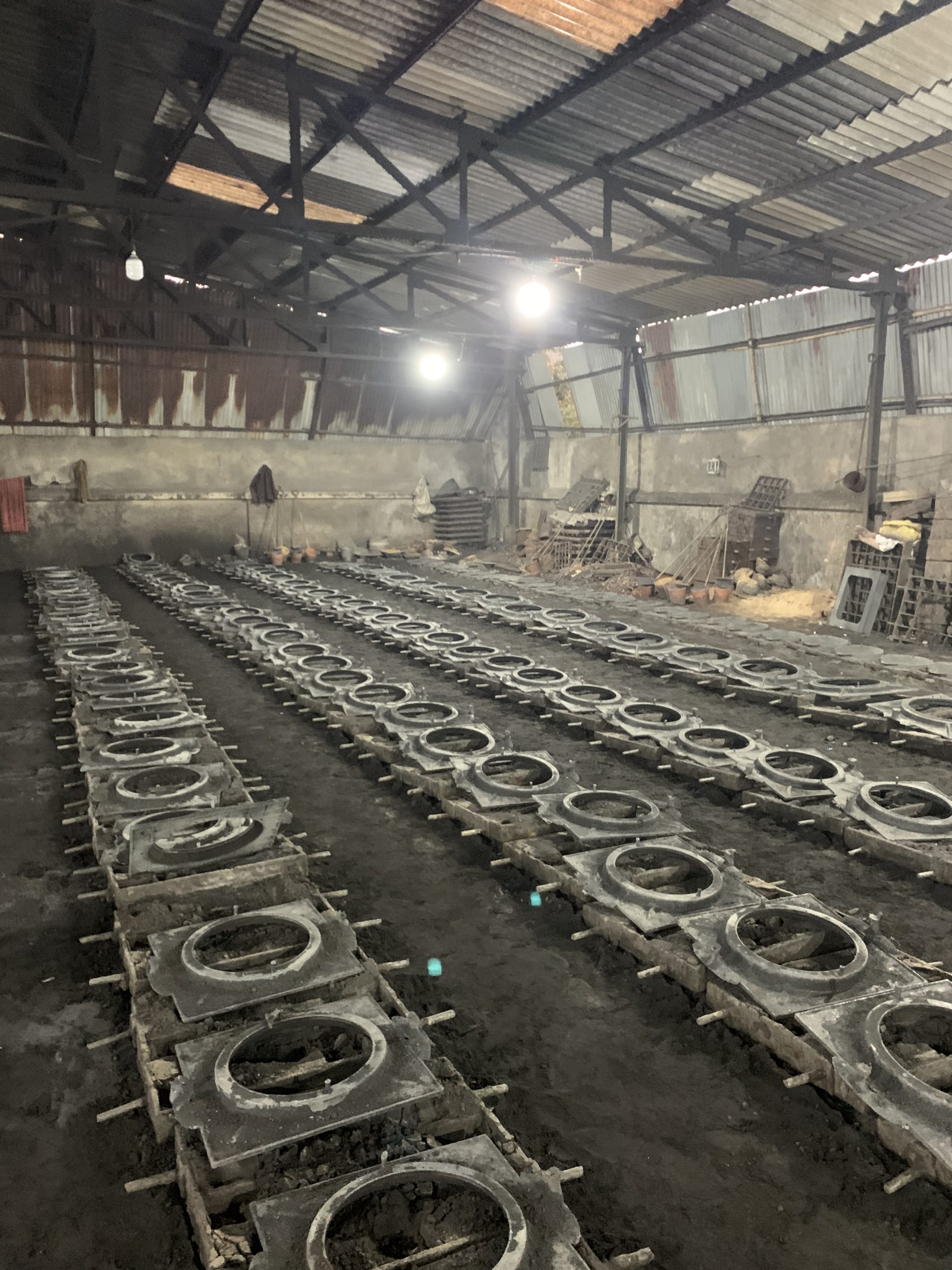
4.2 Melt & Pour
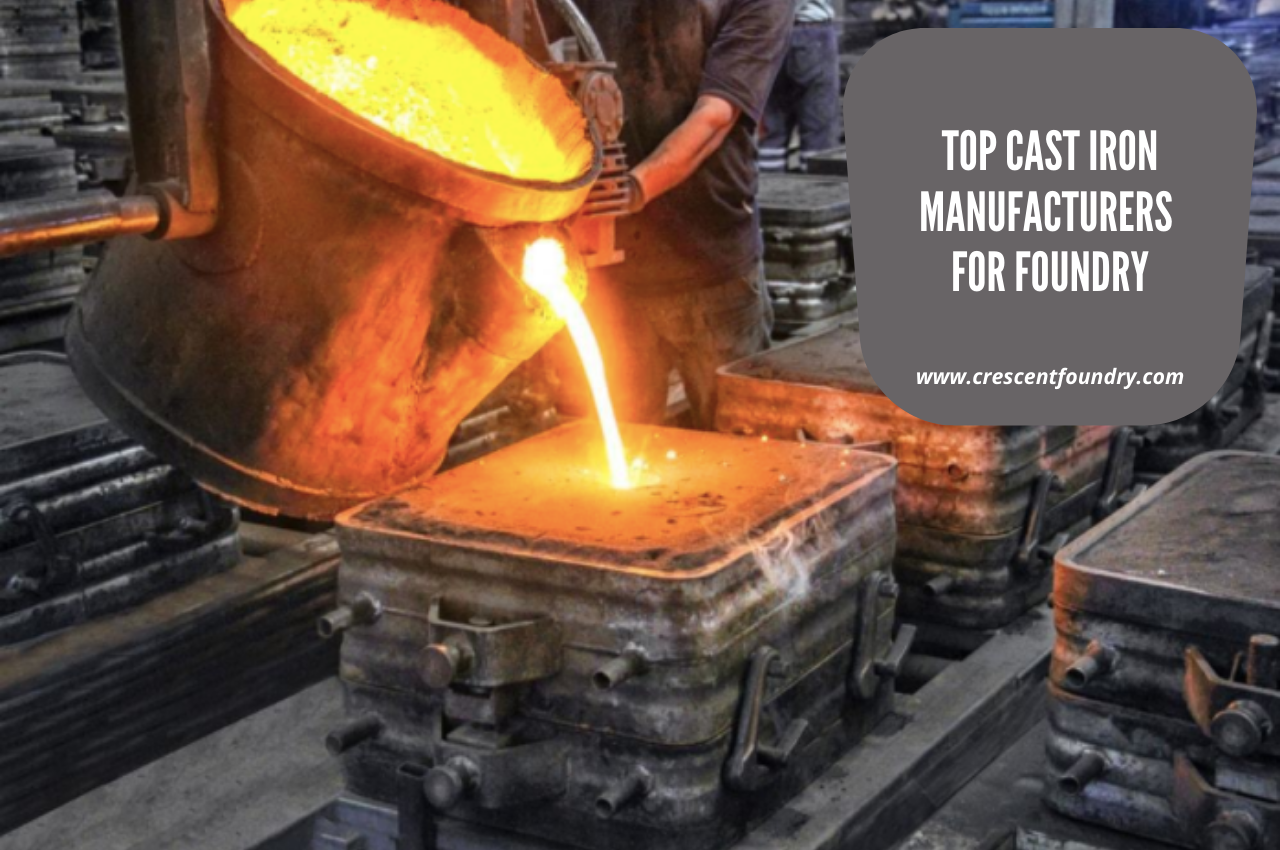
– 1.5 t induction furnace for steel (1600 °C); 0.5 t cupola + duplex for iron (1450 °C).
– Spectrometer check every heat; inoculation & Mg treatment for ductile iron.
4.3 Knock-out & Cut-off
– Vibration shake-out, shot-blast (SG 2.5), automated riser removal (band-saw or plasma).
4.4 Heat Treatment
– Normalizing 900 °C/air for steel; ferritizing 720 °C for ductile iron if required.
4.5 CNC Finish (in-house)
– 3-, 4-, 5-axis Mazak & Haas; PC-DMIS CMM report with each lot.
4.6 Surface & Protection
– Anti-rust dip, primer, e-coat, or customer-specified coating. -
Delivery
• FAI (First-Article Inspection) + material cert (EN 10204 3.1 / ASTM A488) uploaded to portal.
• Vacuum-sealed + VCI film for ocean freight; critical surfaces foam-pocketed.
• Express courier (DHL/FedEx) for <100 kg; LCL/FCL consolidation for >300 kg.
• Digital twin package: actual casting 3D scan overlaid on nominal CAD for future tooling refresh.
End-to-end SLA: 7 days prototype, 15 days batch 1–100, 25 days volume 500+.
All data retained for seamless reorder—no re-DFM unless geometry rev changes.
Start Your Project

Contact Susan Leo for Cast Iron Steel Manufacturing Solutions | info@hy-proto.com | Shenzhen Factory
Precision casting, machining, and prototyping for industrial-grade cast iron steel components. Trusted by global clients for reliability, quality, and on-time delivery.
🚀 Rapid Prototyping Estimator