
Contents
Manufacturing Insight: Casting Metal At Home
Manufacturing Insight: Understanding Metal Casting Realities and Professional Solutions
While the concept of “casting metal at home” occasionally surfaces in hobbyist circles, it is critical for engineering professionals to recognize the significant technical, safety, and quality limitations inherent in such approaches. True metal casting involves manipulating molten materials at extreme temperatures, often exceeding 600°C for common alloys like aluminum or zinc, and demands precise control far beyond typical domestic capabilities. Attempting this without proper industrial infrastructure—dedicated foundry equipment, controlled atmospheres, rigorous safety protocols, and metallurgical expertise—poses severe risks including catastrophic burns, toxic fume exposure, and uncontrolled reactions from material impurities or moisture. Furthermore, home environments lack the precision required for consistent material properties, dimensional accuracy, or structural integrity, rendering any resulting part unsuitable for functional testing or integration into engineered systems. These attempts frequently yield porous, weak, or dimensionally unstable components that fail to meet even basic engineering validation criteria.
Shenzhen Honyo Prototype provides the essential industrial alternative for engineers requiring cast metal prototypes or low-volume production parts. Our dedicated foundry facility integrates advanced process control with stringent quality management systems compliant with ISO 9001 standards. We specialize in investment casting and low-pressure die casting techniques optimized for complex geometries common in sheet metal-adjacent applications, such as brackets, housings, and structural connectors. Our capabilities ensure metallurgical soundness, repeatable mechanical properties, and tight tolerances unattainable in non-industrial settings. Crucially, Honyo’s process begins with certified alloy feedstock and leverages computer-controlled melting furnaces with inert gas shielding to eliminate oxidation and hydrogen porosity—defects endemic to amateur casting attempts. Dimensional accuracy is maintained through proprietary ceramic shell systems and precision pattern making, directly supporting downstream fabrication and assembly processes.
The table below highlights the fundamental disparities between uncontrolled home attempts and Honyo’s professional casting services:
| Parameter | Typical Home Attempt | Honyo Professional Casting |
| :—————– | :————————————— | :————————————— |
| Temperature Control | Manual, unstable (±100°C+) | Computer-regulated (±5°C) |
| Material Purity | Unknown alloys, high contamination risk | Certified aerospace/industrial alloys |
| Dimensional Accuracy | > ±2.0 mm typical | ±0.1 mm achievable |
| Porosity Level | High (visible voids common) | Minimal (X-ray certified to ASTM E505) |
| Safety Compliance | None (significant hazard exposure) | Full OSHA/GB workplace safety protocols |
| Secondary Processing | None | Integrated CNC finishing, anodizing, etc |
For engineering teams developing sheet metal assemblies requiring integrated cast components, Honyo delivers validated solutions from initial design consultation through to finished part. Our rapid turnaround—typically 7-12 days for functional prototypes—enables accelerated validation cycles without compromising on material performance or geometric fidelity. We provide comprehensive material test reports, dimensional inspection data (including CMM reports), and metallurgical analysis upon request, ensuring parts meet specified mechanical and chemical requirements. Partnering with Honyo eliminates the false economy and safety liabilities of improvised casting methods, providing instead a reliable pathway to high-integrity metal components ready for rigorous functional testing and seamless integration into your fabrication workflows. Contact our engineering team to discuss how professional casting can enhance your next prototype development cycle.
Technical Capabilities
Casting Metal at Home: Technical Considerations for Sheet Metal Fabrication
While traditional metal casting typically involves molten metal poured into molds and is more suited to industrial foundries, home-based casting requires simplified methods such as sand casting or die casting using low-melting-point metals like aluminum, zinc, or tin alloys. These processes can yield functional prototypes or decorative components but are limited in precision and scalability. For home fabrication environments, integrating casting with modern sheet metal processes—laser cutting, bending, and welding—can bridge the gap between prototyping flexibility and structural integrity. Shenzhen Honyo Prototype emphasizes hybrid workflows where cast components are refined or combined with sheet metal parts to achieve desired mechanical performance.
Laser cutting plays a critical role in preparing flat sheet components that interface with cast parts. Using high-powered CO₂ or fiber lasers, precise 2D profiles can be cut from materials including mild steel, stainless steel, aluminum, and copper alloys. At home, compact laser cutters with power ratings between 40W–150W are viable for thin-gauge sheets up to 3 mm thickness. Accuracy depends on beam focus, material reflectivity, and assist gas type. For integration with cast elements, laser-cut flanges or mounting brackets ensure alignment and structural support.
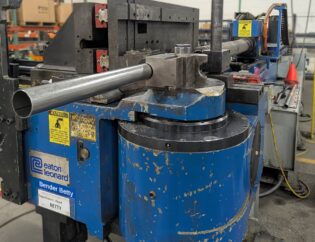
Bending follows cutting to form 3D geometries from flat sheets. Manual press brakes or desktop CNC bending machines are suitable for home use, particularly when fabricating enclosures or frames that house cast components. Air bending is the most common method, allowing flexibility in angle adjustment. Material ductility and grain direction significantly influence bend quality, especially when joining dissimilar materials such as cast aluminum and rolled steel.
Welding unites cast and sheet metal parts into cohesive assemblies. Tungsten Inert Gas (TIG) welding is preferred for its precision and clean finish, particularly on aluminum and stainless steel. Home workshops often utilize multi-process welders capable of TIG, MIG, and stick welding to accommodate various material combinations. Proper joint preparation, shielding gas selection, and post-weld stress relief are essential to prevent cracking, especially when welding castings that may contain porosity.
The following table outlines typical tolerances and compatible materials for each process in a home fabrication setting:
| Process | Material Compatibility | Thickness Range | Typical Tolerance | Surface Finish (Ra, µm) |
|—————|——————————————–|—————–|——————-|————————–|
| Laser Cutting | Mild Steel, Stainless Steel, Aluminum, Copper | 0.5 – 6 mm | ±0.1 mm | 3.2 – 6.3 |
| Bending | Mild Steel, Aluminum, Stainless Steel | 0.8 – 4 mm | ±0.2° angular | As received from cut |
| TIG Welding | Aluminum, Steel, Stainless Steel, Cast Alloys | 1.0 – 8 mm | ±1.0 mm positional| 6.3 – 12.5 |
It is important to note that cast parts used in conjunction with sheet metal components should be stress-relieved and machined to interface surfaces to ensure dimensional stability. Shenzhen Honyo Prototype recommends post-processing steps such as sanding, deburring, and coating to enhance durability and aesthetic quality. While home casting has limitations in repeatability and material strength, its synergy with precision sheet metal techniques enables robust prototyping solutions.
From CAD to Part: The Process
Shenzhen Honyo Prototype: Sheet Metal Fabrication Manufacturing Guide
Section: Production Process Workflow – From CAD to Part
Metal casting is an industrial process requiring specialized foundry equipment, high-temperature furnaces, and stringent safety protocols. We strongly advise against attempting metal casting at home due to extreme burn hazards, toxic fume risks, and the likelihood of catastrophic failure with improvised setups. Honyo Prototype specializes in precision sheet metal fabrication, not casting. This guide details our professional sheet metal workflow for producing safe, high-quality parts from your CAD data.
The process begins with an AI-Powered Quoting Engine. Customers upload native CAD files (STEP, IPT, SLDPRT) or 2D DWG/DXF drawings via our portal. Our AI system instantly analyzes geometric complexity, material selection, tolerances, and finish requirements to generate a preliminary cost and lead time estimate. Key inputs required for accurate quoting include:
| Parameter | Required Specification | Impact on Quoting |
|——————–|——————————————–|—————————————|
| Material Type | SS304, AL6061, SPCC, etc. (Grade specified)| Raw material cost & machinability |
| Thickness | 0.5mm – 6.0mm (Tolerance ±0.1mm) | Laser cutting speed, forming effort |
| Quantity | Prototype (1-10 pcs) to量产 (1000+ pcs) | Tooling amortization, setup efficiency|
| Critical Tolerances| ±0.05mm (bend), ±0.1mm (hole position) | DFM adjustments, inspection time |
| Surface Finish | Brushed, Anodized, Powder Coat (Color RAL) | Secondary process cost |
Following the quote, Design for Manufacturability (DFM) Analysis is conducted by our engineering team. This critical phase identifies potential production issues before metal is cut. We evaluate minimum bend radii relative to material thickness, hole-to-edge distances, kerf compensation for laser cutting, and weld accessibility. Common DFM corrections include adjusting flange lengths to avoid tool interference, increasing relief cuts for sharp bends, or modifying hole patterns to prevent sheet distortion. Customer collaboration during DFM ensures design intent is preserved while optimizing for yield and cost.
Upon DFM approval, the part enters Production. Sheet metal fabrication at Honyo utilizes integrated digital workflows: CAD models drive our fiber laser cutters (max 4000W, 3000x1500mm bed) with automated nesting software to maximize material utilization. Precision press brakes (up to 200 tons) execute bends with real-time angle feedback. Secondary operations—such as CNC tapping, welding (TIG/MIG), and finishing—are tracked through our MES system for full traceability. Every part undergoes first-article inspection against the original CAD model using CMM or optical comparators, with critical dimensions verified per ASME Y14.5. Final quality checks include visual inspection for burrs, coating adhesion tests, and dimensional validation per the agreed tolerance class.
This seamless CAD-to-part workflow—powered by AI quoting, rigorous DFM, and digitally controlled production—ensures your sheet metal components meet exact specifications with minimal lead time. Honyo Prototype’s certified processes (ISO 9001:2015) guarantee repeatability and safety impossible in non-industrial settings. For professional sheet metal solutions, submit your CAD files through our portal for an instant, obligation-free analysis. Never compromise safety with unverified home manufacturing methods.
Start Your Project
Start Your Project with Precision and Confidence
At Shenzhen Honyo Prototype, we understand that every successful product begins with a well-executed prototype. While the idea of casting metal at home may seem like an accessible entry point into metal fabrication, the reality is that achieving consistent, high-quality results requires advanced equipment, metallurgical expertise, and strict process control. For engineers, designers, and product developers, relying on DIY methods can lead to material defects, dimensional inaccuracies, and extended development timelines—risks no professional project can afford.
Our Sheet Metal Fabrication division specializes in precision metal casting and forming processes tailored for prototyping and low-volume production. We utilize industrial-grade techniques such as die casting, sand casting, and investment casting, combined with CNC finishing, to deliver parts that meet exact design specifications. Whether you’re working with aluminum, zinc, brass, or steel, our facility ensures optimal grain structure, mechanical strength, and surface integrity—features that home setups simply cannot replicate.
We support rapid turnaround times without compromising quality. Our integrated workflow spans design validation, material selection, mold creation, casting, post-processing, and final inspection, all under one roof. This vertical integration allows us to maintain tight tolerances, reduce lead times, and provide full traceability for every component produced.
Below are key capabilities that distinguish our casting services:
| Parameter | Capability |
|————————-|———————————————|
| Material Options | Aluminum (A380, ADC12), Zinc (Zamak 3), Brass, Steel |
| Tolerance Range | ±0.05 mm to ±0.1 mm (depending on geometry) |
| Minimum Feature Size | 0.8 mm (casting), 0.5 mm (CNC refinement) |
| Part Weight Range | 10 g to 5 kg |
| Surface Finish | Ra 0.8–3.2 μm (as-cast), up to Ra 0.4 μm (polished) |
| Secondary Operations | CNC Machining, Deburring, Anodizing, Plating |
| Lead Time (Prototype) | 7–12 days from approved design |
All processes are monitored using precision metrology tools, including CMM and optical comparators, ensuring compliance with international quality standards. Our engineering team also provides Design for Manufacturability (DFM) feedback early in the development cycle, helping you avoid costly redesigns and production delays.
If you’re considering metal casting for your next project, we encourage you to partner with professionals who combine technical excellence with responsive service. Skip the uncertainties of home-based casting and move directly from concept to functional prototype with confidence.
Contact Susan Leo today at info@hy-proto.com to discuss your project requirements. Include your design files or sketches, and our team will provide a detailed quotation, DFM analysis, and recommended manufacturing approach within 24 hours. At Shenzhen Honyo Prototype, we don’t just fabricate parts—we help bring innovations to life.
🚀 Rapid Prototyping Estimator
Get a rough estimate for CNC/3D Printing costs.