
Contents
Manufacturing Insight: Cnc Foam Cutting
Precision Foam Fabrication: CNC Cutting for Advanced Prototyping
CNC foam cutting represents a critical capability within rapid prototyping and model-making workflows, particularly for industries demanding accurate scale models, ergonomic mockups, and complex form validation. At Shenzhen Honyo Prototype, we leverage state-of-the-art CNC routing and hot-wire cutting systems specifically optimized for a wide range of polymeric foams. This technology transcends traditional manual methods, delivering exceptional dimensional accuracy, complex geometry reproduction, and consistent surface finish essential for high-fidelity prototypes. Unlike metal or plastic CNC machining, foam cutting requires precise thermal management and feed rate control to prevent melting, tearing, or excessive dust generation, ensuring clean edges and maintaining the material’s structural integrity.
Our dedicated CNC foam cutting platforms utilize advanced motion control and specialized tooling – including precision heated wires for intricate contours and high-speed rotary cutters for rigid foams – to handle diverse project requirements. Honyo Prototype maintains stringent process parameters calibrated for each foam type, from delicate EPS and EPP to denser polyurethane (PU) and polystyrene variants. This expertise ensures minimal thermal distortion and optimal edge quality, critical for applications like wind tunnel models, automotive clay model armatures, architectural study models, and packaging validation fixtures. The ability to directly translate 3D CAD data into physical form enables rapid iteration cycles, significantly accelerating design validation phases compared to manual fabrication.
Honyo Prototype’s infrastructure supports demanding production scales while adhering to tight tolerances. We integrate seamlessly with our broader CNC machining, 3D printing, and finishing services, providing a comprehensive solution from digital model to fully realized prototype. Our engineering team collaborates closely with clients during the design-for-manufacturability stage, advising on optimal foam selection, part orientation, and feature definition to maximize cut quality and minimize post-processing needs. This proactive approach mitigates risk and ensures the final foam component meets the precise functional or aesthetic requirements of the project lifecycle.
Key technical capabilities for our CNC foam cutting service include:
| Parameter | Specification |
|——————–|———————————–|
| Material Types | EPS, EPP, PU, XPS, PMMA, PVC foam |
| Thickness Range | 5 mm to 2000 mm |
| Typical Tolerance | ±0.2 mm to ±0.5 mm |
| Max Working Area | 3000 mm x 2000 mm x 1500 mm (LxWxH) |
| Surface Finish | Smooth, minimal burr, ready for finishing |
| Lead Time | As fast as 24-72 hours for prototypes |
The strategic application of CNC foam cutting at Honyo Prototype directly addresses the need for speed, accuracy, and cost-effectiveness in early-stage product development. By transforming digital designs into precise physical representations swiftly, we empower engineering teams to evaluate ergonomics, aerodynamics, fitment, and aesthetics with tangible confidence. Whether supporting aerospace wind tunnel testing, automotive interior mockups, or large-scale architectural models, our commitment to precision foam fabrication underpins successful innovation cycles for global clients seeking reliable, high-performance prototyping solutions.
Technical Capabilities
Shenzhen Honyo Prototype delivers precision CNC foam cutting services tailored for rapid prototyping, architectural modeling, and custom fabrication applications. Our advanced 3-axis, 4-axis, and 5-axis CNC milling platforms enable intricate shaping of high-density and low-density foam materials with exceptional surface fidelity and dimensional accuracy. Utilizing industry-leading toolpath strategies and rigid machining environments, we maintain tight tolerances across complex geometries, supporting both functional testing and aesthetic evaluation in product development cycles.
Our multi-axis CNC systems are optimized for non-metallic material processing, ensuring minimal vibration and thermal distortion during foam cutting. The 3-axis platform handles standard prismatic forms and planar contours, while the 4-axis configuration introduces rotational capability for cylindrical features and undercuts. For the most complex freeform surfaces—such as aerodynamic models, sculptural components, or ergonomic prototypes—our 5-axis simultaneous machining delivers seamless contouring with a single setup, reducing handling errors and improving repeatability.
Honyo Prototype specializes in machining a broad range of foam types, including EPU (Expanded Polyurethane), EPS (Expanded Polystyrene), XPS (Extruded Polystyrene), EPP (Expanded Polypropylene), and high-density rigid foams. Each material is processed with customized feed rates, spindle speeds, and cooling strategies to prevent melting, chipping, or edge deformation. Our in-house material library allows for rapid selection based on density, rigidity, and finish requirements.
Tight tolerance control is a core strength of our foam machining process. We consistently achieve dimensional accuracy within ±0.05 mm to ±0.2 mm, depending on part geometry, size, and material characteristics. Critical features such as mating surfaces, alignment slots, and mounting interfaces are machined to tighter bands to support assembly validation and fit-checking in downstream applications.
| Material Type | Density Range (kg/m³) | Typical Tolerance (± mm) | Max Part Size (mm) | Surface Finish (Ra, µm) |
|———————|————————|—————————|———————|————————–|
| EPU (Polyurethane) | 150 – 600 | 0.05 – 0.1 | 1500 x 1000 x 800 | 3.2 – 6.3 |
| EPS (Polystyrene) | 15 – 30 | 0.1 – 0.2 | 2000 x 1200 x 1000 | 6.3 – 12.5 |
| XPS (Extruded PS) | 28 – 45 | 0.1 – 0.15 | 1800 x 1200 x 900 | 6.3 – 10.0 |
| EPP (Polypropylene) | 45 – 200 | 0.08 – 0.15 | 1600 x 1000 x 800 | 3.2 – 8.0 |
| HD Rigid Foam | 300 – 800 | 0.05 – 0.1 | 1400 x 900 x 700 | 1.6 – 3.2 |
All CNC foam cutting operations are supported by CAD/CAM integration, with direct import of STEP, IGES, and STL files. Our engineering team performs automated toolpath validation and collision detection to ensure process reliability. Parts are inspected using calibrated coordinate measuring techniques and optical profiling where required. Shenzhen Honyo Prototype combines technical precision with rapid turnaround, serving clients in industrial design, automotive styling, aerospace modeling, and exhibition fabrication with consistent, high-quality foam components.
From CAD to Part: The Process
CNC Foam Cutting Workflow: From CAD to Finished Prototype
At Shenzhen Honyo Prototype, our CNC foam cutting process transforms digital designs into precise physical prototypes through a rigorously defined workflow. This structured approach ensures maximum accuracy, material efficiency, and cost-effectiveness for clients requiring rapid foam models, patterns, or master forms. The journey begins with the client’s CAD file submission and progresses systematically through three critical phases: AI-Powered Quoting, Design for Manufacturability (DFM) analysis, and Production execution.
The initial AI-Powered Quoting phase leverages our proprietary algorithm to rapidly assess the submitted 3D CAD model (accepted formats: STEP, IGES, STL, native CAD). The system analyzes geometric complexity, part volume, material requirements, and estimated machine runtime against real-time shop floor data. This generates a highly accurate cost and lead time quotation within hours, not days. Crucially, the AI identifies potential high-risk geometries early, such as extreme aspect ratios or undercuts incompatible with wire cutting, flagging them for immediate client consultation before formal order placement. This transparency prevents costly revisions later.
Following quote acceptance, the Design for Manufacturability (DFM) Analysis becomes paramount. Our engineering team conducts a deep technical review focused on foam-specific challenges. We scrutinize wall thicknesses to prevent collapse during cutting, evaluate support structures needed for delicate features, assess the impact of foam density on achievable detail, and verify that critical tolerances align with the capabilities of thermal wire cutting. Material selection guidance (e.g., EPS vs. PU foam density ranges) is provided based on the prototype’s intended use—whether for wind tunnel testing, foundry patterns, or visual models. Client collaboration at this stage resolves ambiguities and optimizes the design for successful, first-time-right production, significantly reducing waste and delays.
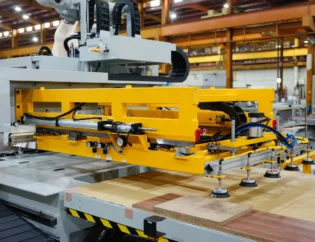
The final Production Execution phase commences only after DFM sign-off. The approved CAD model is converted into precise CNC toolpaths using specialized CAM software tailored for hot wire or multi-axis knife cutting. Parameters are meticulously set based on the finalized foam type and density. During cutting, our state-of-the-art CNC routers or vertical/horizontal wire cutters maintain tight environmental control to manage dust and ensure thermal stability of the cutting wire, critical for dimensional accuracy. Post-cut, parts undergo rigorous inspection against the original CAD data using coordinate measuring machines (CMM) or structured light scanners, verifying critical dimensions and surface quality before final cleaning and packaging. Throughout this phase, real-time machine monitoring ensures process consistency and part integrity.
Key foam material parameters directly influencing the process are summarized below:
| Parameter | Typical Range for CNC Cutting | Critical Impact |
| :—————– | :—————————- | :——————————————- |
| Foam Density | 15 – 300 kg/m³ | Affects cut speed, edge finish, detail level |
| Max Work Envelope | 3000 x 1500 x 1200 mm | Defines maximum single-piece size |
| Standard Tolerance | ±0.5 mm (basic) to ±0.1 mm | Depends on density, feature complexity |
| Common Materials | EPS, PU, XPS, EPP | Selected based on end-use requirements |
This integrated workflow—AI quoting for speed and predictability, rigorous foam-specific DFM for risk mitigation, and controlled production execution—ensures Shenzhen Honyo Prototype delivers dimensionally accurate, high-quality foam prototypes on schedule. By embedding engineering expertise at every stage, we eliminate guesswork, optimize resource utilization, and provide clients with reliable, manufacturable solutions from the very first cut.
Start Your Project
Start Your CNC Foam Cutting Project with Precision and Confidence
At Shenzhen Honyo Prototype, we specialize in high-accuracy CNC foam cutting for prototypes, architectural models, packaging design, and industrial applications. Our advanced 3-, 4-, and 5-axis CNC routing systems deliver clean, dimensionally precise cuts across a wide range of foam materials, including EPS, XPS, EPP, polyurethane, and high-density modeling foams. Whether you’re developing a concept model, a full-scale mockup, or a custom packaging solution, our manufacturing expertise ensures your design is translated into physical form with exceptional fidelity.
Starting your project with Honyo Prototype is simple, efficient, and tailored to your timeline. We begin with a detailed review of your CAD files—accepted in STEP, IGES, SolidWorks, or DXF formats—to assess geometry, tolerances, and material suitability. Our engineering team provides expert feedback to optimize cut paths, minimize material waste, and enhance surface finish, ensuring the final part meets both functional and aesthetic requirements.
Material selection is critical in CNC foam cutting, and we stock a comprehensive range of foam densities and block sizes to suit diverse applications. From lightweight EPS for large-scale architectural forms to rigid polyurethane for high-detail models, we match your project’s needs with the optimal material. For specialized requirements, we support customer-supplied materials and offer guidance on thermal stability, paint adhesion, and post-processing options such as sanding, sealing, or bonding.
Our CNC machines operate with micron-level precision and programmable tooling strategies that accommodate complex contours, undercuts, and multi-part assemblies. With rapid setup times and in-house quality inspection, we support both one-off prototypes and low-to-mid volume production runs with consistent repeatability.
To ensure seamless collaboration, we maintain transparent communication from quote to delivery. Lead times are optimized based on project complexity and urgency, with standard turnaround typically within 3–7 working days after design approval.
| Specification | Details |
|—————|——–|
| Supported Materials | EPS, XPS, EPP, Polyurethane, PVC Foam, Modeling Board |
| Block Size Capacity | Up to 2000 x 1000 x 500 mm (78.7 x 39.4 x 19.7 in) |
| Tolerance | ±0.1 mm (typical), ±0.05 mm (high-precision) |
| CAD File Formats | STEP, IGES, DXF, DWG, SolidWorks, STL |
| Finishing Options | As-cut, sanded, sealed, painted (partner services) |
| Lead Time | 3–7 working days (after design approval) |
| Production Scale | Prototype to low/mid-volume batches |
Ready to bring your concept to life? Contact Susan Leo, our dedicated Project Coordinator, to discuss your CNC foam cutting requirements. We offer free design for manufacturability (DFM) feedback and competitive pricing with no minimum order quantity.
Email Susan Leo at info@hy-proto.com with your CAD files and project specifications. Include details on material preference, quantity, and intended use so we can provide an accurate quote and technical recommendations. Our team responds to all inquiries within 4 business hours.
Partner with Shenzhen Honyo Prototype—where precision meets speed in CNC foam fabrication.
🚀 Rapid Prototyping Estimator
Get a rough estimate for CNC/3D Printing costs.