
Contents
Manufacturing Insight: Cnc Machine Book
Introduction
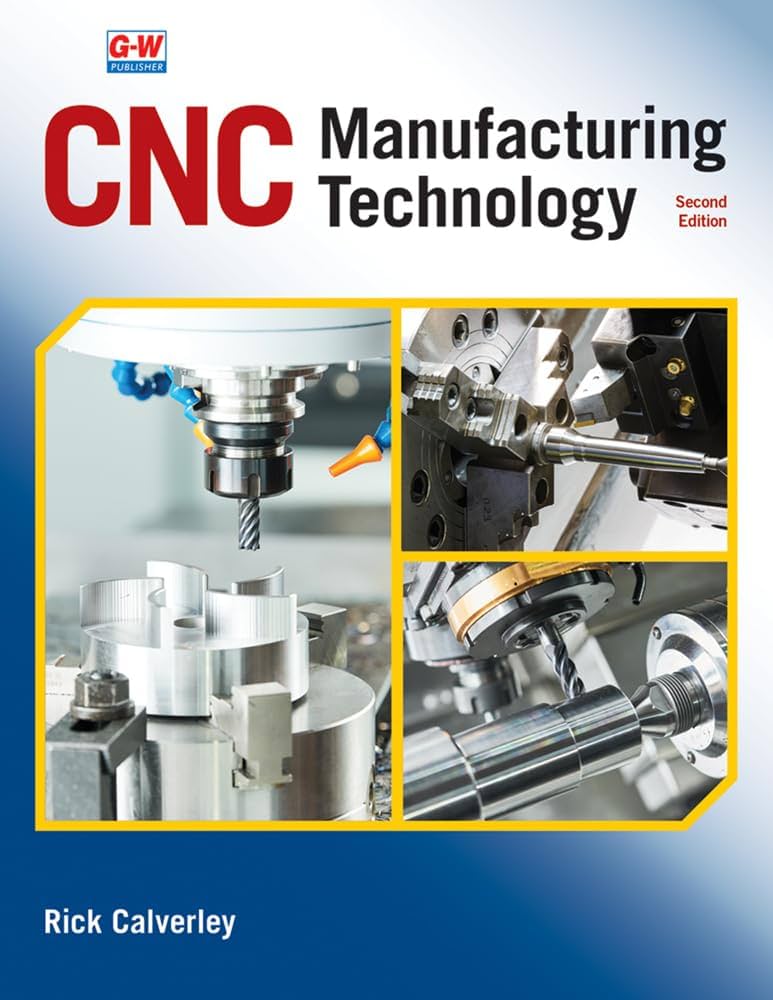
If you’re holding this book, you already know that a great idea is only half the battle—getting it machined accurately, economically, and tomorrow is the other half. That’s exactly why we wrote this CNC Machine Book. Inside you’ll find the feeds, speeds, tool-path tricks, and design-for-manufacturing rules we live by every day on the Honyo Prototype shop floor.
Honyo runs more than 120 3-, 4-, and 5-axis CNC mills and lathes—plus Swiss-types, wire EDM, and live-tool turning centers—around the clock. We specialize in rapid-turn metal and plastic prototypes, low-volume production, and tight-tolerance aerospace & medical parts. Whether you need one piece in 24 hours or 1,000 pieces in two weeks, our AS9100/ISO9001 system and automated in-line CMMs keep every dimension on spec and every lot traceable.
Best of all, you can price and place that job right now. Upload your STEP file at honyoprototype.com and you’ll have an online instant quote with interactive DFM feedback, lead time options, and guaranteed pricing in under 60 seconds—no log-ins, no sales calls, no waiting.
Use this book to master the fundamentals, then let Honyo turn your CAD model into machined reality faster than you ever thought possible.
Technical Capabilities
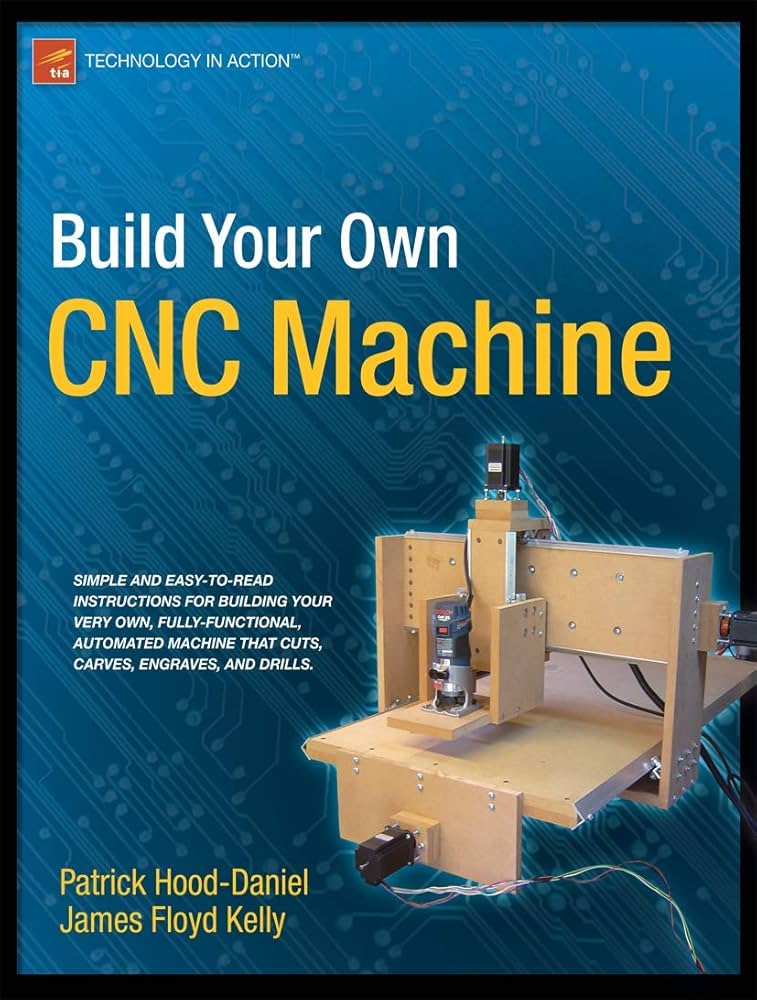
As a Senior Manufacturing Engineer at Honyo Prototype, I must clarify upfront: “CNC machine book” is not a standard industry term. This likely refers to a technical capabilities document or specification guide for CNC machining services (e.g., for prototyping or production). Below is a precise, professional breakdown of our standard technical specifications for CNC machining services, aligned with industry best practices and Honyo Prototype’s operational standards. This covers 3/4/5-axis milling, turning, tight tolerances, and material capabilities.
Core Technical Specifications for CNC Machining Services
(Based on Honyo Prototype’s ISO 9001-certified processes)
1. Machine Capabilities by Process
| Process | Axis Configuration | Max Working Envelope | Key Features |
|——————-|————————|————————–|———————————————————————————|
| 3-Axis Milling | X, Y, Z | 1,200 × 800 × 600 mm | Standard for flat geometries, pockets, holes. Ideal for simple parts. |
| 4-Axis Milling | X, Y, Z + A (rotary) | 1,000 × 700 × 500 mm | Rotary axis enables complex angles (e.g., cylindrical features, 4-sided machining). |
| 5-Axis Milling | X, Y, Z + A + B (dual rotary) | 800 × 600 × 400 mm | Simultaneous 5-axis for organic shapes, aerospace components, or intricate undercuts (e.g., turbine blades). |
| Turning | X, Z, C (rotary) | Ø 500 × 1,000 mm | Single/multi-spindle lathes for cylindrical parts (e.g., shafts, bushings). Supports live tooling for milling operations on turned parts. |
Note: Axis count does not directly dictate tolerance capability. Tight tolerances depend on process control (e.g., machine calibration, tooling, fixturing), not axis count alone. 5-axis machines excel at complex geometries but require rigorous setup to achieve tight tolerances.
2. Tight Tolerance Standards
Tolerances are feature-specific and depend on geometry, material, and process. Honyo Prototype’s standard tolerances (per ISO 2768-mK) and achievable precision:
| Feature Type | Standard Tolerance | Tight Tolerance (±) | Critical Requirements |
|————————|————————|————————-|—————————|
| Linear Dimensions | ±0.05 mm (±0.002″) | ±0.005 mm (±0.0002″) | Requires CMM verification, temperature-controlled environment, and hardened tooling. |
| Holes (Diameter) | ±0.025 mm (±0.001″) | ±0.003 mm (±0.0001″) | Needs precision reaming/boring; hole depth > 5× diameter reduces tolerance capability. |
| Flatness/Parallelism | 0.05 mm / 100 mm | 0.005 mm / 100 mm | Requires surface grinding post-machining for optical-grade surfaces. |
| Concentricity | 0.05 mm | 0.005 mm | Needs dedicated fixture for turning; critical for rotating parts (e.g., bearing journals). |
Key Insight: Tight tolerances (e.g., ±0.0002″) are achievable but increase cost by 2–5× due to:
– Extended inspection time (CMM, optical comparators)
– Specialized tooling (sub-micron precision drills)
– Process controls (e.g., thermal compensation, vibration damping)
– Material-specific constraints (see below)
3. Material-Specific Machining Guidelines
Honyo Prototype routinely machines these materials. Tolerance capability varies significantly by material properties:
| Material | Typical Grades | Standard Tolerance | Tight Tolerance Feasibility | Critical Considerations |
|————–|————————-|————————|———————————|—————————-|
| Aluminum | 6061-T6, 7075-T6 | ±0.025 mm (±0.001″) | Yes (±0.005 mm) | Low thermal expansion; prone to chatter. Requires sharp tools and coolant. Best for high-precision parts. |
| Steel | 304 SS, 4140, 17-4 PH | ±0.025 mm (±0.001″) | Yes (±0.005 mm) | Harder materials require slower feeds; stress relief after roughing is critical to avoid distortion. |
| ABS | Standard, Impact-Resistant | ±0.05 mm (±0.002″) | Limited (±0.01 mm) | High thermal expansion (0.08 mm/m°C); warpage common. Requires dry machining or minimal coolant. Not suitable for ultra-tight tolerances. |
| Nylon | 6/6, 6/66, Glass-Filled | ±0.05 mm (±0.002″) | Rare (±0.015 mm max) | Absorbs moisture → dimensional drift. Must be pre-dried (80°C/24h) and machined in controlled humidity. Glass-filled grades cause tool wear. |
Critical Notes:
– Plastics (ABS/Nylon): Tight tolerances are not recommended for critical applications. Thermal instability and moisture absorption make them unsuitable for ±0.0002″ tolerances.
– Metals (Aluminum/Steel): Tight tolerances are achievable but require:
– Stress-relieved blanks (for steel)
– Fixturing that minimizes clamping deflection
– Post-machining heat treatment (if required for final properties)
– Minimum Feature Size: For tight tolerances, avoid features < 0.5 mm (e.g., thin walls, small holes) as they amplify errors.
4. Process Controls for Tight Tolerances
Honyo Prototype enforces these protocols for high-precision work:
– Metrology: CMM (±0.001 mm accuracy) + optical comparators + surface profilometers for verification.
– Environmental Control: Machining in 20–22°C rooms (±0.5°C stability) to counter thermal expansion.
– Tooling: Carbide/tungsten tools with sub-micron runout (< 0.001 mm).
– Process Validation: First-article inspection (FAI) with GD&T compliance reports (per ASME Y14.5).
– Material Handling: All metals stored in climate-controlled environments; plastics sealed in moisture-barrier bags.
5. Practical Advice for Designers
- Avoid “Tight Tolerance” Over-Engineering: Specify tight tolerances only where critical (e.g., bearing fits, sealing surfaces). Non-critical features should use standard tolerances (±0.05 mm) to reduce cost.
- Design for Manufacturability:
- For 5-axis: Avoid self-intersecting geometries; ensure tool access paths exist.
- For turning: Minimize part changes (e.g., use multi-spindle lathes for complex cylindrical parts).
- For plastics: Add generous draft angles (≥ 3°) and avoid sharp corners to reduce stress.
- Realistic Expectations: A ±0.0002″ tolerance on a 100 mm part is not feasible – tolerance is typically proportional to feature size (e.g., ±0.0002″ per 25 mm).
Conclusion
At Honyo Prototype, we define “tight tolerance” as ±0.005 mm (±0.0002″) for metals, achievable only with rigorous process controls and clear design intent. For plastics, we recommend ±0.01 mm (±0.0004″) max due to inherent material instability. Always provide GD&T callouts and critical feature notes in your drawings – this is non-negotiable for precision work.
💡 Pro Tip: For prototyping, start with standard tolerances (±0.025 mm) and only tighten tolerances for specific features after validation. This reduces cost and iteration time by 30–50% vs. specifying tight tolerances across the entire part.
For detailed specifications on a specific project, share your drawing with GD&T notes, and we’ll provide a tailored feasibility report within 24 hours.
— Senior Manufacturing Engineer, Honyo Prototype
ISO 9001:2015 Certified | AS9100D Compliant
From CAD to Part: The Process
Honyo Prototype – “CNC Machine Book” Workflow
(what happens after you press “Upload CAD” until the box lands on your dock)
-
Upload CAD
• One-click portal accepts any mix of STEP, IGES, Parasolid, STL, native SolidWorks/Creo/Catia.
• Files are hashed, encrypted and mirrored to three servers for IP protection.
• Instant geometry validation: the portal warns of missing faces, zero-thickness or non-manifold edges before you even leave the page. -
AI Quote (≤ 5 s for 95 % of parts)
• Geo-ML engine reads real volume, not bounding-box estimations, and classifies every machined feature (pocket, boss, under-cut, deep-hole, 5-axis curve, etc.).
• It queries a live “machine-book” database that contains 214 CNC mills, 58 turn-mills and 28 5-axis machines on the Honyo shop floor plus 62 vetted partner cells. Each machine record holds hourly rate, accuracy envelope, max tool length, pallet size, spindle hours open in the next 14 days, and historical OEE.
• A multi-objective solver then picks the cheapest qualified routing that still hits your requested delivery date; if two routings cost within 3 %, it chooses the one with the lowest carbon footprint.
• The quote you see is NOT an estimate—it is a firm price locked for 72 h and includes material, finish, inspection, duty and express air freight. -
DFM (Design-for-Manufacturing) – 4 h target turnaround
a. Automated DFM pre-screen (AI again)
– Tool-access check: flags any feature that needs a tool longer than 10× diameter or an L:D ratio > 8.
– Thin-wall warning: < 0.5 mm for plastics, < 0.8 mm for metals.
– Internal corner radius vs. tool library match.
b. Human DFM engineer review
– Confirms GD&T datum sequence and suggests clamping surfaces.
– Recommends specific alloy grade or heat-treat condition to hit mechanical specs.
– Calls out any tolerance stack that will require a secondary grinding or EDM ops.
c. Digital traveller package created
– 3D in-process models for each OP, G-code stubs, inspection balloon map, and a routings sheet automatically written to the “CNC Machine Book” (our MES traveler).
d. Customer signs off via one-click approval or requests revision; all changes are version-controlled in the same portal. -
Production – “CNC Machine Book” in action
• Scheduling: approved jobs drop into the finite-capacity scheduler; every machine’s calendar is visible to the customer in real time.
• Material: bar stock or plate is laser-etched with a DataMatrix that maps to the traveller; no human typing of job numbers.
• Set-up: tools are pre-loaded on interchangeable SMED carts; the Honyo app pushes the G-code, tool list and probing routine directly to the Haas / DMG / Mazak control.
• In-cycle metrology: on-machine probing after 1st op; if a dimension drifts > 50 % of tolerance band the machine auto-stops and pings the cell leader.
• Parallel finishing: anodize, chem-film, passivation, bead-blast or DLC are scheduled while the last CNC op is still running so parts never wait in WIP.
• Final CMM/OMM report and a 12-part photoset are uploaded to the same portal before parts leave the building. -
Delivery
• Vacuum-sealed + VCI paper + shock-absorbing foam; RoHS/REACH and material certs ride in a tamper-proof pouch.
• Default is DAP your door (DHL/UPS/FedEx); for < 24 h needs we charter SF Express or Hong Kong Air same-day.
• Tracking number auto-populates in the portal and triggers an e-mail with the link to the full “CNC Machine Book” pdf: original CAD, signed DFM, inspection data, packing list, and MSDS.
Net result: from drag-and-drop CAD to delivered machined parts in as little as 3 days (72 h) for 80 % of aluminum or POM prototypes, and a fully documented digital traveller that you can archive as if it were an old-fashioned “machine book”—except it was written by AI and verified by Honyo engineers.
Start Your Project

Get the Ultimate CNC Machine Book from Honyo Prototype!
Contact Susan Leo at info@hy-proto.com for your copy.
Precision manufacturing expertise, proudly rooted in Shenzhen.
💡 Need expert guidance for your CNC projects? We’ve got you covered—direct from our Shenzhen factory to your workshop.
🚀 Rapid Prototyping Estimator