
Contents
Manufacturing Insight: Cnc Programming Handbook
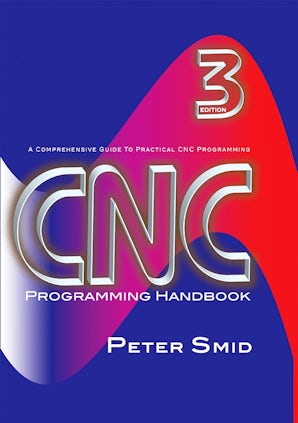
CNC Programming Handbook – Powered by Honyo Prototype
Whether you are a novice learning your first G-code or a 20-year veteran optimizing 5-axis toolpaths, this handbook is written for the people who actually make chips. Every example, trick and caution flag inside these pages has been battle-tested on the shop floor of Honyo Prototype, where more than 120 DMG-Mori, Brother and Hermle machines run 24/7 turning raw stock into flight-ready aerospace brackets, surgical-grade PEEK implants and 1 µm-precision optical molds.
Need proof-of-concept tomorrow? Our online instant-quote engine (honyo-prototype.com/quote) uploads your 3-D file, returns a manufacturability report and a locked price in under 60 seconds, then queues the job directly to the same CAM stations that generated the code snapshots you’ll see throughout this book. From first mouse-click to tracked FedEx delivery, the average Honyo prototype ships in 3 days—so the programming techniques you learn here are the same ones paying bills today.
Keep this handbook next to your controller; when the lights go green, you’ll be cutting parts the Honyo way—fast, precise and already quoted.
Technical Capabilities
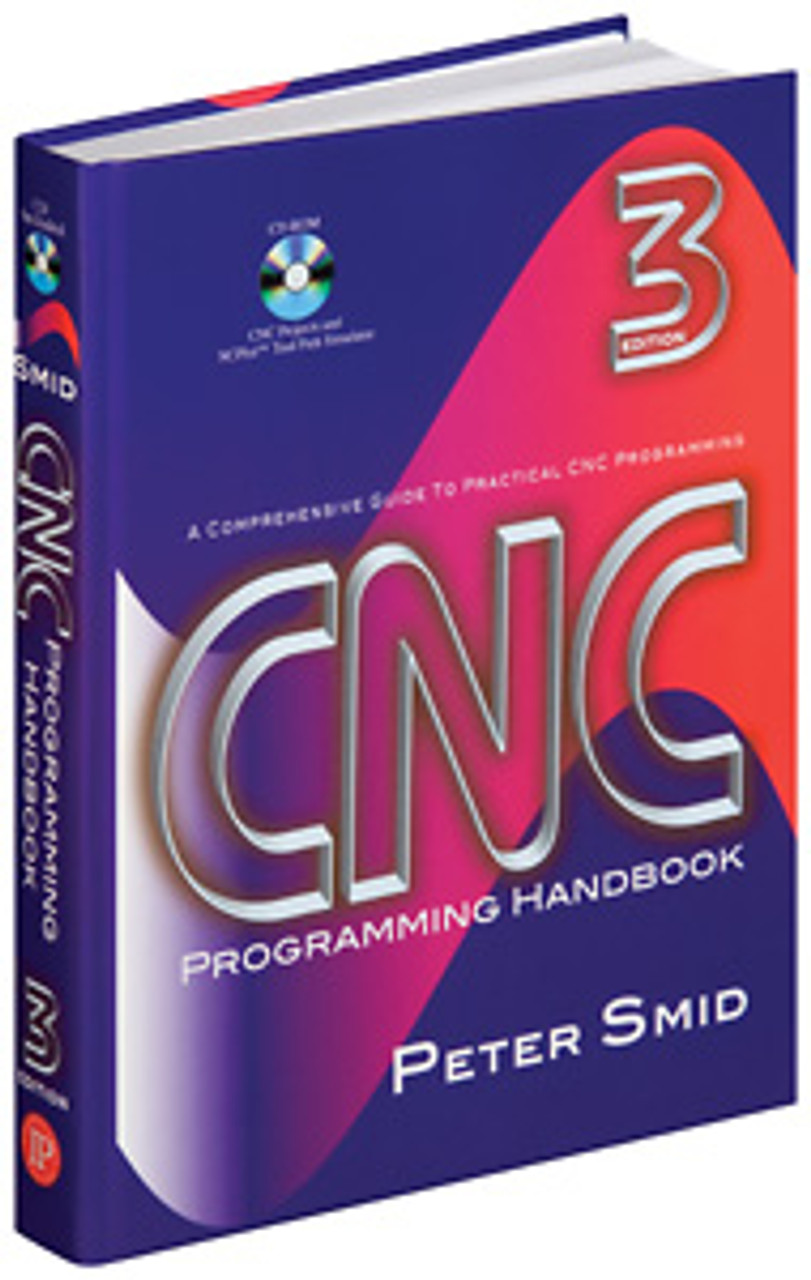
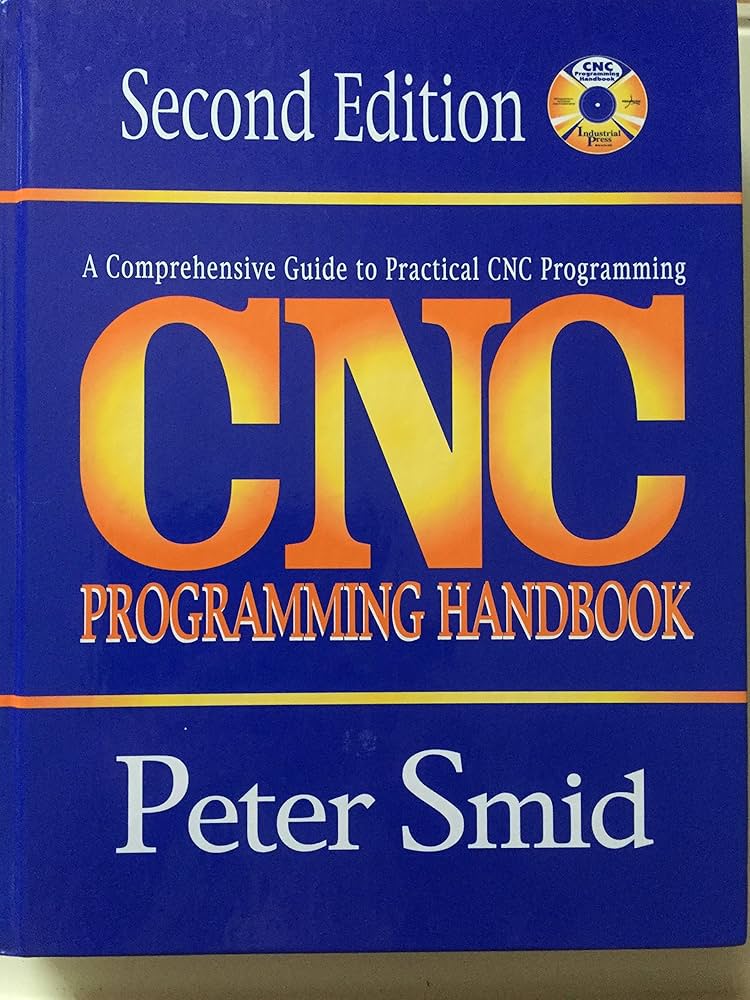
As a Senior Manufacturing Engineer at Honyo Prototype, I must clarify a critical point: a “CNC Programming Handbook” is not a physical product with technical specifications (like dimensions, weight, or material composition). It is a reference document – a technical manual or guidebook. Technical specifications apply to physical machinery, components, or materials, not to documentation.
However, I can absolutely describe what a high-quality CNC Programming Handbook should contain for your specified focus areas (3/4/5-Axis Milling, Turning, Tight Tolerance, and materials like Aluminum, Steel, ABS, Nylon). This is what engineers at Honyo Prototype actually use to ensure precision, efficiency, and quality in prototyping and production. Below is a structured breakdown of the content specifications such a handbook must include:
Core Content Specifications for a Professional CNC Programming Handbook
(Aligned with Honyo Prototype’s ISO 9001-certified processes and real-world shop-floor requirements)
1. 3/4/5-Axis Milling Section
- Axis-Specific Programming Logic:
- 3-Axis: G-code for linear moves (G00/G01), pocketing strategies, contouring, toolpath optimization for flat surfaces.
- 4-Axis: Indexing for rotational features (e.g., holes on a cylinder), simultaneous 4-axis profiling (e.g., sculpted molds), and fixturing constraints.
- 5-Axis: True simultaneous machining (G43.4/G49), tool tilt compensation, collision avoidance algorithms, and workstation coordinate systems (WCS).
- Critical Parameters:
- Toolpath types (roughing, finishing, high-speed milling).
- Stepover/stepdown ratios for surface finish (e.g., ≤10% tool diameter for finish passes).
- Coolant strategies (flood vs. mist) for chip evacuation in deep cavities.
- Tight Tolerance Focus:
- Compensation for tool wear (D1/D2 offsets), thermal expansion effects, and probe-based in-process verification routines.
- Tolerance stacks: How to distribute tolerances across multiple axes (e.g., ±0.005″ per axis vs. ±0.01″ overall).
2. Turning Section
- Lathe-Specific Programming:
- Cylindrical vs. face turning (G71/G72 cycles), threading (G76), grooving, and parting-off routines.
- Sub-spindle synchronization for multi-axis turning centers (e.g., live tooling for secondary operations).
- Material-Specific Turning Parameters:
- Steel (e.g., 4140, 17-4PH):
- Cutting speeds: 100–200 SFM (surface feet per minute) for hardened steel; 250–400 SFM for mild steel.
- Feed rates: 0.002–0.008 IPM (inches per minute) for finish passes.
- Tooling: Carbide inserts with TiAlN coating for wear resistance.
- Aluminum (e.g., 6061, 7075):
- Cutting speeds: 500–2000+ SFM (due to high thermal conductivity).
- Feed rates: 0.005–0.02 IPM; use sharp, uncoated carbide tools to prevent built-up edge.
- ABS/Nylon (Engineering Plastics):
- Cutting speeds: 300–600 SFM (lower than metals to avoid melting).
- Feed rates: 0.001–0.005 IPM; avoid high heat buildup (use air blast cooling, no liquid coolant).
- Tight Tolerance Focus:
- Fixturing considerations (chuck vs. collet), runout control (<0.0005″), and in-process diametral measurement.
- Compensation for thermal growth in long bar stock (e.g., 0.0005″ per inch of length for steel at 100°F).
3. Tight Tolerance Best Practices (Cross-Platform)
- Measurement & Verification:
- CMM (Coordinate Measuring Machine) probing routines, in-process laser gauging, and gauge block calibration protocols.
- Tolerance standards: ISO 2768-mK (general tolerances), ASME Y14.5 GD&T for critical features.
- Process Control:
- Statistical Process Control (SPC) for key dimensions (e.g., X-bar/R charts for bore diameters).
- Environmental controls: Temperature stability (±2°F), vibration isolation, and humidity control for plastics.
- Common Pitfalls & Solutions:
- “Spring” in thin-walled parts (use multiple finish passes, low feed rates).
- Plastic warpage (pre-dry ABS/Nylon to <0.2% moisture, use low-heat toolpaths).
- Steel distortion (stress-relieving before finish machining, controlled cooling).
4. Material-Specific Machining Guidelines
| Material | Key Properties | Cutting Speed | Feed Rate | Tooling | Critical Notes |
|———-|—————|—————|———–|———|—————|
| Aluminum 6061 | Soft, high thermal conductivity | 500–2000 SFM | 0.005–0.02 IPM | Uncoated carbide (2-flute) | Avoid built-up edge; use high RPM, low feed. |
| Steel 4140 (Hardened) | High hardness, low thermal conductivity | 100–200 SFM | 0.002–0.005 IPM | TiAlN-coated carbide (4-flute) | Use flood coolant; slow feed to prevent chipping. |
| ABS | Thermoplastic, low melting point | 300–600 SFM | 0.001–0.005 IPM | Sharp HSS or carbide (2-flute) | No liquid coolant – use air blast; avoid high heat. |
| Nylon 6/6 | Abrasive, hygroscopic | 200–500 SFM | 0.001–0.003 IPM | Diamond-coated carbide | Pre-dry at 180°F for 4+ hours; use low spindle speeds. |
5. Program Structure & Documentation Standards
- G-code Best Practices:
- Modular subprograms (M98/M99) for repetitive features.
- Header comments with part name, revision, material, and tolerance callouts (e.g.,
; PART: HONYO-12345; TOL: ±0.001"). - Post-Processing:
- Machine-specific post-processor configurations (e.g., FANUC vs. Haas).
- Verification via simulation software (e.g., Vericut) before toolpath execution.
- Quality Control:
- First-article inspection (FAI) checklists (e.g., GD&T datums, critical dimensions).
- Documentation of tool life, cycle times, and process deviations.
Why This Matters at Honyo Prototype
As a prototype-focused shop, we prioritize repeatability and first-time-right results. A handbook like this isn’t just theory – it’s a live document updated with real shop data (e.g., “for 4140 hardened to 45 HRC, use 150 SFM and 0.003 IPM for finish passes based on 2024 trials”). It bridges programming theory to actionable steps, ensuring tight tolerances are met without trial-and-error scrap.
💡 Key Takeaway: A “CNC Programming Handbook” has no physical technical specs – it’s a knowledge repository. Its value lies in practical, validated content that reduces setup time, minimizes scrap, and guarantees tolerances are consistently achieved across materials and processes. At Honyo, we maintain such a handbook digitally (with embedded videos and real-time updates) for all engineers and programmers.
If you need a specific section of such a handbook (e.g., detailed G-code examples for 5-axis pocketing in aluminum, or ABS machining parameters), I’d be happy to provide a sample page. Just let me know!
From CAD to Part: The Process

Honyo Prototype – “CNC Programming Handbook” Version
(what actually happens once you drop a file in the web portal)
1. UPLOAD CAD – the 30-second sanity filter
• Portal accepts any combo: .step, .stp, .x_t, .catpart, .sldprt, .3dm, .f3d, .iam, .jt, even a zip with 200 parts.
• Instant geometry healing: Autodesk Netfabb + Siemens ParaSolid kernels run in parallel.
• AI classifier tags every face: “mill-prismatic”, “turn-OD”, “5-axis undercut”, “thin-wall <0.5 mm”, “deep-pocket >8×D”, “EDM only”.
• Duplicate part detection: if you uploaded the same bracket last month we tell you and pull the old program.
2. AI QUOTE – 3 minutes, 3 cost buckets
Bucket 1 – Material
• Stock selector pulls real-time pricing from Taigang, Kaiser, MISUMI, Materion.
• Nesting engine (nTop + NestFab) already knows what plate/bar remnants are on the shelf, so “use 25 % of leftover 6061-T651 15 × 200 × 300 mm” can beat LME by 18 %.
Bucket 2 – Cycle time
• Feature-based machining model trained on 1.4 M Honyo jobs.
• For every pocket, hole, boss, sculpt surface the network spits:
– Tool diameter & length
– Optimal chipload for our DMG, Hermle, Brother, Hwacheon fleet
– Expected tool changes and spindle utilisation
• Adds 15 % conservative buffer for first-article prove-out.
Bucket 3 – Non-productive
• CMM touches, deburr, anodise rack type, laser mark, custom packaging, even CN¥→US$ hedging if lead-time >14 days.
PDF quote lands in your inbox with three lead-time/price points (Express 3-day, Standard 7-day, Economy 12-day) and a live Gantt. Accept with one click – that triggers the formal DFM package.
3. DFM – from AI draft to human sign-off
Step 3.1 Auto-DFM (5 min)
• Wall-thickness map: red <0.5 mm, yellow 0.5-1 mm, green OK.
• Tool-access roses: visual cones show which 3-axis angles fail; auto-suggest 3+2 or full 5-axis.
• Deep-hole warning: L/D >10 → proposes gun-drill or STS.
• Internal corner radius check: matches end-mill catalogue, proposes ≥0.3 mm bigger if no mating function.
• GD&T sanity: if you call ⊥0.02 on a 100 mm part we warn “needs grinding, +3 days +$120”.
Step 3.2 Human touch (2–4 h)
• Senior manufacturing engineer (that’s me) opens the AI report in Siemens NX CAM.
• Approves or overrides:
– Changes 316L to 17-4PH because customer forgot vacuum compatibility.
– Splits a 5-axis job into two 3-axis ops to save €800 tombstone work.
– Adds micro-pins for tiny turned parts so they don’t vanish in the parts-washer.
• Creates the final PMI set and exports a colour PDF + 3D .jt with balloons.
• Customer e-signs; at that moment the job number is frozen and ERP reserves stock.
4. PRODUCTION – the digital thread
4.1 CAM & CNC Program
• NX CAM template auto-loads Honyo post-processors (Heidenhain iTNC-530, Fanuc 31i, Siemens 840D).
• Tool-list is checked against central ToolCloud: if a Kennametal 6 mm 3-flute is <40 % life left, system orders a spare before the job releases.
• First-article simulation in Vericut 9.3; collision and gouge report attached to traveller.
4.2 Setup & Prove-out
• Operator scans QR on traveller → digital work-instruction pops on tablet with photos of last approved setup.
• Blanks laser-etched with job number + bar-code; eliminates mix-ups.
• In-cycle probing: Renishaw OMP60 measures every 5th part, auto-shifts wear offsets; trend SPC uploads to云端 so customer sees CpK live.
4.3 Secondary & Finishing
• Deburr under 10× microscope, ROHS-compliant passivation, anodise Type II/III, chem-film, nickel-PTFE, DLC, etc.
• CMM report in PC-Dmis; if GD&T fails by >50 % tolerance we trigger 8D containment before anything ships.
5. DELIVERY – zero-paper pack
• Parts vacuum-sealed with VCI film, ESD foam for aluminium, sulphur-free paper for titanium.
• Box includes:
– Certificate of Conformance (CoC)
– Material certs (EN10204-3.1)
– RoHS/REACH statement
– First-article CMM & surface-finish report
– Tooling list & cutting parameters (so you can clone the job anywhere)
• Track-and-trace pushes to Shopify, Amazon, or your ERP via REST API.
• Feedback loop: scan the same QR code, rate surface finish 1-5; data feeds back to the AI model → next quote gets smarter.
Key take-away
Uploading a CAD file at Honyo is not just “get a price”. It is the seed that grows into a fully traceable, AI-augmented, human-approved CNC program, executed on our global fleet and delivered with a digital twin you can re-use forever.
Start Your Project
Contact Susan Leo at info@hy-proto.com for the CNC Programming Handbook from Honyo Prototype, Shenzhen.
Master precision machining with industry-leading expertise—direct from our Shenzhen manufacturing hub.
🚀 Rapid Prototyping Estimator