
Contents
Manufacturing Insight: Cnc Router Hobbyist
CNC Router Technology: Bridging Hobbyist Passion with Professional Manufacturing
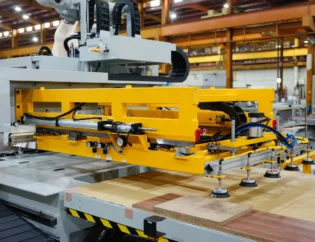
CNC routers represent a transformative technology for makers, enabling precise computer-controlled cutting, carving, and milling of materials like wood, plastics, and soft metals. While hobbyist-grade CNC routers provide accessible entry into digital fabrication, understanding their capabilities and limitations is crucial for project success and future scalability. These systems typically utilize stepper or servo motors guided by G-code generated from CAD/CAM software, moving a rotating spindle along X, Y, and Z axes to shape material based on digital designs. Hobbyist machines excel at prototyping, signage, furniture components, and artistic creations, offering significant advantages over manual methods in repeatability and complexity handling. However, achieving consistent, high-tolerance results requires careful attention to machine rigidity, toolpath strategy, tool selection, and material fixturing – areas where professional manufacturing processes provide substantial refinement.
The distinction between hobbyist exploration and production-ready manufacturing becomes evident when examining core performance metrics. Below is a comparison highlighting typical capabilities:
| Feature | Hobbyist CNC Router | Professional CNC Machining (Honyo Standard) |
| :——————– | :————————— | :—————————————— |
| Work Envelope | Up to 1000x1000mm | Up to 3000x1500x300mm |
| Typical Spindle Power | 500W – 1500W | 5kW – 15kW |
| Positioning Accuracy | ±0.1mm – ±0.5mm | ±0.01mm – ±0.02mm |
| Control System | GRBL, Mach3 | Siemens, Fanuc, Heidenhain |
| Material Range | Wood, Acrylic, Foam, Soft Al | Engineering Plastics, Hardened Steel, Titanium |
| Surface Finish | Requires Significant Post-Processing | Near-Net Shape, Minimal Finishing Required |
| Process Control | Manual Setup, Basic QA | SPC, CMM Validation, ISO 9001 Certified |
At Shenzhen Honyo Prototype, we recognize the vital role hobbyist CNC activity plays in innovation. Many professional projects originate from garage workshops and maker spaces. Our advanced 3-axis, 4-axis, and 5-axis CNC machining centers are engineered to overcome the constraints inherent in hobbyist systems. We leverage industrial-grade rigidity, high-precision spindles with through-coolant options, automated tool changers, and rigorous environmental controls to ensure dimensional stability and surface integrity unattainable on smaller platforms. Our engineering team specializes in translating early-stage concepts – whether originating from hobbyist CAD files or hand sketches – into manufacturable designs. We provide critical DFM feedback, optimize toolpaths for material efficiency and speed, and implement stringent quality assurance protocols including first-article inspection and batch traceability.
When your project demands tighter tolerances, harder materials, larger volumes, or certified quality for functional testing or low-volume production, Honyo Prototype delivers the seamless transition from prototype to precision part. Our ISO 9001-certified facility in Shenzhen operates with the technical rigor required by aerospace, medical, and industrial clients, yet remains responsive to the unique needs of innovators scaling their initial CNC router concepts. Partner with us to transform your hobbyist vision into a professionally manufactured reality, backed by decades of machining expertise and a commitment to engineering excellence. Contact our engineering team to discuss your specific requirements and receive a detailed manufacturability assessment.
Technical Capabilities
Technical Capabilities: Precision CNC Machining for Hobbyist Applications
Shenzhen Honyo Prototype delivers advanced CNC machining services tailored to meet the demands of CNC router hobbyists seeking professional-grade results. Our in-house capabilities include 3-axis, 4-axis, and 5-axis CNC milling, precision turning, and tight-tolerance machining, enabling the production of complex, high-accuracy prototypes and small-batch components. Whether you’re developing custom enclosures, mechanical parts, or artistic models, our equipment and expertise ensure consistency, material integrity, and dimensional accuracy.
Our 3-axis CNC routers provide robust performance for standard 2D and 3D contours, ideal for flat-panel cutting, sign making, and basic prototyping. For more complex geometries requiring simultaneous multi-face machining, our 4-axis and 5-axis systems offer rotational flexibility, significantly reducing setup time and enhancing surface finish. These multi-axis platforms support intricate toolpath strategies such as helical interpolation and contouring, which are essential for organic shapes and ergonomic designs often found in hobbyist projects.
In addition to milling, our CNC turning centers handle cylindrical and symmetrical parts with high repeatability. This capability is particularly beneficial for creating shafts, knobs, pulleys, or threaded components commonly used in DIY robotics and mechanical builds. All machines are calibrated daily and operated by experienced technicians, ensuring optimal tool engagement, minimal vibration, and extended tool life.
Tight-tolerance machining is a core strength at Honyo Prototype. We consistently achieve tolerances down to ±0.005 mm for critical dimensions, depending on material and part geometry. This level of precision ensures fit, function, and interchangeability—key factors in functional prototypes and working assemblies. Our quality control process includes first-article inspection and final verification using digital micrometers, coordinate measuring machines (CMM), and optical comparators.
We support a wide range of materials suitable for hobbyist applications, from easily machinable plastics like acrylic and ABS to engineering-grade metals such as aluminum 6061 and brass. Each material is evaluated for chip load, thermal expansion, and tool wear to optimize cutting parameters and surface quality.
Below is a summary of achievable tolerances and compatible materials:
| Feature | Typical Tolerance |
|——–|——————-|
| Linear Dimensions | ±0.01 mm |
| Hole Diameter | +0.01 mm / -0.00 mm |
| Positional Tolerance | ±0.01 mm |
| Surface Flatness | ±0.02 mm over 100 mm |
| Angular Features | ±0.1° |
| Material Category | Examples | Notes |
|——————|———|——-|
| Plastics | ABS, Acrylic (PMMA), Delrin (POM), Nylon | Low melting point; requires optimized feed rates |
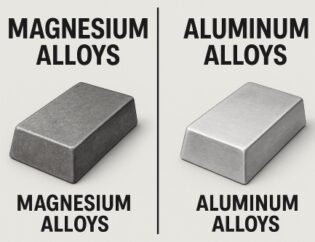
| Aluminum Alloys | 6061, 7075, 5052 | Excellent machinability; ideal for lightweight parts |
| Steels | Mild Steel, Stainless Steel 304 | Higher tool wear; slower cutting speeds |
| Brass & Copper | C110, C260 | Good for conductive or decorative components |
| Wood & Composites | MDF, Baltic Birch, HDPE | Suitable for mockups and non-structural models |
All projects benefit from our digital workflow, including CAM simulation and toolpath optimization, ensuring error-free execution from design to delivery. At Honyo Prototype, we bridge the gap between hobbyist innovation and industrial precision.
From CAD to Part: The Process
From CAD to Part: Streamlined CNC Router Production Workflow
At Shenzhen Honyo Prototype, we understand hobbyist CNC router operators require clarity and efficiency when transitioning from digital design to physical part. Our optimized workflow ensures predictable results while respecting the unique constraints of desktop and benchtop machining environments. This guide details the essential stages: AI-Powered Quoting, Design for Manufacturability (DFM) Analysis, and Production Execution.
The process begins with your CAD file submission. Our AI quoting engine rapidly analyzes geometry, material selection, and requested tolerances against our established machining capabilities. This initial assessment provides an instant, data-driven cost and lead time estimate. Crucially, the AI factors in standard hobbyist router limitations such as spindle power, typical tool diameters, and achievable feed rates, setting realistic expectations from the outset. It identifies potential red flags like excessively deep cavities or features requiring tool changes beyond common hobbyist setups, prompting early dialogue.
Following quote acceptance, rigorous DFM analysis becomes paramount. Our engineering team reviews the design specifically for compatibility with typical hobbyist CNC routers. We scrutinize wall thicknesses, internal corner radii, feature depth-to-width ratios, and overall part stability during machining. Common pitfalls like undercuts requiring specialized tooling or features smaller than standard end mill diameters are flagged. Material selection is cross-referenced with spindle capabilities; softwoods and plastics are generally optimal, while dense hardwoods or metals often exceed router capacity. We provide actionable feedback to modify the design, ensuring manufacturability without compromising core functionality, thereby avoiding costly revisions or failed runs.
Upon DFM sign-off, production commences. The CAD model is imported into our CAM software, where optimized toolpaths are generated using parameters validated for hobbyist-class machines. Tool selection prioritizes readily available end mills (typically 1/8″ or 1/4″ shank). Critical parameters for successful hobbyist routing are strictly adhered to, as summarized below:
Typical Hobbyist CNC Router Machining Parameters
| Parameter | Typical Value Range | Critical Consideration for Hobbyists |
| :—————– | :———————- | :————————————————- |
| Spindle Speed | 12,000 – 24,000 RPM | Must match material; lower for wood, higher for plastics |
| Feed Rate | 200 – 1000 mm/min | Too fast causes tear-out; too slow causes burning |
| Depth of Cut | 1 – 5 mm per pass | Exceeding capacity risks tool breakage or poor finish |
| Tolerance (Machined)| ±0.1 mm to ±0.3 mm | Vibration limits precision; tighter tolerances require multiple light passes |
Material fixturing is meticulously planned using vacuum tables or mechanical clamps compatible with hobbyist setups. During machining, operators continuously monitor spindle load, surface finish, and chip evacuation to prevent overheating or tool deflection. Post-processing involves careful part separation, deburring, and final inspection against the approved DFM notes. This structured approach, from intelligent quoting through practical DFM to parameter-controlled production, transforms your CAD model into a high-quality physical part efficiently and reliably on standard hobbyist CNC equipment.
Start Your Project
Start Your CNC Router Project with Confidence – Partner with Honyo Prototype
When you’re diving into the world of CNC router projects, whether for personal fabrication, small-scale production, or prototyping intricate designs, precision and reliability are non-negotiable. At Shenzhen Honyo Prototype, we specialize in supporting CNC machining enthusiasts and professionals alike by delivering high-accuracy prototypes and custom-machined parts tailored to your exact specifications. Our expertise in CNC routing ensures that your design transitions seamlessly from concept to physical form, with tight tolerances, superior surface finishes, and fast turnaround times.
Hobbyists often face challenges when scaling their ideas—material selection, toolpath optimization, and achieving dimensional accuracy can be complex without the right support. That’s where we come in. With state-of-the-art CNC routing equipment and a team of experienced manufacturing engineers, Honyo Prototype provides the technical backing you need to bring ambitious projects to life. From wood and acrylic to aluminum and engineering plastics, we handle a wide range of materials commonly used in hobbyist and prototyping applications.
Our process begins with a thorough review of your CAD files, ensuring design for manufacturability (DFM) principles are applied to minimize waste, reduce costs, and improve structural integrity. We support common file formats including STEP, IGES, DXF, and STL, making integration into your existing workflow straightforward. Whether you’re creating custom enclosures, artistic woodwork, or functional mechanical components, our team works closely with you to refine your design for optimal machining performance.
Below is an overview of our standard CNC routing capabilities:
| Specification | Detail |
|—————|——–|
| Maximum Work Envelope | 1200 mm × 2400 mm × 200 mm |
| Positioning Accuracy | ±0.05 mm |
| Repeatability | ±0.02 mm |
| Common Materials | ABS, PVC, Acrylic, Wood (MDF, Plywood), Aluminum 6061/7075, Delrin, HDPE |
| Surface Finish | As-machined, Sandblasted, Painted, or Polished (optional) |
| Lead Time | 3–7 business days (varies by complexity) |
| File Formats Accepted | STEP, IGES, DXF, DWG, STL, X_T |
We understand that every project starts with a vision—and often, a few technical questions. That’s why we offer free pre-production consultation to help hobbyists make informed decisions about materials, tolerances, and design adjustments. Our goal is not just to manufacture parts, but to support your creative process from the very first sketch.
Ready to take your CNC router project to the next level? Contact Susan Leo at info@hy-proto.com today. As your dedicated project coordinator, Susan will guide you through the quoting process, answer technical inquiries, and ensure your design receives the attention it deserves. At Honyo Prototype, we’re committed to empowering innovators—because great ideas deserve exceptional manufacturing support.
🚀 Rapid Prototyping Estimator
Get a rough estimate for CNC/3D Printing costs.