
Contents
Manufacturing Insight: Peek Plastic Molding
Manufacturing Insight: PEEK Plastic Molding
Polyether Ether Ketone (PEEK) represents the pinnacle of high-performance thermoplastics, delivering exceptional mechanical strength, chemical resistance, and thermal stability up to 260°C continuously. Its adoption in aerospace, medical implants, and semiconductor manufacturing underscores its critical role in mission-critical applications. However, PEEK’s demanding processing characteristics necessitate specialized expertise in injection molding—a challenge where Shenzhen Honyo Prototype excels through precision engineering and rapid tooling integration. Unlike commodity plastics, PEEK requires meticulous control of thermal profiles, moisture content, and tooling materials to avoid degradation, voids, or dimensional instability.
Processing PEEK demands stringent adherence to elevated temperature ranges and extended cycle times. The material must be dried below 0.02% moisture content at 150°C for 3–6 hours prior to molding; residual moisture causes hydrolysis, leading to molecular weight loss and compromised part integrity. Melt temperatures typically span 360–400°C, while mold temperatures must be maintained at 170–200°C to ensure crystallinity and minimize internal stresses. These conditions impose significant wear on standard tool steels, requiring corrosion-resistant alloys like M300 or NAK80 to withstand acidic byproducts generated during processing. Rapid cooling rates or insufficient packing pressure further risk sink marks and warpage, particularly in thick-walled geometries.
Honyo Prototype addresses these complexities through integrated rapid tooling and process optimization. Our in-house tooling facility employs hardened stainless-steel molds with conformal cooling channels, enabling uniform heat dissipation and reducing cycle times by 15–20% versus conventional approaches. We implement real-time cavity pressure monitoring and adaptive screw control to maintain consistent melt homogeneity, critical for PEEK’s narrow processing window. Our molding cells feature nitrogen-purged料筒 to prevent oxidation and dedicated drying systems with dew point monitoring, ensuring material integrity from hopper to ejection.
Critical PEEK Processing Parameters at Honyo Prototype
| Parameter | Standard Range | Honyo Control Tolerance |
|——————–|———————-|————————-|
| Drying Temperature | 150°C | ±3°C |
| Moisture Content | <0.02% | <0.015% |
| Melt Temperature | 360–400°C | ±5°C |
| Mold Temperature | 170–200°C | ±2°C |
| Injection Pressure | 80–120 MPa | Adaptive control |
Leveraging over 12 years of experience with high-temperature polymers, Honyo delivers PEEK prototypes and low-volume production runs with first-article success rates exceeding 92%. Our rapid tooling process—combining CAD-optimized mold design, 5-axis CNC machining, and iterative process validation—compresses lead times to 15–20 days without sacrificing part fidelity. This capability enables medical device OEMs to accelerate biocompatibility testing and aerospace suppliers to validate component performance under extreme conditions. For applications where material failure is not an option, Honyo’s PEEK molding expertise transforms design intent into certified, high-reliability components. Partner with us to navigate the complexities of high-performance polymer manufacturing with confidence.
Technical Capabilities
Technical Capabilities: PEEK Plastic Molding at Shenzhen Honyo Prototype
Shenzhen Honyo Prototype specializes in high-precision PEEK (Polyether Ether Ketone) plastic molding, leveraging advanced rapid tooling and injection molding technologies to deliver durable, high-performance components for aerospace, medical, automotive, and industrial applications. Our expertise in processing high-temperature thermoplastics enables consistent production of complex geometries with tight tolerances and superior mechanical properties. We support both prototyping and low-to-mid volume production, with a focus on rapid turnaround and material integrity.
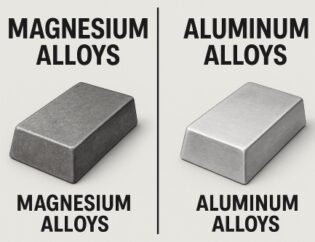
Our PEEK molding process is optimized for use with steel and aluminum molds, selected based on production volume, part complexity, and thermal requirements. Aluminum molds are ideal for rapid prototyping and short production runs, offering faster machining times and excellent thermal conductivity, which reduces cycle times. These molds are typically used for projects requiring T1 samples within 7 days. For higher volume production or parts with stringent dimensional stability requirements, we utilize hardened steel molds (typically H13 or P20), which provide extended tool life, improved wear resistance, and better performance under high processing temperatures.
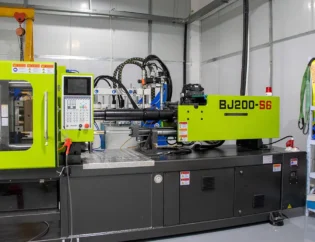
PEEK requires processing temperatures between 350°C and 400°C, with mold temperatures maintained between 170°C and 200°C to minimize internal stresses and ensure optimal crystallinity. Our fully electric and hydraulic injection molding machines are equipped with high-temperature barrels, wear-resistant screws, and precise temperature control systems to maintain process stability. All molding parameters are monitored and recorded to ensure repeatability and traceability.
We achieve exceptional surface finish and dimensional accuracy through controlled cooling, optimized gate design, and in-process quality checks. Our quality assurance protocols include first-article inspection, CMM verification, and material certification to ensure compliance with industry standards.
Below is a summary of our key technical specifications for PEEK plastic molding:
| Parameter | Specification |
|——————————-|————-|
| Material | PEEK (Neat, GF30, CF20, Bearing Grade) |
| Mold Material | Aluminum (7075-T6), Steel (H13, P20) |
| Tooling Lead Time | 5–7 days (T1 sample) |
| Production Volume | 1–10,000+ units |
| Typical Tolerances | ±0.05 mm (standard), ±0.025 mm (tight) |
| Minimum Wall Thickness | 0.6 mm |
| Part Weight Range | 1–200 grams |
| Mold Temperature | 170–200°C |
| Melt Temperature | 350–400°C |
| Surface Finish | SPI-S1, VDI 3400, Texture, Polished |
| Secondary Operations | CNC Finishing, Ultrasonic Welding, Assembly |
At Shenzhen Honyo Prototype, we combine engineering expertise with agile manufacturing to deliver PEEK-molded components that meet the highest standards of performance and precision. Our rapid tooling capabilities ensure fast iteration and accelerated product development cycles without compromising quality.
From CAD to Part: The Process
PEEK Injection Molding Production Workflow: From CAD to Certified Part
At Shenzhen Honyo Prototype, producing high-integrity PEEK components demands a rigorously controlled workflow integrating advanced digital tools with deep material science expertise. Our rapid tooling process for this high-performance polymer begins with seamless client collaboration and concludes with validated, ready-to-use parts, minimizing iteration and maximizing first-pass yield.
AI-Powered Quoting & Feasibility Assessment
Following receipt of client CAD data, our proprietary AI quotation engine performs an initial feasibility scan. This system analyzes geometric complexity, wall thickness distribution, gate location suitability, and potential undercuts against PEEK’s stringent processing requirements. It cross-references historical production data for similar geometries and material grades, generating a highly accurate cost estimate and preliminary lead time within hours. Crucially, the AI flags immediate high-risk areas such as thin walls below 0.8mm or sharp internal corners that could induce stress cracking during PEEK molding, providing clients actionable feedback before formal order placement.
Comprehensive Design for Manufacturability (DFM) Review
Formal project initiation triggers an in-depth DFM review led by our senior PEEK specialists. This phase moves beyond basic geometry checks to address PEEK’s unique thermal sensitivity and crystallization behavior. We meticulously evaluate cooling channel placement to ensure uniform mold temperatures critical for minimizing warpage in semi-crystalline PEEK. Gate design is optimized to prevent shear-induced degradation while ensuring cavity fill before premature solidification. Venting strategies are validated to eliminate burns during high-speed injection. Crucially, we assess draft angles, parting lines, and ejection systems against PEEK’s significant shrinkage (1.2-2.4%) and high ejection forces. Client collaboration at this stage resolves potential failures proactively, often suggesting subtle design tweaks that significantly enhance part quality and reduce cycle time without compromising function.
Precision PEEK Production Execution
Upon DFM sign-off, rapid tool fabrication commences using hardened P20 or H13 steel molds with corrosion-resistant coatings, essential for withstanding PEEK’s high processing temperatures and acidic byproducts. Production leverages all-electric or dedicated high-temperature hydraulic presses featuring precise temperature control zones. Strict adherence to validated process parameters is non-negotiable. Drying is mandatory (150-160°C for 3-6 hours) to prevent hydrolysis. Critical parameters are tightly controlled as shown below:
| Parameter | Typical PEEK Range | Criticality Reason |
| :—————– | :———————- | :————————————- |
| Melt Temperature | 360°C – 400°C | Avoid degradation >400°C; ensure flow <360°C |
| Mold Temperature | 170°C – 200°C | Control crystallinity, minimize warp |
| Injection Speed | Medium-High | Balance fill vs. shear heating |
| Holding Pressure | 50-70% of injection | Compensate shrinkage without flash |
| Cooling Time | 15-40 sec (part dep.) | Ensure solidification before ejection |
| Drying Time/Temp | 3-6 hrs @ 150-160°C | Prevent hydrolysis & surface defects |
Each production run undergoes rigorous in-process verification, including melt temperature profiling and cavity pressure monitoring. Final parts receive dimensional validation against the original CAD and visual inspection for surface integrity before shipment. This integrated workflow ensures Honyo delivers dimensionally stable, high-performance PEEK prototypes and bridge production parts with the reliability demanded by aerospace, medical, and semiconductor applications.
Start Your Project
Start Your PEEK Plastic Molding Project with Confidence
When engineering demands exceed the capabilities of standard thermoplastics, polyetheretherketone (PEEK) stands out as a high-performance solution. At Shenzhen Honyo Prototype, we specialize in rapid tooling and precision injection molding of PEEK components for industries where reliability under extreme conditions is non-negotiable—such as aerospace, medical devices, automotive, and semiconductor manufacturing. With its exceptional thermal stability, chemical resistance, and mechanical strength, PEEK delivers long-term performance in environments exceeding 250°C. However, successfully molding PEEK requires more than just access to the material—it demands expert process control, optimized tool design, and deep material science understanding.
Our team at Honyo Prototype combines advanced in-house molding technology with decades of experience in high-temperature polymer processing. We offer rapid tooling solutions tailored to low-to-medium volume production runs, accelerating your time from concept to functional prototype. Whether you’re validating a new design or preparing for pilot production, our engineers work closely with you to ensure every detail—from gate location to cooling cycle—is optimized for PEEK’s unique behavior.
We understand that starting a PEEK molding project can be technically challenging. Material drying, mold temperature control, and precise melt management are critical factors that directly impact part integrity and performance. That’s why we provide full technical consultation from day one, guiding you through material selection, design for manufacturability (DFM), and process validation. Our cleanroom-capable facilities and real-time process monitoring ensure consistent quality and repeatability across batches.
To help you evaluate feasibility and plan your next steps, here are key processing parameters we routinely manage for PEEK injection molding:
| Parameter | Typical Range |
|—————————-|—————————–|
| Melt Temperature | 360–400°C |
| Mold Temperature | 170–200°C |
| Drying Temperature | 150°C for 4–6 hours |
| Moisture Content (max) | < 0.02% |
| Injection Pressure | 80–120 MPa |
| Cooling Time | Extended due to crystallization |
| Suitable Tool Steel | Hardened stainless (e.g., H13) |
All projects begin with a comprehensive design review and material compatibility assessment. We support multiple grades of PEEK—including unfilled, glass-filled, carbon-reinforced, and wear-resistant formulations—ensuring your component meets exact mechanical, thermal, and regulatory requirements.
Ready to move forward? Contact Susan Leo, our dedicated project manager for high-performance polymers, to discuss your application. Whether you have 3D models, sketches, or just a technical challenge in mind, we’re equipped to help you prototype with precision and confidence.
Reach out today: info@hy-proto.com
Let Shenzhen Honyo Prototype be your partner in turning high-performance design concepts into molded reality.
🚀 Rapid Prototyping Estimator
Get a rough estimate for CNC/3D Printing costs.