

Contents
Manufacturing Insight: Is Cast Iron Better Than Stainless Steel

Manufacturing Insight: Cast Iron vs. Stainless Steel – Application-Driven Material Selection
Material selection between cast iron and stainless steel is a critical engineering decision, not a question of universal superiority. Each excels in distinct applications due to inherent metallurgical properties, directly impacting manufacturability, performance, and lifecycle cost. At Shenzhen Honyo Prototype, our CNC machining expertise ensures optimal material utilization for your specific functional requirements, leveraging decades of experience in precision prototyping and low-volume production.
Cast iron, particularly gray iron (e.g., ASTM A48 Class 30), offers exceptional damping capacity and thermal stability, making it ideal for machine tool bases, engine blocks, and vibration-sensitive components. Its high carbon content (2.5–4%) creates graphite flakes that absorb kinetic energy, reducing chatter during machining and in-service operation. Conversely, stainless steel (e.g., AISI 304) provides superior corrosion resistance and strength-to-weight ratio, essential for medical devices, marine hardware, and food processing equipment. Its chromium content (18–20%) forms a passive oxide layer but increases work hardening and tool wear during CNC operations.
Machinability differs significantly. Cast iron’s graphite structure acts as a built-in lubricant, enabling higher cutting speeds and smoother chip evacuation. Stainless steel’s toughness and galling tendency demand slower feeds, rigid setups, and specialized tooling to prevent built-up edge and thermal deformation. Below is a comparative overview of key properties relevant to CNC manufacturing:
| Property | Cast Iron (Gray ASTM A48) | Stainless Steel (AISI 304) | Primary Advantage Context |
|————————-|—————————|—————————-|————————————|
| Machinability (Relative) | 100 (Baseline) | 45 | Cast iron: Faster cycle times, lower tooling cost |
| Damping Capacity | Excellent | Poor | Cast iron: Critical for precision machinery bases |
| Corrosion Resistance | Low (requires coating) | Excellent | Stainless steel: Harsh/chemical environments |
| Thermal Conductivity | 55 W/m·K | 16 W/m·K | Cast iron: Heat dissipation in tooling |
| Tensile Strength | 200 MPa | 515 MPa | Stainless steel: Structural integrity under load |
Honyo Prototype’s integrated approach addresses these material challenges through advanced CNC capabilities. Our facility employs ISO 9001-certified processes with HAAS and DMG MORI 5-axis machining centers, equipped with high-pressure coolant systems and adaptive toolpath strategies. For cast iron, we utilize optimized spindle speeds to minimize graphite pull-out while maintaining dimensional accuracy to ±0.005mm. With stainless steel, we implement cryogenic cooling and carbide tooling with polished flutes to combat work hardening, ensuring surface finishes as fine as Ra 0.8μm.
Material certification and traceability are non-negotiable at Honyo. Every billet undergoes spectrographic verification, and we provide full material test reports (MTRs) compliant with ASTM, EN, and GB standards. Our engineering team collaborates early in your design phase to recommend cost-effective material substitutions—such as ductile iron for impact resistance or 17-4PH stainless for high-strength applications—without compromising performance.
Ultimately, selecting cast iron or stainless steel hinges on your product’s operational environment, functional loads, and longevity requirements. Honyo Prototype delivers more than machining; we provide material science consultation to transform your design intent into a manufacturable, high-performance solution. Contact our engineering team to discuss material-specific CNC strategies for your next project.
Technical Capabilities
When evaluating whether cast iron is better than stainless steel for CNC machining applications, it is essential to consider the specific requirements of the project, including mechanical performance, machinability, corrosion resistance, and dimensional accuracy. At Shenzhen Honyo Prototype, our advanced 3-, 4-, and 5-axis milling centers, along with high-precision turning capabilities, are optimized to handle both materials across a wide range of industrial applications. Each material offers distinct advantages, and the selection ultimately depends on functional demands.
Cast iron, particularly gray cast iron (such as ASTM A48 Grade 30), is valued for its excellent damping capacity, thermal stability, and wear resistance. These properties make it ideal for machine tool bases, fixtures, and heavy-duty housings where vibration absorption is critical. Cast iron machines efficiently due to its free-machining nature, allowing for higher feed rates and reduced tool wear. However, it lacks corrosion resistance and is generally not suitable for environments exposed to moisture or chemicals.
Stainless steel—especially grades like 304, 316, and 17-4 PH—offers superior corrosion resistance, high tensile strength, and excellent performance in extreme temperatures. These characteristics make it a preferred choice for aerospace, medical, and food processing components. While more challenging to machine due to work hardening and lower thermal conductivity, our CNC machining centers employ optimized toolpaths, specialized tooling, and coolant strategies to maintain precision and surface integrity.
Shenzhen Honyo Prototype maintains tight tolerance control across both materials, leveraging in-process probing, thermal compensation, and post-machining CMM verification. Our 5-axis simultaneous machining capability ensures complex geometries are produced with minimal setup, while our turning centers support bar-fed and chucking operations for high repeatability.
The following table outlines typical achievable tolerances and material suitability for CNC machining processes:
| Material | Process | Typical Tolerance (mm) | Max Dimension (mm) | Surface Finish (Ra, µm) | Recommended Applications |
|——————|—————–|————————|——————–|————————-|—————————————-|
| Gray Cast Iron | 3/4/5-Axis Milling | ±0.010 | 1200 x 800 x 600 | 1.6 – 3.2 | Machine bases, fixtures, molds |
| Ductile Cast Iron| Turning | ±0.012 | Ø600 x 1000 | 1.6 – 2.0 | Hydraulic components, gears |
| Stainless 304 | 3/4/5-Axis Milling | ±0.008 | 700 x 500 x 400 | 0.8 – 1.6 | Food equipment, chemical valves |
| Stainless 316 | Turning | ±0.008 | Ø500 x 800 | 0.8 – 1.2 | Marine, medical, pharmaceutical parts |
| 17-4 PH SS | 5-Axis Milling | ±0.005 | 400 x 300 x 250 | 0.4 – 0.8 | Aerospace actuators, high-strength fittings |
In conclusion, cast iron excels in stability and machinability for static, high-mass components, while stainless steel is superior in corrosive or high-stress environments. At Honyo Prototype, we support both materials with process-specific optimization to ensure compliance with tight tolerance requirements and application-specific performance standards.
From CAD to Part: The Process
From CAD to Part: Honyo Prototype’s CNC Production Workflow
At Shenzhen Honyo Prototype, our CNC machining workflow transforms digital designs into precision components through a rigorously defined sequence: AI-Powered Quoting, Design for Manufacturability (DFM) Analysis, and Production Execution. This process ensures optimal efficiency, quality, and cost control, regardless of material selection between cast iron and stainless steel. Material suitability is evaluated before CAD finalization, as inherent properties directly impact machining strategy. Cast iron’s dampening capacity benefits high-vibration applications but requires careful chip control, while stainless steel’s corrosion resistance demands aggressive coolants and specialized tooling to mitigate work hardening. Our workflow begins once the material-specific CAD model is submitted.
The AI-Powered Quoting Engine rapidly analyzes the 3D model to generate an accurate production estimate. Proprietary algorithms assess geometric complexity, tolerance density, surface finish requirements, and raw material volume. Key inputs include material grade, part dimensions, and critical GD&T callouts. Outputs provide actionable data on lead time, cost drivers, and initial feasibility flags. This phase eliminates manual interpretation delays, delivering quotes within hours.
Design for Manufacturability (DFM) Analysis follows immediately, conducted by our senior engineering team. We scrutinize the design for CNC-specific optimizations, focusing on eliminating unnecessary features that increase cycle time or compromise integrity. Critical checks include verifying minimum wall thicknesses (especially vital for cast iron’s brittleness), assessing tool access for internal cavities, validating hole depth-to-diameter ratios, and confirming tolerance stack-ups. For stainless steel, we prioritize strategies to prevent galling and thermal distortion, such as recommending peck drilling cycles or stress-relieved stock. DFM feedback is provided as a collaborative report with actionable suggestions, not rigid rejections, ensuring design intent is preserved while enhancing manufacturability.
Production Execution leverages Honyo’s integrated CNC ecosystem. Once DFM is approved, the CAM team generates optimized toolpaths using Mastercam and Fusion 360, tailoring parameters to the selected material. Cast iron machining employs carbide tools with positive rake angles and moderate feeds to manage abrasive graphite flakes, while stainless steel requires high-pressure coolant, lower SFM, and polished flute geometries to combat built-up edge. All parts undergo in-process CMM verification at critical stages, with final inspection against first-article inspection (FAI) reports per AS9102 standards.
Material-specific machining parameters are critical to success. The table below outlines comparative baseline settings for common operations:
| Parameter | Cast Iron (GG25) | Stainless Steel (304) |
|——————–|——————|———————–|
| Spindle Speed (SFM) | 200-300 | 120-180 |
| Feed Rate (IPM) | 0.010-0.020 | 0.005-0.012 |
| Coolant | Air/Mist | High-Pressure Soluble |
| Tool Coating | Uncoated Carbide | TiAlN/TiCN |
This structured workflow—AI Quote, DFM, Production—ensures every component, whether cast iron or stainless steel, meets stringent quality benchmarks while minimizing time-to-part. By embedding material intelligence into each phase, Honyo Prototype delivers machined parts that balance performance, cost, and reliability for demanding industrial applications.
Start Your Project
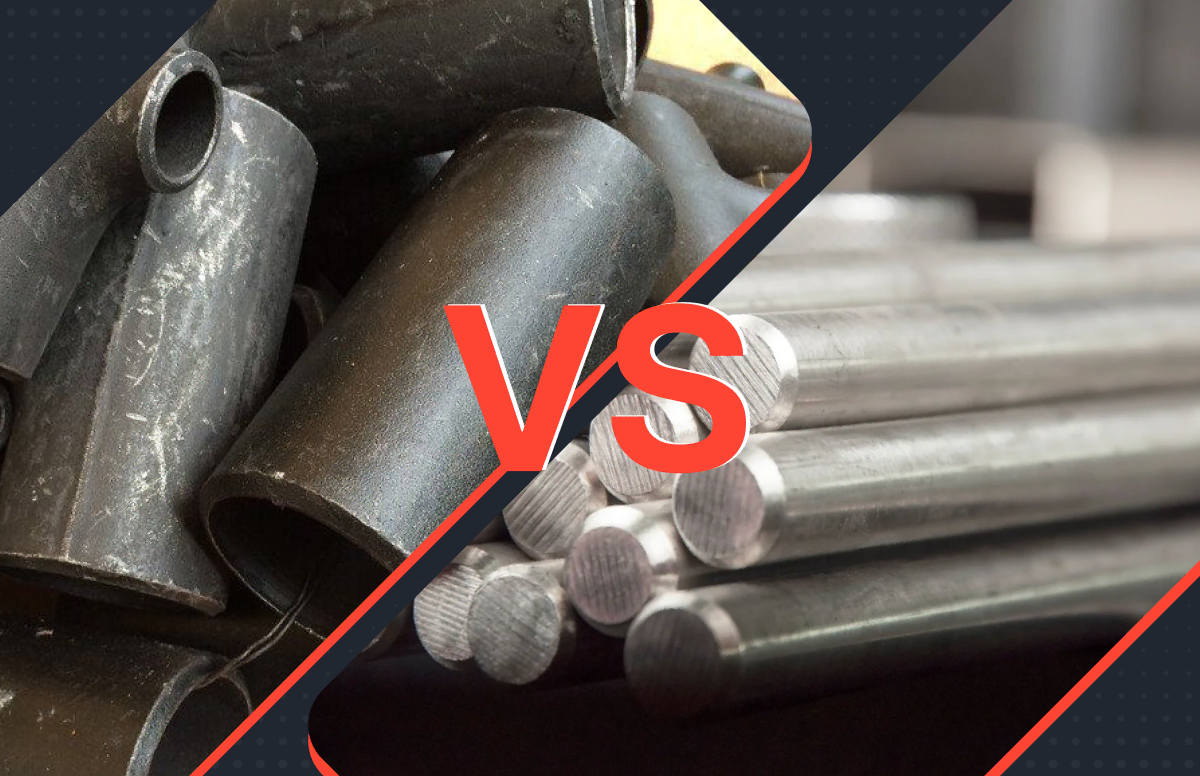
Is Cast Iron Better Than Stainless Steel? Make the Right Choice for Your CNC Machining Project
When designing precision components for industrial, automotive, or consumer applications, selecting the right material is a critical decision that impacts performance, durability, and cost. Two commonly compared metals in CNC machining are cast iron and stainless steel—each offering distinct mechanical properties and suitability depending on the application. Understanding their differences ensures optimal functionality and manufacturing efficiency.
Cast iron is prized for its excellent vibration damping capacity, making it ideal for machine tool bases, engine blocks, and heavy-duty industrial equipment. It exhibits good wear resistance and compressive strength, allowing it to maintain structural integrity under sustained loads. However, cast iron is brittle compared to steel, limiting its use in high-tensile or impact-prone environments. Its machinability is generally favorable due to the graphite content, which acts as a natural lubricant during cutting operations. Still, cast iron produces more tool wear than softer metals and requires proper dust control during CNC processing.
Stainless steel, on the other hand, excels in corrosion resistance and tensile strength. Grades such as 304 and 316 are widely used in medical devices, food processing equipment, and marine applications where exposure to moisture and chemicals is a concern. While stainless steel offers superior ductility and toughness, it can be more challenging to machine due to work hardening—where the material becomes harder during cutting, increasing tool wear and requiring precise feed and speed parameters. Despite this, advancements in CNC tooling and cooling techniques have made stainless steel a reliable option for high-precision components.
The choice between cast iron and stainless steel ultimately depends on your project’s operational environment, performance requirements, and production constraints. Below is a comparative overview of key mechanical properties:
| Property | Cast Iron (Gray) | Stainless Steel (304) |
|————————–|————————|—————————-|
| Tensile Strength (MPa) | 150–400 | 505–860 |
| Yield Strength (MPa) | 100–350 | 215–310 |
| Elongation at Break (%) | 0.2–3.0 | 40–60 |
| Hardness (HB) | 150–250 | 150–200 |
| Corrosion Resistance | Low | High |
| Damping Capacity | Excellent | Poor |
| Machinability Rating | Good | Moderate |
At Shenzhen Honyo Prototype, we specialize in CNC machining services that deliver precision-engineered parts from both cast iron and stainless steel. Our team supports material selection, design optimization, and rapid prototyping to ensure your project meets technical and economic goals.
Ready to start your next manufacturing project? Contact Susan Leo at info@hy-proto.com for expert guidance and a customized quote. Let Honyo Prototype be your trusted partner in high-precision CNC machining.
🚀 Rapid Prototyping Estimator
Get a rough estimate for CNC/3D Printing costs.