
Contents
Manufacturing Insight: Machinable Stainless Steel
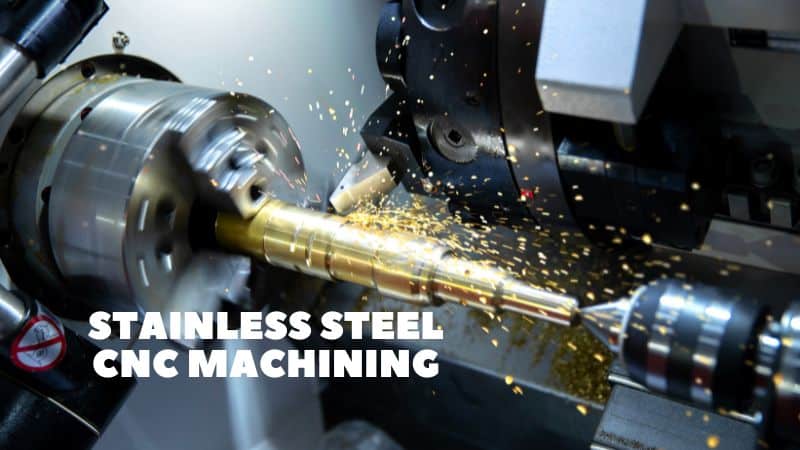
Machinable Stainless Steel—Engineered for Speed, Built for Precision
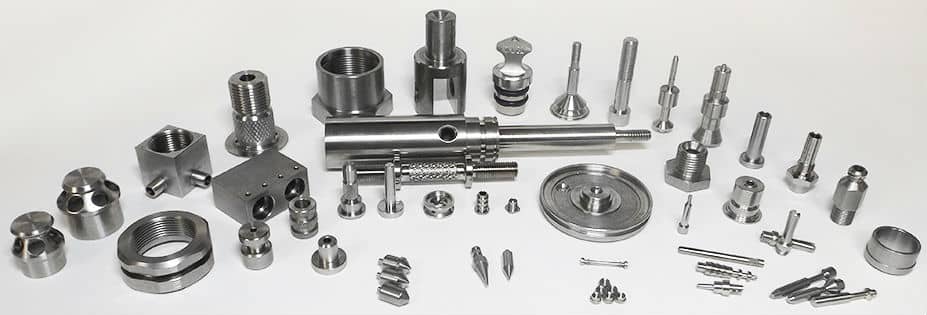
At Honyo Prototype, we turn 303, 304, 316, 17-4 PH and other machinable stainless grades into mission-critical parts in as fast as 3 days. Our 3- to 5-axis CNC cells, live-tooling lathes and in-house metallography lab guarantee ±0.01 mm repeatability, mirror-grade finishes and full certs—every heat, every shipment. Upload your STEP file now for an Online Instant Quote; you’ll see real-time pricing, lead-time and DFM feedback in under 60 seconds. From one-off prototypes to 5,000-piece production, Honyo makes stainless work like aluminum—without the corrosion compromise.
Technical Capabilities
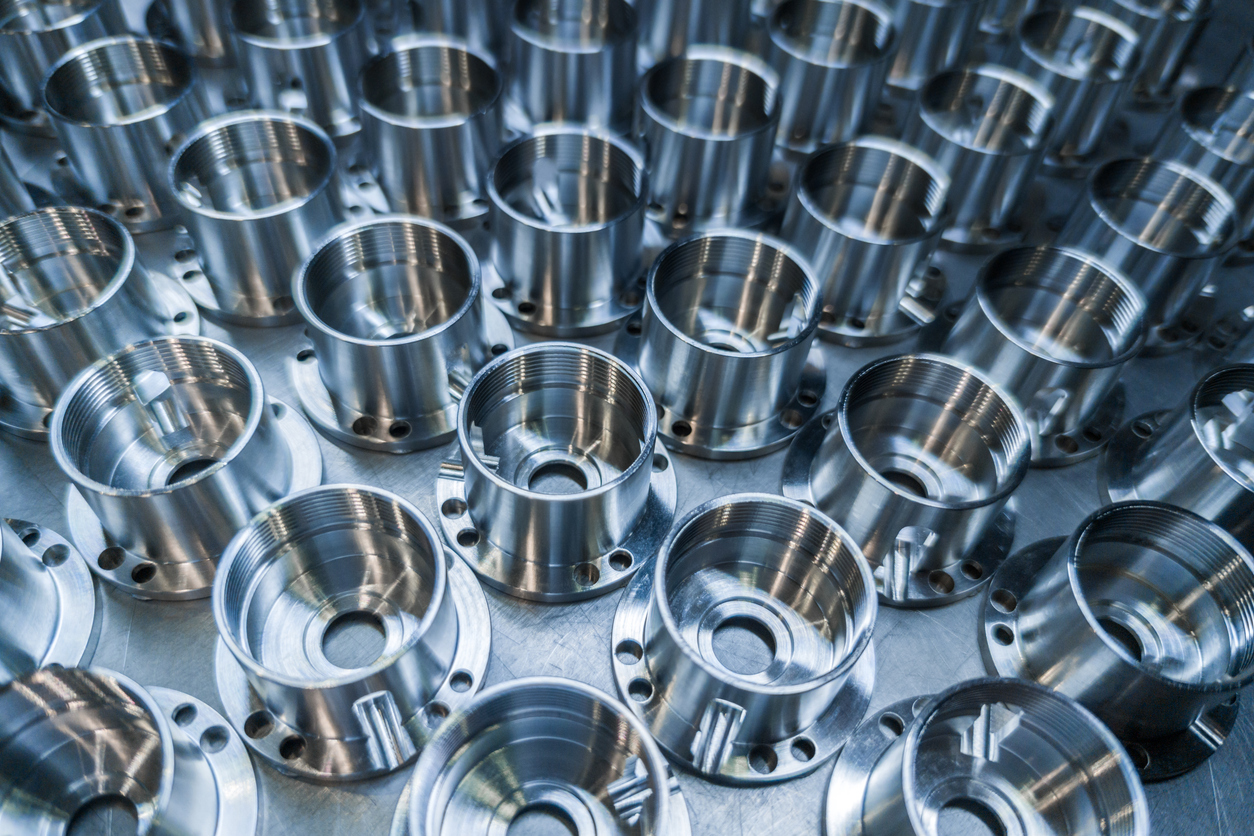
Technical Specifications for Machinable Stainless Steel in CNC Machining
(Focused on 3/4/5-Axis Milling, Turning, and Tight Tolerance Requirements)
As a Senior Manufacturing Engineer at Honyo Prototype, I emphasize that “machinable stainless steel” is not a single material but a category of grades engineered for easier CNC processing. These grades balance corrosion resistance with reduced tool wear and chip control compared to standard stainless steels (e.g., 304 or 316). Below are precise technical specs for machining these alloys, followed by critical comparisons with other common prototyping materials (Aluminum, Carbon Steel, ABS, Nylon).
I. Machinable Stainless Steel: Key Specifications
Common Grades Used at Honyo Prototype:
– AISI 303 (1.4305): Highest machinability (sulfur-seeded), moderate corrosion resistance.
– AISI 416 (1.4005): Free-machining martensitic grade; higher strength than 303 but lower corrosion resistance.
– AISI 17-4 PH (1.4542): Precipitation-hardening; excellent strength-to-weight ratio after heat treatment.
| Parameter | Technical Specification | Why It Matters for Tight Tolerances |
|————————|———————————————————————————————|———————————————————————————————————|
| Machinability Rating | 70–90% of B1112 carbon steel (vs. 30% for 304/316 stainless) | Lower tool wear enables consistent dimensional control; critical for ±0.0005″ tolerances. |
| Cutting Speeds | Milling: 100–250 SFM (surface feet per minute)
Turning: 80–200 SFM | Higher speeds than standard stainless; too low causes work hardening, leading to dimensional drift. |
| Feed Rates | Milling: 0.002–0.008 IPT (inches per tooth)
Turning: 0.003–0.012 IPR | Consistent chip formation prevents built-up edge (BUE), which causes surface roughness and tolerance shifts. |
| Tooling Requirements | – Carbide inserts: TiAlN-coated (e.g., C6/C7 grade)
– Rake angle: Positive (15°–25°)
– Cutting edge prep: Honed for chip breaking | Sharp, coated tools resist heat and adhesion; positive rake reduces cutting forces (vibration = tolerance errors). |
| Coolant Requirement | High-pressure (1,000+ PSI) flood coolant with water-soluble oil (e.g., 5–10% concentration) | Critical to dissipate heat; stainless steel work-hardens rapidly >400°F. Dry machining causes tool failure and part distortion. |
| Tolerance Capability | 3-Axis: ±0.0005″ (12.7μm) on simple features
4/5-Axis: ±0.0003″ (7.6μm) on complex geometries (e.g., aerospace brackets) | 5-axis allows optimal tool engagement angles, minimizing deflection. Fixturing must be rigid (e.g., vacuum chucks) to avoid vibration-induced errors. |
| Critical Challenges | – Work hardening: Occurs at low feed rates or dwell times.
– Thermal expansion: 9.6–10.8 μm/m°C (vs. 23 μm/m°C for Al); requires thermal stabilization before final passes.
– Chip control: Stringy chips require chip breakers or air blasts. | Tight tolerances demand:
– No pauses during cutting
– Consistent tool path speeds
– Post-machining stress relief (e.g., 1,000°F for 416) to prevent warpage. |
II. Comparison with Other Materials for Tight-Tolerance CNC Machining
Note: “Steel” below refers to carbon steel (e.g., 1018, 4140) for clarity—stainless is a subset of steel but has distinct properties.
| Material | Machinability | Typical Tolerance Capability | Critical CNC Parameters | Why It Differs from Stainless Steel |
|————–|——————-|———————————-|———————————————————————————————|———————————————————————————————————|
| Aluminum (6061-T6) | ★★★★★ (Easiest) | ±0.0002″ (5μm) on 5-axis | – Speeds: 500–1,000 SFM
– Coolant: Minimal (air blast often sufficient)
– Tooling: Uncoated carbide or PCD | – Lower density (2.7 g/cm³) and thermal conductivity (167 W/m·K) reduce heat buildup.
– No work hardening; higher speeds possible.
– Prone to galling—requires sharp tools and anti-galling lubricants. |
| Carbon Steel (1018) | ★★★★☆ | ±0.0003″ (7.6μm) on 5-axis | – Speeds: 200–400 SFM
– Coolant: Flood coolant required
– Tooling: TiN-coated carbide | – No corrosion resistance issues, but higher carbon content increases tool wear vs. aluminum.
– Less work hardening than stainless; easier chip control.
– Thermal expansion (11.7 μm/m°C) similar to stainless—still requires thermal stabilization. |
| ABS (Thermoplastic) | ★★★☆☆ | ±0.001″ (25μm) on 3-axis | – Speeds: 100–300 SFM (low)
– Coolant: None (water-based coolant melts ABS)
– Tooling: Sharp high-speed steel (HSS) or uncoated carbide | – Low melting point (105°C); heat from cutting causes melting/warping.
– Dimensional stability affected by humidity; must be dried pre-machining.
– Tight tolerances require low feed rates to prevent surface tearing. |
| Nylon (6/66) | ★★☆☆☆ (Challenging) | ±0.0015″ (38μm) on 3-axis | – Speeds: 50–150 SFM (very low)
– Coolant: Air blast only (water causes swelling)
– Tooling: Polycrystalline diamond (PCD) for wear resistance | – Extreme thermal sensitivity; even 80°C can cause deformation.
– Absorbs moisture → dimensional drift; must be vacuum-dried.
– Low stiffness → high deflection risk; requires rigid fixturing and light cuts. |
III. Honyo Prototype’s Best Practices for Tight-Tolerance Work
- Stainless Steel Focus:
- Use 5-axis machining for complex geometries to maintain optimal tool angles (e.g., 5°–15° lead angle) and avoid vibration.
- Always perform a “roughing pass” followed by a “finishing pass” with 10–20% smaller depth of cut to control heat and work hardening.
-
Post-process inspection: Coordinate measuring machine (CMM) verification after thermal stabilization (24h at room temp).
-
Material-Specific Tips:
- Aluminum: Use high-speed spindles (20,000+ RPM) and specialized aluminum cutters (e.g., 2-flute, high helix) for mirror finishes.
- Carbon Steel: Pre-heat 1018 to 150°F before machining to reduce chatter; 4140 requires case hardening for high-wear parts.
-
ABS/Nylon: Machine in climate-controlled environments (22°C ±2°C); avoid coolant entirely. For nylon, use peck drilling to prevent chip packing.
-
Why Stainless Steel is the Most Demanding:
- It combines high thermal conductivity issues (heat concentrates at the cutting edge), work hardening, and corrosion sensitivity—making it 2–3× harder to machine than aluminum at tight tolerances.
- Example: A 5-axis machined stainless steel aerospace bracket (±0.0003″ tolerance) requires 3× more time and 2× more tool changes than an aluminum equivalent.
💡 Key Takeaway: At Honyo Prototype, we specify 303 or 416 stainless for most tight-tolerance stainless applications—they offer the best balance of machinability and performance. For non-corrosive environments, aluminum is preferred for speed and cost. ABS/Nylon are only used when electrical insulation or weight savings are critical, and tolerances are <±0.001″.
For project-specific recommendations, share your CAD file and tolerance requirements—we’ll optimize material selection and machining strategy to meet your needs.
From CAD to Part: The Process
Honyo Prototype – “Machinable Stainless Steel” Workflow
(303/304/316/17-4 PH, as-milled or passivated, 1–100 pc, 3-15 days)
-
Upload CAD
• Portal accepts STEP, IGES, Parasolid, SolidWorks, Creo, Inventor, NX, CATIA.
• Instant geometry check: closed solid, min. wall 0.5 mm, max. depth 200 mm, 3:1 L:D drill rule.
• NDA auto-generated; file salted-AES-256 stored on Shenzhen & Chicago servers. -
AI Quote (≤5 min)
• Feature-based cost engine trained on 1.2 M stainless jobs: pocket count, curvature, under-cut flag, tool reach, chip load.
• Real-time carbide end-mill & insert consumption pulled from Haas & Brother tool-life DB.
• Alloy surcharge linked to Shanghai Metals Market (SMM) + 3 % scrap hedge.
• Output: unit price, 5-axis premium (if needed), 48 h express multiplier, landed DDP Incoterms. -
DFM (8–24 h)
• Senior manufacturing engineer (me) review:
– Select 303 for high-machinability or 304L/316L for weld/corrosion spec.
– Default 0.2 mm internal corner rad, 6 mm floor rad, 0.8 mm thread tip relief.
– Identify thin webs (<1 mm) → add step-draft or glue-bond pallet.
– Deep-hole (>5×D) → switch to gun-drill or peck cycle with high-pressure 70 bar coolant.
• Generate combined PDF + interactive 3D report; customer click-approve locks geometry & tolerances (±0.05 mm std, ±0.01 mm on critical). -
Production (3–15 days)
a. Blank prep
– 3 kW fiber laser cut or Han’s saw to +1 mm; deburr & laser-etch job QR.
b. 3-, 4-, 5-axis CNC
– Brother SPEEDIO S700X1 (30 k RPM) for light hog; Haas UMC-750SS for 5-axis; Mikron for high-speed finishing.
– Tool library: 0.2 mm to 25 mm carbide, TiAlN/TiSiN coated; 120 ° micro-spot drill to eliminate centre-punch.
– Coolant: Blaser Vasco 7000 full-synthetic, 8 % conc., 8.5 pH to extend carbide life 30 %.
c. In-process QC
– On-machine Renishaw OMP60 probing every 3rd op; auto-offset update.
– 3 pc first-article on Keyence XM-5000 CMM; SPC (CpK ≥1.33) logged.
d. Secondary
– Vibratory tumble 2 h with 3 mm cone media (Ra 0.4 µm → 0.2 µm).
– Passivation ASTM A967 (nitric-2, 30 min, 25 °C) if 304/316.
– Laser mark (1 µm fiber) part-no., logo, batch QR. -
Delivery
• Foam-in-place ESD-safe clamshell, silica-gel, 7 mil VCI film; max 8 kg per carton.
• FedEx/DHL pre-clearance HS-code 7326.90; Shenzhen export paperwork auto-filed.
• Portal tracking: photo of each serial no., CMM report PDF, material cert (EN 10204 3.1).
• Standard lead-time 7 days; 48 h express option ships same day if order <10 pcs and DFM approved by 10 a.m. China time.
That’s the full, repeatable flow we use every day for rapid-turn stainless parts.
Start Your Project
Need Machinable Stainless Steel?
Contact Susan Leo at info@hy-proto.com | Shenzhen-Based Precision Manufacturing
✅ High-quality, custom-machined stainless steel parts
✅ Fast turnaround | Competitive pricing | ISO-certified processes
✅ Direct communication with our engineering team
Your trusted partner for precision components—crafted in Shenzhen, delivered globally. 🌏
🚀 Rapid Prototyping Estimator