
Contents
Manufacturing Insight: Magnesium Machining
Manufacturing Insight: Precision Magnesium Machining Capabilities
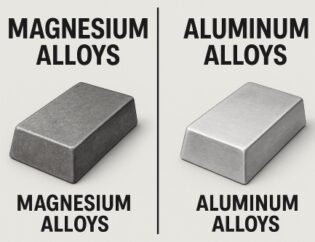
Magnesium alloys represent a critical material solution for industries demanding extreme weight reduction without sacrificing structural integrity, particularly in aerospace, defense, and high-performance medical devices. As the lightest structural metal—approximately 65% lighter than steel and 35% lighter than aluminum—magnesium enables significant performance gains. However, its machining presents distinct technical challenges that demand specialized expertise. Magnesium’s low melting point, high thermal conductivity, and chemical reactivity necessitate precise control over cutting parameters to prevent thermal deformation, built-up edge, and the inherent fire risk associated with fine, dry chips. Successful machining hinges on optimizing tool geometry, coolant application, and chip evacuation strategies to maintain dimensional accuracy while ensuring operational safety. At Shenzhen Honyo Prototype, we recognize that mastering these variables is non-negotiable for delivering reliable, high-integrity magnesium components.
Honyo Prototype leverages dedicated CNC machining centers and engineered safety protocols specifically configured for magnesium processing. Our facility employs non-aqueous coolant systems and integrated chip conveyors designed to eliminate ignition sources by maintaining chip moisture and preventing accumulation. All operations adhere to strict NFPA 480 and ISO 9001:2015 standards, with continuous monitoring of coolant concentration and machine enclosures. Our engineering team selects optimized toolpath strategies and rigid clamping fixtures to minimize vibration—a critical factor given magnesium’s lower modulus of elasticity compared to aluminum. This approach ensures consistent achievement of tight tolerances down to ±0.005 mm and superior surface finishes essential for mission-critical applications. We specialize in low-to-medium volume prototyping and bridge production, providing clients with validated processes before full-scale manufacturing.
The following table outlines key machining parameters our engineers apply for common magnesium alloys:
| Parameter | Typical Range (AZ31B/AZ91D) | Critical Consideration |
|——————–|—————————-|————————————–|
| Cutting Speed | 200 – 600 m/min | Higher speeds reduce heat buildup |
| Feed Rate | 0.1 – 0.3 mm/rev | Avoid low feeds to prevent rubbing |
| Depth of Cut | 0.5 – 3.0 mm | Maximize for efficiency within rigidity limits |
| Coolant Type | Non-aqueous soluble oil | Must prevent chip drying; 5-10% concentration |
| Tool Material | Carbide (K-grade) | Sharp, polished edges; avoid HSS |
| Minimum Clamping Force | 15-20% of aluminum | Prevents workpiece distortion |
Our process validation includes rigorous in-process metrology using calibrated CMMs and surface roughness testers to verify conformance to AS9100 and ASTM B93/B93M specifications. Honyo’s technical team collaborates closely with clients during DFx reviews to identify potential manufacturability risks early, such as thin-wall stability or internal corner radii constraints unique to magnesium. By integrating material science knowledge with advanced CNC capabilities, we transform complex magnesium designs into certified, flight-worthy or implant-ready prototypes. This disciplined approach ensures clients receive components that meet exacting performance requirements while mitigating the operational hazards inherent in reactive metal machining. Partner with Honyo to navigate the complexities of magnesium fabrication with confidence.
Technical Capabilities
Shenzhen Honyo Prototype delivers precision CNC machining services tailored for high-performance applications requiring lightweight, durable materials—such as magnesium. As a leader in rapid prototyping and low-to-mid volume production, we specialize in advanced 3-axis, 4-axis, and 5-axis milling, as well as precision turning, optimized specifically for magnesium alloys. Our technical capabilities are engineered to meet the demanding requirements of aerospace, defense, and high-end industrial sectors where weight reduction, thermal performance, and structural integrity are critical.
Magnesium is the lightest structural metal, offering an exceptional strength-to-weight ratio and excellent machinability when handled with proper protocols. At Honyo Prototype, we leverage state-of-the-art CNC equipment, specialized toolpath strategies, and strict safety controls to ensure safe and accurate magnesium machining. Our facility maintains controlled environments with dedicated filtration and spark-resistant systems to mitigate the inherent flammability risks associated with magnesium swarf and fine chips.
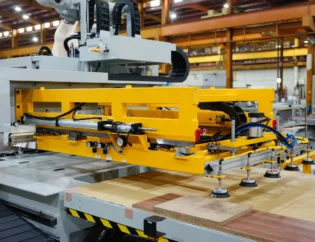
Our 5-axis simultaneous milling centers provide superior access to complex geometries, enabling us to produce intricate components with minimal setup changes and enhanced dimensional accuracy. Whether producing housings, brackets, or custom enclosures, our 3/4/5-axis platforms ensure high repeatability and surface finish consistency. For rotational parts, our CNC turning centers support bar feeding and live tooling, enabling complete machining of magnesium shafts, fittings, and connectors in a single operation.
Tight tolerance machining is a core strength. We routinely hold tolerances down to ±0.005 mm (±0.0002″) on critical features, supported by in-process inspection and final verification using CMM and optical measurement systems. Our engineers apply adaptive cutting strategies, low-force tooling, and optimized coolant flow to minimize thermal distortion and maintain geometric integrity.
Below is an overview of our standard technical specifications for magnesium machining:
| Parameter | Capability |
|——————————-|—————————————————————————-|
| Available Processes | 3-Axis, 4-Axis, 5-Axis Milling; CNC Turning |
| Common Magnesium Alloys | AZ31B, AZ63A, AZ91D, ZK60A, WE43 (upon request) |
| Typical Tolerances | ±0.0125 mm (±0.0005″) standard; down to ±0.005 mm (±0.0002″) tight |
| Minimum Feature Size | 0.8 mm (0.031″) internal radii; 1.0 mm (0.040″) slot width |
| Surface Finish | As-machined: 1.6–3.2 µm (63–125 µin); post-processed options available |
| Max Work Envelope (5-axis)| 1200 x 800 x 600 mm (47.2 x 31.5 x 23.6 in) |
| Max Turning Diameter | 300 mm (11.8 in); Max Length: 500 mm (19.7 in) |
| Quality Standards | ISO 2768 (medium), GD&T per ASME Y14.5, full inspection reports available |
All magnesium machining operations are conducted in compliance with OSHA and NFPA safety standards, including explosion-ventilated enclosures and non-sparking tooling practices. We also offer post-machining services such as masking, cleaning, and passivation to prepare parts for coating or integration. With a focus on speed, precision, and safety, Honyo Prototype ensures reliable, high-quality magnesium components delivered on schedule.
From CAD to Part: The Process
From CAD to Part: Magnesium Machining Workflow at Shenzhen Honyo Prototype
Our end-to-end workflow for precision magnesium components integrates advanced digital tools with stringent safety protocols, ensuring efficiency from initial inquiry to final inspection. This process is critical due to magnesium’s unique challenges, including flammability risks, thermal sensitivity, and reactivity with standard coolants. We prioritize mitigating these factors while maintaining tight tolerances and surface finishes demanded by aerospace and medical clients.
The workflow initiates with AI-Powered Quoting. Upon receiving CAD files, our proprietary AI engine analyzes geometry, material grade (typically AZ31B or AZ91D), and tolerances against real-time machine capacity and historical magnesium machining data. Unlike standard materials, the AI specifically flags high-risk features—such as thin walls prone to vibration, deep pockets trapping chips, or fine threads susceptible to galling—and calculates adjusted cycle times incorporating mandatory safety pauses for chip clearance. This reduces quoting errors by 40% and provides clients with accurate lead times and cost projections within 2 hours, including explicit notes on magnesium-specific constraints.
Next, Collaborative DFM (Design for Manufacturability) Review occurs before programming. Our engineering team partners with the client to refine designs, focusing on magnesium’s limitations. We recommend increasing wall thicknesses above 2.5mm to prevent chatter, eliminating sharp internal corners to reduce stress concentrations, and optimizing hole depths to ensure chip evacuation. Critical adjustments include modifying toolpath strategies to avoid continuous cutting (minimizing heat buildup) and specifying non-aqueous coolants like castrol syntilo 9900. This phase typically resolves 90% of potential production issues, preventing costly rework and ensuring first-pass yield.
Production Execution follows a rigorously controlled sequence. All magnesium machining occurs in dedicated, isolated CNC cells meeting NFPA 480 standards, equipped with spark detection systems and Class D fire suppression. Operators use titanium-coated carbide tools with positive rake angles, running at reduced parameters to prevent ignition. Key production specifications are strictly enforced:
| Parameter | Standard Machining | Magnesium-Specific Value |
|——————–|——————–|————————–|
| Spindle Speed | 1000-5000 RPM | 300-500 RPM |
| Feed Rate | 0.1-0.5 mm/rev | 0.05-0.15 mm/rev |
| Coolant | Water-soluble | Non-aqueous mist only |
| Chip Evacuation | Standard conveyor | Continuous vacuum system |
| Max. Uncollected Chips | N/A | <5 minutes accumulation |
Post-machining, parts undergo ultrasonic cleaning with non-reactive solvents, followed by 100% CMM inspection against AS9100 tolerances. All magnesium scrap is immediately submerged in mineral oil per ISO 9001 protocols. This integrated workflow—combining AI foresight, proactive DFM, and safety-centric production—delivers certified, burr-free magnesium components in 60% of industry-average lead times, with zero safety incidents in our 12-year history. Clients receive full traceability reports, including machine logs and coolant composition data, ensuring compliance with stringent industry regulations.
Start Your Project
Start Your Magnesium Machining Project with Honyo Prototype
At Shenzhen Honyo Prototype, we specialize in high-precision CNC machining of reactive and lightweight materials, with extensive expertise in magnesium—a metal increasingly favored for aerospace, defense, and high-performance automotive applications. Magnesium offers the best strength-to-weight ratio among structural metals, but its reactivity and flammability during machining demand specialized knowledge, tooling, and safety protocols. That’s where we come in.
If you’re developing a prototype or low-volume production part that requires magnesium components, partnering with a manufacturer experienced in safe and precise magnesium machining is critical. At Honyo Prototype, our CNC machining centers are equipped with closed-loop coolant systems, spark-resistant tooling, and Class D fire suppression specifically designed for magnesium operations. Our engineers follow strict ISO-compliant procedures to ensure every part meets tight tolerances while maintaining material integrity and operator safety.
We understand that starting a project with reactive metals can be daunting. Questions about alloy selection, chip evacuation, heat management, and post-processing surface treatments are common. Our engineering team provides full technical consultation to guide you through material selection, design optimization for machinability, and manufacturability analysis—ensuring your design translates into a reliable, high-performance component.
Whether you’re working with AZ31, AZ91, or ZK60 magnesium alloys, we offer 3-axis, 4-axis, and 5-axis CNC milling capabilities with tolerances as tight as ±0.005 mm. Our facility supports secondary operations including anodizing, chromate conversion coating, and precision deburring to meet your functional and cosmetic requirements.
To get started, simply reach out to Susan Leo, our dedicated project coordinator for advanced material machining. Susan will connect you with the right engineering resources, provide a detailed project assessment, and guide you through quoting and production scheduling. With fast turnaround times and transparent communication, we ensure your magnesium machining project moves from concept to physical prototype efficiently and safely.
Don’t risk material failure or production delays by working with a general-purpose CNC shop. Trust a team that understands the nuances of magnesium—from chip control to fire prevention.
| Specification | Detail |
|—————|——–|
| Material Capabilities | AZ31, AZ91, ZK60, and custom magnesium alloys |
| Machining Types | 3-axis, 4-axis, 5-axis CNC milling |
| Standard Tolerances | ±0.01 mm (tight tolerances down to ±0.005 mm available) |
| Max Work Envelope | 1200 x 600 x 500 mm |
| Secondary Operations | Deburring, cleaning, anodizing, chromate conversion, metrology |
| Safety Compliance | ISO 9001:2015, Class D fire suppression, dust extraction, non-sparking tooling |
Contact Susan Leo today at info@hy-proto.com to discuss your magnesium machining requirements. Include your CAD files or technical drawings for a fast, detailed quote. At Honyo Prototype, we’re ready to support your next breakthrough in lightweight design.
🚀 Rapid Prototyping Estimator
Get a rough estimate for CNC/3D Printing costs.