
Contents
Manufacturing Insight: Nitric Acid Stainless Steel
Manufacturing Insight: Nitric Acid Resistant Stainless Steel Machining
Stainless steel alloys engineered for nitric acid service, primarily ASTM A276 grades 304L and 316L, present distinct challenges and opportunities in precision CNC machining. These low-carbon variants minimize chromium carbide precipitation during welding or thermal exposure, preserving the critical chromium oxide layer essential for resisting the aggressive oxidizing environment of nitric acid. However, their inherent properties – high work hardening rates, low thermal conductivity, and strong adhesion tendencies – demand specialized machining strategies far beyond standard stainless steel protocols. Successful fabrication requires meticulous control over cutting parameters, tool geometry, coolant application, and post-machining surface integrity to prevent micro-cracking, residual stress, or compromised passive layers that could initiate catastrophic corrosion in service.
At Shenzhen Honyo Prototype, we leverage deep metallurgical understanding and advanced CNC capabilities to consistently deliver nitric acid service components meeting stringent chemical processing industry requirements. Our process begins with rigorous material certification verification against ASTM A276 and A480 standards, ensuring correct composition and traceability. Machining employs rigid, high-precision 5-axis milling and turning centers equipped with through-spindle coolant systems. Crucially, we utilize sharp, fine-grain carbide tools with optimized positive rake geometries and specialized PVD coatings (such as TiAlN) designed specifically for austenitic stainless steels. This combination, paired with controlled, aggressive depths of cut to avoid work hardening zones and precisely managed feed rates, ensures clean shear and minimizes heat generation at the cutting edge. Continuous, high-volume coolant flow is non-negotiable, not only for lubrication and chip evacuation but critically for maintaining low workpiece temperatures to prevent thermal distortion and microstructural alteration.
The following table outlines key machining parameters and achievable tolerances for nitric acid resistant stainless steel grades at Honyo Prototype:
| Parameter | Typical Range (304L/316L) | Honyo Prototype Capability |
| :—————– | :———————— | :————————- |
| Spindle Speed | 60 – 120 m/min | Optimized per feature |
| Feed Rate | 0.10 – 0.30 mm/rev | Tight process control |
| Depth of Cut | 1.0 – 3.0 mm | Feature-dependent |
| Surface Finish (Ra)| 0.8 – 1.6 μm (Typical) | 0.4 μm Ra achievable |
| Dimensional Tolerance | ±0.025 mm (Standard) | ±0.005 mm achievable |
| Passivation Test | ASTM A967 (Nitric 1) | Mandatory for all parts|
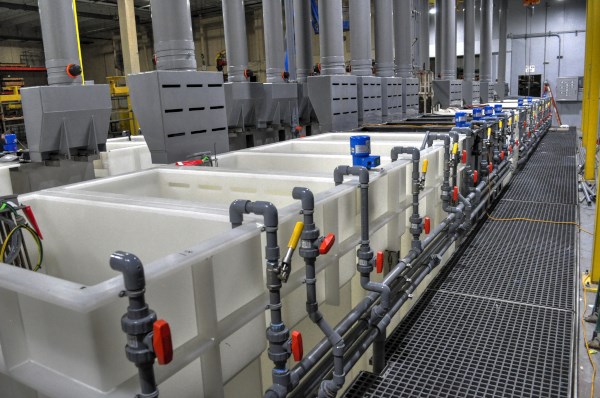
Critical to long-term performance is our integrated post-machining protocol. All components undergo precision vibratory finishing or electropolishing to eliminate micro-burrs and enhance surface smoothness, directly improving passive film formation. This is followed by mandatory passivation per ASTM A967 Method 1 (20-25% nitric acid, no sodium dichromate) to maximize corrosion resistance. Finally, Honyo implements a rigorous three-stage quality verification: CMM inspection for geometric accuracy, profilometer measurement for surface finish validation, and batch testing of passivation efficacy via copper sulfate testing per ASTM A380. This comprehensive approach, combining advanced CNC execution with metallurgical best practices and stringent quality control, ensures components manufactured by Honyo Prototype deliver reliable, long-term performance in demanding nitric acid environments, directly supporting our clients’ critical process integrity and safety requirements.
Technical Capabilities
Technical Capabilities: Precision CNC Machining of Nitric Acid-Resistant Stainless Steel
Shenzhen Honyo Prototype specializes in high-precision CNC machining of corrosion-resistant materials, with extensive expertise in processing stainless steel alloys specifically engineered for resistance to nitric acid environments. These materials are critical in chemical processing, pharmaceutical, semiconductor, and aerospace industries where long-term exposure to oxidizing acids demands exceptional material stability and dimensional accuracy. Our advanced 3, 4, and 5-axis milling centers, combined with high-precision CNC turning capabilities, enable the production of complex geometries with tight tolerances and superior surface finishes.
We routinely machine nitric acid-grade stainless steels such as ASTM A276/A479 compliant 304L, 316L, and specialized grades like 310S and 904L, which offer enhanced resistance to nitric acid corrosion due to controlled chromium, nickel, and molybdenum content. Material selection is optimized based on acid concentration, temperature exposure, and mechanical requirements. All materials are sourced from certified suppliers and undergo incoming inspection to ensure compliance with international standards.
Our 5-axis simultaneous machining technology allows for complete part fabrication in a single setup, minimizing cumulative errors and ensuring geometric accuracy for intricate components such as reactor fittings, pump housings, and valve bodies. Multi-axis capabilities support undercuts, compound angles, and deep cavity milling with tool access from multiple vectors, significantly reducing lead times and improving repeatability.
For high-integrity applications, we maintain tight process control across all machining stages. Our CNC turning centers achieve concentricity within ±0.005 mm and surface roughness down to Ra 0.4 µm, critical for sealing surfaces and rotating components. Advanced in-process probing and post-process CMM inspection ensure dimensional compliance, with full inspection reports available upon request.
The table below outlines our standard machining capabilities and achievable tolerances for nitric acid-resistant stainless steel components:
| Parameter | 3-Axis Milling | 4-Axis Milling | 5-Axis Milling | CNC Turning |
|——————————|———————-|———————-|———————-|———————-|
| Linear Tolerance | ±0.010 mm | ±0.010 mm | ±0.008 mm | ±0.005 mm |
| Positional Accuracy | ±0.010 mm | ±0.010 mm | ±0.005 mm | ±0.010 mm |
| Surface Roughness (Ra) | 0.8 µm | 0.8 µm | 0.4 µm | 0.4 µm |
| Maximum Work Envelope (mm) | 1000 × 600 × 500 | 800 × 600 × 500 | 600 × 600 × 500 | Ø500 × 800 |
| Minimum Feature Size | 0.5 mm | 0.5 mm | 0.3 mm | 0.2 mm |
| Typical Applications | Flanges, brackets | Manifolds, housings | Impellers, nozzles | Shafts, fittings |
All machined components undergo passivation per ASTM A967 (nitric acid method 2 or 3) to enhance surface oxide layer formation, ensuring optimal corrosion resistance. We support low to mid-volume production with rapid turnaround, backed by ISO 9001-compliant quality management systems. Shenzhen Honyo Prototype delivers engineered solutions where material integrity, precision, and reliability converge.
From CAD to Part: The Process
Production Process: CAD to Finished Part for Nitric Acid Stainless Steel Components
At Shenzhen Honyo Prototype, manufacturing precision components from nitric acid-resistant stainless steel (typically ASTM A240/A240M Type 316L or equivalent low-carbon grades) follows a rigorously defined workflow designed to ensure material integrity, dimensional accuracy, and corrosion resistance critical for chemical processing applications. This workflow integrates advanced digital tools with specialized CNC machining expertise, spanning from initial quotation through final inspection.
The process initiates with the AI-Powered Quotation System. Upon receipt of the customer’s CAD model (STEP, IGES, or native formats), our proprietary AI engine performs an immediate preliminary analysis. It identifies geometric complexity, potential thin-walled sections, tight tolerances, and critical features. Crucially, it cross-references the specified material grade against our internal database of nitric acid service requirements, flagging any potential conflicts with standard machining parameters or necessary post-processing steps. This enables rapid generation of an accurate, data-driven quote reflecting the specific challenges of machining low-sulfur, low-carbon stainless steel for corrosive environments, including material certification costs and mandatory passivation.
Subsequently, approved projects enter the Critical Design for Manufacturability (DFM) Review. Our senior manufacturing engineers conduct a deep-dive analysis focusing explicitly on nitric acid service demands. This phase is non-negotiable for material performance and involves verifying compliance with key parameters:
| DFM Checkpoint | Nitric Acid Stainless Steel Requirement | Purpose |
|—————-|—————————————-|———|
| Surface Finish | Ra ≤ 0.8 µm (32 µin) minimum | Minimizes crevices for acid entrapment and corrosion initiation |
| Material Certification | Mill Test Reports (MTRs) confirming ASTM A240 316L, low interstitials | Ensures chemical composition meets corrosion resistance standards |
| Geometric Tolerancing | GD&T analysis for flatness/cylindricity critical to sealing surfaces | Prevents stress concentrations and ensures seal integrity under pressure |
| Feature Accessibility | Verification of tool reach for internal cavities/chamfers | Avoids secondary operations that compromise passive layer |
Following DFM sign-off, the project moves to Precision CNC Production. Machining nitric acid stainless steel demands specialized parameters to prevent work hardening, galling, and thermal distortion. We utilize rigid CNC machining centers with high-pressure coolant delivery systems. Carbide tooling with polished flutes and specific geometries for austenitic stainless steel is employed. Strict adherence to optimized cutting parameters is enforced:
| Production Parameter | Nitric Acid Stainless Steel Setting | Reason |
|———————-|———————————–|——–|
| Spindle Speed | 30-50% lower than 304 stainless | Controls heat generation to avoid work hardening |
| Feed Rate | Moderate, consistent feeds | Prevents rubbing and built-up edge formation |
| Coolant | High-pressure, clean, non-chlorinated emulsion | Essential for chip evacuation and thermal management |
| Passivation | ASTM A967 Method 5 (20-25% Nitric Acid + Sodium Dichromate) | Restores chromium oxide layer post-machining |
All components undergo mandatory post-machining passivation in dedicated nitric acid baths to remove free iron and contaminants, followed by thorough deionized water rinsing and drying. Final inspection includes dimensional verification per the print, surface roughness validation, and visual examination for surface defects. Material traceability via MTRs is maintained throughout. This integrated workflow, from AI-driven quoting through nitric acid-specific DFM and production, ensures Honyo Prototype delivers components that meet the stringent reliability demands of chemical processing environments.
Start Your Project
Start Your Nitric Acid-Resistant Stainless Steel Project with Precision Engineering at Honyo Prototype
When engineering components that must withstand aggressive chemical environments, material integrity and manufacturing precision are non-negotiable. At Shenzhen Honyo Prototype, we specialize in CNC machining of nitric acid-resistant stainless steel, delivering high-performance parts tailored to the rigorous demands of aerospace, semiconductor, pharmaceutical, and chemical processing industries. Our expertise ensures that every component not only meets but exceeds industry standards for corrosion resistance, dimensional accuracy, and long-term reliability.
Stainless steel alloys such as 304L, 316L, and 904L are inherently resistant to nitric acid due to their high chromium and low carbon content, which promotes the formation of a stable passive oxide layer. However, maintaining this resistance through machining, heat treatment, and surface finishing requires advanced process control. At Honyo Prototype, we apply industry-best practices in passivation, pickling, and post-machining cleaning to preserve and enhance the material’s natural corrosion resistance. Our CNC machining processes are optimized to minimize work hardening and microstructural distortion—critical factors when working with austenitic stainless steels in aggressive environments.
We understand that your project’s success depends on more than just material selection—it hinges on precision, repeatability, and technical collaboration. That’s why our engineering team works closely with clients from the initial design phase through final inspection, ensuring manufacturability, cost-efficiency, and compliance with international standards such as ASTM A262 for intergranular corrosion testing and ISO 9001 for quality management.
Below is an overview of key stainless steel grades we machine for nitric acid service, along with their typical performance characteristics:
| Grade | Key Composition | Nitric Acid Resistance | Common Applications |
|——-|——————|————————|———————-|
| 304L | 18% Cr, 8% Ni, <0.03% C | Excellent in low-concentration, ambient temperature environments | Chemical tanks, piping, laboratory equipment |
| 316L | 16% Cr, 10% Ni, 2% Mo, <0.03% C | Superior resistance, especially under oxidizing conditions | Reactor vessels, heat exchangers, pharmaceutical systems |
| 904L | 20% Cr, 25% Ni, 4.5% Mo, Cu-added | Exceptional resistance to high-concentration nitric acid | Industrial acid handling, pollution control systems |
All components undergo rigorous in-process and final inspections using coordinate measuring machines (CMM), surface profilometers, and chemical spot testing to verify material authenticity and passive layer quality. We also offer full traceability documentation, including material test reports (MTRs) and first-article inspection reports (FAIRs), to support your compliance and quality assurance requirements.
Whether you’re developing a prototype or scaling to low-volume production, Honyo Prototype provides the technical depth, advanced equipment, and responsive service you need to move from concept to certified part quickly and confidently.
Ready to begin? Contact Susan Leo today at info@hy-proto.com to discuss your nitric acid stainless steel machining project. Let Honyo Prototype be your partner in precision, performance, and reliability.
🚀 Rapid Prototyping Estimator
Get a rough estimate for CNC/3D Printing costs.