
Contents
Manufacturing Insight: 12L14 Steel Material Properties
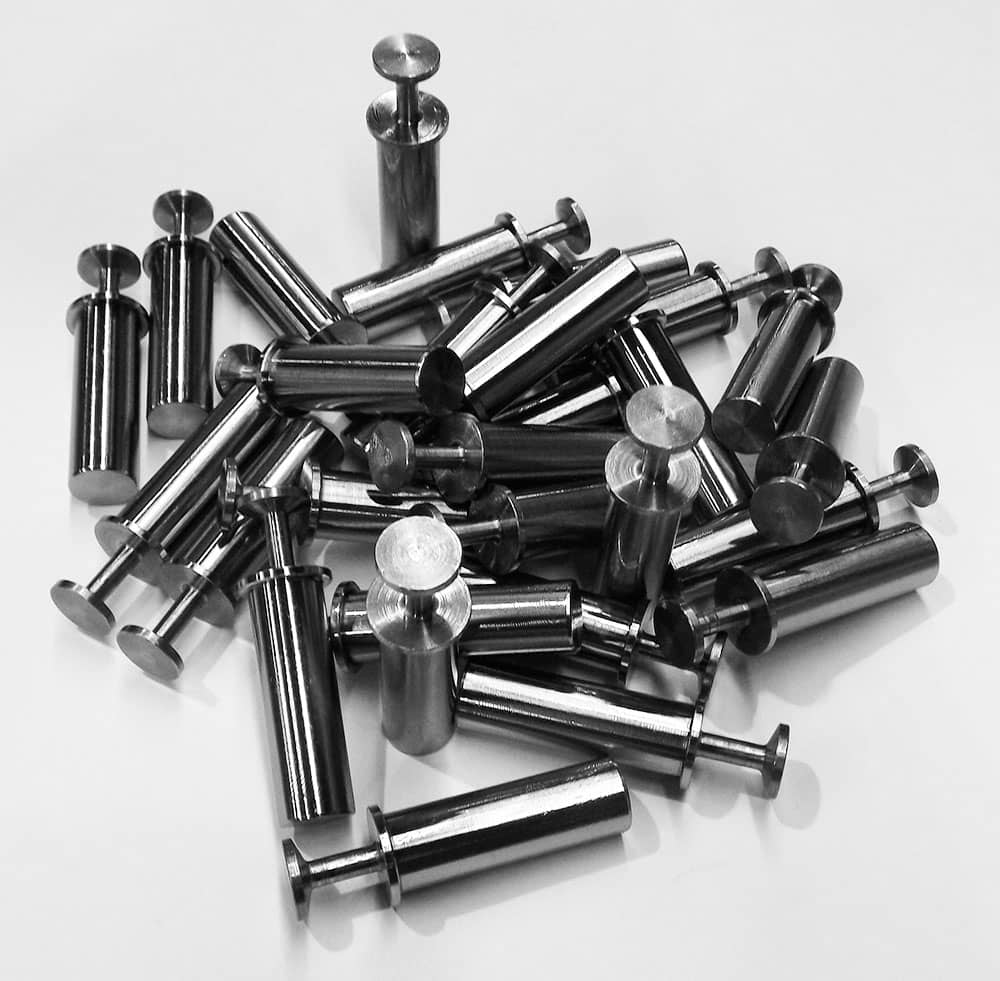
12L14 – the “free-machining” champion that turns hours of cycle time into minutes. At Honyo Prototype, we pair this leaded, resulphurized steel with our fleet of 3-, 4- and 5-axis CNC machining centers to give you precision parts in days, not weeks. Whether you need 1 prototype or 10,000 production pieces, upload your 3D file today and get an Online Instant Quote—complete with design-for-manufacturability feedback, lead time, and piece price—before your coffee cools.
Technical Capabilities
Technical Specifications for 12L14 Steel Material Properties in Precision Machining (3/4/5-Axis Milling, Turning, Tight Tolerance)
Prepared by: Senior Manufacturing Engineer, Honyo Prototype
Focus: Machinability, dimensional stability, and tight-tolerance capabilities for high-precision prototyping and production.
1. 12L14 Steel: Core Properties & Machining Characteristics
12L14 is a lead-containing free-machining carbon steel (ASTM A108/A29, SAE J403). Its composition and properties make it ideal for complex, high-precision machining but unsuitable for welding or high-stress applications.
| Property | Specification | Impact on 3/4/5-Axis Milling & Turning |
|—————————-|—————————————————|———————————————————————————————————–|
| Chemical Composition | C: 0.09–0.15%, Mn: 0.70–1.00%, P: 0.04–0.09%, S: 0.26–0.35%, Pb: 0.15–0.35% | Lead (Pb) acts as a chip breaker and lubricant, reducing tool wear and enabling high-speed machining. Sulfur (S) and phosphorus (P) enhance machinability but reduce ductility. |
| Tensile Strength | 500–600 MPa (72–87 ksi) | Moderate strength allows stable cutting without excessive tool deflection, critical for tight tolerances. |
| Hardness (Bhn) | 110–150 (as-rolled) | Soft enough for high feed rates but hard enough to maintain edge integrity in tight-tolerance operations. |
| Thermal Expansion (CTE)| 11.5 µm/m·°C (20–100°C) | Critical for tight tolerances: Low CTE minimizes dimensional drift during machining (vs. aluminum/plastics). Ideal for temperature-sensitive operations. |
| Machinability Rating | 100% (ASTM standard: 1212 steel = 100%) | Best-in-class for precision work: 20–30% faster cutting speeds than 1018 steel. Produces short, brittle chips (no stringy swarf), reducing rework. Surface finishes of Ra 0.4–0.8 µm achievable with sharp tools and coolant. |
| Tight Tolerance Capability | ±0.005 mm (±0.0002″) achievable in 5-axis milling/turning | Stable microstructure prevents warping during complex multi-axis operations. Consistent material removal ensures repeatability for features like ±0.010 mm roundness or ±0.005 mm flatness. |
| Key Limitations | ❌ Not weldable (lead causes cracking)
❌ Not heat-treatable (lead melts at 327°C)
❌ Avoid plating (lead can cause adhesion failure) | Requires careful process planning: no secondary heat treatments. Best for as-machined parts or light surface treatments (e.g., black oxide). |
Why 12L14 Excels in 3/4/5-Axis Milling & Turning:
– Chip Control: Lead particles fracture chips instantly, preventing chip entanglement in complex 5-axis geometries (e.g., internal cavities, undercuts).
– Tool Life: 2–3× longer tool life vs. non-free-machining steels (e.g., 1045), reducing tool change downtime.
– Surface Finish: Smooth cuts with minimal vibration, critical for optical or medical components requiring mirror finishes.
– Dimensional Stability: Low thermal expansion ensures parts maintain tolerances during prolonged machining (e.g., 8-hour runs on 5-axis centers).
– Real-World Example: Honyo Prototype uses 12L14 for aerospace sensor housings with ±0.005 mm concentricity on 5-axis milling. Lead content prevents built-up edge on carbide tools during deep pocket milling.
2. Comparative Material Analysis for Precision Machining
Key metrics for tight-tolerance applications (3/4/5-axis milling/turning):
| Material | Typical Grade | Machinability | CTE (µm/m·°C) | Tight Tolerance Capability | Key Strengths | Key Limitations |
|————–|——————-|——————-|——————-|——————————-|——————-|———————|
| 12L14 Steel | ASTM A108 | ★★★★★ (100%) | 11.5 | ±0.005 mm | Best chip control, low thermal drift, high surface finish quality | Not weldable/heat-treatable; limited to low-stress applications |
| Aluminum | 6061-T6 | ★★★★☆ (85%) | 23.6 | ±0.010 mm (with fixturing) | Lightweight, excellent thermal conductivity, easy to machine | High CTE causes dimensional drift; prone to galling; requires coolant control |
| ABS | General Purpose | ★★★☆☆ (70%) | ~80 | ±0.025 mm (with stress relief) | Low cost, good for prototypes, easy to CNC | High CTE; warps easily; absorbs moisture; poor dimensional stability in temp-varying environments |
| Nylon | PA6 or PA66 | ★★☆☆☆ (50%) | ~100 | ±0.050 mm (relatively loose) | Good wear resistance, chemical resistance | Extremely high CTE; hygroscopic (swells with moisture); poor for tight tolerances without environmental control |
Critical Insights for Tight-Tolerance Work:
- Aluminum (6061-T6):
- Best for lightweight, high-stiffness parts where CTE is managed (e.g., cooled spindles, fixtures).
- Tight-tolerance challenge: Thermal expansion is 2× higher than steel. Requires strict temperature control (±2°C) and fixturing to prevent deflection during 5-axis operations.
-
Honyo Tip: Use cryogenic cooling for finishes
24-hour runs without active temperature control. -
ABS (Acrylonitrile Butadiene Styrene):
- Ideal for non-critical prototypes (e.g., enclosures, jigs).
- Tight-tolerance challenge: CTE is 7× higher than steel – a 10°C temp change causes 0.08 mm drift per 100 mm part. Moisture absorption causes warpage (e.g., 0.5% water uptake → 0.1% dimensional change).
-
Honyo Tip: Dry ABS at 80°C for 4 hours pre-machining. Use sharp HSS tools at low speeds to avoid melting. Avoid for functional parts requiring precision.
-
Nylon (PA6/66):
- Used for wear-resistant components (e.g., gears, bushings) but not for tight-tolerance work.
- Tight-tolerance challenge: CTE is 8–9× higher than steel. Dimensional stability requires controlled humidity (40–50% RH) and annealing post-machining.
- Honyo Tip: Only use for non-critical prototypes; expect ±0.05 mm tolerances even with environmental controls.
3. Engineering Recommendations for Honyo Prototype Projects
- For Tight-Tolerance Steel Parts (±0.005 mm):
- Use 12L14 for complex geometries (e.g., aerospace fittings, medical implants) where chip control and stability are paramount.
-
Process:
- 5-axis milling: 1,200–1,800 SFM, 0.05–0.10 mm/rev feed, with water-soluble coolant.
- Turning: 200–300 m/min speed, 0.1–0.2 mm/rev feed.
- Always anneal before machining to relieve stresses (650°C for 1 hour, then furnace cool).
-
When to Avoid 12L14:
- If heat treatment, welding, or high-temperature exposure (>200°C) is required → switch to 4140 steel (heat-treatable) or 17-4 PH stainless (corrosion-resistant).
-
For electrical conductivity or non-magnetic parts → use aluminum 6061-T6 (with strict temp control) or brass C11000.
-
Plastics for Prototyping Only:
- ABS/Nylon are acceptable for concept models or non-functional jigs, but never for high-precision functional parts. Use them when cost/speed outweighs tolerance needs.
Honyo Prototype Best Practice: Always verify material lot certificates for 12L14 – inconsistent lead content (>0.35% Pb) causes tool chatter. For critical aerospace/medical parts, we specify 12L14 with “low-sulfur” variants (S <0.20%) to improve fatigue strength while retaining machinability.
For further details on material selection for your specific application, contact Honyo Prototype’s Engineering Team for a free design-for-manufacturability (DFM) review.
From CAD to Part: The Process
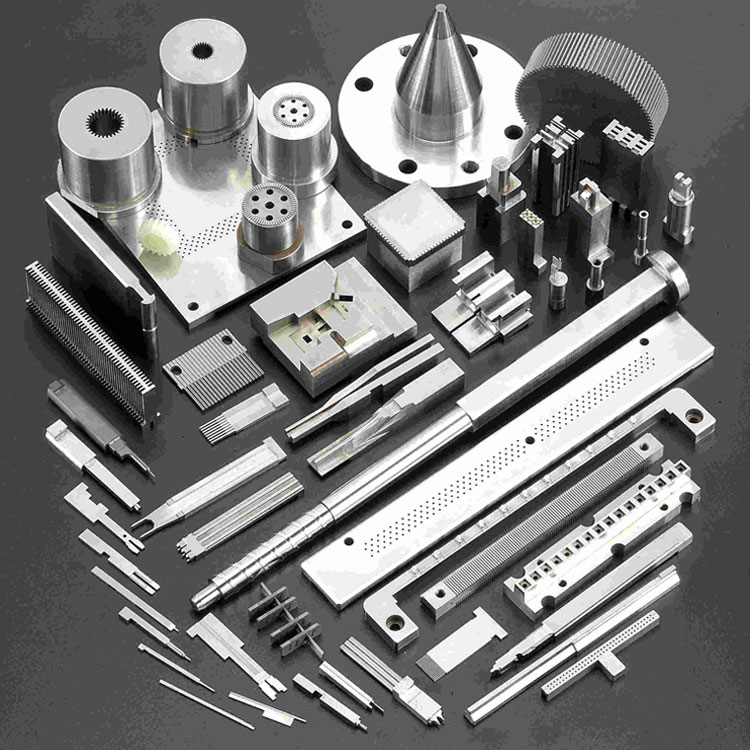
At Honyo Prototype the words “12L14 steel material properties” are not just a line-item on a print—they are the design driver for every step of our rapid-turn CNC workflow. Below is what actually happens inside our system once you click “Upload CAD” and select 12L14.
-
Upload CAD
• Our portal automatically tags the file with “Steel-Free-Cutting” and runs a first-pass geometry extract (volume, max turn diameter, min drilled hole, deepest pocket, thinnest wall).
• The AI Quote engine immediately pulls the 12L14 material master:
– Density 7.87 g/cm³
– Typical delivery hardness 160-190 HB (as-rolled)
– Ultimate tensile 540 MPa, yield 415 MPa, elongation 10 %
– High sulfur (0.26–0.35 %) = 30 % better tool life, 25 % lower cutting force vs. 1215.
• With those constants the algorithm predicts cycle time, feeds, speeds, and chip control strategy before a human even sees the part. -
AI Quote (≤ 5 min)
• Cost model adds a 5 % material overrun to cover the “chip weight” 12L14 loses in its brittle, powdery chips.
• Lead-time calendar auto-blocks Monday morning for sulfur-free jobs that could cross-contaminate 12L14 parts.
• You receive a quote that already includes any required stress-relief or reaming allowance—12L14 can grow 25 µm after heavy machining if stress relief is skipped. -
DFM (same day)
• Feasibility engine flags:
– Walls < 0.5 mm: risk of edge tear-outs due to MnS stringers.
– Tapped holes < M2: suggests roll-tap instead of cut-tap to reduce pull-out.
– Weld symbols: warns that 12L14 is NOT recommended for fusion welding; offers 12L14+1215 hybrid or alternative alloy.
• A human manufacturing engineer reviews, adds any post-plate diameter offsets (12L14 plating adhesion is lower because of surface sulfur; we pre-bake 190 °C/2 h and add 0.01 mm stock).
• Final DFM package released to production with optimum chipload 0.08 mm/tooth (vs 0.06 mm for 1018) to exploit the free-machining edge. -
Production (1–3 days)
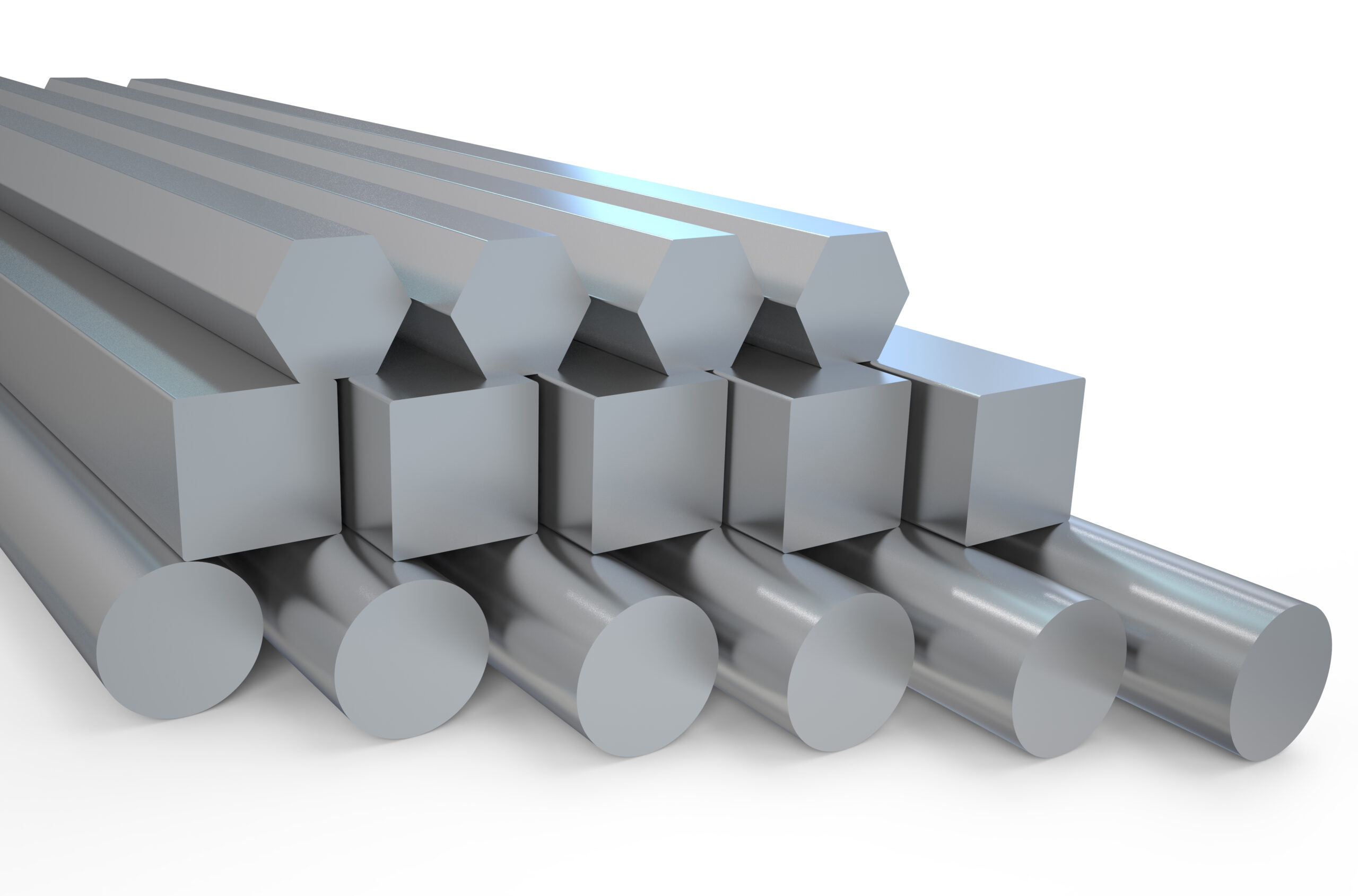
• Bar stock is 12 mm–75 mm hot-rolled, mill-certified to ASTM A108, sulfur print verified on first slice.
• CNC lathes run oil-based coolant at 8 % concentration to flush the abrasive MnS chips; chip conveyors are set to 5 min cycle to avoid bird-nest fires.
• In-cycle air-blast every 3rd pass keeps sulfur deposits off the tool flank, holding 0.025 mm dimensional Cpk ≥ 1.67.
• If part has reamed bores, we schedule a 190 °C/1 h low-temp stress relief before final ream to hit 0.01 mm roundness.
• Surface finish target 1.6 µm Ra is achieved without grinding—12L14 naturally “shears” glossy under sharp carbide. -
Delivery
• Parts are VCI-bagged with desiccant within 2 h of final wash; sulfur residue can initiate rust spots in < 24 h if left unprotected.
• CMM report includes hardness spot-check (converted from Leeb rebound) to confirm 160-190 HB range.
• Mill test report (MTR) and a short “12L14 Data Card” (tensile, yield, chemistry, magnetic permeability µr ≈ 700) travel with every shipment—handy if your end-customer suddenly asks “why is this part so magnetic?”
Bottom line: when you choose 12L14 at Honyo you are not just ordering “steel.” Our pipeline is tuned to exploit its high-sulfur machinability, compensate for its welding & plating quirks, and deliver turned parts in days instead of weeks.
Start Your Project
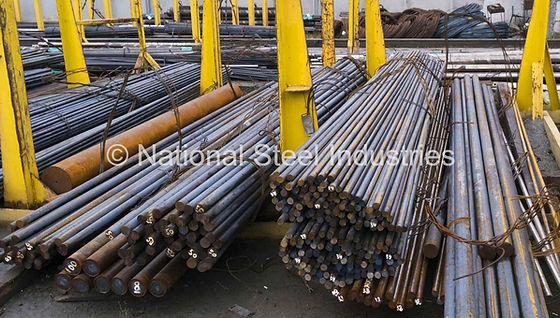
Unlock precision with 12L14 steel—engineered for performance.
Contact Susan Leo at info@hy-proto.com for expert material specifications, machining guidance, and custom solutions.
Honyo Prototype’s Shenzhen factory delivers high-precision components, on time, every time. 🛠️
🚀 Rapid Prototyping Estimator