
Contents
Manufacturing Insight: Aluminium Die Casting Companies
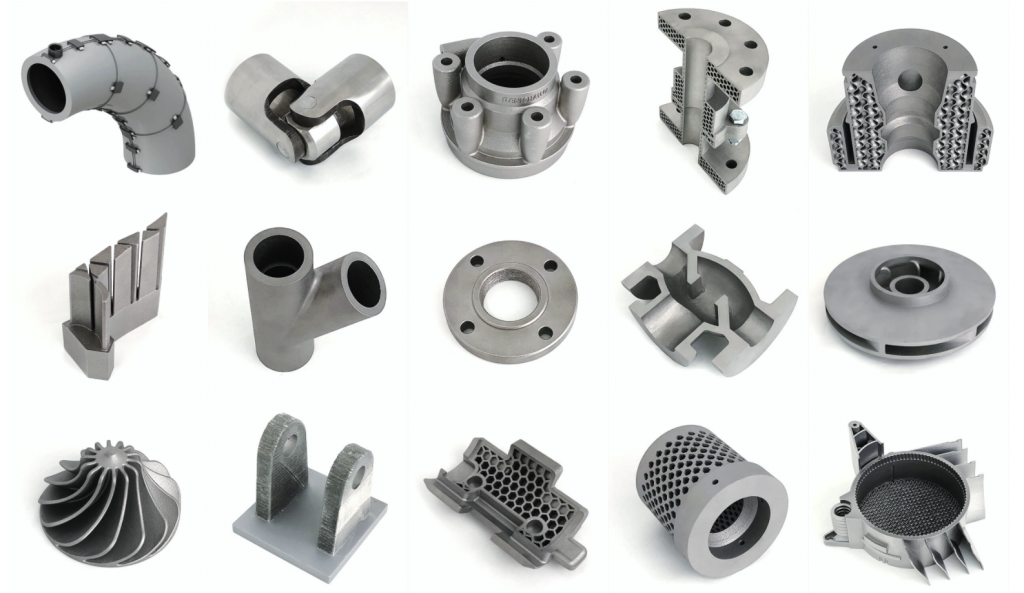
Aluminium die-casting companies no longer have to choose between speed and precision.
At Honyo Prototype we combine high-pressure die-casting know-how with a 200+ machine CNC department that finishes, machines and as-casts parts to ±0.01 mm—often within the same 7-day window. Upload your 3D file today and receive an Online Instant Quote for both the casting and the 5-axis CNC finishing in minutes, so you can go from tool release to validated parts faster than any traditional supply chain.
Technical Capabilities
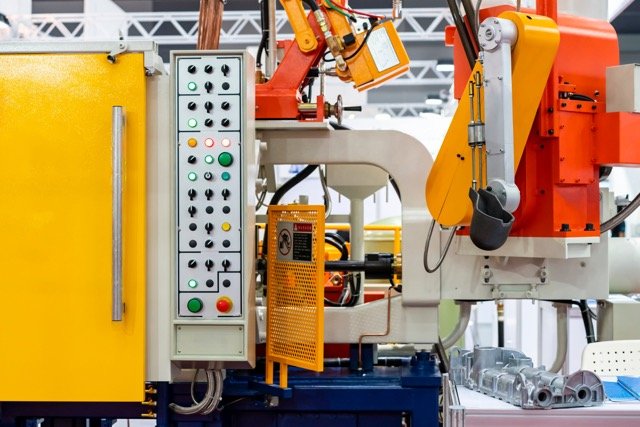
Clarification & Correction: Critical Misconception Addressed
There is a fundamental misunderstanding in your query. Aluminium die casting companies do NOT perform 3/4/5-axis milling, turning, or handle ABS/Nylon plastics. Die casting is a molding process for molten metal, while milling/turning are subtractive machining processes typically handled by separate CNC machining shops. ABS/Nylon are plastics and are processed via injection molding (not die casting).
To provide accurate technical specs, I’ll break this down into two distinct realities:
1. What aluminium die casting companies actually do (correct scope).
2. What CNC machining companies do for milling/turning (your stated focus).
✅ 1. TRUE TECHNICAL SPECS FOR ALUMINIUM DIE CASTING COMPANIES
(Focus: Casting Process Only – NO milling/turning, NO ABS/Nylon)
| Parameter | Typical Specifications | Notes |
|————————|——————————————————————————————–|—————————————————————————|
| Primary Materials | Aluminum Alloys Only:
– A380 (most common)
– A383
– A413
– 380/383
– 413
– 518 (for marine applications) | Steel is NOT die cast (melting point too high for standard dies).
ABS/Nylon are plastics – processed via injection molding, not die casting. |
| Tolerance Capability | • Dimensional: ±0.005″ per inch (±0.127 mm per 25.4 mm)
• Flatness: ±0.010″ (±0.254 mm)
• Surface Finish: 125–250 μin Ra (3.2–6.3 μm Ra) | Tighter tolerances require secondary machining (e.g., CNC). Die casting tolerances are significantly looser than machining. |
| Process Limits | • Max part size: ~100 lbs (45 kg) for aluminum
• Wall thickness: 0.060″–0.250″ (1.5–6.35 mm)
• Minimum draft angle: 0.5°–1° per side | Die casting is not suitable for high-precision features like tight holes, threads, or complex geometries without post-processing. |
| Secondary Operations | • Machining is outsourced to CNC shops (not done in-house by die casters)
• Typical machining specs for die-cast parts:
– 3/4/5-axis milling: ±0.0005″ (±0.0127 mm) tolerance
– Turning: ±0.0002″ (±0.005 mm) tolerance
– Surface finish: 32 μin Ra (0.8 μm) or better | Die casting companies do NOT own CNC machines as core equipment. They partner with machining vendors. |
✅ 2. TRUE TECHNICAL SPECS FOR CNC MACHINING COMPANIES
(Focus: 3/4/5-Axis Milling, Turning, Tight Tolerance – Includes ABS/Nylon)
| Parameter | Typical Specifications | Materials Supported |
|————————|——————————————————————————————–|—————————————————————————————–|
| 3/4/5-Axis Milling | • Tolerance: ±0.0005″ (±0.0127 mm)
• Surface Finish: 16–32 μin Ra (0.4–0.8 μm)
• Complexity: 5-axis simultaneous machining for aerospace/medical parts
• Max Part Size: Up to 120″ x 60″ x 30″ (varies by shop) | • Aluminum: 6061-T6, 7075-T6
• Steel: 1018, 4140, 304/316 Stainless
• Plastics: ABS, Nylon (6/66), PEEK, Delrin |
| Turning | • Tolerance: ±0.0002″ (±0.005 mm)
• Surface Finish: 8–16 μin Ra (0.2–0.4 μm)
• Max Diameter: 12″ (300 mm)
• Max Length: 48″ (1200 mm) | • Aluminum: Same as above
• Steel: 4140, 17-4 PH
• Plastics: ABS, Nylon, POM (Delrin) |
| Tight Tolerance Focus | • CTQ (Critical to Quality) Features: ±0.0001″ (±0.0025 mm) achievable with CMM verification
• GD&T Compliance: ASME Y14.5M-2018
• Metrology: CMM, optical comparators, laser trackers | • Plastics Note: ABS/Nylon require specialized tooling (e.g., sharp carbide bits) due to heat sensitivity. |
| Material-Specific Notes | • Aluminum: Machinable at high speeds (500–1000 SFM)
• Steel: Requires slower speeds, coolant; 4140 hardened to 28–32 HRC
• ABS/Nylon: Low heat generation; avoid chatter; use positive rake tools | ABS/Nylon CANNOT be die cast – they are only processed via injection molding or machining. |
🔑 Key Takeaways for Your Project
- Die casting ≠ Machining:
- If you need die-cast aluminum parts, a die casting company will produce the raw casting. They cannot machine it to tight tolerances – this requires a separate CNC shop.
-
If you need milled/turned parts with tight tolerances, you need a CNC machining supplier (not a die caster).
-
Material Reality Check:
- Aluminum: Used in BOTH die casting (for raw castings) and CNC machining (for precision parts).
- Steel: Never die cast – only machined or forged.
-
ABS/Nylon: Never die cast – only injection molded or machined.
-
What You Actually Need:
- For complex aluminum parts requiring both casting and precision machining:
→ Partner with a full-service supplier that has in-house die casting + CNC machining capabilities (e.g., companies like Alcoa, Nemak, or Dow Metal).
→ Typical workflow: Die casting → Heat treatment → 3/4/5-axis machining → Surface finishing. - For purely machined parts (no casting):
→ Source from a CNC machining shop (e.g., Protolabs, Xometry, or First Mold).
💡 Pro Tip: When sourcing, ask suppliers:
– “Do you have in-house CNC machining for secondary operations on die-cast parts?”
– “What is your tight-tolerance capability for [Aluminum/Steel/ABS/Nylon]?”
– “Can you provide GD&T-compliant CMM reports for critical features?”
Final Note: Confusing die casting with machining is a common mistake in procurement. Always verify a supplier’s actual capabilities – many “die casting companies” outsource machining, while CNC shops rarely handle die casting. For best results, work with a single supplier that controls both processes to avoid tolerance drift and communication gaps.
From CAD to Part: The Process
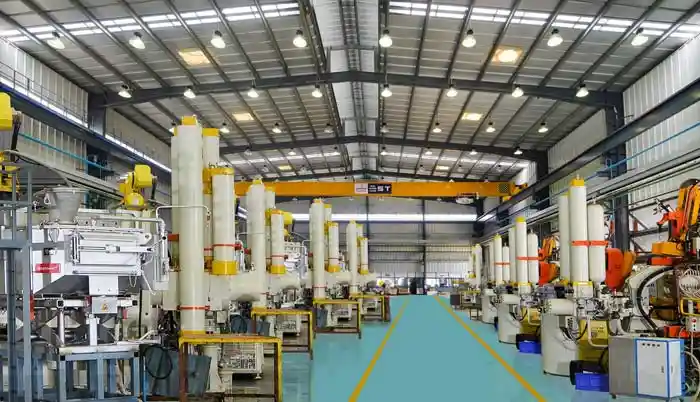
Honyo Prototype – Aluminium Die-Casting Workflow
(optimised for 0.2 g – 8 kg parts, 1–2 000 pcs / batch)
-
Upload CAD
• Portal accepts any native or neutral format (STEP, Parasolid, Creo, NX, Catia, SolidWorks, JT, STL for shrink-check).
• Automatic geometry healing & wall-thickness colour map are run in < 60 s.
• NDA is countersigned on-line before file decrypt. -
AI Quote (2 h goal, 24 h guarantee)
a. Machine-learning model trained on 280 000 real shots predicts cycle time ± 7 %.
b. Alloy selector recommends ADC12, A380, A360, AlSi10Mg(Fe), B390 or custom grade based on strength, thermal or corrosion requirement.
c. Multi-cavity & slider count is auto-suggested to minimise part cost.
d. Instant price curve (1, 5, 20, 100, 500, 2 000 pcs) with 3 surface finishes:
– F0 “as-cast” Ra 6–12 µm
– F1 “trim + blast” Ra 3–6 µm
– F2 “high-pressure blast + vibratory” Ra 1–2 µm
e. One-click to accept or request human review; accepted quotes lock material unit price & slot for 30 days. -
DFM (3–5 days, free once PO ≥ 1 000 USD)
• Gate & runner simulation (MAGMA) – verifies air entrapment, porosity < 3 % in critical zone.
• Draft & under-cut analysis – minimum 0.5° on outer, 1° on inner walls; slider split line optimised for flash < 0.15 mm.
• Shrink & distortion compensation – CNC- machined H13 tool steel to +0.3 % linear pre-distortion.
• Feeding & overflow layout – chills & overflows placed to hit Class A surface after 0.5 mm machining skin removal.
• Tolerance audit – DIN 1686 / GB/T 15114 CT6–CT8 achievable; tighter features flagged for post-machining.
• Review meeting (Zoom/WeChat) with customer; signed DFM report releases steel order. -
Production
4.1 Tool build (12–18 days for 1-cavity, 20–25 days for 2-cavity family tool)
– H13 vacuum-hardened to 46–48 HRC, with nitrided surface; 500 k-shot life target.
– Interchangeable inserts for threaded or high-wear areas.
4.2 Sampling (T0)
– 30 pcs process window study: die temperature 180–240 °C, fill time 20–60 ms, intensification 600–900 bar.
– CT scan + CMM report against 3D; customer sign-off within 48 h.
4.3 Batch production
– 280 T–1 250 T Buhler, LK, or Toyo cold-chamber machines with ABB 6-axis extract & spray.
– Real-time shot-trace (cavity pressure, plunger speed) stored for every cycle; SPC alarms if > ± 2 σ.
– In-line X-ray every 50 pcs on structural parts; automatic segregation to rework or scrap bin.
– Secondary: gate/overflow sawing, 3-axis robotic deburr, vibratory tumbling, shot-blast SS304 0.3 mm cut-wire.
• Optional CNC machining, impregnation (Loctite 290), anodise Type II/III, chromate, powder coat, e-coat. -
Delivery
• 100 % bubble-wrapped + VCI film; silica-gel for sea freight.
• PPAP Level 3 default (FAI, material cert, CPK, X-ray, salt-spray if coated).
• Express: 3 days to North America / EU via DDP air; economy: 10–12 days rail/sea.
• Digital twin package: actual cycle data + inspection report uploaded to portal; same data feeds back to AI model to tighten next quote.
Result: 5–7 days from CAD to DFM sign-off, 15–25 days to first article, 3–4 weeks repeat batches.
Start Your Project
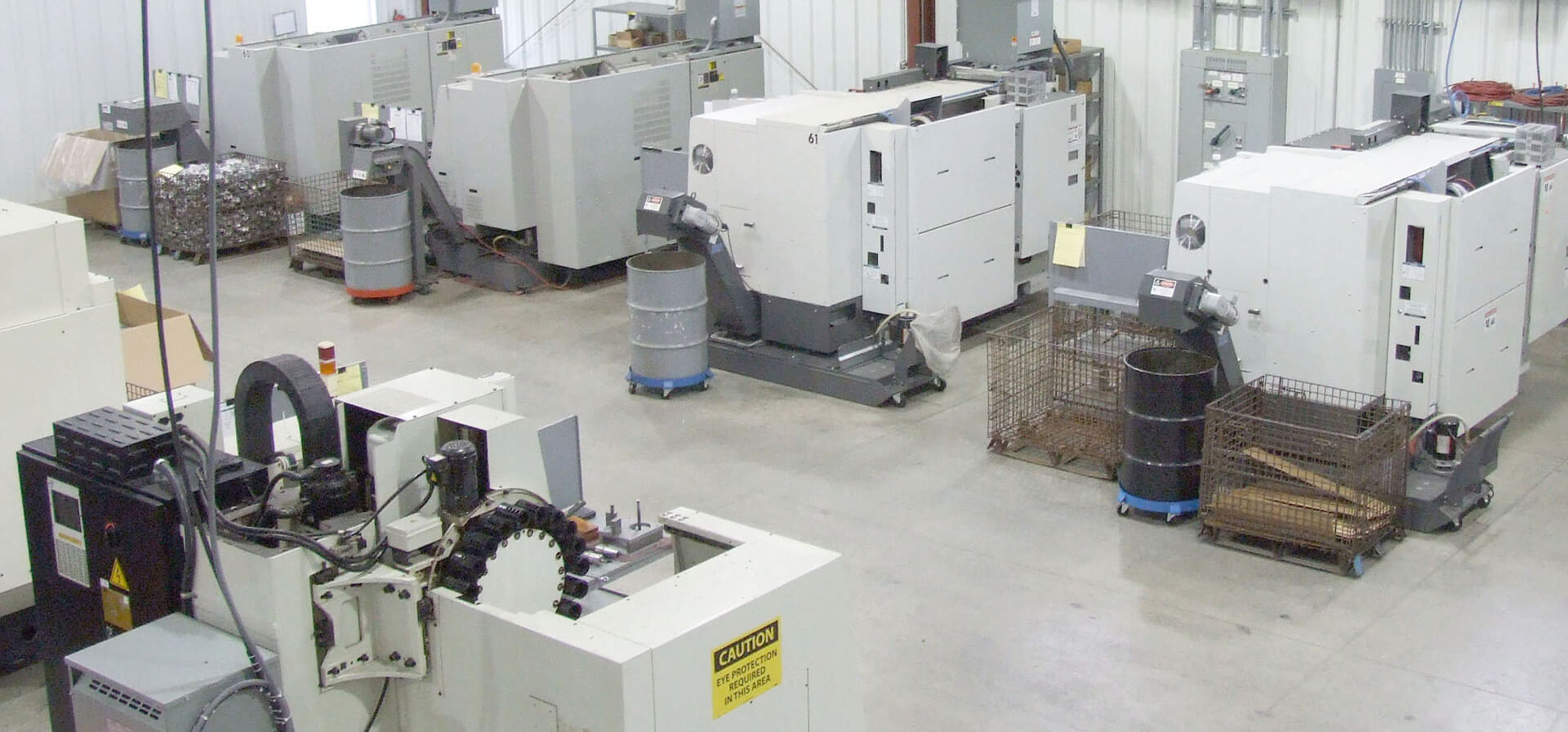
Precision Aluminium Die Casting Solutions from Shenzhen’s Trusted Partner
Honyo Prototype delivers high-quality, cost-effective aluminium die casting with advanced manufacturing expertise. Our Shenzhen facility ensures tight tolerances, rapid turnaround, and seamless scalability for your projects.
Contact Susan Leo today at info@hy-proto.com to discuss your requirements and receive a tailored solution.
Engineered for excellence. Delivered on time. 🏭
🚀 Rapid Prototyping Estimator