
Contents
Manufacturing Insight: All About Sheet Metal
All About Sheet Metal – the definitive guide for engineers who need parts fast, precise, and production-ready.
Written from the shop-floor perspective of Honyo Prototype, this series walks you through every bend, punch, and weld that turns a flat blank into a mission-critical bracket, enclosure, or chassis. Along the way you’ll see the same 4-step workflow our customers use every day: upload a 3-D file, get an online instant quote in under 60 seconds, DFM feedback within hours, and finished sheet-metal parts in as little as 3 days. Whether you’re specifying 0.5 mm stainless steel shields or 6 mm aluminum weldments, Honyo’s sheet-metal fabrication service—lasers, turrets, press brakes, hardware insertion, PEM staking, robotic welding, silk-screening, and powder-coat line under one roof—translates your CAD into quality-certified metal with zero MOQ and global delivery. Let’s dive in.
Technical Capabilities
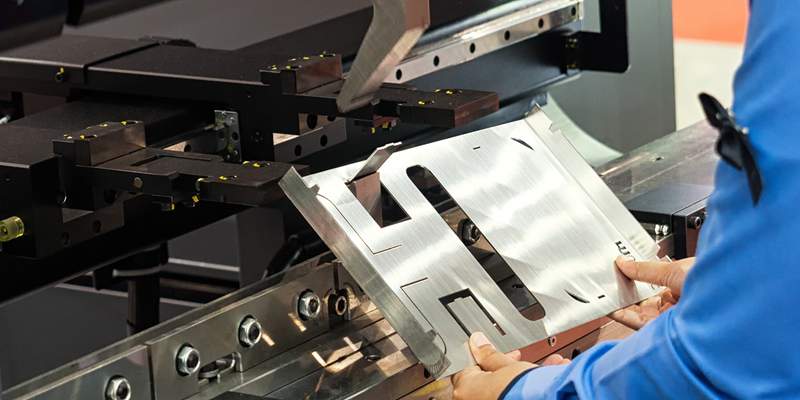
Important Clarification First:
“Sheet metal” exclusively refers to thin, flat pieces of metal (e.g., steel, aluminum, copper). ABS and Nylon are thermoplastic polymers, NOT metals. They are processed using completely different techniques (e.g., injection molding, 3D printing, or plastic thermoforming) and cannot be laser-cut, bent, or welded using sheet metal fabrication methods. Including them in a “sheet metal” specification is technically incorrect.
As a Senior Manufacturing Engineer at Honyo Prototype, I’ll provide accurate technical specs for sheet metal (metals only), followed by a clear explanation of why ABS/Nylon don’t belong here. If you need specs for plastic sheet processing, we can address that separately.
I. Sheet Metal: Correct Material Scope
Only metals qualify as “sheet metal”:
– Steel (Mild steel, Stainless steel 304/316)
– Aluminum (6061-T6, 5052-H32, 3003-H14)
– Other metals: Copper, Brass, Titanium (less common in standard prototyping).
❌ ABS & Nylon are NOT sheet metal. They are plastics. Using them in metal processes causes:
– Laser cutting: ABS/Nylon melts/vaporizes unevenly, emitting toxic fumes (HCN, CO). Metal lasers often use CO₂ or fiber optics designed for metals—plastics require specialized low-power CO₂ lasers.
– Bending: Plastics deform via heat-assisted forming (not mechanical bending like metal).
– Welding: Plastics require ultrasonic, hot plate, or solvent welding—not arc/MIG/TIG welding used for metals.
II. Technical Specs for Sheet Metal Processes (Metals Only)
1. Laser Cutting
Process: Focused laser beam melts/vaporizes metal; assist gas (N₂/O₂) blows away molten material.
| Parameter | Mild Steel | Stainless Steel | Aluminum | Notes |
|——————–|——————|——————|——————|———————————————————————–|
| Max Thickness | 25 mm (1″) | 20 mm (0.8″) | 15 mm (0.6″) | Thicker cuts require higher power (e.g., 6kW+ for 25mm steel). |
| Min Thickness | 0.5 mm (0.02″) | 0.5 mm (0.02″) | 0.5 mm (0.02″) | Thinner sheets may warp or require fixturing. |
| Tolerance | ±0.1 mm (±0.004″)| ±0.1 mm (±0.004″)| ±0.1 mm (±0.004″)| Tighter tolerances possible with high-end machines (e.g., ±0.05mm). |
| Kerf Width | 0.1–0.3 mm | 0.1–0.3 mm | 0.1–0.25 mm | Narrower kerf for thinner materials. |
| Edge Quality | Smooth, minimal dross | Oxidized (if O₂ used) | Rougher due to reflectivity | Aluminum requires N₂ purge to prevent oxidation; steel can use O₂ for faster cutting. |
| Key Limitation | — | — | High reflectivity can damage laser optics if not managed (use fiber lasers). |
2. Bending (Press Brake)
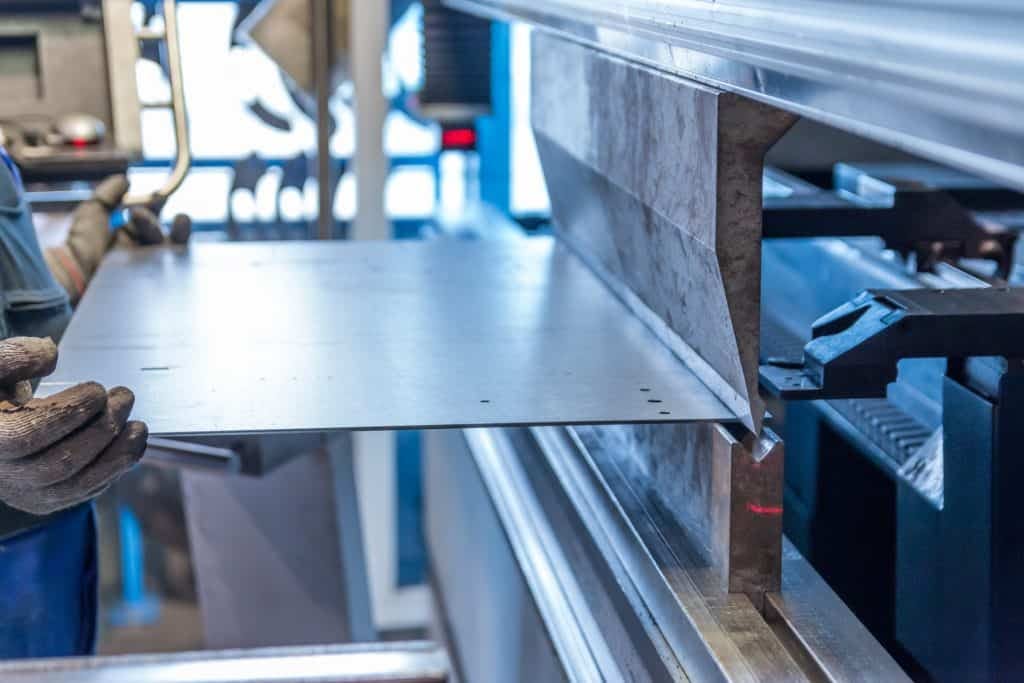
Process: Metal is clamped between a punch and die, then forced into a V-shape.
| Parameter | Mild Steel | Stainless Steel | Aluminum | Notes |
|——————–|——————|——————|——————|———————————————————————–|
| Max Thickness | 12 mm (0.5″) | 10 mm (0.4″) | 8 mm (0.3″) | Thicker gauges require higher tonnage (e.g., 250+ tons for 12mm steel). |
| Min Bend Radius| 0.8x material thickness | 1.0x thickness | 1.0x thickness | Aluminum cracks more easily than steel at sharp bends. |
| Tolerance | ±0.25° angular | ±0.25° angular | ±0.25° angular | Springback varies: Aluminum (5–10°), Steel (2–5°), Stainless (3–8°). |
| Min Flange Length| 3x material thickness | 3x thickness | 3x thickness | Shorter flanges risk slippage or distortion. |
| Die Width | 8–12x material thickness | Same as steel | Same as steel | Wider dies reduce force but increase bend radius. |
| Key Limitation | — | Work hardening requires annealing after bending. | Aluminum is prone to surface scratching; requires soft jaws. |
3. Welding (for Sheet Metal Assemblies)
Process: Joining metal parts via localized melting (MIG, TIG, spot welding).
| Parameter | Mild Steel | Stainless Steel | Aluminum | Notes |
|——————–|——————|——————|——————|———————————————————————–|
| Common Processes| MIG (GMAW), Spot Welding | TIG (GTAW), MIG | TIG (GTAW) | Aluminum requires TIG or pulse MIG; spot welding is rare for thin sheets. |
| Max Thickness | 6 mm (0.25″) | 4 mm (0.16″) | 4 mm (0.16″) | Thicker sections need preheating or multiple passes. |
| Min Thickness | 0.8 mm (0.03″) | 0.8 mm (0.03″) | 0.8 mm (0.03″) | Thinner sheets risk burn-through; requires precise current control. |
| Weld Tolerance | ±0.5 mm leg size | ±0.3 mm leg size | ±0.3 mm leg size | TIG offers finer control for thin materials. |
| Heat Input | Moderate | Low (to avoid sensitization) | Very Low (to prevent warping) | Aluminum’s high thermal conductivity demands high heat input but rapid cooling. |
| Key Limitation | — | Chromium carbide precipitation at high heat → corrosion risk. | Oxide layer must be cleaned before welding; prone to porosity. |
III. Why ABS & Nylon Don’t Belong in Sheet Metal Specs
- ABS/Nylon are plastics: They are typically supplied as sheet stock (not “sheet metal”), with thicknesses from 0.5mm to 25mm.
- Processing differences:
- Laser Cutting: Requires CO₂ lasers at lower power (e.g., 40–100W) to avoid melting. Common for acrylic but not for metals.
- Bending: Done via heat guns or thermoforming—not mechanical press brakes. ABS softens at ~100°C; Nylon at ~150°C.
- Welding: Uses ultrasonic (for ABS), hot gas (for Nylon), or solvent bonding—no arc welding possible.
- Critical risk: Using a metal laser cutter on ABS/Nylon releases toxic cyanide gas (HCN)—a severe safety hazard.
IV. Honyo Prototype’s Standard Practice
- Sheet metal projects: We handle only metals (steel, aluminum) with the specs above.
- Plastic projects (ABS/Nylon): We use dedicated plastic processes:
- Laser cutting: CO₂ lasers at 30–100W (for acrylic, ABS, polycarbonate).
- Bending: Thermoforming or manual heat bending.
- Welding: Ultrasonic for ABS; hot gas for Nylon.
- We never mix metal/plastic processes in the same workflow.
💡 Recommendation: If your project involves both metals and plastics, we’ll handle them in separate, dedicated workflows to avoid cross-contamination, safety risks, and quality issues.
For precise specs on plastic sheet processing, please share your material and application—we’ll provide a tailored quote. For sheet metal, we’re ready to deliver precision cutting, bending, and welding within the parameters above.
— Senior Manufacturing Engineer, Honyo Prototype
Certified in ISO 9001, AWS D1.1 (Steel Welding), and ASME Y14.5 (GD&T)
From CAD to Part: The Process
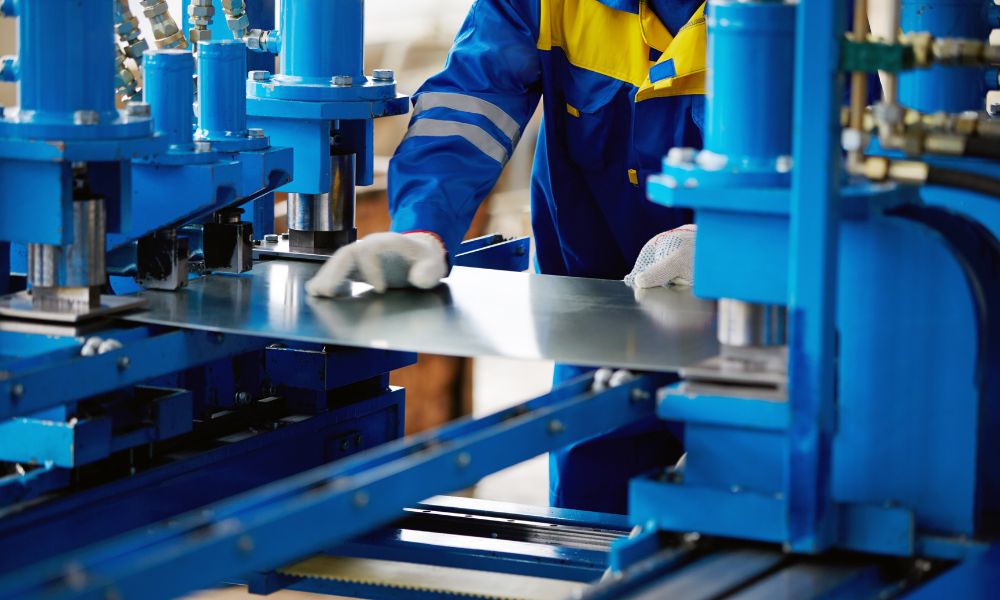
Honyo Prototype – “All About Sheet Metal”
One-page walk-through (what really happens inside our plant)
-
Upload CAD
• Portal accepts any 3-D sheet-metal format (STEP, IGES, SolidWorks, Parasolid, IPT, etc.).
• Auto-checker scans for open solids, non-manifold edges, zero-thickness zones, and missing bend radii.
• Thickness library (0.2–20 mm) is auto-matched to the part volume; if the customer left the gauge open we suggest the closest stock that keeps ±0.1 mm flatness.
• Instant security: every file is encrypted at rest, water-marked, and placed in a project vault isolated from the Internet within 30 s. -
AI Quote (≤30 s)
• Neural-net cost model trained on 1.8 M historical laser/punch/bend minutes, 14 k material coils, and real-time steel/aluminium LME pricing.
• Inputs: perimeter length, number of holes, bend count, bend height ratio, deburr class, finish code, quantity, and postal code for freight.
• Outputs: piece price, batch price breaks, 3 lead-time options, and a “confidence bar” (green ≥95 %, yellow 90-95 %, red needs human review).
• If confidence <90 % the job is auto-escalated to a senior estimator; customer sees “manual review” badge but still gets a provisional price in <5 min. -
DFM (Design-for-Manufacture) – 24 h turnaround
a. Bend sequence simulation
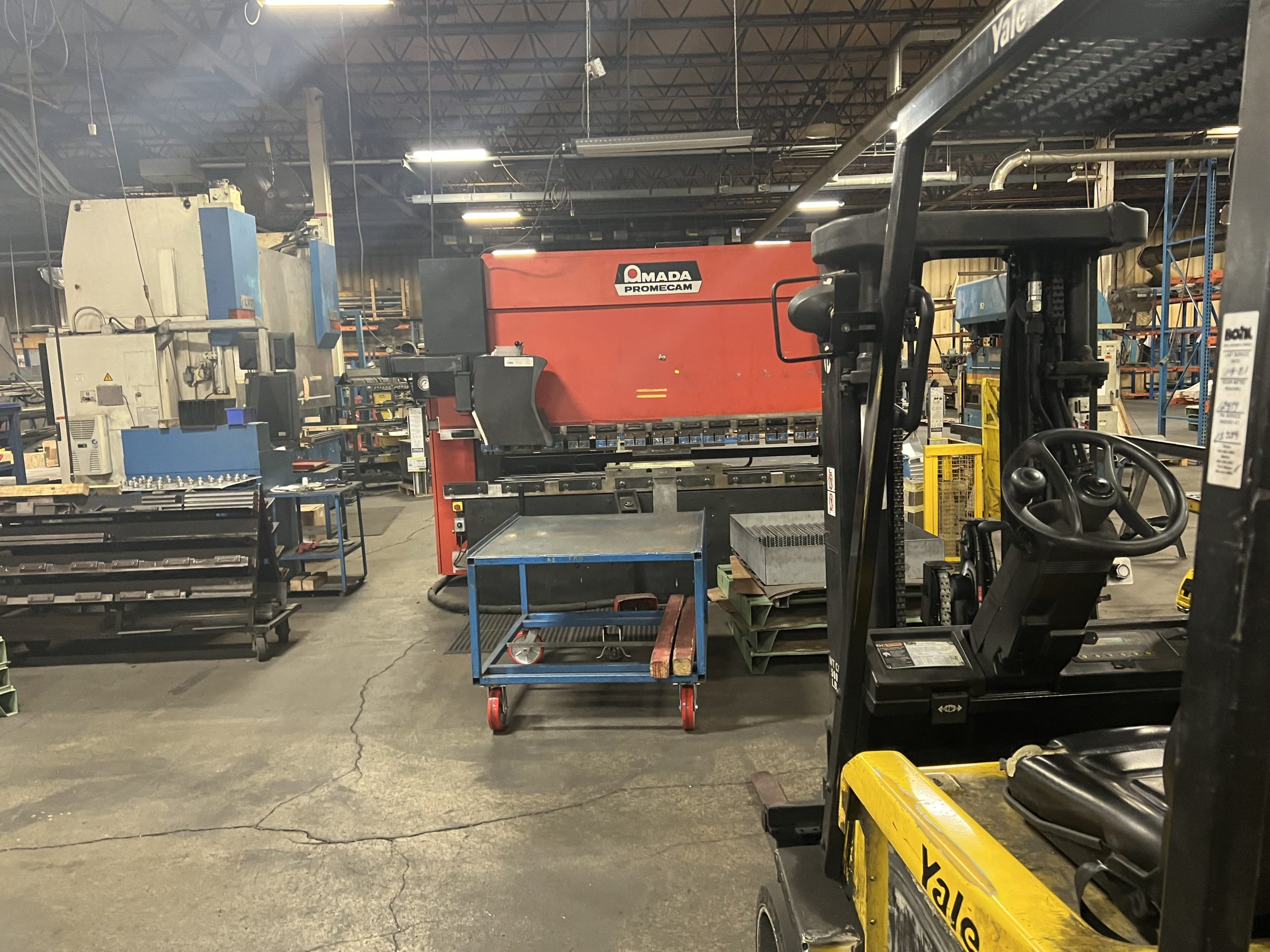
– Software unfolds the 3-D model, applies DIN 6935 or customer k-factor table, and checks for collisions on our Amada HDS 1303 NT press brake (6-axis back gauge + hydraulic crowning).
– Flags “impossible bends” (heel <0.4×V-die width, over-bend interference, or 180° return flanges).
b. Nesting & yield
– 2-D nests run on SigmaNEST with common-line cutting and micro-joint tabs to stabilize thin sheets.
– AI chooses between fibre laser (≤0.5 s hole-to-hole on <6 mm steel) or punch-laser hybrid (forms louvers, embosses, taps) based on feature mix.
c. Tolerance & gauge check
– ISO 2768-f or customer drawing; critical faces are mapped to our CMM fixture library.
– If ±0.05 mm true-position is required on a single-setup part we pre-select a TOP 2000B pneumatic clamp fixture so the customer isn’t surprised by added cost.
d. Finish & hardware
– Plating line (zinc-nickel, trivalent chromate), anodise (Type II, III, hard coat), chem-film, powder coat (Qualicoat class 1/2), silk-screen, PEM®, Rivnut®, Heli-Coil®.
e. DFM report delivered as a 3-D PDF: green = OK, yellow = suggestion, red = must-change. Customer approves or requests iteration; all revs stored in vault with digital signature. -
Production – 3-day standard, 24 h express
Step 0: Material prep
– Coil/sheet certified to EN 10204 3.1 or ASTM A480; thickness verified by ultrasonic gauge at receiving.
Step 1: Flat cutting
– 6 kW fibre laser (≤25 mm mild steel, ≤15 mm stainless, ≤12 mm Al) or 22 t Amada EM punch with 58-station turret.
– Auto nozzle changer and 3-axis capacitive height control keep taper ≤0.05 mm on <6 mm parts.
Step 2: Deburr & grain
– Timesaver 1370 3-head wet machine: first drum knocks down laser dross, second flattens burr to ≤0.05 mm, third scotch-brite applies uniform #4 grain if required.
Step 3: Forming
– 130 t press brake with 6-axis back gauge ±0.01 mm repeatability; crowning table compensates ≤0.2 mm deflection over 3 m.
– Offline programming uploads bend table to controller so first-article is also production part—no trial scrap.
Step 4: Hardware & welding
– PEM insertion force monitored to 0.1 kN; automatic feed rivets at 1.5 s per cycle.
– TIG/MIG cells for stainless and Al; robot MIG on long production runs; argon back-purge on stainless to keep chrome >10 %.
Step 5: Finish
– 7-stage iron phosphate washer before powder coat; e-coat line for 12 µm zinc-nickel with 1 000 h salt-spray rating.
Step 6: QC & CMM
– Keyence IM-8000 image dimension system checks 99 dimensions in 2 s; brown-wall CMM (Zeiss Contura) samples geometric tolerances.
– FAIR (First Article Inspection Report) per AS9102 or customer template; PPAP level 3 available.
Step 7: Assembly & kitting
– Hardware torque to spec, apply Kapton masks, add laser-etched QR for traceability.
– Parts sealed with VCI film + desiccant, boxed in triple-wall cartons with corner protectors. -
Delivery – Anywhere on earth
• Standard: DHL/UPS 2-day air with carbon-neutral option.
• Freight merge: we hold export licences for ITAR/EAR parts; wooden crates meet ISPM-15.
• Digital twin: customer receives a QR code; scan shows material cert, CMM data, finish thickness, and packing list—no paper needed.
• Feedback loop: delivery scan triggers an NPS survey; data feeds back into the AI quote engine to refine the next 30-second quote.
That’s the whole “sheet-metal in five clicks” journey—CAD to dock in as little as 72 h, with zero-surprise pricing and full traceability.
Start Your Project
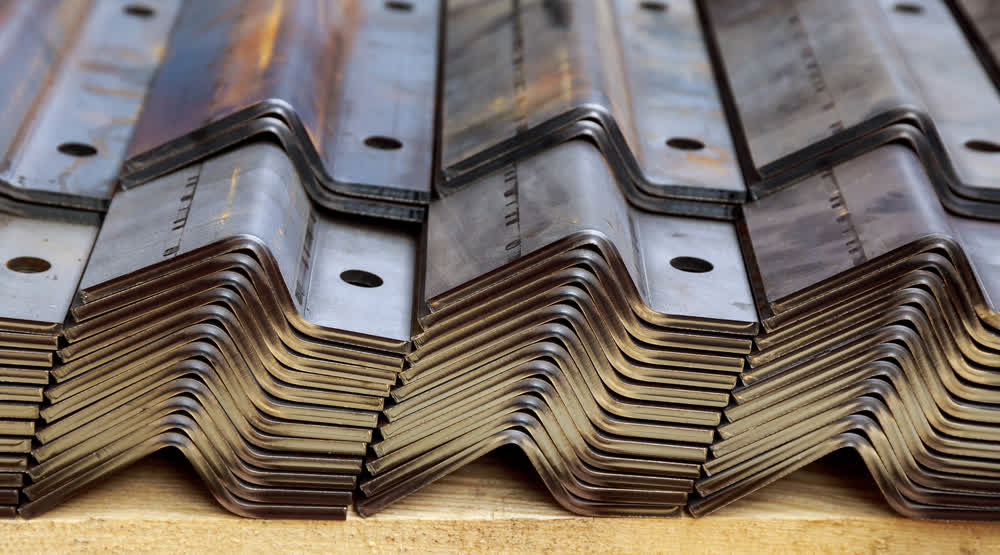
All About Sheet Metal – Precision Fabrication from Honyo Prototype’s Shenzhen Factory.
Contact Susan Leo at info@hy-proto.com for expert solutions tailored to your project needs! 🛠️✨
Trusted quality. Fast turnaround. Seamless manufacturing.
🚀 Rapid Prototyping Estimator