
Contents
Manufacturing Insight: Aluminum Machine Parts
Manufacturing Insight: Precision Aluminum Components via CNC Machining
Aluminum remains a cornerstone material in precision engineering due to its exceptional strength-to-weight ratio, inherent corrosion resistance, and outstanding thermal and electrical conductivity. These properties make it indispensable across aerospace, medical device, automotive, and industrial automation sectors where weight reduction, durability, and thermal management are critical design drivers. Its relative softness and excellent chip evacuation characteristics also position aluminum as one of the most machinable engineering metals, enabling high-speed, complex feature creation with minimal tool wear when processed correctly. Engineers value aluminum alloys like 6061-T6, 7075-T6, and 2024-T3 for their proven performance balance, though material selection must align precisely with the component’s mechanical and environmental demands.
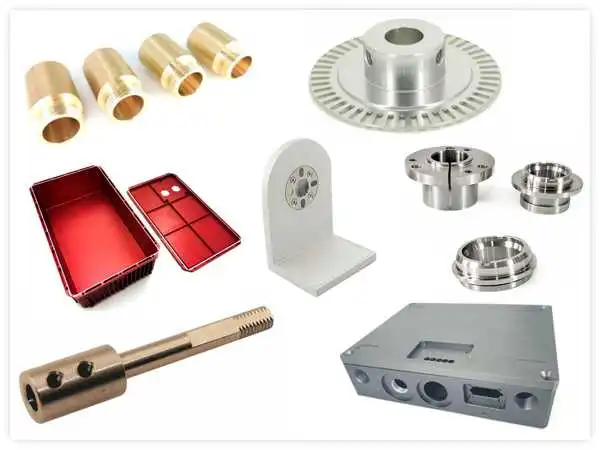
CNC machining stands as the definitive manufacturing process for producing high-integrity aluminum machine parts. Computer Numerical Control technology delivers the micron-level precision, exceptional repeatability, and geometric complexity required for mission-critical applications. Modern multi-axis CNC mills and lathes execute intricate toolpaths with sub-micron accuracy, transforming solid billets into finished components with tight tolerances and superior surface finishes. This subtractive process ensures material integrity is maintained throughout fabrication, avoiding the potential weaknesses associated with casting or welding for demanding applications. The inherent flexibility of CNC programming allows for seamless transitions from rapid prototyping to low-volume production and full-scale manufacturing runs, providing significant agility for product development cycles.
Shenzhen Honyo Prototype leverages advanced CNC infrastructure and deep material science expertise to deliver exceptional aluminum components. Our dedicated machining cells utilize state-of-the-art equipment featuring rigid construction, high spindle speeds, and sophisticated coolant systems optimized specifically for aluminum alloys. This ensures dimensional stability, minimizes thermal distortion, and achieves superior surface finishes critical for assemblies and sealing surfaces. Our process encompasses comprehensive in-house capabilities from initial material sourcing and 3D model validation through precision machining, rigorous quality inspection, and value-added finishing like anodizing or powder coating.
Honyo maintains strict adherence to international quality standards throughout production. Our technical capabilities for aluminum machining are defined by the following core specifications:
| Parameter | Standard Capability | High-Precision Capability | Notes |
| :—————– | :—————— | :———————— | :—————————– |
| Tolerance (Linear) | ±0.01 mm | ±0.005 mm | Per ISO 2768-mK for features |
| Surface Roughness | Ra 1.6 μm | Ra 0.8 μm | Typical milled surfaces |
| Max. Part Size | 1000 x 600 x 500 mm | 600 x 400 x 300 mm | For high-precision tolerances |
| Key Alloys | 6061, 7075, 2024, 5052, 2014 | Specialized Alloys on Request | Full material certification |
| Finishing Options | As-Machined, Deburred, Anodized (Type II/III), Powder Coating | Custom finishes available | Per customer specification |
Every component undergoes stringent dimensional verification using calibrated CMMs, optical comparators, and surface roughness testers, with full inspection reports provided. Honyo’s integrated approach—from engineering support during DFM analysis to final packaging—ensures aluminum parts meet the exact functional and aesthetic requirements of demanding B2B applications. We understand that reliability in aluminum machining demands not just advanced equipment, but rigorous process control and material understanding, which form the foundation of our manufacturing partnership with global engineering teams. Partnering with Honyo guarantees precision-engineered aluminum solutions delivered with speed, quality assurance, and technical transparency.
Technical Capabilities
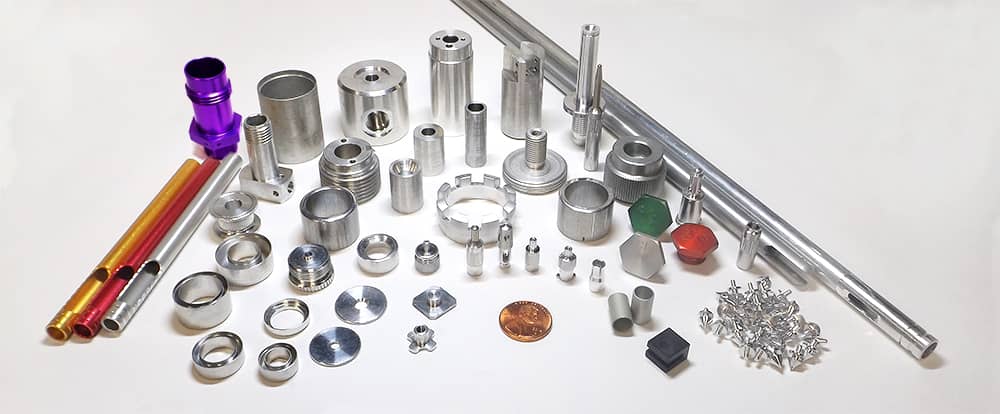
Shenzhen Honyo Prototype delivers precision aluminum machine parts through advanced CNC machining technologies, supporting complex geometries and tight tolerance requirements across aerospace, medical, automotive, and industrial applications. Our in-house 3-axis, 4-axis, and 5-axis milling capabilities, combined with multi-axis turning and mill-turn solutions, enable the production of high-integrity components with superior surface finish and dimensional accuracy. We specialize in rapid prototyping and low-to-mid volume production, ensuring fast turnaround without compromising quality.
Our 3-axis milling services are ideal for prismatic parts with straightforward features, offering high-speed machining with excellent repeatability. For components requiring access to multiple faces or complex contours, our 4-axis and 5-axis CNC machining centers provide enhanced flexibility, reducing setup changes and improving positional accuracy. These multi-axis systems allow for simultaneous machining of intricate features such as undercuts, organic surfaces, and deep cavities—common in aluminum enclosures, housings, and structural brackets.
Turning operations are performed on precision CNC lathes equipped with live tooling, enabling complete part fabrication in a single setup. This capability supports the production of cylindrical aluminum components with milled flats, cross-holes, and keyways, minimizing handling and ensuring tight concentricity. Our mill-turn machines further integrate turning and milling functions, ideal for complex shafts, fittings, and connectors.
Tight tolerance machining is a core competency at Honyo Prototype. We consistently hold standard tolerances down to ±0.005 mm (±0.0002″) and can achieve tighter specifications up to ±0.001 mm (±0.00004″) for critical features, depending on geometry and material. Our quality control system includes CMM inspection, optical comparators, and surface roughness testers to verify conformance to engineering requirements.
The following table outlines our standard technical capabilities and material options for aluminum machining:
| Parameter | Specification |
|——————————-|————-|
| Milling (3/4/5-Axis) | Up to 5-axis simultaneous machining, max work envelope: 1200 × 600 × 500 mm |
| Turning (CNC Lathe) | Max turning diameter: 300 mm, Max length: 500 mm |
| Mill-Turn (Live Tooling) | Multi-axis turning with milling, drilling, tapping up to 8,000 RPM |
| Standard Tolerance | ±0.005 mm (±0.0002″) |
| Tight Tolerance Capability| Down to ±0.001 mm (±0.00004″) |
| Surface Roughness (Ra) | As low as 0.4 µm (16 µin) |
| Lead Time (Typical) | 3–7 days for prototypes, 7–15 days for production runs |
| Finishing Options | As-machined, anodizing (Type II & III), bead blasting, powder coating, passivation |
We commonly machine the following aluminum alloys, selected for their strength-to-weight ratio, machinability, and corrosion resistance:
| Material | Common Designation | Typical Use Case |
|————–|——————–|——————|
| Aluminum 6061 | 6061-T6 | General-purpose, structural, aerospace |
| Aluminum 7075 | 7075-T6 | High-strength applications, defense |
| Aluminum 2024 | 2024-T3 | Aerospace components, fasteners |
| Aluminum 5052 | 5052-H32 | Marine and chemical environments |
| Aluminum 6082 | 6082-T6 | European standard, mechanical parts |
All aluminum parts are machined using optimized toolpaths, high-performance cutting tools, and coolant strategies to minimize thermal distortion and ensure consistent quality. At Shenzhen Honyo Prototype, we combine technical expertise with advanced CNC infrastructure to deliver precision aluminum components that meet the most demanding engineering specifications.
From CAD to Part: The Process
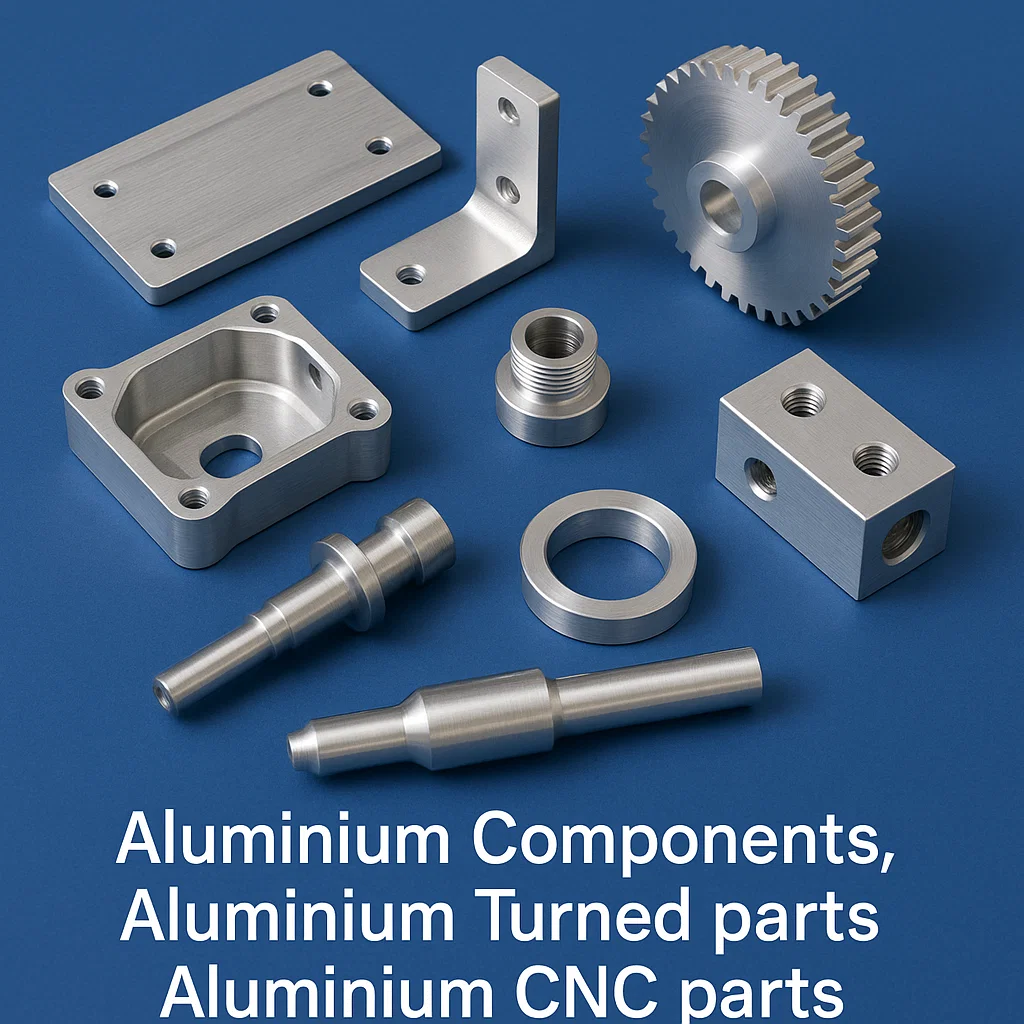
Aluminum CNC Machining Workflow: From CAD to Finished Component
At Shenzhen Honyo Prototype, our aluminum CNC machining process integrates advanced digital tools with precision manufacturing to deliver high-integrity parts efficiently. This workflow ensures technical rigor while optimizing cost and lead time for clients in aerospace, medical, and industrial automation sectors.
The process initiates with the AI-Powered Quoting System. Upon receipt of a 3D CAD model (STEP or IGES format), our proprietary AI engine analyzes geometric complexity, feature density, and material requirements. It instantly generates a detailed quote by calculating machine hours, toolpath strategies, and raw material consumption against real-time shop floor data. Critical inputs include part volume, cavity depths, thin-wall sections, and surface finish specifications. This eliminates manual quoting errors and provides clients with transparent cost drivers before project commitment.
Following quote acceptance, the Design for Manufacturability (DFM) Review becomes pivotal. Our engineering team conducts a rigorous analysis focused on aluminum-specific challenges. Key considerations include: minimum wall thickness (≥0.8mm for 6061-T6 to prevent chatter), hole depth-to-diameter ratios (≤10:1 without specialized tooling), and avoidance of sharp internal corners that induce stress concentrations. We validate tolerances against aluminum’s thermal expansion coefficient (23.6 µm/m°C) and recommend adjustments where ±0.025mm tolerances would unnecessarily increase cycle time. DFM feedback is delivered within 24 hours, often suggesting consolidation of features or optimized stock sizes to reduce waste.
Production Execution leverages our 5-axis milling and turning centers under strict environmental controls. Material selection follows this specification profile:
| Aluminum Grade | Typical Applications | Machinability Rating | Standard Tolerance (±mm) |
|—————-|———————-|———————-|————————–|
| 6061-T6 | Brackets, housings | Excellent (9/10) | 0.05 (Rough), 0.025 (Fin) |
| 7075-T6 | High-stress fixtures | Good (7/10) | 0.075 (Rough), 0.05 (Fin) |
| 2024-T3 | Aerospace components | Moderate (6/10) | 0.1 (Rough), 0.05 (Fin) |
Machining progresses through sequenced stages: roughing with high-feed cutters to remove bulk material, semi-finishing for dimensional stability, and precision finishing using diamond-coated tools for critical surfaces. All parts undergo in-process CMM verification at defined checkpoints, with thermal stabilization protocols for complex geometries. Final deburring employs robotic abrasive flow machining to eliminate micro-burrs without dimensional compromise.
Quality validation includes first-article inspection reports per AS9102 and batch-level hardness testing. This integrated workflow—AI quoting for predictability, aluminum-optimized DFM, and controlled production—ensures 99.2% on-time delivery while reducing client NRE costs by 15-30% compared to industry benchmarks. Clients receive fully documented traceability from digital model to certified physical component.
Start Your Project
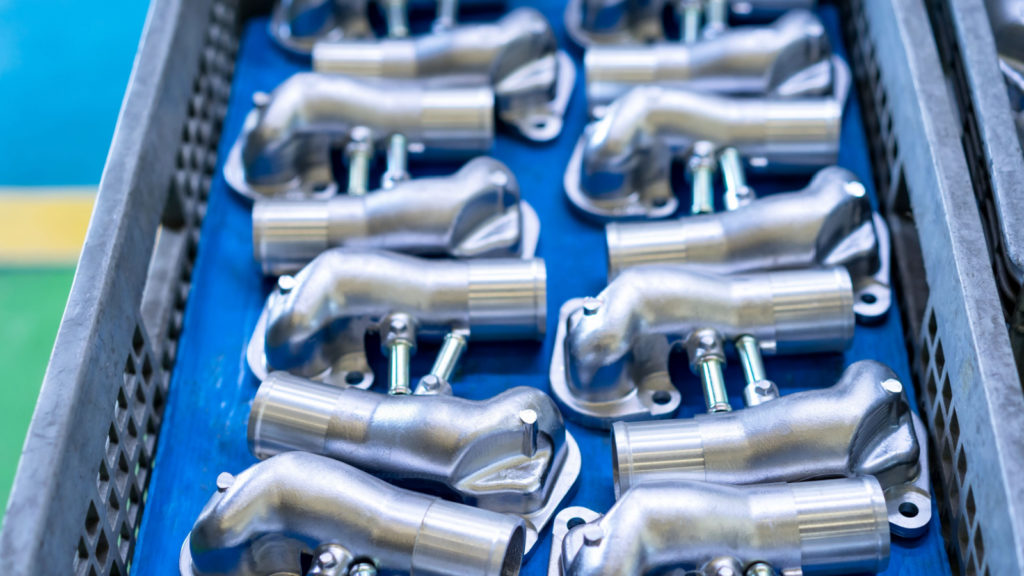
Start Your Aluminum Machine Parts Project with Precision and Confidence
When it comes to manufacturing high-performance aluminum machine parts, selecting the right partner is critical to ensuring precision, repeatability, and timely delivery. At Shenzhen Honyo Prototype, we specialize in CNC machining services tailored to meet the demanding requirements of industries such as aerospace, automotive, robotics, and medical devices. Our state-of-the-art facility, combined with over a decade of expertise in rapid prototyping and low-to-mid volume production, enables us to deliver parts that meet exacting engineering standards.
Aluminum is a preferred material in precision engineering due to its excellent strength-to-weight ratio, corrosion resistance, and machinability. Whether you’re developing functional prototypes or preparing for production runs, our CNC milling and turning capabilities support a wide range of aluminum alloys, including 6061, 7075, 2024, and 5052. Each part is machined with tight tolerances—down to ±0.005 mm—and finished to your exact surface and dimensional requirements.
Our process begins the moment you submit your design. Our engineering team conducts a comprehensive Design for Manufacturability (DFM) review to identify potential optimizations, reduce lead times, and minimize costs—without compromising performance. We support STEP, IGES, SolidWorks, and DWG file formats and provide feedback within 24 hours to keep your project moving forward efficiently.
To ensure the highest quality, every aluminum component undergoes rigorous in-process and final inspections using calibrated CMMs, optical comparators, and surface roughness testers. We also offer a variety of secondary operations, including anodizing, bead blasting, powder coating, and custom engraving, to meet both functional and aesthetic specifications.
Below is an overview of our CNC machining capabilities for aluminum parts:
| Feature | Specification |
|—————————–|————————————————|
| Material Options | Aluminum 6061, 7075, 2024, 5052, and custom alloys |
| Tolerance | ±0.005 mm |
| Maximum Work Envelope | 1000 x 600 x 500 mm (3-axis), 500 x 400 x 400 mm (5-axis) |
| Surface Finish | As-machined, bead blasted, anodized (Type II & III), powder coated |
| Lead Time | As fast as 3 days for prototypes |
| Certifications | ISO 9001:2015 compliant |
| File Formats Accepted | STEP, IGES, SolidWorks, DWG, PDF, X_T |
Starting your project with Shenzhen Honyo Prototype is simple. Just send your 3D model or technical drawings to Susan Leo at info@hy-proto.com. As your dedicated manufacturing advisor, Susan will guide you through material selection, process planning, and finishing options to ensure your design is optimized for performance and cost-efficiency. We offer competitive pricing, real-time project tracking, and direct engineering support throughout the manufacturing cycle.
For fast turnaround and precision-engineered aluminum components you can rely on, contact Susan Leo today. Let us help you turn your design into a high-quality, production-ready part—on time and to specification.
🚀 Rapid Prototyping Estimator
Get a rough estimate for CNC/3D Printing costs.