
Contents
Manufacturing Insight: Cast Aluminum Vs Aluminum
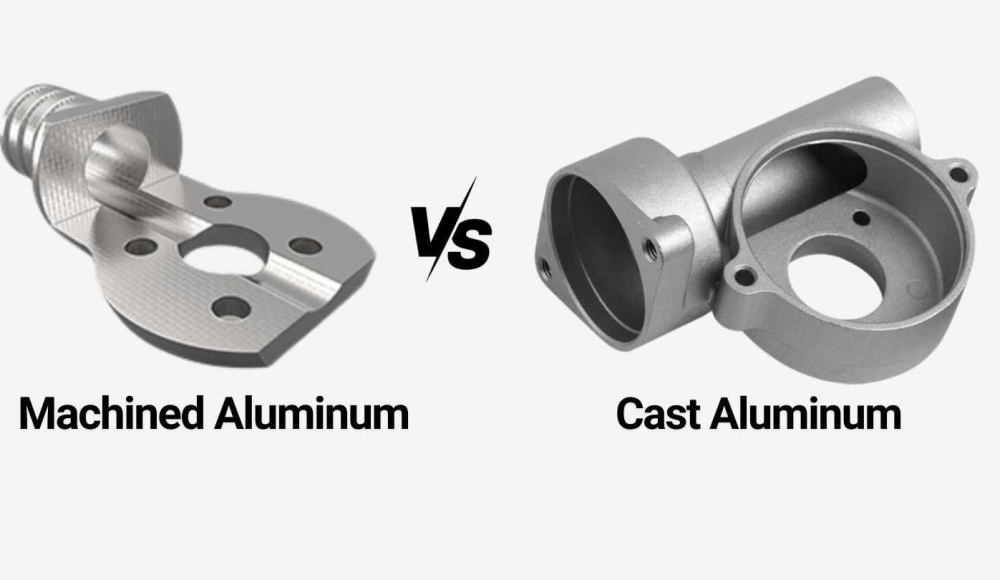
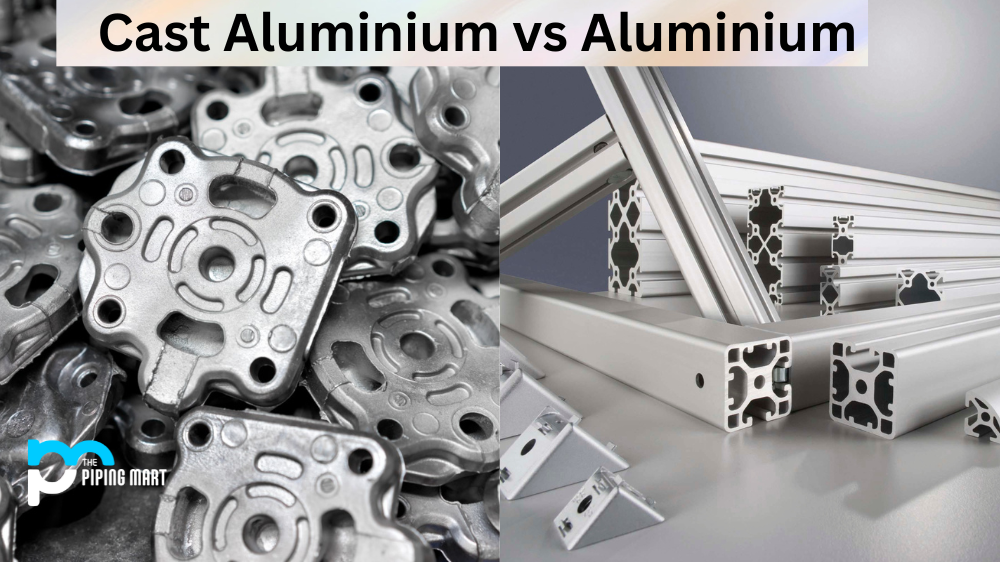
Cast Aluminum vs. Aluminum: Which Grade Wins for Your Next Part?
At Honyo Prototype, we machine both every day—cast A356-T6 engine brackets on one spindle, 7075-T6 aerospace panels on the next—so we know the real-world trade-offs in strength, porosity, chip control and cost. Our 3-, 4- and 5-axis CNC cells (30–15,000 rpm, 0.002 mm repeatability) turn raw billet or near-net castings into flight-ready, anodized or chem-filmed parts in as little as 3 days. Upload your STEP file now for an Online Instant Quote and see the exact price difference between machining from solid 6061 versus finish-machining a precision sand-casting—lead time, material yield and surface finish included—before you lock the design.
Technical Capabilities
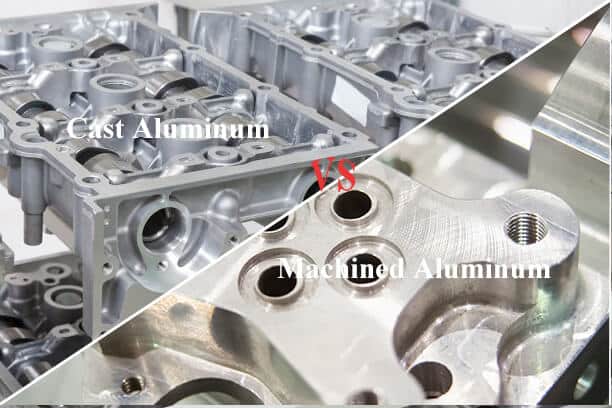
Technical Specs Comparison: Cast Aluminum vs. Wrought Aluminum for Precision Machining (3/4/5-Axis Milling, Turning, Tight Tolerance)
Critical Clarification: Your query says “cast aluminum vs aluminum,” but “aluminum” alone is ambiguous. In manufacturing contexts:
– “Cast Aluminum” = Aluminum alloy solidified in a mold (e.g., A356, A380).
– “Aluminum” (unqualified) = Typically implies wrought aluminum (e.g., 6061-T6, 7075-T6), which is extruded, forged, or rolled.
This is not a comparison of “types of aluminum” but of two distinct manufacturing processes: casting vs. machining from solid billet/plate.
For tight-tolerance applications (±0.001″ to ±0.005″) in precision machining (3/4/5-axis milling, turning), wrought aluminum is almost always superior to cast aluminum. Cast parts are rarely used for high-precision machining due to inherent material limitations. Below are detailed technical specs for both, plus comparisons to steel, ABS, and nylon.
⚙️ 1. Cast Aluminum vs. Wrought Aluminum: Core Technical Differences
| Property | Cast Aluminum (e.g., A356-T6) | Wrought Aluminum (e.g., 6061-T6) | Why It Matters for Machining |
|—————————-|——————————————————-|——————————————————-|————————————————————————————————–|
| Microstructure | Dendritic grains; porosity (1–5%); inclusions | Uniform, fine-grained; near-zero porosity | Cast: Porosity causes tool chatter, inconsistent cuts, and surface defects. Wrought: Smooth, predictable chip formation. |
| Tensile Strength | 30–40 ksi (207–276 MPa) | 45–55 ksi (310–380 MPa) | Wrought holds tighter tolerances under cutting forces; cast may deform or chip. |
| Hardness (Brinell) | 70–90 HB | 95–110 HB | Wrought is harder but more machinable; cast requires slower speeds to avoid tearing. |
| Thermal Expansion | 12.0–13.0 µm/m·°C | 12.0–12.5 µm/m·°C | Similar, but cast’s porosity amplifies thermal distortion during machining. |
| Surface Finish (Ra) | 125–250 µin (3.2–6.4 µm) as-cast; ≥63 µin (1.6 µm) after machining | 16–32 µin (0.4–0.8 µm) achievable | Cast requires heavy stock removal to eliminate porosity; wrought achieves superior finishes with less effort. |
| Tolerance Capability | ±0.015″ (±0.38 mm) typical after machining | ±0.001″ (±0.025 mm) achievable | Cast parts have dimensional instability due to internal stresses; wrought is stable for tight tolerances. |
| Machinability Rating | 50–70% (Alloy 2011 = 100%) | 80–90% (Alloy 2011 = 100%) | Wrought cuts cleaner with less tool wear; cast requires specialized tooling (e.g., PCD tips) for porosity. |
Machining Process-Specific Challenges
- 3/4/5-Axis Milling:
- Cast Aluminum: High risk of surface delamination, vibration-induced chatter, and inconsistent wall thickness. Not recommended for complex 5-axis geometries requiring ±0.001″ tolerances.
- Wrought Aluminum: Ideal for 5-axis contouring. Stable material allows high-speed machining (e.g., 1,000–2,000 SFM) with minimal deflection. Achieves ±0.0005″ tolerances on critical features.
- Turning:
- Cast Aluminum: Porosity causes “pitting” on surfaces; requires reduced RPM (300–600 RPM) and light cuts to avoid tearing.
- Wrought Aluminum: Smooth cuts at 800–1,500 RPM; consistent diameters within ±0.0005″.
Key Insight: Cast aluminum is only suitable for machining if the part is designed as a “cast-to-net” or “near-net” shape (e.g., simple housings with loose tolerances). For precision components (e.g., aerospace brackets, medical devices), wrought aluminum is the only viable choice. Honyo Prototype typically rejects cast aluminum for tight-tolerance work unless explicitly specified for non-critical features.
🛠️ 2. Comparison with Other Materials for Precision Machining
Steel (e.g., 4140 Pre-Hardened)
| Property | Steel (4140) | Wrought Aluminum (6061-T6) |
|——————–|——————————————————-|——————————————————-|
| Tolerance | ±0.0005″ (±0.013 mm) achievable | ±0.001″ (±0.025 mm) |
| Surface Finish | 8–16 µin (0.2–0.4 µm) Ra | 16–32 µin (0.4–0.8 µm) Ra |
| Machinability | Low (30–40% of Alloy 2011); requires coolant, slower speeds | High (80–90%); faster cuts, less heat generation |
| Thermal Expansion | 6.5 µm/m·°C | 12.0–12.5 µm/m·°C | Steel holds tolerances better under temperature swings. |
| Best For | High-stress, wear-resistant parts (gears, fixtures) | Lightweight, non-critical structural parts (brackets, enclosures) |
ABS (Acrylonitrile Butadiene Styrene)
| Property | ABS | Wrought Aluminum (6061-T6) |
|——————–|——————————————————-|——————————————————-|
| Tolerance | ±0.010″ (±0.25 mm) typical (highly temperature-dependent) | ±0.001″ (±0.025 mm) |
| Surface Finish | 63–125 µin (1.6–3.2 µm) Ra (prone to melting) | 16–32 µin (0.4–0.8 µm) Ra |
| Thermal Expansion | 70–80 µm/m·°C (very high) | 12.0–12.5 µm/m·°C | ABS distorts easily; requires rigid fixturing and no coolant. |
| Best For | Prototypes, non-critical enclosures, low-stress parts | Precision mechanical parts requiring strength/dimensional stability |
Nylon (e.g., Nylon 6/6)
| Property | Nylon | Wrought Aluminum (6061-T6) |
|——————–|——————————————————-|——————————————————-|
| Tolerance | ±0.015″ (±0.38 mm) typical (moisture-sensitive) | ±0.001″ (±0.025 mm) |
| Surface Finish | 125–250 µin (3.2–6.4 µm) Ra (chatter-prone) | 16–32 µin (0.4–0.8 µm) Ra |
| Thermal Expansion | 100–120 µm/m·°C (extremely high) | 12.0–12.5 µm/m·°C | Nylon absorbs moisture, causing dimensional drift; requires pre-drying. |
| Best For | Wear-resistant parts (gears, bushings), low-cost prototypes | High-precision, load-bearing components |
✅ Key Recommendations for Honyo Prototype Customers
- For tight-tolerance (±0.001″) parts:
- Always choose wrought aluminum (6061-T6 or 7075-T6). Cast aluminum is unsuitable due to porosity and instability.
- Example: Aerospace brackets, medical implants, or optical mounts.
- For cast parts:
- Only use cast aluminum if the design allows loose tolerances (±0.015″+) and the part is simple (e.g., housings, covers).
- Always specify “machined from cast billet” – not “as-cast”.
- Steel vs. Aluminum:
- Use steel for high-strength, wear-resistant parts where weight is secondary.
- Use aluminum for lightweight, non-critical structural parts.
- Thermoplastics (ABS/Nylon):
- Avoid for precision machining. Use only for prototypes where tolerances >±0.010″ are acceptable.
- Critical: Dry ABS/Nylon for 24+ hours before machining to prevent moisture-related warpage.
💡 Honyo Prototype Expert Tip: For 5-axis milling of complex geometries, wrought aluminum is the only practical choice for tight tolerances. Cast aluminum will fail at the first sign of high-speed precision work. Always consult with our engineers early in design to specify the correct material/process.
For more details on our capabilities, see Honyo Prototype’s Precision Machining Standards. Need a quote? Share your CAD file and tolerance requirements – we’ll recommend the optimal material and process.
From CAD to Part: The Process
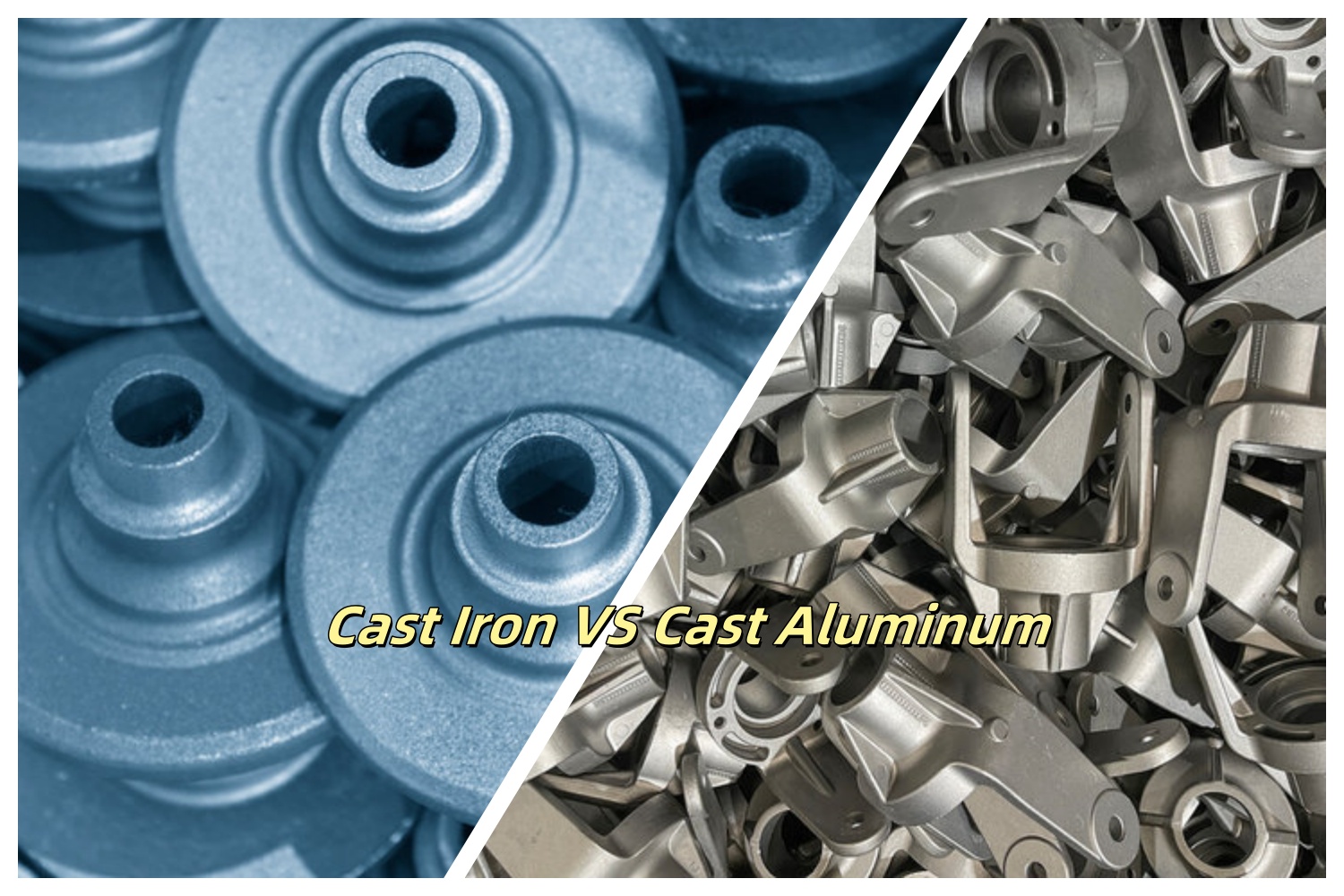
Honyo Prototype – “Cast-Aluminum vs. Machined-Aluminum” workflow
(Upload CAD → AI Quote → DFM → Production → Delivery)
-
Upload CAD
• Customer uploads the same 3-D file(s) for both routes.
• Our AI classifier instantly tags the geometry:
– Thick-walled, deep pockets, under-cuts, ≥2 mm draft → “cast candidate”.
– Thin ribs, tight radii, ±0.02 mm tolerances, no draft → “machined-from-solid candidate”.
• If both are feasible we create two parallel part numbers:
– A-CAST (A356-T6, secondary CNC finish)
– A-BILLET (6061-T651, fully CNC) -
AI Quote (≈ 60 s)
Cast branch
• Tooling: multi-slide steel mold or 3-D printed sand core set.
• Material: A356 ingot + T6 heat-treat lot.
• Secondary ops: gate/flash removal, 3-axis CNC skim cut, penetrant inspection.
• Lead time: 10 days (printed sand) – 18 days (steel mold).
• Piece price drops >40 % at 200+ pcs.
Machined branch
• Stock: 6061 plate or round bar.
• Machine time: calculated by voxel-volume removal + feature penalty.
• Lead time: 3 – 5 days.
• Price linear with qty; no tooling NRE.
- DFM (24 h engineering report)
Cast DFM
• Add 1–1.5° draft, fillet ≥R0.5 mm, uniform 2–4 mm wall.
• Core prints, riser placement, solidification simulation (MAGMA).
• Machine stock allowance: +0.5 mm on mating faces.
Machined DFM
• Split into 3-axis and 5-axis setups; minimize chatter on thin walls.
• Check tool reach ≤5×D; suggest tear-drop ribs or bonded inserts if aspect ratio >15.
• Anodize rack points, thread relief grooves.
- Production
Cast route
a. Tool build or sand print (Day 0-3)
b. Gravity pour or vacuum-assisted casting (Day 4)
c. Gate cut + T6 heat treat (Day 5-6)
d. CNC skim + critical bore/face (Day 7-8)
e. CMM + X-ray + penetrant (Day 9)
Machined route
a. Cut stock, stress-relief (Day 0)
b. Rough, semi-finish, finish in one overnight lights-out cell (Day 1-2)
c. Anodize Type-II or chem-film (Day 3)
d. Laser mark + final CMM (Day 4)
- Delivery
• Both parts ship in the same Honyo foam tray; COA includes:
– Cast: chemistry, tensile bar results, X-ray film.
– Machined: mill test cert, anodize thickness, RoHS.
• Serial barcode links back to AI quote ID—any future revision auto-re-runs the cast-vs-billet comparison so the customer can re-select the cheaper or faster path without re-uploading geometry.
Key takeaway
One CAD upload triggers two parallel, fully quoted process trees. You see cost, lead time, and mechanical property deltas side-by-side and can toggle between “cast aluminum” and “aluminum (machined)” right up to PO release.
Start Your Project
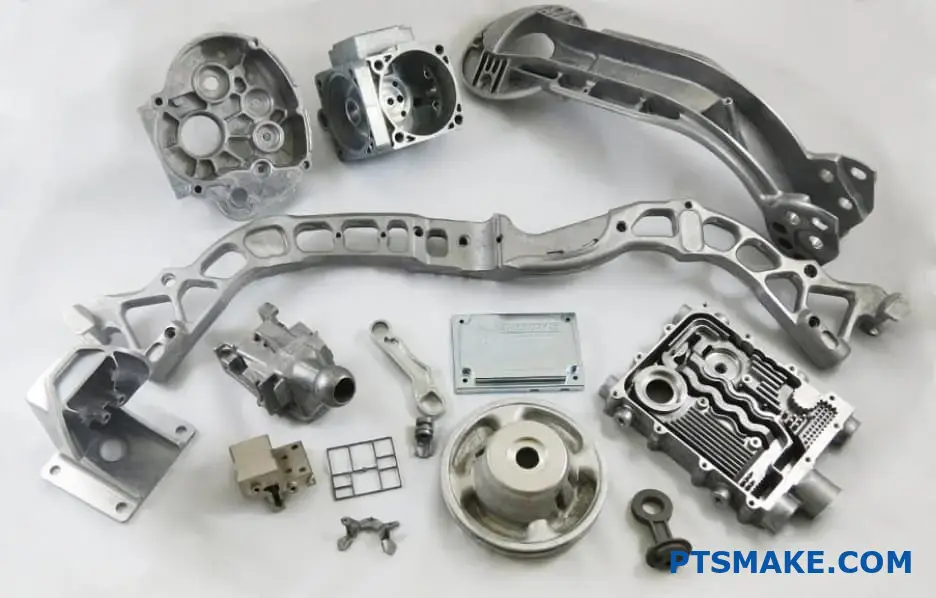
Cast aluminum vs. standard aluminum: Which is right for your project?
Get expert guidance tailored to your needs. Contact Susan Leo today at info@hy-proto.com.
With our Shenzhen factory, Honyo Prototype delivers precision casting and custom manufacturing solutions—fast, reliable, and cost-effective.
👉 Email now to discuss your requirements!
🚀 Rapid Prototyping Estimator