
Contents
Manufacturing Insight: Cnc Programming Handbook

Manufacturing Insight: CNC Programming Handbook Introduction
CNC programming stands as the critical bridge between digital design and physical part realization, transforming CAD models into precise machine instructions that drive modern manufacturing efficiency. At Shenzhen Honyo Prototype, we recognize that advanced CNC programming is not merely a technical step but a strategic advantage in delivering high-integrity prototypes and low-volume production components. Our approach integrates deep material science knowledge, geometric complexity management, and rigorous process validation to ensure every program optimizes toolpath efficiency, surface finish, and dimensional accuracy while minimizing cycle times and material waste. This handbook outlines the foundational principles and advanced methodologies we employ to overcome the unique challenges inherent in rapid prototyping and precision machining across diverse industries, from aerospace to medical devices.
Honyo Prototype leverages a comprehensive suite of industry-standard CAM platforms and proprietary optimization protocols to handle everything from simple 3-axis milling to complex 5-axis simultaneous machining and multi-tasking operations. Our engineering team prioritizes first-article success through virtual machine simulation, collision avoidance analysis, and adaptive cutting strategies tailored to exotic alloys, engineering plastics, and composites. This technical rigor ensures that programs deployed on our shop floor consistently achieve tight tolerances and superior surface integrity, directly reducing time-to-market for client innovations.
Our CNC programming capabilities are anchored in an extensive in-house infrastructure designed for prototyping agility and production readiness. The following table details key technical specifications underpinning our service delivery:
| Capability Category | Specification | Application Impact |
|—————————|—————————————-|———————————————|
| Machine Platform Support | 3-axis, 4-axis, 5-axis milling; Swiss-type turning; Mill-turn | Complex geometry execution without secondary operations |
| Tolerance Achievement | ±0.005 mm (±0.0002″) standard; ±0.002 mm (±0.00008″) on request | Critical feature accuracy for functional testing and assembly |
| CAM Software Ecosystem | Mastercam, Siemens NX, Fusion 360, ESPRIT | Seamless CAD/CAM integration and multi-axis optimization |
| Material Proficiency | Aluminum 7075-T6, Inconel 718, Titanium Grade 5, PEEK, PTFE, engineered plastics | Reliable process parameters for challenging materials |
| Program Validation | VERICUT simulation, in-process probing, post-process CMM verification | Zero scrap rates and guaranteed dimensional compliance |
Beyond technical execution, Honyo’s programming philosophy emphasizes collaborative problem-solving with client engineering teams. We actively engage during the Design for Manufacturability (DFM) phase to identify potential machining constraints early, suggesting geometry refinements that maintain functional intent while enhancing producibility. This proactive partnership minimizes costly redesigns and accelerates iteration cycles—a critical factor in today’s competitive development landscape. Our commitment to transparent communication ensures clients receive detailed process documentation, including tooling lists, setup sheets, and inspection reports, fostering trust and enabling seamless scalability from prototype to pilot production. By embedding intelligence into every line of G-code, Honyo Prototype transforms CNC programming from a production necessity into a catalyst for engineering excellence and accelerated innovation.
Technical Capabilities
CNC Programming Handbook – Technical Capabilities
Shenzhen Honyo Prototype delivers precision CNC machining services tailored for rapid prototyping, low-volume production, and high-complexity components across aerospace, medical, automotive, and industrial sectors. Our in-house CNC programming and machining capabilities are built on advanced 3-axis, 4-axis, and 5-axis milling systems, complemented by precision CNC turning centers. These platforms are supported by industry-leading CAD/CAM software, including Siemens NX, Mastercam, and Autodesk Fusion 360, enabling optimized toolpaths, simulation-driven validation, and seamless integration from design to finished part.
Our 3-axis milling systems are ideal for prismatic and planar geometries, offering high-speed machining with consistent accuracy. For complex contours and multi-sided features, our 4-axis and 5-axis machining centers provide dynamic workpiece positioning, reducing setup cycles and improving geometric fidelity. The 5-axis simultaneous milling capability supports undercuts, organic shapes, and tight-tolerance cavities common in molds, impellers, and structural components. All milling operations are performed under strict environmental controls to minimize thermal drift and ensure repeatability.
CNC turning operations are executed on multi-axis lathes with live tooling, enabling complete part fabrication in a single setup. This includes external and internal turning, grooving, threading, drilling, and milling operations on cylindrical components. Our turning centers support bar-fed automation for batch production, with diameters ranging from 3 mm to 120 mm and lengths up to 500 mm.
A core strength at Honyo Prototype is our capability to achieve and maintain tight tolerances across diverse materials. We routinely hold dimensional tolerances down to ±0.005 mm on critical features, with geometric tolerances aligned to ISO 2768 and ASME Y14.5 standards. Surface finishes as fine as Ra 0.4 µm are attainable through optimized tool selection, spindle control, and post-processing techniques.
The following table outlines our standard tolerance capabilities and compatible materials:
| Operation | Dimensional Tolerance | Geometric Tolerance | Surface Finish (Typical) | Max Work Envelope (mm) |
|——————-|————————|———————-|—————————|————————|
| 3-Axis Milling | ±0.01 mm | ±0.01 mm (Flatness) | Ra 1.6 – 3.2 µm | 1000 × 600 × 500 |
| 4-Axis Milling | ±0.01 mm | ±0.01 mm (Position) | Ra 1.6 – 3.2 µm | 800 × 500 × 400 |
| 5-Axis Milling | ±0.005 mm | ±0.008 mm (Profile) | Ra 0.8 – 1.6 µm | 600 × 600 × 500 |
| CNC Turning | ±0.01 mm | ±0.01 mm (Concentricity) | Ra 0.8 – 1.6 µm | Ø120 × 500 L |
| Material Type | Common Grades | Max Tolerance Capability | Notes |
|——————–|—————————————-|—————————|——-|
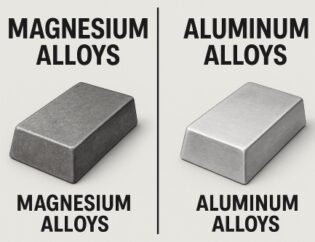
| Aluminum Alloys | 6061, 7075, 2024, 5052 | ±0.005 mm | High machinability, ideal for prototypes |
| Stainless Steel | 303, 304, 316, 17-4PH | ±0.01 mm | Corrosion resistance, tight-tolerance capable |
| Titanium Alloys | Ti-6Al-4V (Grade 5), CP Titanium | ±0.01 mm | Aerospace grade, requires specialized tooling |
| Engineering Plastics | PEEK, Delrin, Nylon, Polycarbonate | ±0.02 mm | Low thermal stability; controlled feeds/speeds |
| Brass & Copper | C36000, C11000 | ±0.01 mm | Excellent for electrical and decorative parts |
All CNC programs are verified using offline simulation and first-article inspection via CMM, optical comparators, and surface profilometers. This ensures full compliance with engineering specifications and enables rapid iteration for design validation.
From CAD to Part: The Process

From CAD to Part: Integrated Workflow at Shenzhen Honyo Prototype
Shenzhen Honyo Prototype delivers precision CNC machined prototypes and low-volume production parts through a rigorously defined workflow that bridges digital design to physical realization. Our process ensures manufacturability, quality, and speed from the initial client inquiry to the finished component. This integrated approach minimizes iterations and accelerates time-to-part without compromising on dimensional accuracy or material integrity.
AI-Powered Quoting Phase
The workflow initiates upon receipt of client CAD files (STEP, IGES, or native formats). Our proprietary AI quoting engine instantly analyzes geometric complexity, feature density, material selection, and critical tolerances against historical machine performance data and material databases. This system generates a highly accurate preliminary cost and lead time estimate within minutes, factoring in setup complexity, toolpath strategies, and secondary operations. The AI output provides immediate feedback on potential cost drivers, enabling early client consultation on design optimizations before formal order placement, significantly reducing quotation cycle times compared to manual methods.
Engineering-Driven DFM Analysis
Following order confirmation, certified manufacturing engineers conduct a comprehensive Design for Manufacturability (DFM) review. This critical phase identifies potential production challenges and optimizes the design for CNC efficiency. Engineers assess feature geometry against machine capabilities, verify tolerance feasibility, evaluate fixturing requirements, and recommend modifications to reduce cycle time or cost while maintaining functional intent. Key parameters analyzed include:
| Parameter | Analysis Focus | Honyo Standard Threshold |
|——————–|—————————————–|——————————–|
| Wall Thickness | Machinability, vibration resistance | ≥ 0.8mm (Aluminum), ≥ 1.2mm (Steel) |
| Hole Depth | Tool reach, chip evacuation | ≤ 3x Diameter (standard drills) |
| Internal Radii | Tool accessibility, stress concentration | ≥ 0.5mm (preference for 0.8mm+) |
| Tolerance Zones | Feasibility vs. cost impact | ±0.05mm standard; tighter requires justification |
Client collaboration during DFM is mandatory; engineers provide a detailed report with actionable recommendations, ensuring alignment before programming commences.
Precision CNC Production Execution
Upon DFM sign-off, CNC programmers generate optimized toolpaths using Mastercam and Fusion 360, leveraging Honyo’s extensive material and tooling libraries. Programs undergo rigorous virtual simulation to verify collision avoidance and material removal sequences. Production occurs on our climate-controlled shop floor utilizing Haas, DMG MORI, and Makino machining centers with 3, 4, and 5-axis capabilities. All critical features are inspected in-process using Renishaw probes, with final First Article Inspection (FAI) reports generated per AS9102 standards using Zeiss CMMs and optical comparators. This closed-loop workflow—from validated CAD data through intelligent DFM to precision machining and metrology—ensures consistent delivery of high-integrity parts within 5-15 business days for most prototype projects, embodying Honyo’s commitment to engineering excellence in rapid manufacturing.
Start Your Project

Start Your Project with Precision and Confidence
At Shenzhen Honyo Prototype, we understand that the success of any product development cycle begins with a strong foundation in manufacturing. Whether you’re developing a single prototype or preparing for low-volume production, our CNC machining services are engineered to deliver accuracy, repeatability, and speed—right from the first cut. Our team of experienced engineers and machinists work closely with clients to translate design concepts into high-precision parts, ensuring every dimension meets your exact specifications.
Our state-of-the-art CNC machining center is equipped with advanced 3-axis, 4-axis, and 5-axis milling machines, as well as high-speed turning centers, enabling us to handle complex geometries and tight tolerances with ease. We support a wide range of materials, including aluminum, stainless steel, brass, titanium, and engineering plastics such as PEEK and Delrin. This flexibility allows us to meet the diverse needs of industries ranging from aerospace and medical devices to consumer electronics and automotive engineering.
One of the key advantages of partnering with Honyo Prototype is our integrated approach to CNC programming. We utilize industry-leading CAM software—including Mastercam, Fusion 360, and Siemens NX—to generate optimized toolpaths that maximize efficiency and surface finish quality. Our programming process emphasizes tool life, material removal rates, and dimensional accuracy, resulting in faster lead times and reduced costs for our clients.
We also provide comprehensive DFM (Design for Manufacturability) analysis at the outset of every project. This proactive review helps identify potential issues early, minimizing rework and ensuring your design is optimized for CNC production. From file evaluation to final inspection, our workflow is designed for transparency, efficiency, and quality control.
To get started, simply send your 3D CAD model (in STEP, IGES, or native formats) along with any specific requirements or notes. Our team will review your design, provide feedback if needed, and deliver a detailed quotation within 12 hours.
Below are the key technical specifications of our CNC machining capabilities:
| Parameter | Specification |
|—————————-|————————————————-|
| Positioning Accuracy | ±0.005 mm |
| Repeatability | ±0.002 mm |
| Maximum Work Envelope | 1200 × 600 × 500 mm (5-axis) |
| Minimum Feature Size | 0.3 mm internal radius |
| Surface Finish (Typical) | Ra 0.8 – 3.2 µm |
| Standard Tolerances | ±0.05 mm (standard), down to ±0.005 mm (tight) |
| Supported File Formats | STEP, IGES, X_T, SLDPRT, PARASOLID, DWG, DXF |
| Lead Time (Prototype) | 3–7 working days (based on complexity) |
Your project deserves the precision and reliability that only expert CNC programming and manufacturing can provide. Let Honyo Prototype be your trusted partner in bringing high-performance parts to life.
Contact Susan Leo today at info@hy-proto.com to discuss your project requirements. Let’s turn your design into reality—efficiently, accurately, and on time.
🚀 Rapid Prototyping Estimator
Get a rough estimate for CNC/3D Printing costs.