
Contents
Manufacturing Insight: Cnc Programming Services
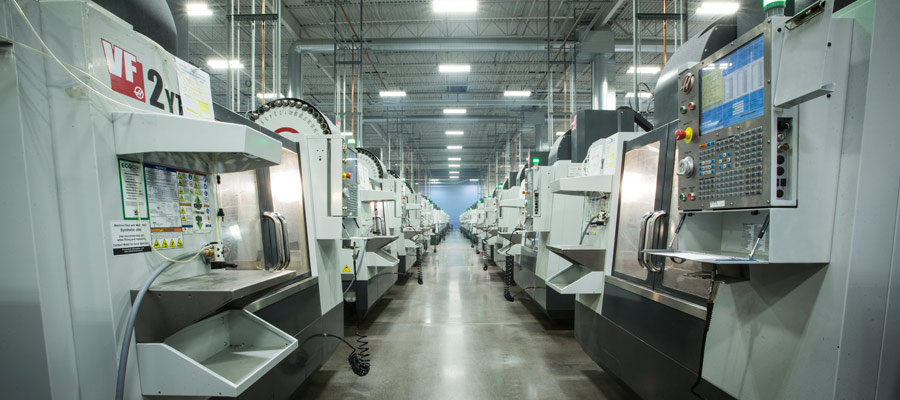
Manufacturing Insight: CNC Programming Services
CNC programming forms the critical bridge between digital design and physical precision in modern prototyping. At Shenzhen Honyo Prototype, we recognize that advanced CNC programming is not merely a translation step but a strategic engineering process that directly impacts part accuracy, lead time, and cost efficiency. Our approach integrates deep material science knowledge with multi-axis machining expertise to transform complex 3D CAD models into optimized G-code, ensuring manufacturability while adhering to stringent tolerances demanded by aerospace, medical, and automotive sectors. Unlike standard production shops, Honyo specializes in low-volume, high-mix prototyping where programming agility and first-article success rates are paramount.
Our programming methodology begins with rigorous design-for-manufacturability (DFM) analysis, identifying potential tool access issues, wall thickness constraints, or surface finish conflicts before code generation. Honyo’s certified programmers utilize industry-leading CAM platforms to develop intelligent toolpaths that minimize machine cycle time without compromising surface integrity. This includes dynamic motion strategies for high-speed machining, adaptive roughing to extend tool life, and multi-axis simultaneous operations that eliminate secondary setups. Crucially, we prioritize material-specific parameters—adjusting feeds, speeds, and coolant strategies for everything from aluminum 7075-T6 to PEEK and titanium—to prevent thermal distortion in thin-walled prototypes. Every program undergoes virtual machine simulation to verify collision avoidance and dimensional accuracy, reducing scrap risk and accelerating time-to-part.
Honyo’s capabilities extend beyond standard 3-axis programming to include sophisticated 5-axis simultaneous machining for organic geometries and tight-tolerance features. Our programmers collaborate directly with your design team to suggest manufacturability refinements, such as optimizing draft angles or consolidating features, which can reduce prototype iterations by up to 30%. This proactive engineering partnership ensures that your digital intent is physically realized with minimal rework. Below outlines our core programming specifications for prototype development:
| Parameter | Capability | Application Impact |
|————————|————————————–|—————————————-|
| Software Platforms | Siemens NX, Mastercam, Fusion 360 | Seamless CAD/CAM integration |
| Max Complexity | 5-axis simultaneous, mill-turn | Single-setup complex geometries |
| Typical Tolerances | ±0.005 mm (standard), ±0.002 mm (opt)| Critical feature precision |
| Material Range | Metals, engineering plastics, composites | Broad prototyping material coverage |
| Lead Time Compression | 24-72 hour programming turnaround | Rapid iteration for design validation |
The true value of Honyo’s CNC programming services lies in our prototype-first mindset. We understand that a prototype is not a miniature production part but a functional validation tool requiring strategic programming trade-offs. Our engineers balance speed, cost, and precision to deliver prototypes that accurately reflect your design intent—enabling confident testing and iteration. By embedding manufacturing intelligence into every line of code, we transform machining from a cost center into a strategic accelerator for your product development cycle. Partner with Honyo to leverage programming expertise that turns complex designs into precise, functional prototypes faster and with fewer iterations.
Technical Capabilities
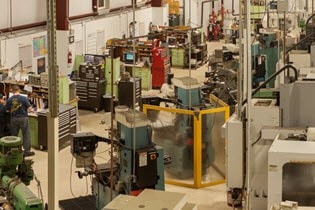
Shenzhen Honyo Prototype delivers advanced CNC programming services engineered to support complex, high-precision manufacturing demands across aerospace, medical, automotive, and industrial sectors. Our in-house programming team utilizes industry-leading CAD/CAM software, including Siemens NX, Mastercam, and SolidWorks CAM, to generate optimized toolpaths that ensure accuracy, efficiency, and repeatability across all machining operations. With a focus on 3-axis, 4-axis, and 5-axis milling as well as CNC turning, we provide comprehensive programming solutions tailored to part geometry, material characteristics, and functional requirements.
Our 3-axis milling programming supports prismatic and planar components with exceptional surface finish and dimensional consistency. For complex geometries involving undercuts, compound angles, and sculpted surfaces, our 4-axis and 5-axis simultaneous milling programming eliminates the need for multiple setups, reduces cycle times, and maintains tight tolerances on intricate features. All multi-axis programs are verified using advanced simulation tools to prevent collisions, ensure tool engagement, and optimize feed rates and spindle speeds.
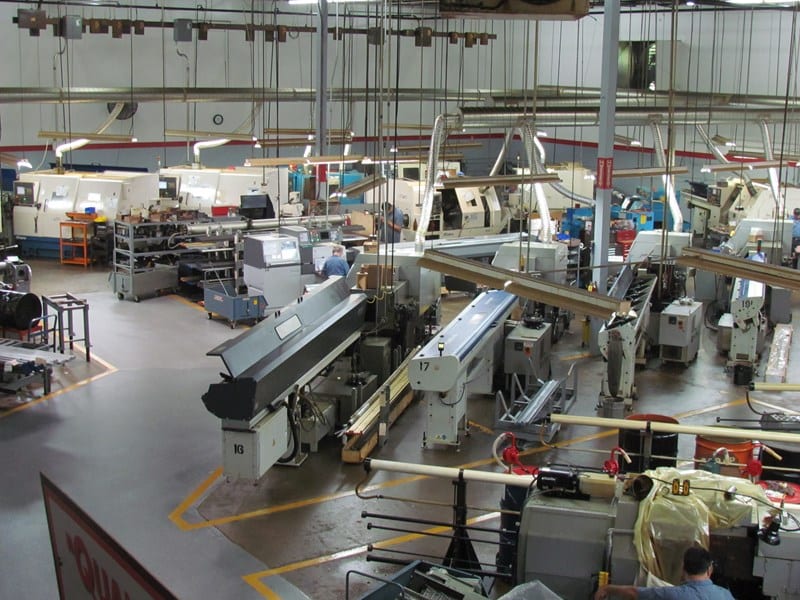
CNC turning programming is optimized for both standard and multi-tasking lathes with live tooling, enabling complete turn-mill solutions in a single setup. Our programming protocols support bar feeding, parting, grooving, threading, and drilling operations, ensuring high repeatability for both short-run prototypes and medium-volume production.
A cornerstone of our CNC programming capability is our commitment to tight-tolerance machining. We routinely hold tolerances down to ±0.005 mm (±0.0002″) on critical dimensions, with geometric tolerances aligned to ASME Y14.5 and ISO 1101 standards. Our programming workflows integrate process planning, fixture design guidance, and in-process inspection routines to maintain consistency from first article to full production.
The table below outlines the typical tolerance capabilities and compatible materials for our CNC programming and machining services:
| Operation Type | Dimensional Tolerance | Geometric Tolerance | Surface Finish (Ra) | Common Materials |
|——————–|———————–|———————|———————|——————|
| 3-Axis Milling | ±0.01 mm | ±0.01 mm | 0.8 – 3.2 µm | Aluminum (6061, 7075), Steel (1018, 4140), Stainless (303, 316), Brass, Plastics (PEEK, Delrin) |
| 4-Axis Milling | ±0.008 mm | ±0.008 mm | 0.8 – 1.6 µm | Aluminum, Steel, Stainless, Titanium, PEEK |
| 5-Axis Milling | ±0.005 mm | ±0.005 mm | 0.4 – 1.6 µm | Aluminum, Titanium, Inconel, Stainless, Magnesium |
| CNC Turning | ±0.01 mm | ±0.01 mm | 0.8 – 3.2 µm | Aluminum, Brass, Steel, Stainless, Titanium, Plastics |
All programs are backed by rigorous quality validation, including CMM inspection reports and first-article inspection documentation upon request. At Shenzhen Honyo Prototype, our CNC programming services are designed to bridge design intent with manufacturing excellence, ensuring every component meets the highest standards of precision and performance.
From CAD to Part: The Process
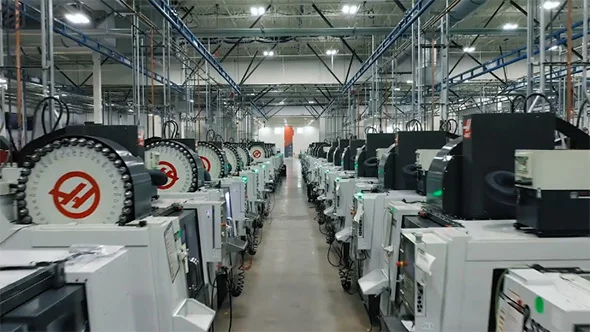
Shenzhen Honyo Prototype: CNC Programming Services – Production Process Workflow
The transition from client CAD data to a finished precision component at Shenzhen Honyo Prototype follows a rigorously defined, three-stage workflow designed to maximize efficiency, accuracy, and cost-effectiveness. This structured approach—AI Quote, Design for Manufacturability (DFM), and Production—ensures seamless integration of engineering intent with manufacturing capability, minimizing delays and rework.
The process initiates with the AI-Powered Quoting System. Upon receipt of client CAD files (STEP, IGES, or native formats), our proprietary AI engine performs an instant geometric and feature analysis. It evaluates part complexity, material requirements, tolerance density, and setup considerations against live machine availability and tooling databases. This generates a highly accurate preliminary quote within hours, including estimated lead time and cost drivers, while flagging potential high-risk features requiring immediate client consultation. Unlike manual quoting, this eliminates subjectivity and accelerates project initiation by up to 70%.
Following quote acceptance, the Design for Manufacturability (DFM) Review commences. Our senior manufacturing engineers conduct a detailed technical assessment, focusing on optimizing the design for CNC production. This phase identifies issues such as non-standard tool access, thin wall instability, excessive tolerance stacking, or inefficient feature sequencing. We provide actionable feedback—often with annotated CAD markups—to resolve geometric deviations, suggest material-saving modifications, or recommend alternative finishing methods. Crucially, this step prevents costly errors before programming begins, reducing scrap rates by an average of 35% and ensuring the design aligns with our process capabilities.
The final Production Phase leverages Honyo’s integrated CAM programming and machining expertise. Certified programmers utilize Mastercam and Siemens NX to develop optimized toolpaths, incorporating verified DFM adjustments. Rigorous virtual machine simulation validates collision avoidance, cycle time accuracy, and surface finish quality. Only after 100% digital verification do parts proceed to the shop floor. Our HAAS and DMG MORI machining centers execute production with real-time process monitoring, adhering to strict first-article inspection protocols per AS9102 standards. Final parts undergo comprehensive CMM validation against original CAD geometry before shipment.
This workflow’s strength lies in its closed-loop communication: DFM insights continuously refine the AI quoting algorithms, while production feedback informs future programming strategies. The result is a predictable, high-yield process delivering complex prototypes and low-volume production parts with exceptional repeatability. Key CNC production specifications are detailed below:
| Parameter | Specification | Application Context |
|——————–|———————————–|———————————–|
| Positional Tolerance | ±0.005 mm (3-axis), ±0.010 mm (5-axis) | Critical mating surfaces, aerospace components |
| Surface Finish | Ra 0.8 µm (standard), Ra 0.4 µm (optical) | Hydraulic seals, cosmetic parts |
| Material Range | Aluminum 6061/7075, Stainless Steel 303/316, Titanium Gr5, PEEK | Prototypes to production |
| Max Work Envelope | 1000 x 600 x 500 mm (3-axis) | Large structural components |
| Lead Time Standard | 5-7 days (simple), 10-15 days (complex) | From DFM sign-off to shipment |
By embedding intelligence and engineering rigor at every stage—from initial quote through final inspection—Honyo transforms CAD data into certified, production-ready components with unmatched reliability for demanding industrial applications.
Start Your Project
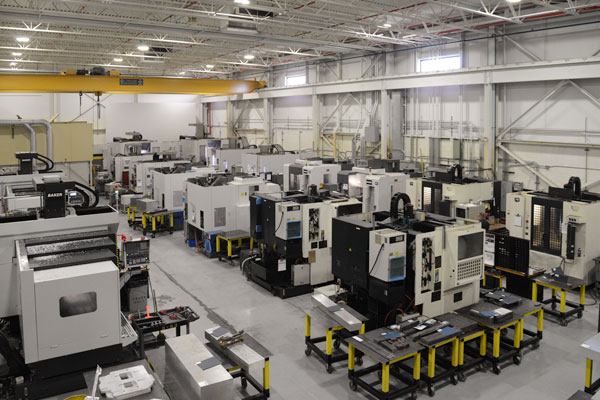
Start Your CNC Programming Project with Shenzhen Honyo Prototype
When it comes to precision CNC programming services, Shenzhen Honyo Prototype stands at the forefront of innovation, efficiency, and reliability. As a trusted partner in the CNC machining industry, we specialize in transforming complex design concepts into high-accuracy, fully functional prototypes and production components. Our advanced programming capabilities, combined with state-of-the-art machining technology, ensure that every part we produce meets the strictest quality standards across aerospace, medical, automotive, and consumer electronics sectors.
At Honyo Prototype, we understand that the foundation of any successful CNC machining project lies in precise programming. Our team of certified CNC programmers utilizes industry-leading software such as Mastercam, SolidCAM, and Fusion 360 to generate optimized toolpaths, minimize cycle times, and maximize part accuracy. Whether you’re working with 3-axis, 4-axis, or full 5-axis CNC milling, turning, or mill-turn operations, our programming expertise ensures seamless integration from CAD model to finished component.
We support a wide range of materials, including aluminum alloys, stainless steel, titanium, brass, and engineering plastics such as PEEK and Delrin. Our programming protocols are tailored to the specific mechanical properties and tolerances required for your application, ensuring optimal surface finish, dimensional stability, and structural integrity.
To begin your project, simply provide your CAD file in STEP, IGES, SolidWorks, or native format. Our engineering team will conduct a comprehensive Design for Manufacturability (DFM) review to identify potential improvements in geometry, tolerancing, and material selection—helping you reduce lead times and avoid costly revisions.
Below are the key specifications we support for CNC programming and machining services:
| Feature | Specification |
|——–|—————|
| Machining Types | 3-axis, 4-axis, 5-axis milling, CNC turning, mill-turn with live tooling |
| Tolerances | Standard: ±0.005 mm; Tight: ±0.002 mm |
| Supported Materials | Aluminum (6061, 7075), Stainless Steel (303, 304, 316), Titanium (Grade 5), Brass, PEEK, Delrin, and more |
| File Formats Accepted | STEP, IGES, X_T, SolidWorks (.sldprt), Parasolid, PDF (for 2D), DWG/DXF |
| Lead Times | As fast as 3–5 days for prototypes; production runs scalable |
| Surface Finishes | As-machined, anodizing (Type II & III), powder coating, passivation, polishing |
Our commitment to excellence is matched by our dedication to customer collaboration. We work closely with engineers and product developers to ensure that every line of code in your CNC program translates into real-world precision.
Ready to bring your next project to life? Contact Susan Leo, Customer Project Manager at Shenzhen Honyo Prototype, to discuss your CNC programming requirements. Email us at info@hy-proto.com with your design files and project specifications. Our team will respond within 24 hours with a detailed quote, DFM feedback, and timeline estimate.
Partner with Honyo Prototype—where advanced CNC programming meets precision manufacturing. Let’s build the future, one micron at a time.
🚀 Rapid Prototyping Estimator
Get a rough estimate for CNC/3D Printing costs.