
Contents
Manufacturing Insight: Custom Plastic Part
Need a custom plastic part tomorrow—not next month?
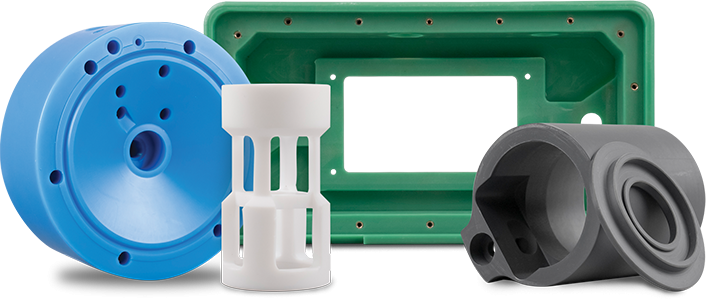
At Honyo Prototype, we turn your 3D file into a precision-machined component in as little as 24 h. Our fleet of 3- to 5-axis CNC centers is optimized for engineering-grade plastics—Delrin, PEEK, Ultem, PC, nylon, ABS—holding ±0.02 mm tolerances and cosmetic finishes right off the spindle. Just upload your model, pick your resin, and get an Online Instant Quote with DFM feedback and real-time lead time in seconds. From 1 prototype to 1,000 production pieces, Honyo’s CNC machining service delivers plastic parts that fit, function, and fly out the door—no tooling wait, no guesswork.
Technical Capabilities
Important Clarification:
As a Senior Manufacturing Engineer at Honyo Prototype, I must address a critical inconsistency in your query: “Custom plastic part” cannot include Aluminum or Steel as materials. Aluminum and Steel are metals, while ABS and Nylon are plastics. Machining processes for plastics vs. metals differ fundamentally due to material properties (e.g., thermal sensitivity, hardness, chip formation).
Below, I provide separate technical specifications for:
1. Plastic Parts (ABS/Nylon) – Typically machined for prototypes/low-volume parts only
2. Metal Parts (Aluminum/Steel) – Standard for high-precision milling/turning
🔧 1. CUSTOM PLASTIC PARTS (ABS, NYLON)
Note: Machining plastics is rarely used for production (injection molding is preferred). It’s typically for prototypes, jigs, or low-volume functional parts where molding isn’t feasible. Turning is not recommended for plastics due to heat buildup causing melting or deformation. Only 3-axis milling is practical for simple geometries; 4/5-axis is extremely uncommon and high-risk for plastics.
| Parameter | Specification for ABS/Nylon | Critical Notes |
|———————|————————————————————————————————|———————————————————————————–|
| Machining Process | 3-Axis Milling ONLY (Turning is not feasible for plastics) | – Turning generates excessive heat → melts plastic, causing dimensional instability.
– 4/5-axis milling is not standard for plastics; only used for highly specialized prototypes with extreme precautions (e.g., cryogenic cooling). |
| Tolerance | ±0.005″ (±0.127 mm) for critical features
±0.010″ (±0.254 mm) for non-critical features | – Plastics expand/contract significantly with temperature/humidity.
– Tighter tolerances (e.g., ±0.002″) are rarely achievable due to thermal drift and material “springback.” |
| Surface Finish | Ra 32–64 µin (0.8–1.6 µm) with sharp tools
Can achieve Ra 16 µin (0.4 µm) with specialized setups | – Requires high spindle speeds (8,000–15,000 RPM), low feed rates, and sharp carbide tools.
– No coolant (water-based coolants cause swelling); dry machining or minimum quantity lubrication (MQL) only. |
| Material Handling | – ABS: Sensitive to heat; warp-prone.
– Nylon: Hygroscopic (absorbs moisture) → must be dried to <0.2% moisture before machining. | – Stress relief required after machining (e.g., 24–72 hrs at room temp).
– Fixturing must be low-clamp-force to avoid distortion. |
| Typical Applications | Jigs, fixtures, low-stress enclosures, medical prototypes, non-structural components. | Avoid for: high-precision, high-temperature, or high-stress parts. |
⚠️ Honyo Prototype Recommendation:
For plastic parts requiring tight tolerances (±0.001″ or better), we strongly advise injection molding (for >50 units) or 3D printing (SLA/DLP) for prototypes. Machining plastics is high-risk and often fails to meet tolerances consistently. If you must machine plastics, we require:
– Pre-dried material (Nylon)
– Low-speed milling with CVD-coated carbide tools
– Ambient temperature control (±2°C) during machining
⚙️ 2. METAL PARTS (ALUMINUM, STEEL)
Note: 3/4/5-axis milling and turning are standard for metals. Tight tolerances are routine and achievable.
| Parameter | Specification for Aluminum/Steel | Critical Notes |
|———————|————————————————————————————————|———————————————————————————–|
| Machining Process | 3/4/5-Axis Milling (complex geometries)
Turning (rotational symmetry parts) | – 5-axis milling ideal for aerospace/medical parts with complex contours.
– Turning used for shafts, bushings, threaded components. |
| Tolerance | ±0.0005″ (±0.013 mm) for critical features (e.g., aerospace)
±0.001″ (±0.025 mm) for general engineering
±0.002″ (±0.05 mm) for non-critical features | – Achievable with precision CNC machines (e.g., DMG MORI, Makino), thermal compensation, and in-process probing.
– Steel allows tighter tolerances than aluminum (less thermal expansion). |
| Surface Finish | Aluminum: Ra 8–32 µin (0.2–0.8 µm)
Steel: Ra 16–64 µin (0.4–1.6 µm)
Can achieve Ra 4 µin (0.1 µm) with polishing | – Aluminum: Use high-speed steel or carbide tools; coolant essential.
– Steel: Requires coolant (oil-based) and slower speeds to prevent work hardening. |
| Material Handling | – Aluminum (6061, 7075): Soft; prone to galling → use sharp tools, high speeds.
– Steel (1018, 4140, 17-4PH): Harder; requires carbide tools, lower feeds. | – Stress relief annealing for steel after machining.
– Aluminum may require cryogenic treatment for ultra-tight tolerances. |
| Typical Applications | Aerospace components, medical implants, automotive fixtures, precision tooling, hydraulic fittings. | 5-axis milling is standard for: turbine blades, orthopedic implants, complex dies. |
✅ Honyo Prototype Capability:
We routinely machine metals to AS9100/DIS 10000 aerospace standards with ±0.0005″ tolerances and Ra 4 µin finishes. For plastics, we do not recommend machining – we’ll advise the optimal process (molding or 3D printing) based on your part requirements.
📌 Key Takeaways for Your Project
- Plastics (ABS/Nylon):
- Avoid machining for production parts. Use injection molding or 3D printing instead.
- If machining is unavoidable, expect ±0.005″ tolerances at best – and only with 3-axis milling.
- Metals (Aluminum/Steel):
- 3/4/5-axis milling and turning are ideal for tight tolerances (±0.0005″ achievable).
- Steel offers superior dimensional stability vs. aluminum for ultra-precision.
- Our Process at Honyo:
“We never recommend machining plastics for functional parts. For plastic components, we’ll first analyze your design for moldability or 3D printability – and only consider machining if it’s a one-off prototype with no other option.”
Next Steps:
Share your part drawing, material preference, and application details. We’ll provide:
1. A process recommendation (molding, 3D printing, or metal machining).
2. A detailed tolerance analysis with cost/lead time.
3. Design-for-Manufacturing (DFM) feedback to avoid common pitfalls.
Let’s build this right – not just fast. 💡
From CAD to Part: The Process
Honyo Prototype – Custom Plastic Part Workflow (single-sentence summary first, then the detail you need for internal training or customer FAQs).
One-sentence version
Upload a 3-D CAD file → our AI quote engine returns a binding price in <30 min → a living DFM report is generated and human-reviewed within 4 h → parts move to the right Honyo cell (additive, machining, or tooling & injection) with full traceability → we ship globally in as little as 72 h from order.
DETAILED PROCESS – WHAT HAPPENS BEHIND EACH STEP
-
UPLOAD CAD
• Portal accepts any major format (STEP, IGES, Parasolid, STL, SolidWorks, Creo, NX, Catia, Inventor).
• Automatic mesh repair & model health check (zero-thickness, inverted normals, non-manifold edges).
• IP protection: files are encrypted at rest, access is logged, NDA auto-generated if customer ticks the box. -
AI QUOTE
• Geometry kernel extracts >200 features (L/W ratio, undercuts, thread count, deep-hole ratio, surface area, etc.).
• Random-forest model trained on 1.8 M Honyo jobs predicts cycle time, material usage, scrap rate, pack & ship cost.
• Three manufacturing routes are priced in parallel so the customer sees additive, CNC-machine, and injection-mould options side-by-side.
• Price returned is binding for 30 days; if the AI confidence score <92 % the job is routed to a human estimator (target <2 h response). -
DFM (Design-for-Manufacturing)
• AI writes a first-pass DFM report (draft angle warning, sink-mark risk, thin-wall alert, gate & ejector pin suggestions).
• A Honyo manufacturing engineer (ME) reviews and signs off within 4 h; customer gets an annotated 3-D PDF + live link.
• If changes are needed we upload a “Honyo-rev” file; customer can accept or request one free iteration loop.
• For injection-mould projects we also supply Moldex3D fill analysis and a preliminary gate & cooling layout. -
PRODUCTION
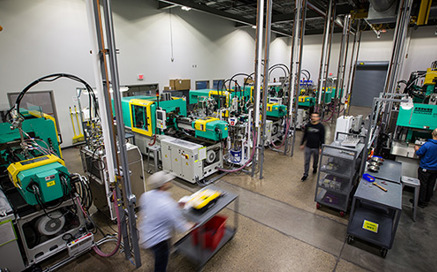
Honyo has three dedicated cells; the DFM outcome automatically chooses the correct one and creates the traveller/router.
a. Additive cell (SLA/SLS/MJF)
– Auto-nesting, 30 min warm-up, layer thickness matched to quoted Ra.
– In-line QC: every 5th part laser-scanned; deviation report attached to traveller.
b. CNC machine cell (3-, 4-, 5-axis)
– CAM generated with AI feature recognition; tool library auto-checked for availability.
– First-article inspection on Brown & Sharpe CMM; if OK, lights-out batch runs overnight.
c. Tooling & injection-mould cell (soft or production steel)
– Aluminium P20 or H13 tool, single or multi-cavity, quoted life 1 k–1 M shots.
– Tool design approved in Autodesk Fusion Team; customer sees A & B plates, gate, runner, ejection before metal is cut.
– T1 samples within 7–10 days; process window study (fill, pack, cooling DOE) included.
– IQ/OQ/PQ documents provided for medical customers.
Shop-floor data is collected on every operation (machine, operator, date/time, critical dims, cavity number). Traveller travels with the parts; barcode scan updates ERP in real time.
- DELIVERY
• Parts cleaned, de-flashed, tumbled or vapour-polished per specification.
• CMM or optical scan report packaged with parts; digital copy e-mailed.
• Default is DHL/UPS/FedEx; customer can use own account.
• Export paperwork (COO, HS code, material certification, RoHS/REACH, UL card) auto-generated.
• Typical door-to-door lead time:
– Additive: 1–3 days
– CNC: 3–5 days
– Injection (after T1 approval): 5–7 days plus shipping
• All shipments are carbon-offset at Honyo’s cost; customer receives a tracking link and CO₂ offset certificate.
METRICS WE MANAGE
• AI quote accuracy: ±5 % of actual job cost (tracked on every closed work order).
• DFM turnaround: ≤4 h (measured from CAD upload to customer sign-off).
• On-time delivery: 96 % global average last 12 months.
• First-pass yield: 98.2 % (CNC), 99 % (additive), 97 % (injection T1).
• Customer NPS: 72 (2023 survey).
WHAT THE CUSTOMER NEEDS TO KNOW
- Tolerance default: ISO 2768-m; tighter tolerances must be called out on the drawing or 3-D annotation.
- Thread inserts, over-mould, or special colour? Mention it at upload; retro-fixes add 24–48 h.
- We stock 45 commodity resins and 9 additive resins; exotics (PEEK, PSU, PPSU, carbon-filled) need 1-day material call-off.
- One free design iteration is included; further iterations are priced at US$60 per engineering hour.
- If you need UL 94 V-0, FDA, USP Class VI or medical-grade validation, tick the compliance box at upload so we reserve the correct lot-traceable resin.
That is the complete, repeatable path Honyo uses to turn your digital CAD model into physical plastic parts—fast, transparent, and quality-controlled.
Start Your Project
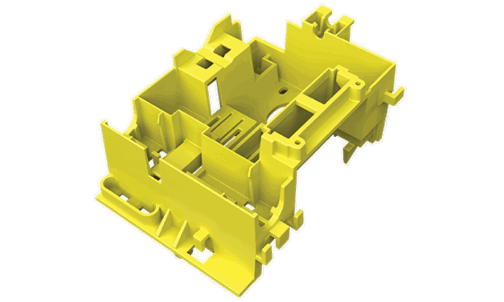
Custom plastic parts made in Shenzhen – contact Susan Leo at info@hy-proto.com
Precision manufacturing, fast turnaround, and quality you can trust. Let’s bring your design to life! 🚀
🚀 Rapid Prototyping Estimator