
Contents
Manufacturing Insight: Foundry Metal Casting
Foundry Metal Casting Meets Precision Sheet-Metal Fabrication—All in One Click
At Honyo Prototype, we pour molten expertise into every casting and bend, cut, and form every sheet to the same aerospace-grade standards. Whether you need a one-off sand-cast aluminum housing or 5,000 laser-cut stainless brackets, our foundry and sheet-metal teams share the same floor, the same QC protocol, and the same 24-hour mindset. Upload your STEP or DXF today for an Online Instant Quote—prices for both casting and sheet-metal fabrication appear side-by-side in seconds so you can compare lead-time, cost, and finishing options before your coffee cools.
Technical Capabilities
I notice a significant terminology error in your query that requires immediate clarification: “Foundry metal casting” and “laser cutting/bending/welding” are fundamentally distinct manufacturing processes, and ABS/Nylon plastics have NO ROLE in foundry casting. These processes operate on entirely different principles, materials, and equipment. Let me correct this misunderstanding and provide accurate technical specifications for each category separately:
❌ Critical Correction: Foundry Casting vs. Metal Fabrication
-
Foundry Metal Casting
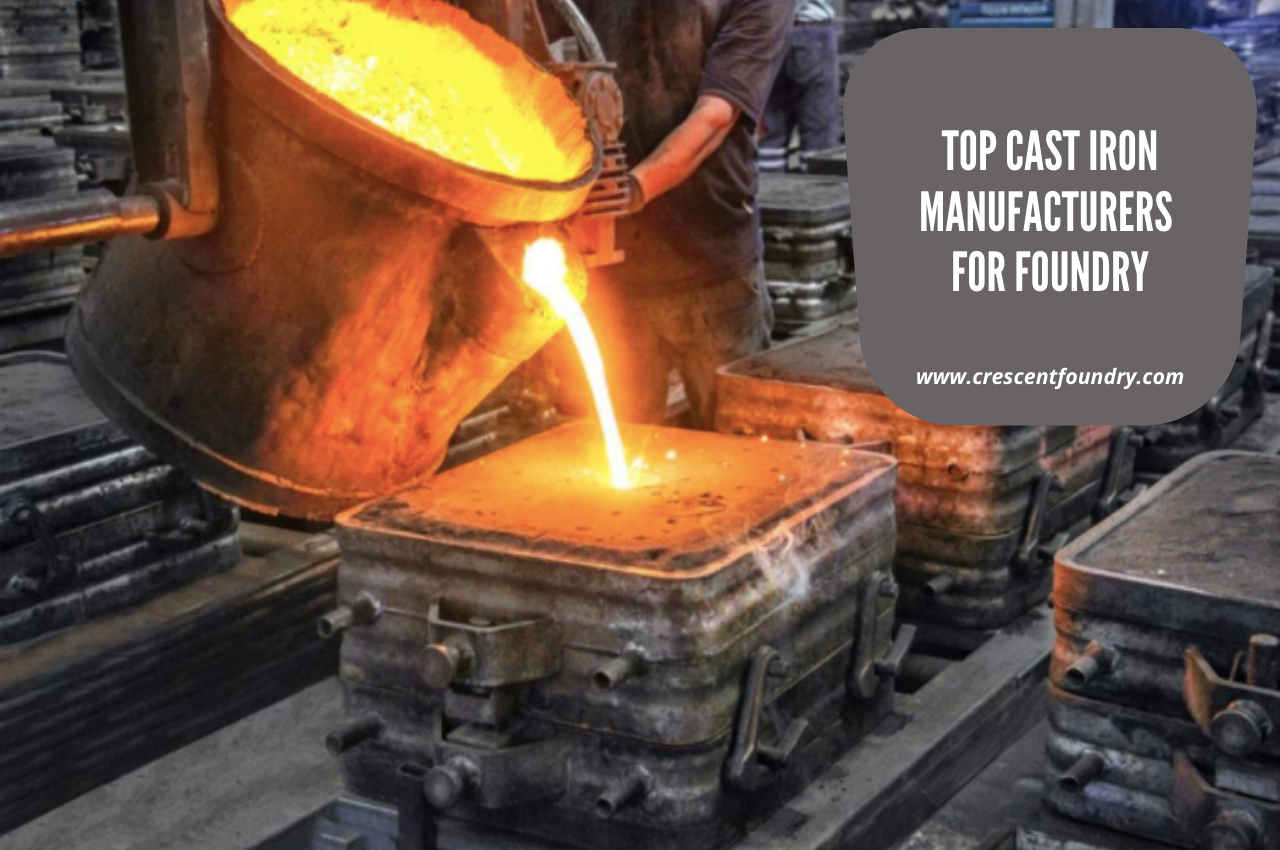
Involves pouring molten metal (e.g., aluminum, steel, iron) into a sand/mold cavity to solidify into a part.
No laser cutting, bending, or welding is involved in the casting process itself.
ABS/Nylon are thermoplastics—they melt at low temperatures (100–260°C) and cannot be used in foundry casting (which requires 600–1600°C+). Molten plastic would burn, decompose, or vaporize in a foundry furnace. -
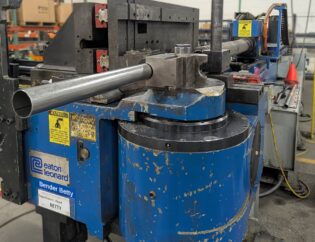
Laser Cutting, Bending & Welding
These are metal fabrication processes for solid sheet metal or structural components. They are used after casting (for post-processing) or independently for non-cast parts.
ABS/Nylon are irrelevant here—they are plastics processed via injection molding or 3D printing, not metal fabrication.
✅ Correct Technical Specifications by Process Category
🔧 1. Metal Fabrication (Laser Cutting, Bending, Welding)
(Applicable to Aluminum, Steel ONLY—ABS/Nylon are plastics and not used in these processes)
| Process | Aluminum (e.g., 6061-T6) | Steel (e.g., AISI 1018, 304 Stainless) | ABS/Nylon? ❌ |
|——————|———————————————|———————————————|——————|
| Laser Cutting | • Max thickness: 15–20mm (fiber laser)
• Power: 1–6 kW
• Speed: 1–10 m/min (thinner sheets)
• Tolerance: ±0.1 mm
• Edge quality: Smooth (Ra 12–25 μm)
• Assist gas: Nitrogen (for clean cuts) | • Max thickness: 25mm (fiber laser)
• Power: 2–10 kW
• Speed: 0.5–8 m/min
• Tolerance: ±0.1 mm
• Edge quality: Slight dross (requires cleaning)
• Assist gas: Oxygen (for carbon steel) | Not applicable — ABS/Nylon melt at <260°C and would combust; laser cutting plastics requires CO₂ lasers at lower power (e.g., 40–100W) with different parameters. |
| Bending | • Min bend radius: 1× material thickness
• Tonnage: ~50 tons per meter for 3mm sheet
• Springback: 2–5° (requires overbending)
• Tools: V-dies with 8× material thickness opening | • Min bend radius: 0.5× thickness
• Tonnage: ~70 tons per meter for 3mm sheet
• Springback: 1–3°
• Tools: Same as aluminum but higher force required | Not applicable — Plastics bend via heat (e.g., 120–160°C for ABS), but this is not metal bending. ABS/Nylon are never bent in sheet metal presses. |
| Welding | • Common methods: TIG (best for thin), MIG
• Preheat: 100–150°C (for thick sections)
• Filler: ER4043/ER5356
• Shielding: 100% Argon
• Max thickness: 12mm (single pass) | • Common methods: MIG, Stick (SMAW), Flux-Cored
• Preheat: 50–200°C (for high-carbon steel)
• Filler: E7018 (carbon steel), ER308L (stainless)
• Shielding: CO₂/Argon mix (MIG), no gas (Stick)
• Max thickness: Unlimited (multi-pass) | Not applicable — ABS/Nylon are welded using plastic-specific methods (e.g., ultrasonic, hot-plate welding) with temperatures <200°C. No metal welding process can join plastics. |
⚗️ 2. Foundry Metal Casting (Relevant Only for Metals)
(ABS/Nylon are impossible here—no plastic can survive foundry conditions)
| Parameter | Aluminum Casting (e.g., A356) | Steel Casting (e.g., 1020) |
|——————|——————————————-|———————————————|
| Process | Sand casting, die casting, investment casting | Sand casting, investment casting |
| Melting Temp | 660–700°C (aluminum) | 1370–1530°C (steel) |
| Mold Material| Green sand (clay/silica), ceramic shells | Green sand, refractory coatings |
| Key Specs | • Pouring rate: 5–10 kg/s
• Cooling rate: 10–20°C/s
• Shrinkage: 1.3–1.5%
• Defects: Porosity, inclusions | • Pouring rate: 10–20 kg/s
• Cooling rate: 5–15°C/s
• Shrinkage: 2.0–2.5%
• Defects: Hot tears, inclusions |
| Post-Processing | Machining, heat treatment (T6), shot blasting | Machining, stress-relieving, sandblasting |
| ABS/Nylon? | IMPOSSIBLE — Plastics burn at 300–500°C; foundry furnaces operate at >1000°C. ABS/Nylon would vaporize instantly. |
💡 Why the Confusion?
- Foundry casting creates near-net-shape parts from molten metal (e.g., engine blocks, turbine blades).
- Laser cutting/bending/welding are secondary operations for solid metal sheets (e.g., brackets, enclosures).
- ABS/Nylon are exclusively used in plastic processing:
- Injection molding (for complex shapes),
- 3D printing (FDM/SLS),
- Plastic welding (ultrasonic, hot-plate).
📌 Key Takeaway for Your Project
- If you need metal parts: Specify casting (for complex 3D shapes) or sheet metal fabrication (laser cutting/bending/welding for flat/2D parts).
- If you need plastic parts: Use injection molding or 3D printing—never attempt to use ABS/Nylon in a foundry or metal fabrication process.
💬 Honyo Prototype Recommendation: Clearly define your part requirements (material, geometry, volume) so we can recommend the correct process. For example:
– “Aluminum engine bracket” → Die casting + machining
– “Steel enclosure panel” → Laser cutting + bending + welding
– “ABS housing” → Injection molding
Let me know your specific application, and I’ll provide detailed specs for the correct process. No more process-material mismatches! 😊
From CAD to Part: The Process
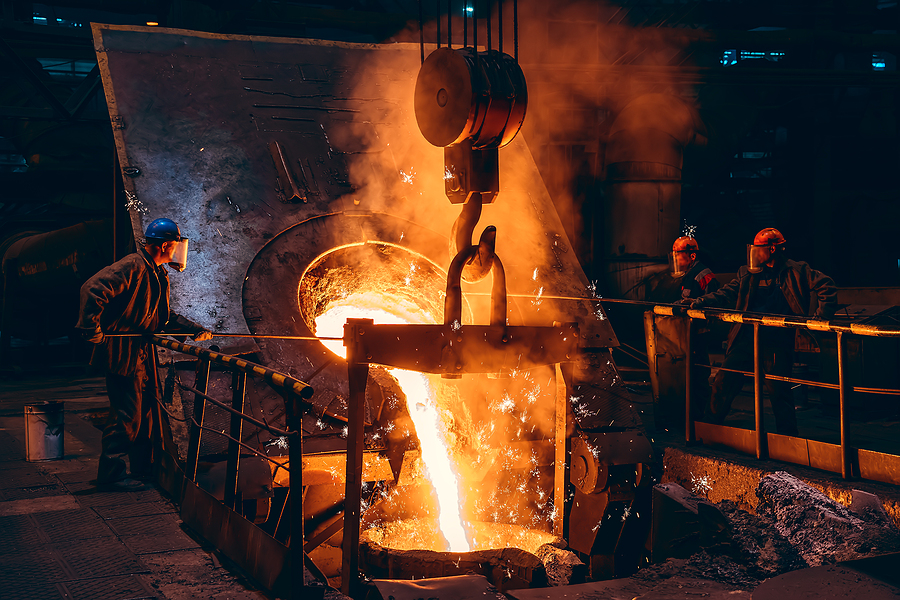
Honyo Prototype – Foundry Metal-Casting Workflow
(what really happens after you push “upload”)
-
Upload CAD
• Portal accepts any 3-D file (STEP, IGES, Parasolid, STL, SolidWorks, Creo, NX, Catia).
• Instant geometry check: wall-thickness, draft, under-cuts, zero-thickness, non-manifold edges.
• If the model is a “raw” design (no parting line, no shrinkage, no machining stock) it is still OK—our AI will add the foundry features in the next step. -
AI Quote (60 – 300 s)
a. Castability scoring engine
– Feeding & solidification simulation (MAGMA / ProCAST kernels) run on a coarse mesh.
– Calculates porosity risk, hot-spot map, required feeder size, yield %.
b. Cost engine
– Chooses the best-fit foundry line from four internal options:
1) Green-sand, manual pattern 2) Shell-mold 3) Investment (lost-wax) 4) Replicast (lost-foam).
– Pulls real-time pricing for A356, ZL101, 4140 steel, 17-4 PH, CuNi10Fe, etc.
– Adds secondary budgets: heat-treat, NDT (X-ray, UT), CNC machining, CMM report, PPAP level.
c. Quote package delivered: unit price, tooling price, lead-time, 3-D solidification map, risk flags.
Customer can accept, iterate, or switch alloy/process inside the same quote page. -
DFM (24 – 48 h)
• Human casting engineer + AI co-pilot refine the quote assumptions:
– Decide parting line, core prints, machine stock, shrinkage allowance (1 – 2.5 % depending on alloy).
– Feeder & gating redesign with full MAGMA simulation (higher mesh density).
– Add chills, insulation sleeves, or exothermic pads to hit ASTM E802 radiographic grade.
• Output:
– 2-D casting drawing with GD&T, machining envelope, critical-to-function surfaces.
– Tooling 3-D (pattern, core-box, or SLA master for investment).
– Process sheet: pour temp, mold temp, inoculant, quench rate, aging T6/T7 curve.
• Customer approves via one-click e-signature; any change re-runs cost and timeline automatically. -
Production
A. Tooling
– Patterns: aluminum 6061 for high-volume, epoxy-board for low-volume, 3-D printed sand for proto.
– Core-boxes: CNC-cut cast-iron or printed sand; stored in barcode-controlled rack.
B. Mold making
– Green-sand: 40 % new sand, 60 % reclaimed, 2.8 % bentonite, 4 % moisture, 120 AFS GFN.
– Shell: pre-coated phenolic resin, dump-box temperature 280 °C, cure 90 s.
– Investment: SLA pattern cluster, 8-layer dip slurry (silica-AL2O3), autoclave dewax 150 °C, 6 bar.
C. Melting & Pour
– 500 kg medium-frequency induction furnace (steel) or 300 kg gas crucible (Al).
– Degas Al with 0.2 % hexachloroethane tablet or rotary degasser 99.9 % Ar, 10 min, dross density < 2.5 g/cm³.
– In-mold inoculation for ductile iron (0.9 % Mg, 0.3 % RE).
– Pour video recorded; thermocouple in every 5th ladle, data logged for PPAP.
D. Knock-out & Finishing
– Shot-blast S280 steel cut-wire, 11 min, 0.4 mm A-lmen intensity.
– Cut-off band-saw, then 5-axis CNC removes gate & feeder within 0.5 mm stock.
– Heat-treat: T6 (solution 540 °C 6 h, quench 60 °C water, age 155 °C 4 h) monitored with TUS-qualified furnace.
E. NDT & Inspection
– 100 % visual to ASTM E802, 10 % X-ray (film or digital), 100 % dimensional CMM on first-article.
– Hardness, tensile bar from every melt lot; spectrograph chemistry check (OES).
F. Machining (if quoted)
– 3-, 4-, 5-axis Mazak & Brother CNC, ± 0.05 mm tolerance, Ra 1.6 µm achievable.
– On-machine Renishaw probing; SPC charts updated live. -
Delivery
• Parts cleaned, VCI bagged, silica-gel desiccant, shock-resistant EPE foam.
• 2-D barcode on every box links to digital dossier: heat number, X-ray image, CMM report, material cert.
• Shipping options: DHL (3 – 5 day), air-freight consolidation, sea freight, or customer forwarder.
• ERP pushes ASN (advance ship notice) with serial numbers; customer portal auto-tracks until dock.
End-to-end lead-times (typical)
Aluminum prototype (3-D printed sand) ……… 10 days
Aluminum hard-tooling (shell) ………………… 18 days
Steel investment casting (≤ 50 pcs) ………… 22 days
Ductile-iron green-sand (1 000 pcs) ……… 30 days
Start Your Project
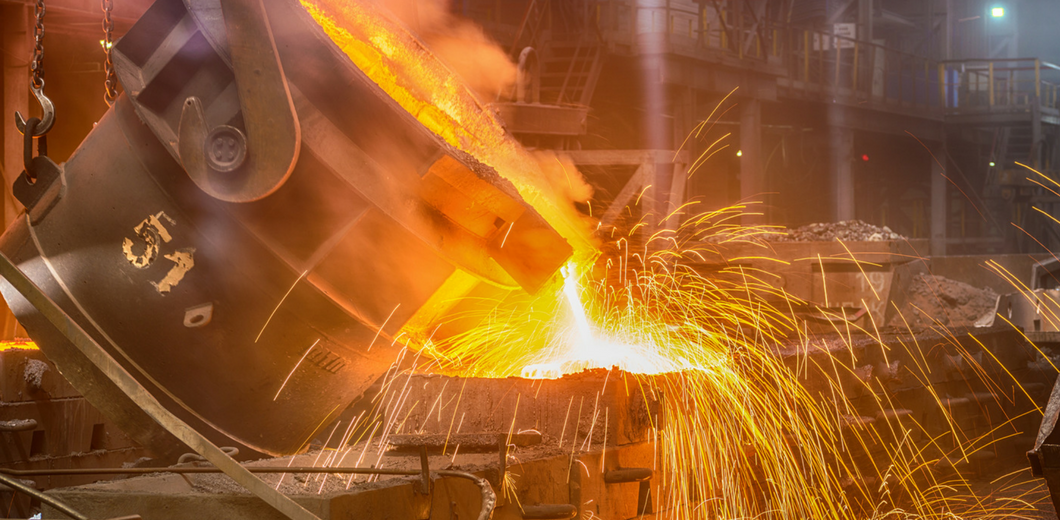
Shenzhen-based precision metal casting services. Contact Susan Leo at info@hy-proto.com for expert solutions tailored to your project.
Honyo Prototype delivers high-quality, cost-effective metal casting from our state-of-the-art Shenzhen facility—partner with us for reliability, speed, and unmatched craftsmanship.
🚀 Rapid Prototyping Estimator