
Contents
Manufacturing Insight: Heat Treating Stainless Steel

Precision Heat Treating for Stainless Steel Components: A Honyo Manufacturing Insight
Heat treating stainless steel is a critical, non-negotiable process step for achieving the required mechanical properties, dimensional stability, and corrosion resistance in high-performance CNC machined components. Unlike carbon steels, stainless alloys present unique challenges due to their chromium content, which forms a protective oxide layer but complicates thermal processing. Improper heat treatment can lead to sensitization (chromium carbide precipitation at grain boundaries), reduced corrosion resistance, excessive distortion, or failure to meet stringent hardness and strength specifications. At Shenzhen Honyo Prototype, we recognize that precision heat treatment is not merely a finishing step but an integral part of the component’s functional integrity, directly impacting its performance in demanding applications from aerospace fittings to medical implants.
The specific heat treatment process applied depends heavily on the stainless steel grade (e.g., 304, 316, 17-4 PH, 440C) and the final part requirements. Common critical processes include:
Solution annealing dissolves carbides and intermetallic phases, restoring maximum corrosion resistance and ductility in austenitic grades like 304/316, followed by rapid quenching to prevent sensitization. Stress relieving, typically performed below the sensitization range (e.g., 475°C – 900°C depending on grade), is essential after extensive CNC machining to mitigate residual stresses that could cause distortion in service or during subsequent operations. For martensitic and precipitation-hardening (PH) stainless steels like 440C or 17-4 PH, hardening involves austenitizing followed by quenching to form martensite, then precise tempering to achieve the target strength-toughness balance without compromising corrosion resistance. Each step demands exact temperature control, soak times, and cooling rates, governed by the alloy’s specific time-temperature-transformation (TTT) diagram.
Honyo Prototype leverages advanced, tightly controlled thermal processing capabilities specifically calibrated for stainless steel alloys. Our dedicated heat treatment facility utilizes state-of-the-art equipment designed to minimize oxidation, decarburization, and distortion – critical concerns for precision-machined surfaces and tight-tolerance features. We prioritize atmosphere control and precise quenching methodologies to ensure consistent, repeatable results that meet aerospace, medical, and industrial specifications.
Honyo Prototype Stainless Steel Heat Treatment Capabilities
| Process Type | Typical Temperature Range (°C) | Atmosphere/Quench Control | Key Tolerances/Achievements | Common Applications |
| :—————— | :—————————- | :—————————– | :————————————– | :——————————– |
| Solution Annealing | 1010 – 1150 | High-Purity Argon/Hydrogen; Molten Salt Bath Quench | ±5°C Uniformity; Distortion < 0.05mm/m | Austenitic Fittings, Chemical Valves |
| Stress Relieving | 475 – 900 (Grade Specific) | Vacuum; Controlled Convection | ±3°C Uniformity; Residual Stress < 50 MPa | Post-Machined Aerospace Brackets |
| Hardening (PH/Mart) | 980 – 1050 (Aust) / 480-620 (Temp) | Vacuum; Polymer/Oil Quench | Hardness ±1.5 HRC; Dimensional Stability ±0.025mm | Surgical Tools, Pump Shafts |
Our integrated approach ensures heat treatment parameters are optimized in conjunction with the initial CNC machining strategy. We utilize in-process metrology before and after heat treatment to validate dimensional stability and correlate thermal parameters with final part performance. This closed-loop process control, combined with our metallurgical expertise in stainless steel behavior, guarantees components that not only meet print specifications but also deliver reliable performance in the field. Partner with Honyo Prototype for stainless steel components where thermal processing integrity is as critical as the precision of the machined geometry.
Technical Capabilities
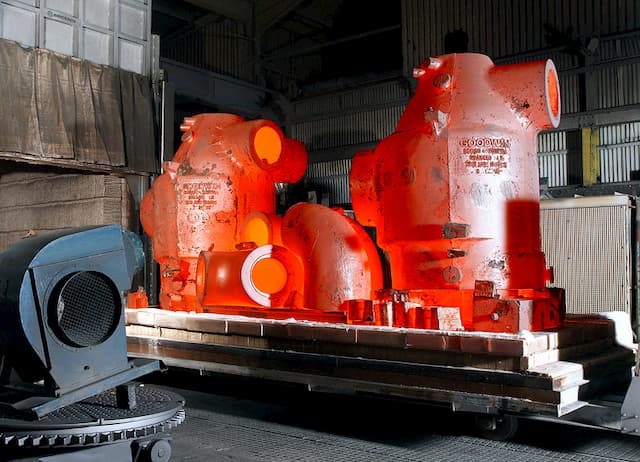
Heat Treating Stainless Steel – Technical Capabilities
At Shenzhen Honyo Prototype, our advanced CNC machining services include precision heat treating of stainless steel components, optimized for performance, durability, and dimensional stability. Our in-house heat treatment processes are integrated seamlessly with 3-axis, 4-axis, and 5-axis milling, as well as precision turning operations, enabling us to deliver high-integrity parts that meet exacting industry standards. We specialize in manufacturing components with tight tolerances, where material integrity and post-treatment consistency are critical.
Stainless steel heat treatment at Honyo Prototype is performed under strictly controlled atmospheres to prevent oxidation and decarburization. We utilize electrically heated batch and continuous furnaces with precise temperature regulation, ensuring uniform heat distribution and repeatable results. Our standard processes include solution annealing, stress relieving, and, for select grades, precipitation hardening. Each treatment cycle is documented and traceable, supporting compliance with ISO 9001 and customer-specific quality requirements.
Solution annealing is applied to austenitic grades such as 304, 316, and 17-4 PH to optimize corrosion resistance and restore ductility after machining. Stress relieving is employed for complex geometries prone to residual stress accumulation during CNC milling or turning, particularly in 410 and 420 martensitic grades. For applications requiring high strength, we offer age hardening of precipitation-hardening alloys like 17-4 PH and 15-5 PH, achieving targeted mechanical properties without compromising dimensional accuracy.
Our 5-axis milling and turning centers are programmed to account for minimal thermal growth or distortion that may occur during heat treatment. Pre- and post-heat treat inspections are conducted using coordinate measuring machines (CMM) and optical comparators to ensure that final tolerances are maintained. Workholding strategies and fixture designs are engineered to minimize stress concentration and support geometric stability throughout the process chain.
The following table outlines our standard heat treatment capabilities and achievable tolerances for key stainless steel alloys:
| Material Grade | Heat Treatment Process | Typical Hardness (HRC) | Dimensional Tolerance (Post-Treatment) | Max Part Size (mm) |
|——————–|————————|————————|—————————————-|——————–|
| 304 / 304L | Solution Annealing | 75–85 HRB | ±0.010 mm | 600 × 500 × 400 |
| 316 / 316L | Solution Annealing | 75–85 HRB | ±0.010 mm | 600 × 500 × 400 |
| 17-4 PH | Solution + Age Hardening | 28–44 HRC | ±0.012 mm | 500 × 400 × 350 |
| 15-5 PH | Solution + Age Hardening | 30–40 HRC | ±0.012 mm | 500 × 400 × 350 |
| 410 / 420 | Stress Relieving | 20–30 HRC | ±0.010 mm | 400 × 300 × 300 |
| 2205 Duplex | Solution Annealing | 30–35 HRC | ±0.015 mm | 550 × 450 × 350 |
All heat treatment cycles are validated through mechanical testing and metallographic analysis when required. Honyo Prototype supports full material traceability, including mill test reports and post-treatment certification. By combining precision CNC machining with controlled thermal processing, we deliver stainless steel components that meet the performance demands of aerospace, medical, and industrial applications.
From CAD to Part: The Process

Shenzhen Honyo Prototype: Stainless Steel Heat Treating Workflow Guide
Production Process: From CAD to Final Part
At Shenzhen Honyo Prototype, our CNC machining workflow integrates precision heat treatment for stainless steel components, ensuring optimal mechanical properties and dimensional stability. This process begins with the client’s CAD model and progresses through three critical phases: AI-Powered Quoting, Design for Manufacturability (DFM) review, and Production execution. Each phase addresses stainless steel’s unique thermal response to prevent distortion, cracking, or sensitization.
The workflow initiates with AI-Powered Quoting. Our system analyzes the CAD geometry, material specification (e.g., 304, 316, 17-4PH), and functional requirements to predict heat treatment needs. Key parameters assessed include section thickness variations, tolerance zones (±0.05mm typical for critical features), and hardness targets. For instance, austenitic grades (304/316) require solution annealing to dissolve carbides, while martensitic grades (410, 420) necessitate hardening and tempering. The AI estimates cycle times, energy consumption, and potential distortion risks, generating a technically validated quote within 2 hours. This phase ensures thermal processing is cost-optimized before order commitment.
Critical considerations advance into Design for Manufacturability (DFM) Review. Our engineers collaborate with clients to refine designs for heat treat compatibility. We scrutinize sharp corners, uneven wall thicknesses, and thin features that induce thermal stress during rapid cooling. For welded assemblies, we verify interpass temperatures to avoid chromium carbide precipitation in 304/316. DFM adjustments might include adding stress-relief notches or specifying solution annealing temperatures within safe ranges (1040–1150°C for 304) to prevent sigma phase formation. This stage reduces post-machining scrap rates by 30% through proactive thermal design validation.
The Production Phase executes the validated thermal plan. Components undergo rigorous pre-heat cleaning to remove oils that cause surface oxidation. Heat treatment follows a tightly controlled sequence:
| Stainless Grade | Process | Temperature Range | Quench Medium | Critical Parameter |
|—————–|——————|——————-|—————|—————————–|
| 304/316 | Solution Anneal | 1040–1150°C | Water | Cooling rate > 50°C/sec |
| 17-4PH | Aging | 480–550°C | Air | Hold time ±5 min tolerance |
| 420 | Hardening | 980–1050°C | Oil | Austenitizing time ≤30 min |
Furnaces are calibrated to ±5°C accuracy, with real-time atmosphere monitoring (oxygen <50 ppm for bright finishes). Post-heat treat, parts undergo precision stress-relief machining to correct minor distortions before final inspection. Dimensional verification uses CMMs to confirm geometric integrity against the original CAD model, ensuring tolerances are maintained post-thermal cycling.
Honyo’s integrated workflow guarantees stainless steel components meet aerospace, medical, and industrial performance standards. By embedding heat treat expertise from quote to shipment, we eliminate thermal processing surprises, delivering parts that perform reliably in demanding applications. This systematic approach reduces lead times by 25% while upholding ISO 9001:2015 quality frameworks.
Start Your Project
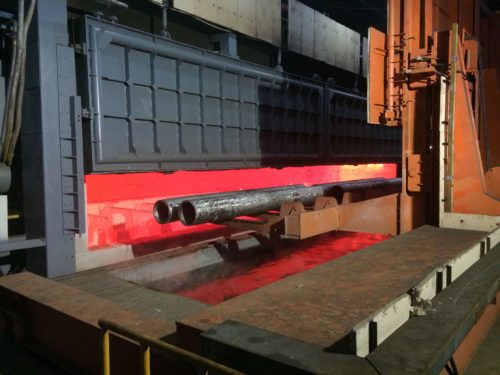
Expert Heat Treating for Stainless Steel – Partner with Honyo Prototype
When it comes to CNC machining high-performance components, the integrity of the final product hinges on precise material treatment. At Shenzhen Honyo Prototype, we specialize in advanced heat treating processes for stainless steel, ensuring your parts meet exact mechanical, structural, and dimensional requirements. Whether you’re developing aerospace components, medical devices, or industrial tooling, our engineering-led approach guarantees consistency, durability, and compliance with international standards.
Heat treating stainless steel is a critical step that enhances hardness, strength, and corrosion resistance. However, improper treatment can lead to warping, microstructural instability, or reduced fatigue life. Our in-house thermal processing facilities are equipped with state-of-the-art furnaces, controlled atmosphere chambers, and precision monitoring systems to deliver repeatable, certified results. We follow strict ASTM and ISO protocols, tailoring each cycle to your alloy type and application demands.
Our process begins with a comprehensive material analysis. We identify the optimal treatment method—whether it’s annealing, stress relieving, hardening, or tempering—based on your design specifications. For example, austenitic grades like 304 and 316 are typically annealed to maximize corrosion resistance and ductility, while martensitic steels such as 410 or 440C undergo quenching and tempering to achieve high wear resistance. Each step is documented and traceable, with full material certification available upon request.
At Honyo Prototype, we integrate heat treatment seamlessly into our CNC machining workflow. This vertical integration allows us to maintain tight tolerances and minimize post-treatment distortion. Our team of metallurgists and manufacturing engineers work in tandem to optimize cycle times, reduce lead times, and eliminate costly rework.
Below is an overview of our standard heat treatment capabilities for common stainless steel grades:
| Stainless Steel Grade | Process Type | Temperature Range (°C) | Soak Time (hrs) | Atmosphere | Typical Use Case |
|————————|——————–|————————-|——————|——————|——————————-|
| 304 / 304L | Solution Annealing | 1010–1120 | 1–2 | Argon/H2 | Medical & Food Equipment |
| 316 / 316L | Solution Annealing | 1010–1120 | 1–2 | Argon/H2 | Marine & Chemical Processing |
| 410 | Hardening + Tempering | 980–1020 / 150–650 | 1 / 2 | Vacuum | Valves & Pump Components |
| 440C | Hardening + Tempering | 1010–1050 / 150–300 | 1 / 2 | Vacuum | Bearings & Cutting Tools |
| 17-4 PH | Precipitation Hardening | 900–1050 / 480–560 | 1 / 4 | Inert Gas | Aerospace & Defense |
We understand that every project is unique. That’s why we offer free engineering consultations to review your design, material choice, and performance goals before initiating any process. Our goal is to deliver not just parts, but performance-ready solutions.
Start your next precision manufacturing project with confidence. Contact Susan Leo today at info@hy-proto.com to discuss your heat treating requirements. Let Honyo Prototype be your trusted partner in transforming raw stainless steel into engineered excellence.
🚀 Rapid Prototyping Estimator
Get a rough estimate for CNC/3D Printing costs.