
Contents
Manufacturing Insight: Nickel Plating Services
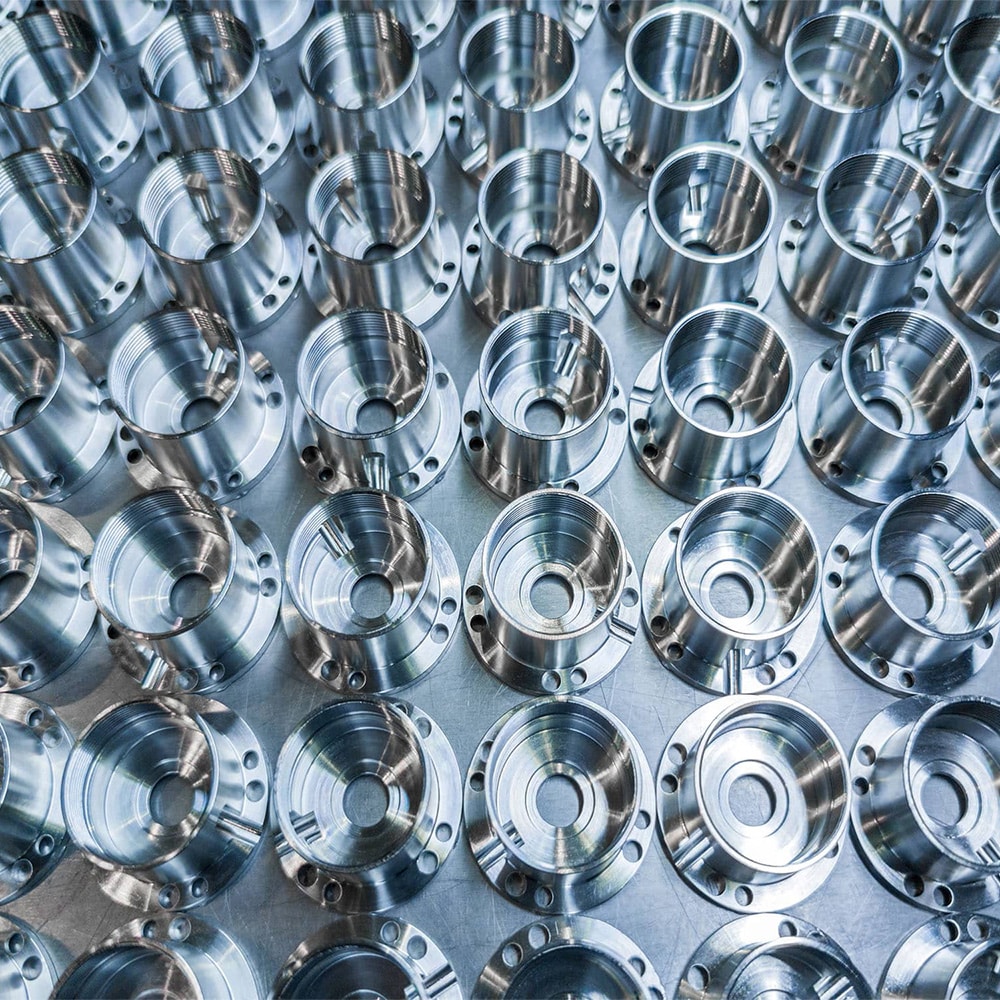
Need precision-machined parts that arrive already protected by a mirror-bright, corrosion-resistant nickel finish? At Honyo Prototype we combine 3-, 4- and 5-axis CNC machining with in-house sulfamate and bright nickel plating services so your prototypes or production runs come off the machine, go straight into the plating line, and ship to you fully finished—no extra vendors, no extra logistics. Upload your STEP or IGES file today for an online instant quote and you’ll see CNC-machined, nickel-plated components priced, programmed and ready to ship in as little as 24 hours.
Technical Capabilities
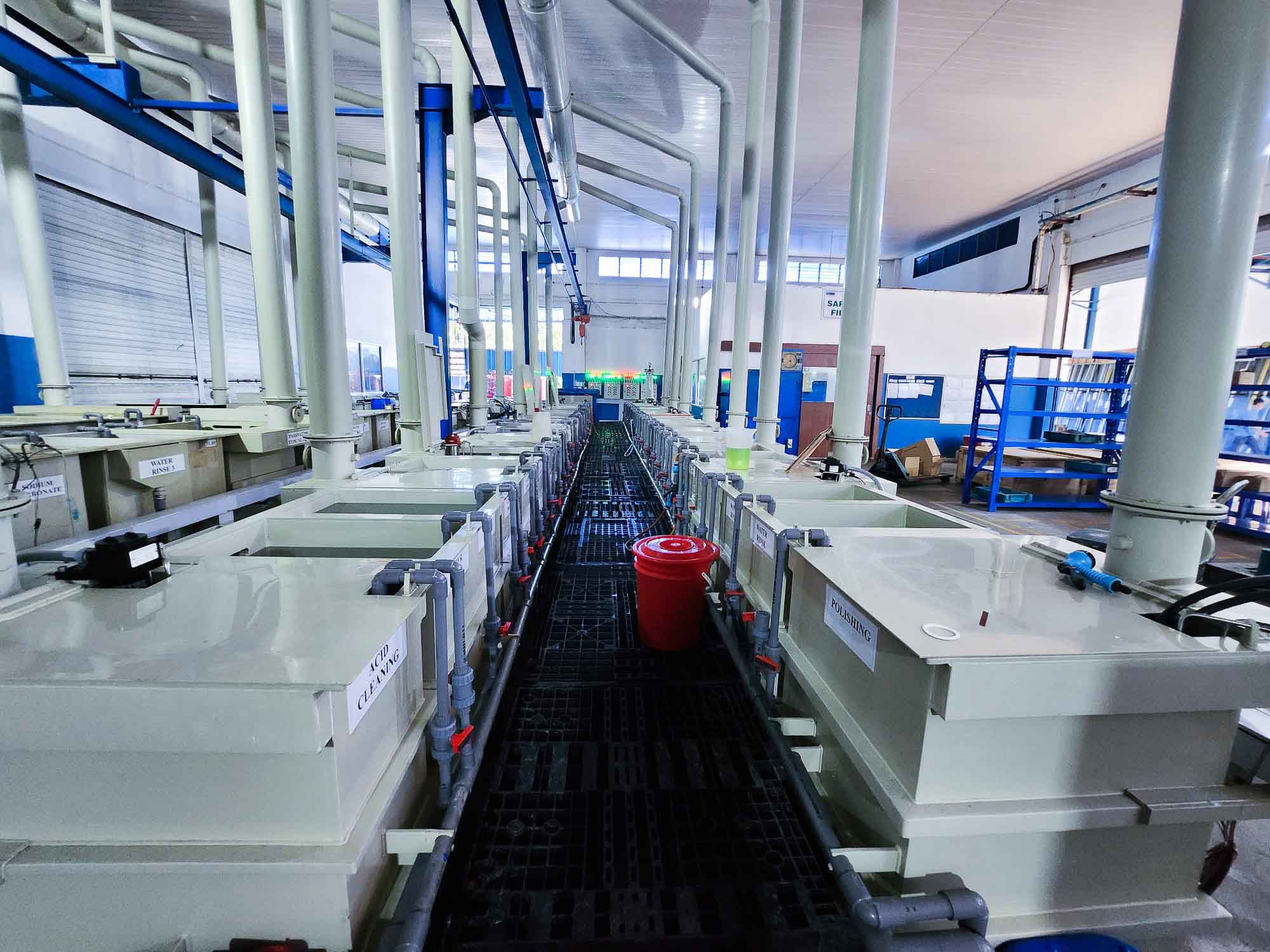
Here’s a clear, technically precise breakdown of nickel plating specifications – crucially separating them from machining processes like 3/4/5-axis milling and turning. Nickel plating is a surface finishing process, not a machining process. Machining creates the part geometry; plating is a post-machining step applied to the finished part. Tight tolerance requirements impact plating design but are defined by the machining process before plating.
Core Clarification: Machining vs. Plating
- 3/4/5-Axis Milling & Turning: These create the part’s geometry with tolerances (e.g., ±0.0005″ for critical features). Specifications for these processes include:
- Surface finish (Ra values), dimensional tolerances, geometric tolerances (flatness, roundness), tooling requirements.
- Not part of nickel plating specs. Plating is applied after machining.
- Nickel Plating: A surface treatment that deposits a nickel-based coating onto the machined part. Its specs are independent of machining axes and focus solely on coating properties.
Nickel Plating Technical Specifications (Standard Industry Practices)
1. Plating Process Types & Key Parameters
| Parameter | Electroless Nickel (EN) | Electrolytic Nickel (ENi) | Notes for Precision Parts |
|———————|—————————-|——————————|——————————|
| Thickness Range | 0.0001″–0.003″ (2.5–76 μm) | 0.0002″–0.002″ (5–50 μm) | Critical for tight tolerances:
– For ±0.0005″ tolerance parts, plating thickness must be controlled to ±10% of nominal.
– Example: If plating 0.0005″ EN, machined dimensions must be undersized by 0.001″ (0.0005″ per side) to compensate for coating buildup. |
| Adhesion | ASTM B571 (Bend Test) or ISO 2819 | ASTM B571 / ISO 2819 | Must pass 180° bend test without blistering or peeling. Critical for high-stress parts. |
| Hardness | 500–700 HV (as-plated); up to 1,000 HV after heat treatment | 150–300 HV (as-plated) | EN (e.g., EN 99% Ni) is preferred for wear resistance in tight-tolerance applications. |
| Porosity | <5% (per ASTM B733) | <10% (per ASTM B733) | Must be tested via salt spray (ASTM B117) or ferroxyl test. Low porosity essential for corrosion protection. |
| Phosphorus Content | 2–12% (commonly 8–10% for corrosion/wear) | <0.1% (pure nickel) | Higher P% = better corrosion resistance but lower hardness. Critical for aerospace/medical parts. |
| Surface Finish | As-plated Ra: 10–20 μin (0.25–0.5 μm) | As-plated Ra: 15–30 μin (0.4–0.8 μm) | Plating amplifies base surface roughness. Base machining must have Ra ≤ 10 μin for optimal plating adhesion. |
2. Material-Specific Plating Requirements
| Material | Plating Process | Critical Pre-Treatment | Tolerance & Plating Considerations |
|————–|———————|—————————-|—————————————-|
| Steel (e.g., 4140, 17-4PH) | Electroless Nickel (EN) or Electrolytic | Acid pickling, activation, hydrogen embrittlement relief (375°F/190°C for 4+ hours for >150 ksi strength steels) | – Plating adds thickness uniformly.
– For tight-tolerance shafts (e.g., ±0.0005″), specify “unplated” dimensions with plating allowance (e.g., “Ø0.5000″ ±0.0005” before plating; plating to 0.0005″ total thickness”).
– Post-plating grinding may be needed for critical fits. |
| Aluminum (e.g., 6061, 7075) | Electroless Nickel (EN) only | Zincate process + double-zincate for adhesion; strict pH/temperature control during etching | – Aluminum expands during plating; thermal stress can cause micro-cracks.
– Max thickness: 0.0015″ (38 μm) to avoid delamination.
– Never plate hardened aluminum (e.g., T6) without stress-relieving first. |
| ABS/Nylon (Plastics) | Electroless Nickel only (no electrolytic) | Acid etching (chromic/sulfuric), sensitization (SnCl₂), activation (Pd catalyst) | – Plating thickness must be ≤ 0.0003″ (7.6 μm) to prevent cracking on plastic substrates.
– Base machining tolerances must be looser (±0.002″ min) due to plastic thermal expansion.
– Critical: Plating on plastics is not for dimensional tolerance control – it’s for EMI shielding or aesthetics. Mechanical tolerances are defined by machining before plating. |
3. Tight Tolerance Workflow for Plated Parts
- Machining Phase:
- Parts are machined to “unplated” dimensions with allowance for plating thickness (e.g., 0.001″ total for 0.0005″ per side plating).
- Surface finish ≤ 10 μin Ra to ensure adhesion.
- Plating Phase:
- Thickness controlled per AMS 2404 / ASTM B733 standards.
- For critical features (e.g., bearing seats), post-plating grinding/lapping may be required to achieve final tolerance (e.g., ±0.0002″).
- Verification:
- Thickness measured via XRF or coulometric testing.
- Dimensional checks after plating using CMM with calibrated probes (plating adds thickness to all surfaces).
Why Machining Processes Don’t Affect Plating Specs
- 3/4/5-Axis Milling/Turning define how the part is shaped (e.g., complex contours, hole patterns).
- Nickel Plating defines what is applied to the surface (e.g., corrosion resistance, wear layer).
- Tight tolerances are achieved by:
- Machining the part to undersized dimensions before plating.
- Controlling plating thickness precisely (±10% of nominal).
- Optional: Post-plating grinding for critical features.
⚠️ Critical Note for Plastics (ABS/Nylon): Nickel plating on plastics is not dimensional. The base part must be machined to final shape, and plating is purely for surface properties. Plating thickness on plastics is never used to achieve tight tolerances (e.g., ±0.0005″) due to uneven buildup and stress cracking risks.
Industry Standards for Reference
- Electroless Nickel: AMS 2404, ASTM B733, ISO 4527
- Electrolytic Nickel: AMS 2403, ASTM B88
- Adhesion Testing: ASTM B571
- Corrosion Testing: ASTM B117 (salt spray)
For precision parts requiring both machining and plating, always:
1. Specify “unplated” dimensions on the drawing.
2. Define plating thickness as a separate callout (e.g., “EN 8-10% P, 0.0005″ ±10% per AMS 2404”).
3. For plastics, state: “Plating for EMI shielding only; no dimensional tolerance control.”
This ensures the machining and plating teams know exactly how to achieve the final part’s requirements. Let me know if you need help with specific drawing callouts!
From CAD to Part: The Process
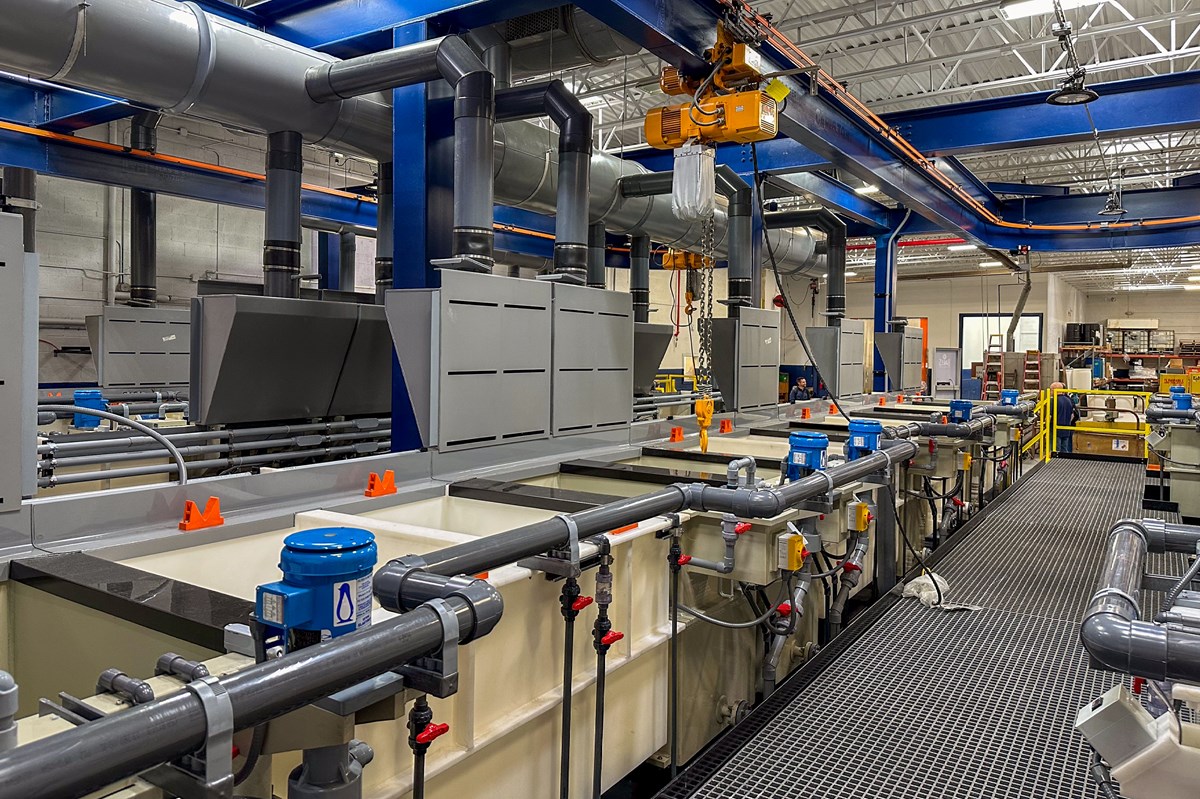
Honyo Prototype – Nickel Plating Work-flow
(what happens to your part from the minute you press “upload” to the day the plated parts land on your dock)
-
Upload CAD
• Portal accepts any mix of STEP, IGES, Parasolid, STL, 3MF, native SolidWorks/Creo/Catia.
• Geometry engine immediately runs a first-pass plating check:
– Sharp internal corners (< 0.2 mm) are flagged (they will plate thin).
– Blind holes L:D > 5:1 are highlighted (solution exchange risk).
– Surface area & theoretical amp-hours are calculated for the later plating quote.
• You pick “Electrolytic Nickel” or “Electroless Nickel (EN, mid-phos)” and required thickness (2–50 µm typical).
• Optional: specify under-layer (Cu strike, Ni strike), top-layer (Au, Sn, Cr), salt-spray hours, or ASTM B733 / AMS 2404 call-outs. -
AI Quote (turn-around: 5 min–2 h)
• Algorithm pulls 3 years of identical or “geo-similar” parts from the MES.
• Cost model adds:
– Rack vs. barrel vs. vibratory basket (based on size & qty).
– Masking complexity (threads, bores, grounding pads).
– Extra labor for fixturing if aspect ratio > 3:1.
• Lead-time engine checks nickel bath queue depth and rectifier capacity; auto-slots the job into the next open flight.
• You receive an interactive quote: unit price, lot price, 5-day, 7-day, 10-day tiers, plus a “plating risk score” (0–100). -
DFM (24 h engineering loop)
• Plating application engineer opens the solid model in Honyo’s custom NX plugin.
• Parting-line analysis: suggests datum that keeps racked parts 15° off-vertical for uniform thickness.
• Adds “robber” or “thief” geometry in CAD if local current density is > 1.5× average.
• Recommends bead-blast Ra 0.4–0.8 µm pre-treat to hide minor machining marks and raise adhesion.
• Issues final travelers:
– Alkaline clean → HCl pickle → Wood’s Ni strike → Sulfamate Ni 25 µm → Cr 0.3 µm.
– Masking diagram: silicone pull plugs in M4 × 0.7 threads, PTFE tape on 6 mm ground spigot.
• You approve or request changes; e-sign triggers automatic BOM & bath prep. -
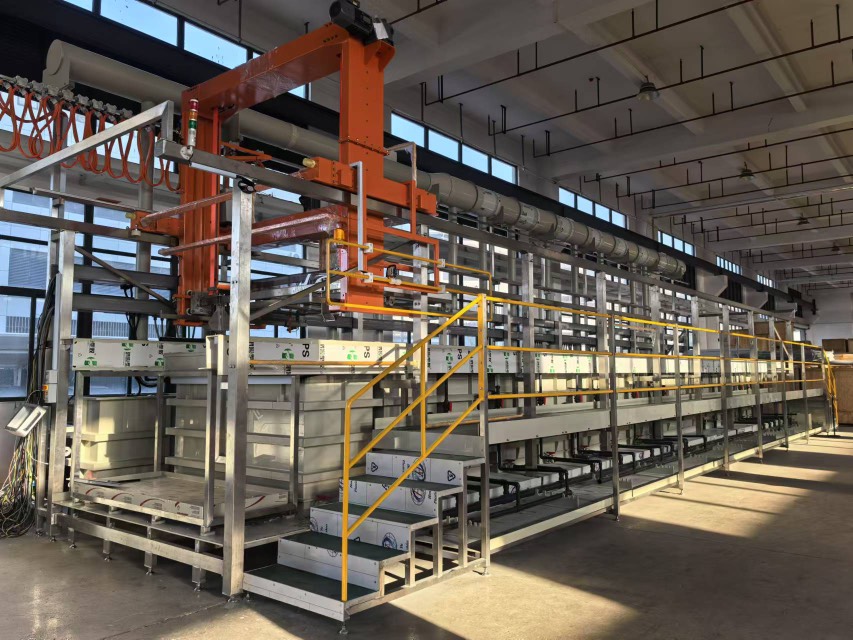
Production (nickel plating cell)
a. Pre-treat line
– 3-stage ultrasonic alkaline clean, 65 °C, 3 min.
– 50 % HCl dip 30 s for scale removal.
– DI water rinse to < 5 µS.
b. Activation / strike
– Wood’s nickel chloride strike, 6 V, 30 s, ensures adhesion on alloy steels or stainless.
c. Main plating
– Sulfamate nickel bath: Ni(SO₃NH₂)₂ 450 g L⁻¹, 50 °C, pH 3.8, 2–4 A dm⁻².
– Real-time amp-hour counter stops bath automatically at 110 % of theoretical thickness (accounts for 92 % current efficiency).
– EN option: sodium hypophosphite bath, 88 °C, 4–6 µm h⁻¹, continuous “ball-out” carbon filtration.
d. Post-plate
– 200 °C hydrogen embrittlement bake 4 h (AMS 2759/9) for high-strength steels > 40 HRC.
– Optional 24 h neutral salt-spray spot check per ASTM B117.
e. QC & CMM
– X-ray fluorescence (XRF) verifies thickness ±1 µm anywhere on part.
– Adhesion tape test per ASTM B571, no peel.
– Ground thread GO/NO-GO gauges after plating to ensure 6g/6H fit still valid. -
Delivery
• Parts dried in centrifugal hot-air dryer, packed in VCI anti-tarnish bags.
• Certificate of Compliance (CoC) includes bath chemistry, thickness map, salt-spray pass, embrittlement bake log.
• Shipped DAP or FCA Shenzhen; typical door-to-door:
– Asia: 1 day
– North America: 2–3 days
– EU: 2–3 days
• Tracking link auto-pushed; QR code on box re-opens the original AI quote & inspection report for lifetime traceability.
That closed-loop process—CAD-intake, AI costing, human DFM, controlled plating, validated QC—lets Honyo deliver nickel-plated prototypes or low-volume production in 5–7 calendar days with aerospace-grade documentation.
Start Your Project
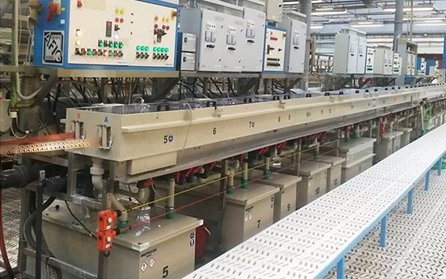
Elevate Your Products with Precision Nickel Plating Solutions from Honyo Prototype!
✅ Corrosion-resistant & wear-durable finishes
✅ Customizable for automotive, aerospace, electronics & industrial applications
✅ Shenzhen-based factory ensuring fast turnaround, strict quality control, and cost efficiency
Ready to optimize your components?
Contact Susan Leo directly today for expert consultation and a competitive quote:
📧 info@hy-proto.com
Honyo Prototype: Where Engineering Excellence Meets Manufacturing Precision.
🚀 Rapid Prototyping Estimator