
Contents
Manufacturing Insight: Precipitation Hardening Stainless Steel
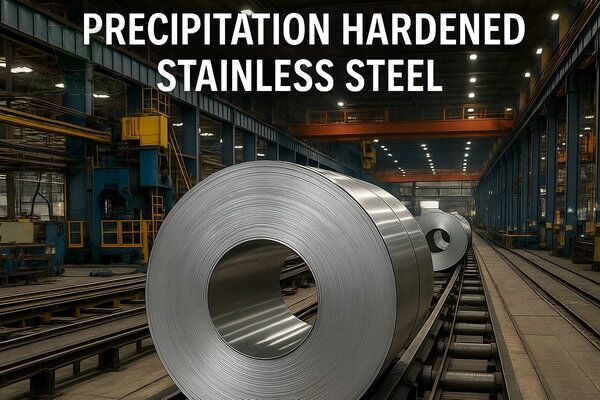
Manufacturing Insight: Precision Machining of Precipitation Hardening Stainless Steel
Precipitation hardening (PH) stainless steels represent a critical class of alloys where exceptional strength, corrosion resistance, and moderate machinability converge, making them indispensable for high-performance aerospace, medical, and industrial components. Unlike standard austenitic or martensitic stainless grades, PH alloys like 17-4PH (AISI 630), 15-5PH, and Custom 465 achieve their superior mechanical properties through a unique two-step heat treatment process. Initial solution annealing places the material in a relatively soft, machinable condition. Subsequent aging precipitation hardens the steel by forming fine intermetallic compounds within the matrix, dramatically increasing yield strength—often exceeding 1,000 MPa—while maintaining good toughness and corrosion resistance. This inherent property profile presents both significant opportunity and a distinct manufacturing challenge for CNC machining operations.
The primary machining challenge with PH stainless steels lies in their transformation after the initial machining phase. Components are typically rough and finish machined in the annealed (Condition A) state to achieve tight tolerances and fine surface finishes. However, the subsequent aging heat treatment induces dimensional changes and potential distortion due to internal stress relief and phase transformations. Achieving final part accuracy requires meticulous process control throughout the entire manufacturing sequence—from material selection and initial machining to stress-relieving strategies and precise aging parameters. Failure to account for this predictable movement results in non-conforming parts, scrap, and costly rework. Material work-hardening tendencies during cutting also demand optimized toolpaths and rigid setups to prevent tool deflection and surface integrity issues.
At Shenzhen Honyo Prototype, we leverage deep metallurgical understanding and advanced CNC capabilities to master this complex process chain. Our approach begins with strict material certification verification and strategic stress-relief cycles integrated before critical final machining passes. We utilize high-rigidity CNC milling centers with thermal stability controls and employ specialized cutting strategies, including optimized stepovers, controlled feed rates, and premium sub-micron carbide tooling with PH-specific coatings. Crucially, our process engineers apply empirically derived compensation factors based on extensive historical data for each alloy and geometry, anticipating and counteracting aging-induced dimensional shifts. This proactive methodology ensures components meet stringent geometric dimensioning and tolerancing (GD&T) requirements post-aging, eliminating costly trial-and-error.
Key material properties and our machining parameters are summarized below:
| Property / Parameter | 17-4PH (Typical) | Honyo Prototype Machining Approach |
| :————————– | :————— | :—————————————— |
| Annealed Hardness (HRC) | 28-32 | Rough/Finish Machining in this state |
| Aged Hardness (HRC) | 38-45 | Final dimensions achieved before aging |
| Yield Strength (Aged, MPa) | 1000-1300 | Rigorous fixture design to prevent distortion |
| Critical Machining Focus | Work hardening | Optimized feeds/speeds, sharp tooling, coolant |
| Dimensional Shift (Typical) | 0.025-0.100 mm | Pre-aging compensation applied via CAM |
Honyo Prototype delivers fully functional, aged PH stainless steel components with certified material properties and guaranteed dimensional conformance. Our integrated process—from precision CNC machining in the annealed state through controlled aging and final inspection—ensures your demanding applications benefit from the full performance potential of these advanced alloys, without the traditional yield loss or schedule delays associated with their fabrication. We transform the complexity of precipitation hardening into a reliable, high-precision manufacturing outcome.
Technical Capabilities
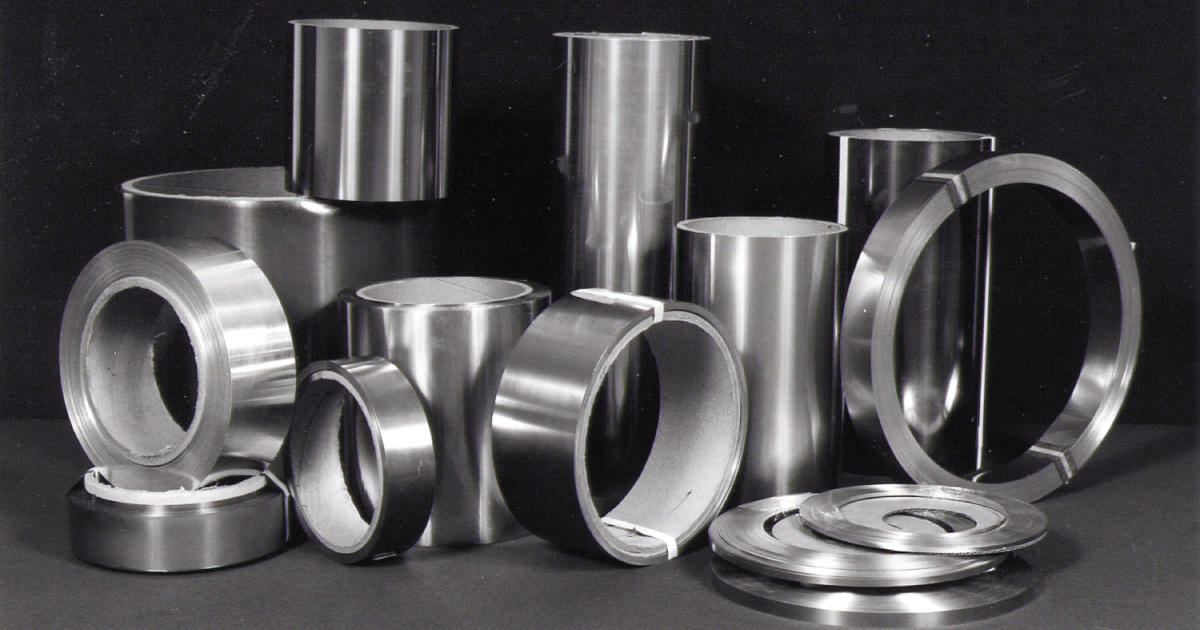
Precision CNC Machining of Precipitation Hardening Stainless Steel at Shenzhen Honyo Prototype
Shenzhen Honyo Prototype specializes in high-precision CNC machining of advanced materials, including precipitation hardening (PH) stainless steels. These alloys offer an exceptional balance of high strength, excellent corrosion resistance, and dimensional stability after heat treatment, making them ideal for aerospace, medical, and high-performance industrial applications. Our 3-, 4-, and 5-axis milling capabilities, combined with precision turning, enable us to produce complex geometries with strict tolerances and superior surface finishes.
PH stainless steels, such as 17-4 PH (SAE 630), 15-5 PH, and Custom 465®, are martensitic in structure after solution annealing and can be aged to achieve tensile strengths exceeding 1,300 MPa. Machining is typically performed in the solution-annealed condition to ensure optimal machinability, followed by age hardening to achieve the desired mechanical properties. This approach minimizes distortion and supports the production of components requiring tight dimensional control.
Our CNC machining centers are equipped with high-resolution probing systems, thermal compensation, and in-process inspection tools to maintain consistency across production runs. The integration of multi-axis technology allows for reduced setup times, improved accuracy, and the ability to machine intricate features in a single operation—critical for components such as turbine blades, valve parts, and surgical instruments.
We maintain strict process controls for tool selection, cutting parameters, and coolant management to prevent work hardening and ensure surface integrity. Advanced CAM software enables optimized toolpaths, minimizing tool deflection and vibration, which is essential when achieving tolerances down to ±0.005 mm.
Below is a summary of our technical capabilities and tolerances for precipitation hardening stainless steels:
| Parameter | Specification |
|——————————-|—————|
| Material Types | 17-4 PH, 15-5 PH, Custom 465, 13-8 Mo |
| Machining Processes | 3-axis, 4-axis, 5-axis milling; CNC turning |
| Typical Tolerance (Milling) | ±0.010 mm (standard), ±0.005 mm (tight) |
| Typical Tolerance (Turning) | ±0.010 mm (diameter), ±0.020 mm (length) |
| Surface Finish (Milling) | Ra 0.8 µm (standard), Ra 0.4 µm (fine) |
| Surface Finish (Turning) | Ra 1.6 µm (standard), Ra 0.8 µm (fine) |
| Minimum Feature Size | 0.5 mm (milling), 1.0 mm (turning) |
| Maximum Work Envelope (5-axis)| 1,200 × 800 × 600 mm |
| Maximum Work Envelope (Turning)| Ø500 × 1,000 mm |
| Heat Treatment Support | In-house coordination for solution + aging |
| Inspection Tools | CMM, optical comparators, surface roughness testers |
All components undergo full dimensional verification and material traceability documentation. Shenzhen Honyo Prototype adheres to ISO 9001 standards, ensuring repeatable, high-quality output for low to medium volume production. Our expertise in machining PH stainless steels allows customers to realize high-performance parts with minimal lead time and maximum reliability.
From CAD to Part: The Process
Manufacturing Guide: Precipitation Hardening Stainless Steel CNC Workflow
At Shenzhen Honyo Prototype, we optimize the production of precipitation hardening (PH) stainless steel components—such as 17-4PH or 15-5PH—through a rigorously controlled CNC machining workflow. This process ensures dimensional stability and mechanical integrity by addressing the material’s unique thermal sensitivity. The workflow begins with CAD file submission and progresses through three critical phases: AI-Powered Quoting, Design for Manufacturability (DFM) analysis, and precision production.
AI-Powered Quoting
Upon receiving a CAD model, our AI-driven quoting system instantly evaluates geometric complexity, material grade, and tolerance requirements. For PH stainless steels, the algorithm factors in solution annealing costs, aging cycle parameters, and post-heat-treatment machining allowances. This phase generates a cost-accurate quote within 2 hours, highlighting potential risks like distortion in thin-wall features or high-aspect-ratio geometries. Material-specific variables—such as the 950–1050°C solution treatment range for 17-4PH—are pre-validated against our process databases to prevent downstream delays.
Design for Manufacturability (DFM) Analysis
Honyo’s engineering team conducts a mandatory DFM review to mitigate PH steel-specific challenges. We scrutinize wall thicknesses, internal radii, and tolerance zones to prevent warpage during aging. Critical parameters are cross-referenced against proven process limits, as summarized below:
| Parameter | Constraint | Honyo Solution |
|——————–|——————————–|—————————————–|
| Minimum Wall Thickness | <1.5 mm prone to distortion | Add +0.2 mm stock + stress-relief cycle |
| Feature Density | High risk of thermal warpage | Staged roughing with 15-min cooling intervals |
| Tolerance Zone | ±0.025 mm challenging post-aging | Machine pre-aging oversize by 0.05 mm |
This phase often reveals opportunities to simplify geometries—such as replacing sharp corners with ≥0.8 mm radii—to reduce residual stress concentrations. Clients receive a detailed DFM report with actionable recommendations, typically reducing lead time by 20% through preemptive design adjustments.
Production Execution
Production follows a strict sequence to preserve material properties. Components are first solution-annealed at 1020–1060°C (per ASTM A564) and rapidly quenched to achieve a soft, machinable state (H900 condition). CNC machining then proceeds in three stages: roughing with 70% material removal, stress-relief at 620°C for 4 hours, and finishing with tight-tolerance cuts. Crucially, all critical dimensions are held 0.03–0.05 mm under final spec to accommodate dimensional shift during aging. The part undergoes final aging at 480°C for 4 hours to achieve target hardness (e.g., 41–44 HRC for 17-4PH H1150), followed by precision inspection against first-article requirements. Throughout, in-process CMM checks validate thermal stability, ensuring compliance with ISO 2768-mK geometric tolerances.
This integrated workflow—AI quoting, material-aware DFM, and thermally managed production—delivers PH stainless steel components with repeatable mechanical performance. By embedding metallurgical expertise into each phase, Honyo Prototype minimizes scrap rates and guarantees that every part meets aerospace and medical industry standards for strength and corrosion resistance.
Start Your Project
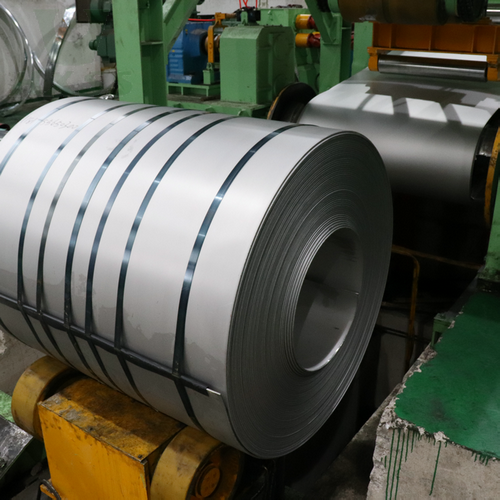
Unlock Precision Machining for Precipitation Hardening Stainless Steel — Start Your Project Today
When it comes to high-performance components in aerospace, defense, medical, and oil & gas applications, precipitation hardening (PH) stainless steel stands out for its unique combination of corrosion resistance, mechanical strength, and dimensional stability. At Shenzhen Honyo Prototype, we specialize in CNC machining of advanced alloys, with extensive expertise in PH stainless steels such as 17-4 PH, 15-5 PH, and Custom 465®. Our precision manufacturing processes ensure that your parts meet the tightest tolerances and highest quality standards—right from the prototype to low-volume production.
Precipitation hardening stainless steels require specialized knowledge during machining due to their high strength post-heat treatment and sensitivity to thermal distortion. At Honyo, our engineering team applies proven strategies in tool selection, cutting parameters, and stress-relief sequencing to deliver components with optimal surface finish and structural integrity. Whether your design demands complex geometries, fine features, or strict regulatory compliance, we are equipped to exceed your expectations.
We understand that every project begins with a vision. That’s why our engineering consultation is built into the early stages of development. Our team works closely with you to review material selection, heat treatment schedules (including H900, H1025, H1150, etc.), and design for manufacturability (DFM) to ensure seamless production and consistent performance.
Below is an overview of common PH stainless steel grades we frequently machine, along with key mechanical properties after heat treatment:
| Grade | Tensile Strength (min, psi) | Yield Strength (min, psi) | Hardness (HRC) | Corrosion Resistance | Common Applications |
|————-|—————————–|—————————-|—————-|————————|———————–|
| 17-4 PH | 130,000 | 115,000 | 27–31 | High | Aerospace fittings, shafts, valves |
| 15-5 PH | 135,000 | 120,000 | 28–33 | Very High | Landing gear, actuators |
| Custom 465® | 180,000 | 165,000 | 39–44 | High | Defense components, surgical tools |
| PH 13-8 MO | 150,000 | 135,000 | 31–35 | Excellent | High-stress fasteners, turbine blades |
Our CNC machining capabilities include 3-axis, 4-axis, and 5-axis milling, precision turning, and secondary operations such as heat treatment coordination, passivation, and non-destructive testing support. We maintain strict process controls and full traceability to meet AS9100 and ISO 9001 standards.
Ready to bring your next high-performance component to life? Contact Susan Leo, Customer Project Manager at Shenzhen Honyo Prototype, to discuss your project requirements, request a quote, or schedule a technical review. With fast turnaround times and a commitment to engineering excellence, we are your trusted partner in advanced metal prototyping and production.
Email Susan Leo at info@hy-proto.com today — let’s turn your design into a precision-engineered reality.
🚀 Rapid Prototyping Estimator
Get a rough estimate for CNC/3D Printing costs.