
Contents
Manufacturing Insight: Rotomolding Machine
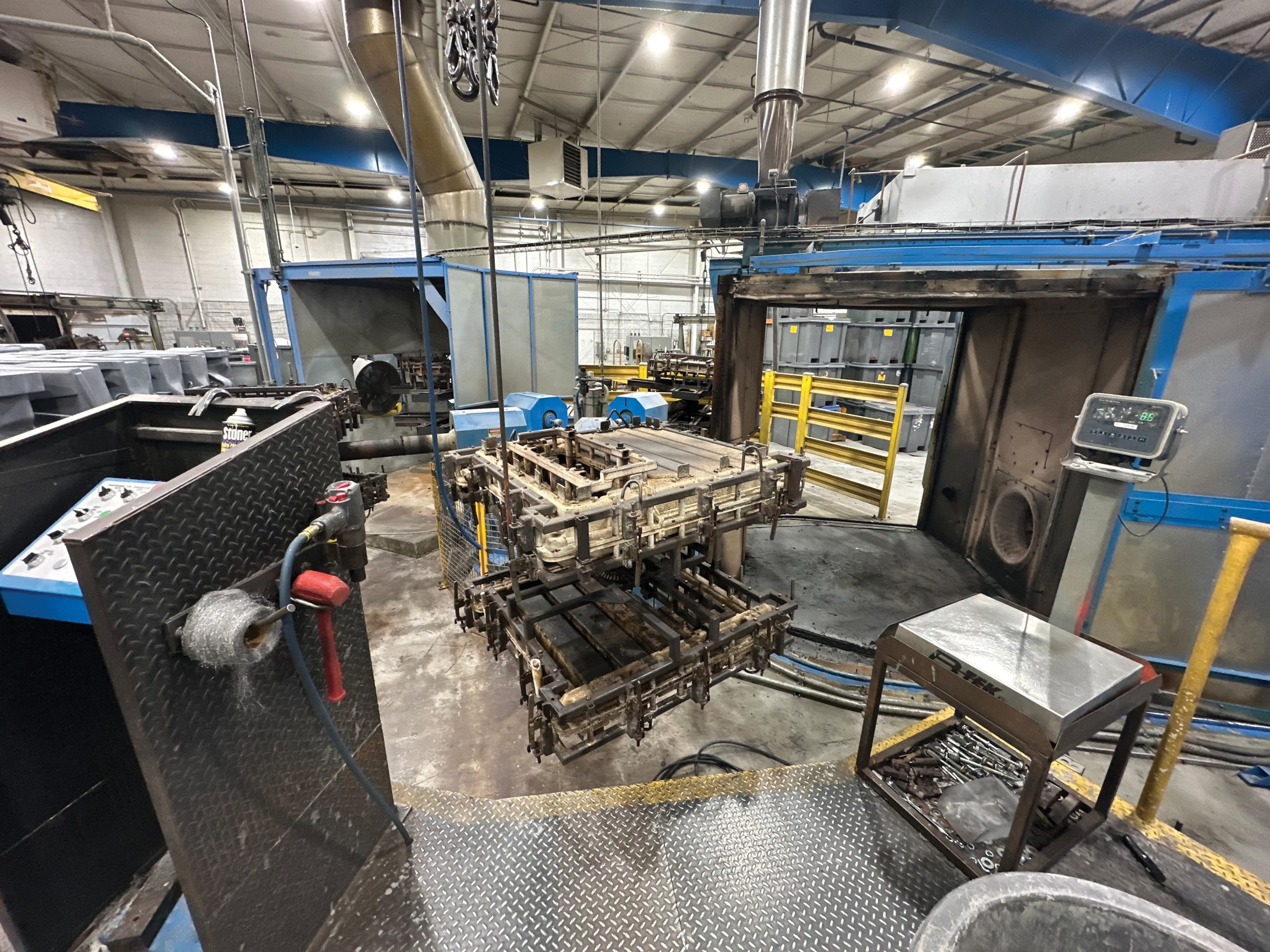
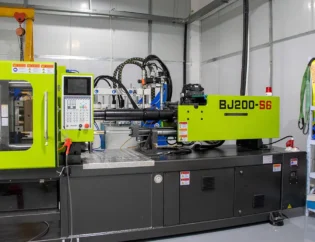
Rotomolding starts with a mold, and at Honyo Prototype that mold can be in your hands in days—not weeks. By pairing our Rapid Tooling cells (aluminum tools delivered in 3-7 days) with nearby ISO-class injection-molding presses, we give designers the freedom to prototype, test, and immediately pivot to low-volume rotomolded parts without ever changing suppliers. Upload your 3D file today for an Online Instant Quote on both the quick-turn mold and the first shot of plastic; you’ll see real pricing and DFM feedback in under two hours, so your rotomolding project spins into production faster than ever.
Technical Capabilities
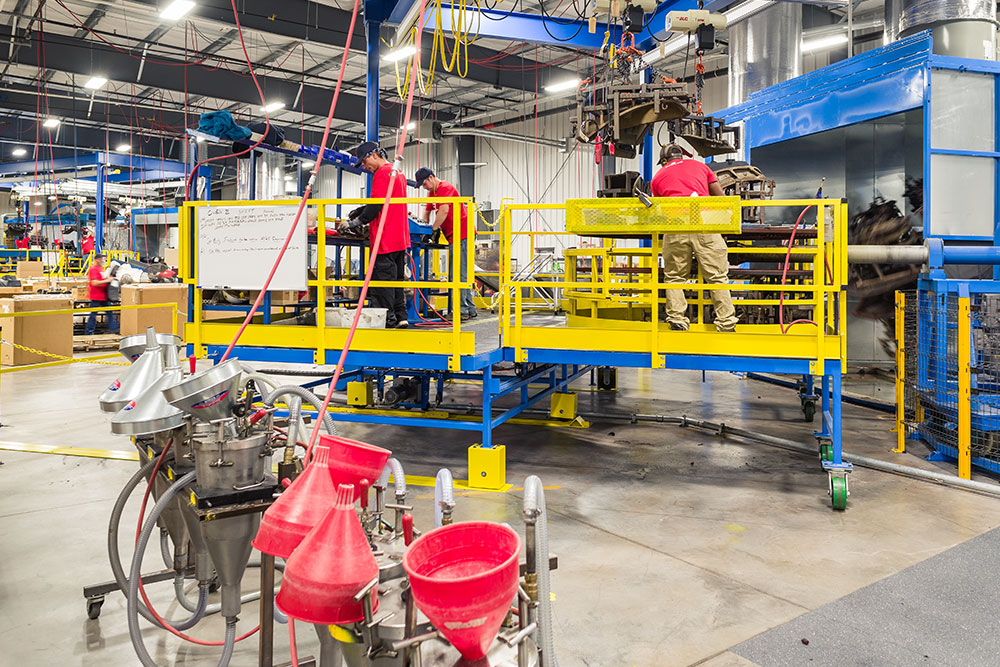
As a Senior Manufacturing Engineer at Honyo Prototype, I must first address a critical misconception in your query:
Rotomolding machines themselves do not produce “T1 samples in 7 days” or directly handle “steel/aluminum molds” as part of their technical specs. This is a common point of confusion. Let me clarify the roles and provide accurate technical specifications for clarity:
🔧 Key Clarification: What “T1 Sample in 7 Days” Actually Means
- T1 Sample = First production-quality prototype from a new mold.
- 7-Day Timeline is not a machine capability—it depends entirely on:
- Mold fabrication speed (steel vs. aluminum molds have vastly different lead times).
- Design finalization, material selection, and process setup.
- Rotomolding machines only handle the molding process—they do not make molds.
- Critical Fact:
- ❌ Steel molds take 14–30+ days to machine (due to hardness, precision requirements).
- ✅ Aluminum molds can be machined in 3–7 days for simple geometries—this is the only scenario where a 7-day T1 is feasible.
- ABS/Nylon are resin materials (plastics being molded), not mold materials. Molds are always steel or aluminum.
💡 Honyo Prototype’s Realistic T1 Timeline:
– For simple parts using aluminum molds: 5–7 days (design confirmed + aluminum mold + molding process).
– For complex parts or steel molds: 14–21+ days (steel machining alone takes 10–15 days).
Rotomolding machines are a small part of this timeline—they only take 1–2 days for setup/testing after the mold is ready.
🏭 Actual Rotomolding Machine Technical Specifications
(Typical for Honyo Prototype’s production-grade machines)
These specs define the machine’s operational capabilities—not mold production or T1 timelines.
| Parameter | Technical Specification | Why It Matters |
|—————————–|————————————————————-|———————————————————————————–|
| Mold Capacity | Up to 2.0m x 2.0m x 2.0m (LxWxH) | Size limit for parts; larger molds require industrial-grade machines. |
| Oven Temperature Range | 50°C to 400°C (±2°C accuracy) | Critical for melting ABS (180–220°C) or Nylon (220–260°C) without degradation. |
| Rotation Speed | 0–30 RPM (programmable, bidirectional) | Controls material distribution; slower speeds for thick walls, faster for thin. |
| Cooling System | Water-spray + forced-air (adjustable) | Aluminum molds cool faster (5–10 min); steel molds require 15–30 min cooling. |
| Drive System | Variable-frequency drive (VFD) with servo control | Ensures smooth rotation to prevent material sagging or voids. |
| Control System | PLC with HMI touch screen (recipe storage for 100+ profiles)| Saves settings for ABS vs. Nylon (e.g., different temp ramps for Nylon’s hygroscopic nature). |
| Power Requirement | 415V 3-phase, 30–60 kW | High power needed for large ovens; aluminum molds reduce energy use vs. steel. |
| Safety Features | Emergency stop, over-temperature cut-off, gas detection | Mandatory for handling powdered resins (e.g., ABS dust is flammable). |
⚙️ How Mold Material (Steel vs. Aluminum) Impacts Your Project
(Directly relevant to “T1 in 7 days” but unrelated to the machine itself)
| Mold Material | Machining Time | Durability | Best For | T1 Feasibility in 7 Days? |
|——————-|——————–|—————-|———————————————-|——————————-|
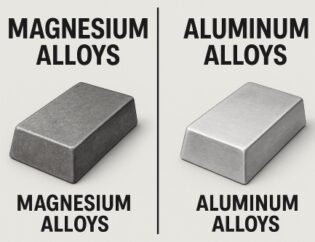
| Aluminum | 3–7 days | Moderate (5k–10k cycles) | Prototypes, low-volume runs (<1k parts), simple geometries | ✅ YES (if design is finalized) |
| Steel | 14–30+ days | High (>50k cycles) | High-volume production, complex details, sharp edges | ❌ NO (too slow for 7 days) |
- ABS/Nylon Resin Notes:
- ABS: Requires 180–220°C oven temp; prone to warpage if cooling is uneven. Aluminum molds cool faster, reducing cycle time.
- Nylon: Hygroscopic—requires strict drying (80°C for 4+ hours) before molding. Machine must have precise temp control to avoid degradation.
🚀 Honyo Prototype’s Path to Your T1 Sample in 7 Days
- Day 1–2: Finalize design (DFM review) + select aluminum mold material (7075-T6 or 6061-T6).
- Day 3–6: CNC machine aluminum mold (using 5-axis machining for complex shapes).
- Day 7: Mount mold on rotomolding machine → run test cycle with ABS/Nylon pellets.
- Machine specs ensure consistent results: e.g., 25 RPM rotation, 200°C oven temp for ABS, 240°C for Nylon.
⚠️ Critical Requirement: Your design must be geometry-simple (no undercuts, <3mm wall thickness) and fully approved before mold machining starts. Complex designs will push the timeline beyond 7 days.
💡 My Recommendation as Your Senior Engineer
- For a 7-day T1: Use aluminum molds only—never steel. Confirm design stability before we begin machining.
- Machine specs are irrelevant to the timeline: Our machines are standardized; the bottleneck is always mold fabrication.
- Next Steps: Share your part drawing + material choice (ABS/Nylon). We’ll validate if it’s feasible for aluminum mold production in 7 days.
“Rotomolding machines are the stage—but the mold is the star. For speed, aluminum molds are non-negotiable for T1 in 7 days.”
— Senior Manufacturing Engineer, Honyo Prototype
Let’s discuss your project details—I’ll ensure we optimize for speed without sacrificing quality. 🛠️
From CAD to Part: The Process
Honyo Prototype – Rotational-Molding (Rotomolding) Workflow
“Upload CAD → AI Quote → DFM → Production → Delivery”
-
Upload CAD
• Portal: HTTPS drag-and-drop or direct plug-in from SolidWorks/Fusion/NX.
• AI pre-checks: wall-thickness histogram, zero-thickness faces, under-cuts, parting-line feasibility, volume/weight estimate.
• Instant feedback: “OK for rotomolding” or “Needs split lines; see report.”
• File types accepted: STEP, IGES, Parasolid, STL (for comparison only). -
AI Quote (≤ 60 s)
a. Geometry engine: calculates surface area, projected area, volume, and aspect ratio.
b. Material selector: recommends PE grades (LLDPE, HDPE, XLPE, EVA, TPU, nylon, polycarbonate) based on end-use temp, chemical, UV, FDA, and color.
c. Mold-cost model: aluminum cast tool vs. CNC billet vs. fabricated sheet metal; predicts cycle count (5 k, 20 k, 100 k).
d. Cycle-time model: oven dwell time ∝ (max wall × heat-transfer coeff) / oven ΔT; cooling time by forced-air + water-mist data.
e. Secondary ops: spin-trim, CNC rout, foam-fill, inserts, graphics.
f. Logistics: incoterms,关税, local freight.
Result: interactive quote with three tiers (prototype 1–5, bridge 20–200, production 500+) and real-time slider for quantity/lead-time trade-off. -
DFM (Design-for-Manufacture) – 24 h engineering package
• Wall-thickness map: target 2.0–6.0 mm; flags thick sections > 8 mm (void risk) and thin < 1.5 mm (bridging).
• Corner radii: min 3× wall thickness internal, 1.5× external.
• Draft: 1° per side for textured surfaces, 0.5° for smooth.
• Parting line: placed to hide witness; checks for “pinch-off” land width ≥ 3 mm.
• Venting: predicts vent area = 13 mm² per 1 m³ mold cavity; offers self-threading vent options.
• Insert protocol: brass or stainless, knurled & under-cut, pre-heated to 80 °C to eliminate shrink porosity.
• Shrink allowance: 3 % for PE, 2.2 % for PP, 1.8 % for nylon; provides scaled CAD back to customer.
• Mold material choice:
– Prototype (< 50 parts): 6061-T6 CNC billet, 2-week lead.
– Bridge (50–2 k): cast aluminum A356-T6, 3-week lead.
– High-volume (> 2 k): nickel-plated cast tool or P20 steel for vented sections.
• Sign-off: customer approves DFM report & 3-up cross-section PDF; triggers PO. -
Production
4.1 Mold manufacture
• 5-axis CNC to ±0.15 mm; textured with 120-grit or Mold-Tech MT-11020.
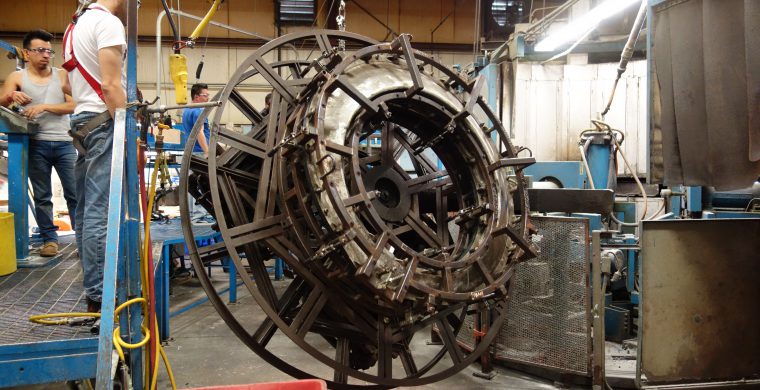
• Mounting: spider frame with adjustable armatures for multi-cavity balance.
4.2 Material prep
• PE powder: 35-mesh, dry-blended color concentrate or compounded color; MFI 4–8 g/10 min.
• Weight check: ±1 % of theoretical part weight + 3 % bleed.
4.3 Machine set-up
• Carousel machine: 4-arm, 3.5 m diagonal, 2 independent ovens.
• Recipe download from MES: oven 290 °C, 14 min dwell, 7:1 rotation ratio (major:minor), arm speed 8 rpm major, 1.1 rpm minor.
• In-mold temperature probes (thermocouple tip 0.5 mm below cavity surface) confirm peak metal temp 180 °C → signals “dump” into cooling station.
4.4 Cooling & demold
• Forced air 3 min + water-mist 2 min; part temp ≤ 60 °C before ejection.
• Automatic pin-lift; robot transfers to trim fixture.
4.5 QC gate
• 100 % visual (color, gloss, short shots, bubbles).
• CMM on first-article: ±0.5 mm on critical dims, ±1 mm on non-critical.
• Burst test 1 bar/30 s on cooler tank parts; drop test 2 m on tool-boxes.
• SPC chart: weight, wall thickness (ultrasonic gauge at 5 points).
4.6 Secondary operations
• 5-axis CNC routs openings to ±0.1 mm; spin-trim for flush edge.
• Hot-plate weld or spin-weld fittings; foam-fill with 38 kg/m³ PU if specified.
• Pad-print or in-mold label (IML) graphics.
4.7 Lot traceability
• QR laser-etched inside each part: material batch, mold cavity, date, operator ID. -
Delivery
• Packaging: PE bag + 5-ply export carton + pallet; VCI film for metal inserts.
• Drop-test simulated 1.2 m corner drop; passes ISTA-2A.
• Digital dossier shipped with parts: C-of-C, material MSDS, RoHS/REACH, QC data, mold maintenance log.
• Logistics options: FedEx priority (3–5 days), air-freight (7 days), sea-freight (25 days), DDP/DDU.
• Customer portal auto-sends ASN (advance ship notice) with tracking link; e-signature POD closes order in ERP.
Throughout the entire flow, Honyo’s MES feeds live OEE, cycle time, and scrap data back to the AI engine—continuously refining cost models for the next quote.
Start Your Project
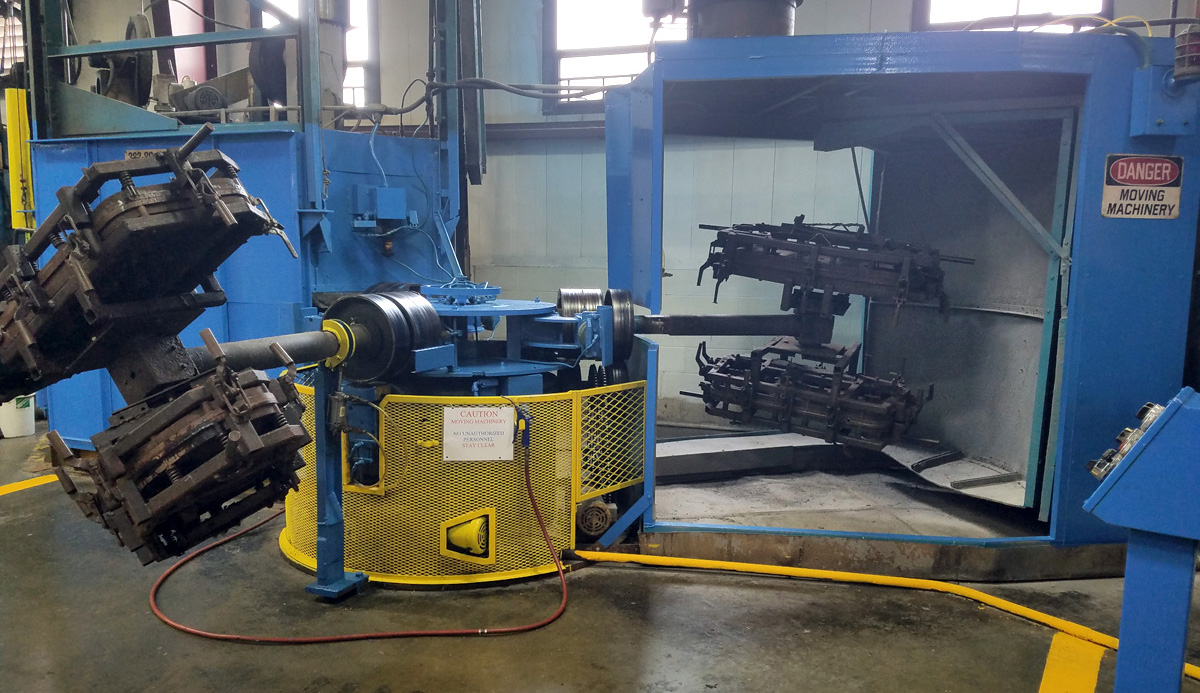
Transform your vision into precision rotomolded products with unmatched quality and efficiency.
Contact Susan Leo at info@hy-proto.com to discuss your project.
Honyo Prototype – Shenzhen’s trusted manufacturing partner.
✅ Expertise in rotomolding for industrial, automotive, and consumer goods
✅ State-of-the-art facility in Shenzhen with ISO-certified processes
✅ Custom solutions tailored to your specifications
Ready to elevate your production? Reach out today! 🌟
🚀 Rapid Prototyping Estimator