
Contents
Manufacturing Insight: Sheet Metal Bending Dies
Sheet Metal Bending Dies: Precision Tooling for Prototype Fabrication
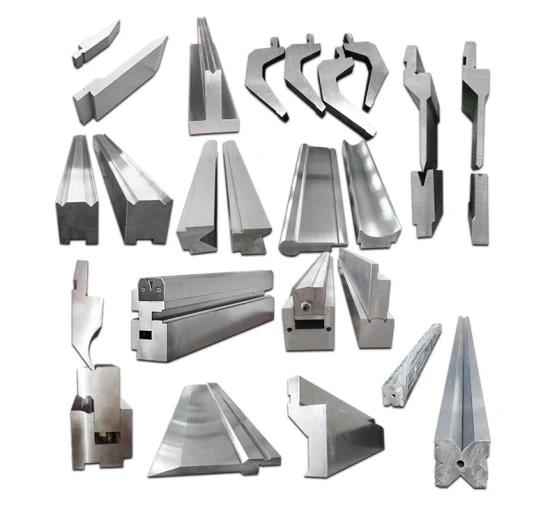
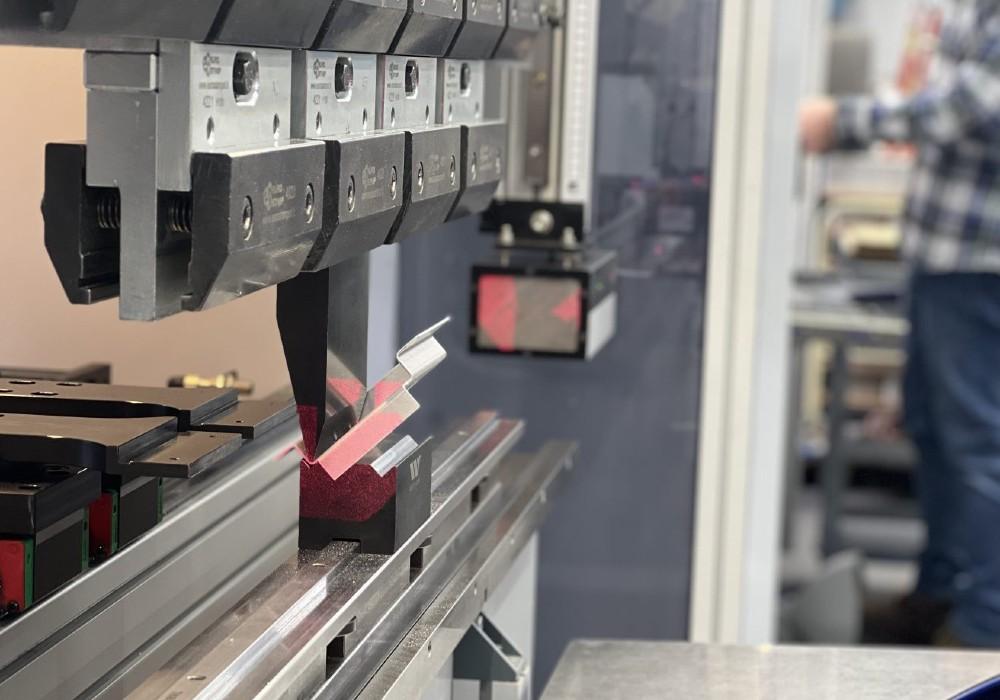
Sheet metal bending dies represent the critical interface point between the press brake and the workpiece, directly dictating the geometric accuracy, surface finish, and repeatability of formed parts. At Shenzhen Honyo Prototype, we recognize that for low-volume and prototype manufacturing, the selection and execution of bending die strategy are paramount to achieving functional, dimensionally stable components without the constraints of high-volume production tooling. These precision tooling sets—comprising the punch (upper die) and die (lower V-opening)—must be meticulously engineered to accommodate specific material properties, bend angles, radii, and part complexity. Key considerations include material hardness compatibility, die opening width relative to material thickness (typically 6-12x material thickness), punch tip radius influencing internal bend radius and stress concentration, and precise alignment to prevent camber or angular deviation. Crucially, effective springback compensation must be integrated into the die design and machine programming to achieve the target bend angle after elastic recovery, especially with higher-strength alloys common in modern prototypes.
Honyo Prototype leverages advanced CNC machining and stringent quality control to manufacture bending dies optimized for the demanding requirements of rapid prototyping and small-batch production. Our process begins with detailed analysis of your part geometry, material specification (e.g., SS304, AL6061, SPCC), and functional tolerances to determine the optimal die configuration. We prioritize versatility within our standard die sets while maintaining the capability to rapidly produce custom tooling for complex geometries or unique material challenges. This approach ensures minimal setup time and maximum precision for your prototype runs, directly translating to reduced lead times and higher first-article yield. Our commitment to metrology-driven manufacturing guarantees that every die set meets exacting standards for parallelism, surface finish, and dimensional accuracy, forming the foundation for consistent bend quality.
The table below outlines Honyo Prototype’s core capabilities for bending die fabrication and application:
| Parameter | Capability Range | Precision Standard | Application Focus |
| :——————— | :———————————– | :———————– | :—————————— |
| Material | D2 Tool Steel, SKD11, Custom Alloys | Hardness: 58-62 HRC | Prototype & Low-Volume Runs |
| Bend Angle Range | 15° to 180° (Standard) | Angular Accuracy: ±0.1° | Complex Geometries Supported |
| Bend Radius (Min) | 0.2mm (Material Dependent) | Radius Tolerance: ±0.05mm | Tight Radii for Precision Parts |
| Die Opening (V) | 4mm to 50mm (Standard Sets) | Parallelism: ≤ 0.02mm/m | Wide Material Thickness Range |
| Lead Time (Custom) | 3-7 Working Days | Surface Finish: Ra ≤ 0.8μm | Accelerated Prototype Cycles |
By integrating our expertise in die design, precision machining, and press brake operation, Honyo Prototype delivers bending solutions that ensure your sheet metal prototypes meet stringent functional and dimensional requirements. We focus on eliminating common bending defects—such as cracking, marking, or inconsistent angles—through optimized tooling selection and process validation. This capability enables faster iteration cycles and reduces the risk associated with transitioning prototype designs to production, providing you with reliable, high-quality fabricated components from the earliest stages of development. Trust Honyo to transform your sheet metal concepts into accurately formed realities.
Technical Capabilities
Sheet Metal Bending Dies – Technical Capabilities
Shenzhen Honyo Prototype delivers precision-engineered sheet metal bending dies as part of our comprehensive fabrication services. Our expertise spans laser cutting, press brake bending, and welding, enabling us to support complex sheet metal components from prototype to low-volume production. The design and manufacturing of bending dies are optimized for accuracy, repeatability, and material integrity, ensuring consistent part quality across various alloys and thicknesses.
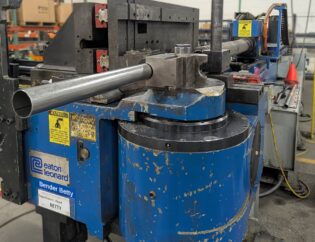
Our CNC-controlled press brakes are equipped with interchangeable tooling sets, allowing for precise die configurations tailored to specific bend angles, radii, and flange lengths. We support both air bending and bottoming techniques, with tool selection based on material type, thickness, and required dimensional accuracy. Each die setup is validated using digital angle measurement systems to maintain angular tolerances within ±0.25°. This level of control ensures that formed parts meet tight geometric specifications, particularly in applications requiring multiple bends or close-fitting assemblies.
Laser cutting precedes bending in our standard workflow, utilizing high-precision fiber laser systems capable of cutting materials up to 3 mm in thickness with a positional accuracy of ±0.1 mm. This ensures clean, burr-minimized edges that enhance bending consistency and reduce secondary finishing requirements. All cut profiles are nested using advanced CAD/CAM software to optimize material utilization and maintain part-to-part uniformity.
Welding operations follow forming, where required, using TIG and MIG processes performed by certified technicians. Weldments are fixtured to minimize distortion, especially critical after bending, to preserve dimensional integrity. Post-weld stress relief and straightening procedures are applied when necessary to meet flatness and alignment specifications.
The following table outlines key technical specifications and tolerances for our sheet metal bending die operations:
| Parameter | Specification |
|—————————–|————————————————|
| Material Thickness Range | 0.5 mm – 3.0 mm |
| Bend Angle Tolerance | ±0.25° |
| Bend Radius (Standard) | Equal to material thickness (or as designed) |
| Minimum Flange Length | 3 × material thickness + 1 mm |
| Tooling Types | V-dies, gooseneck punches, radius tooling |
| Press Brake Capacity | Up to 100 tons, CNC-controlled |
| Laser Cutting Accuracy | ±0.1 mm |
| Common Materials Processed | SPCC, SECC, SS410, SS304, AL5052, AL6061 |
| Surface Finish Options | As-rolled, powder coating, anodizing (Al only) |
| Welding Standards | ISO 15614-1, ISO 9606-1 |
We maintain a rigorous quality control process throughout production, including first-article inspection (FAI) and in-process dimensional checks using coordinate measuring machines (CMM) and optical comparators. This ensures that all bending dies and formed components comply with customer engineering drawings and industry standards. At Shenzhen Honyo Prototype, our integrated approach to laser cutting, bending, and welding enables rapid turnaround without compromising precision or structural performance.
From CAD to Part: The Process
Sheet Metal Bending Die Production Workflow: From CAD to Finished Part
At Shenzhen Honyo Prototype, our sheet metal bending die production process is engineered for precision, efficiency, and manufacturability from the initial customer CAD submission through to the final formed component. This structured workflow ensures minimal lead time, optimal part quality, and cost-effectiveness for our clients. The core sequence integrates advanced digital tools with expert engineering validation before physical production commences.
The workflow initiates upon receipt of the customer’s 3D CAD model, typically in STEP or IGES format. Our proprietary AI-powered quoting system performs an immediate geometric and feature analysis. This system rapidly identifies critical bend parameters, material requirements, tooling complexity, and potential geometric conflicts against our standard press brake capabilities and die libraries. The AI engine cross-references historical production data and current machine utilization to generate a highly accurate preliminary quote and lead time estimate within minutes, significantly accelerating the initial commercial phase compared to manual methods.
Following client acceptance of the quote, the project enters the mandatory Design for Manufacturability (DFM) review stage. Our senior manufacturing engineers conduct a rigorous, multi-point assessment focused specifically on bending feasibility and die design implications. This is not a passive check; it involves active collaboration with the client to resolve issues and optimize the design. Key parameters evaluated include minimum bend radii relative to material thickness and type, bend sequence logic, flange interference risks, tooling clearance requirements, and the critical K-factor for accurate flat pattern development. Unresolved DFM issues at this stage inevitably lead to production delays, part rejection, or excessive costs.
Critical DFM Parameters for Bending Die Design & Production
| Parameter | Critical Consideration | Honyo Standard Practice |
| :——————– | :—————————————————— | :————————————————– |
| Bend Radius (Inner) | Must exceed material minimum; affects springback & tool wear | Verified against material spec; tool radius selected ≥ min required |
| Bend Sequence | Order impacts part stability, tool access, final accuracy | Optimized virtually; complex parts require multi-stage tooling |
| Flange Clearance | Adjacent flanges must clear tooling during bending | Simulated; design modifications or custom tooling proposed if needed |
| Material Thickness | Directly determines required tonnage & tool geometry | Confirmed; die width & V-opening calculated per ISO 8480 |
| K-Factor | Essential for accurate flat pattern development | Material-specific value applied; validated via test bends |
Only after DFM sign-off, with all potential manufacturability hurdles resolved and client-approved, does the project move to physical production. Our CNC-controlled die manufacturing cells fabricate precision forming tools, often using hardened tool steels, based on the validated digital model. Concurrently, the approved flat pattern is nested and sent to our laser cutting or punching center. The formed blanks then proceed to our state-of-the-art press brakes, where the engineered bending sequence is executed using the custom or standard dies, with in-process inspection ensuring geometric conformity to the original CAD specifications. This integrated workflow, underpinned by AI-driven quoting and stringent DFM, guarantees that the final bent sheet metal part meets the highest standards of dimensional accuracy and structural integrity required by our B2B partners.
Start Your Project
Start Your Project with Precision-Engineered Sheet Metal Bending Dies from Shenzhen Honyo Prototype
When it comes to sheet metal fabrication, the quality and accuracy of your bending dies directly influence the integrity, consistency, and performance of the final product. At Shenzhen Honyo Prototype, we specialize in manufacturing high-precision sheet metal bending dies tailored to meet the exact specifications of your production needs. Whether you’re prototyping a new design or scaling into medium-volume manufacturing, our engineering expertise ensures optimal tooling performance, extended die life, and superior bend accuracy.
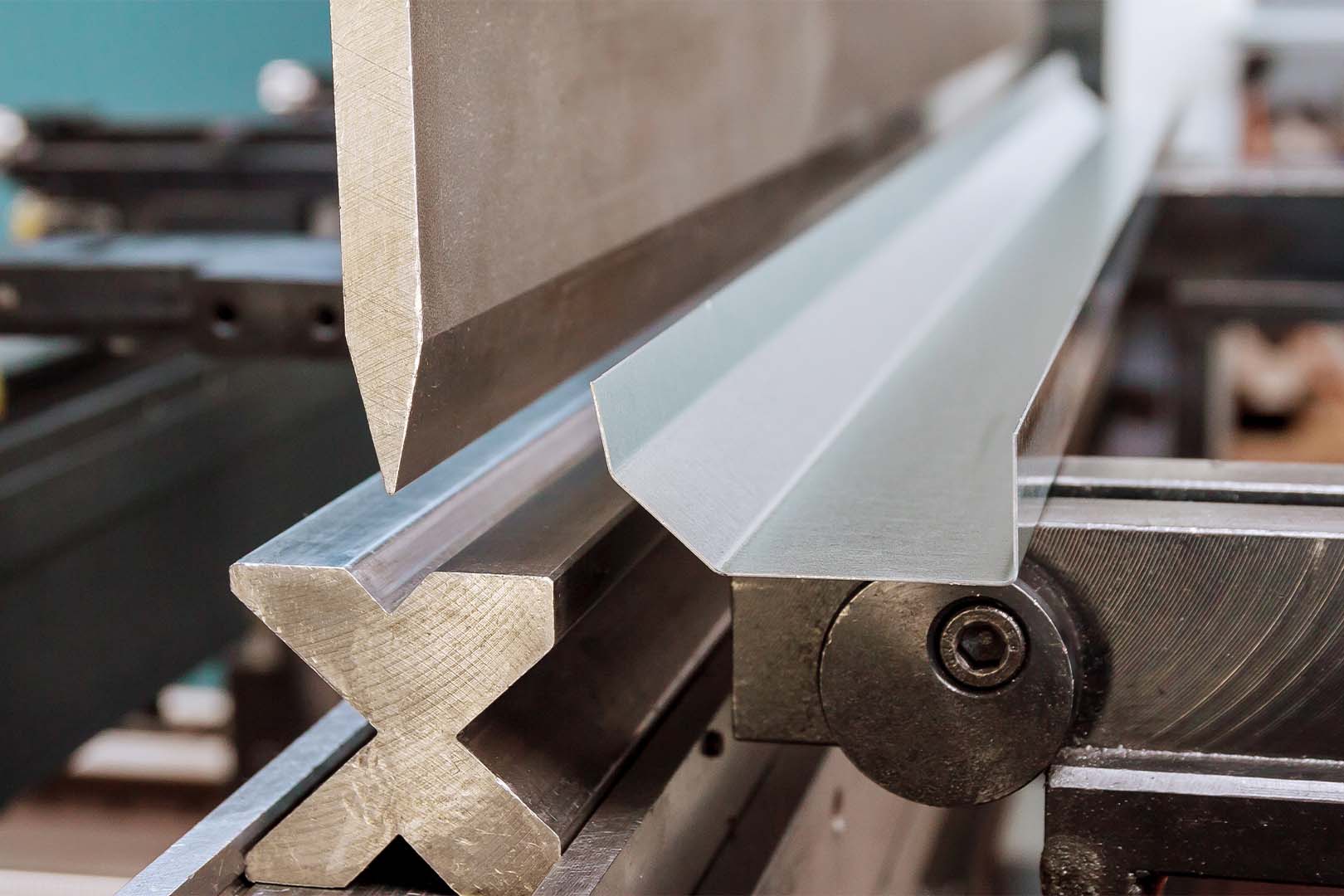
Our bending dies are engineered using premium-grade tool steels and advanced CNC machining processes, guaranteeing dimensional stability and resistance to wear under high-pressure forming conditions. We support a wide range of bending applications, including V-bending, edge bending, and bottoming, with customizable die angles, opening widths, and shoulder radii to suit your material type and thickness requirements.
At Honyo Prototype, we understand that every project begins with a vision. That’s why our team collaborates closely with engineers and designers during the initial stages to evaluate material properties, bend allowances, springback effects, and part geometry. This proactive approach minimizes trial-and-error in production and accelerates time-to-market for your components.
We support materials from mild steel and stainless steel to aluminum and copper alloys, with thicknesses ranging from 0.5 mm to 6.0 mm. Our in-house simulation tools allow us to predict forming behavior and optimize die design before fabrication begins—ensuring first-time-right performance.
To help you get started, we’ve outlined key specifications our team considers during the die design phase:
| Parameter | Standard Range | Custom Options Available |
|————————-|————————————-|—————————|
| Die Opening (V-width) | 6x material thickness (standard) | 4x to 12x |
| Bend Angle | 30° to 135° | Up to 180° |
| Shoulder Radius | 0.3 mm to 5.0 mm | As per drawing |
| Material Thickness | 0.5 mm – 6.0 mm | Up to 8.0 mm (on request) |
| Tool Steel Grade | Cr12MoV, H13, SKD11 | Other alloys on request |
| Surface Treatment | Hardening & Precision Grinding | TiN Coating (optional) |
All dies undergo rigorous quality inspection using coordinate measuring machines (CMM) and optical comparators to ensure compliance with ISO 2768-mK geometric tolerances. We also provide full documentation, including 2D drawings, 3D STEP files, and material certifications.
Starting your project with Honyo Prototype means partnering with a team committed to technical excellence and responsive service. Our engineers are ready to review your design files, offer manufacturability feedback, and deliver production-ready bending dies with fast turnaround times.
Contact Susan Leo today at info@hy-proto.com to discuss your sheet metal bending die requirements. Let us help you achieve precise, repeatable bends and flawless fabrication outcomes—right from the first press cycle.
🚀 Rapid Prototyping Estimator
Get a rough estimate for CNC/3D Printing costs.