
Contents
Manufacturing Insight: Wood Working Cnc
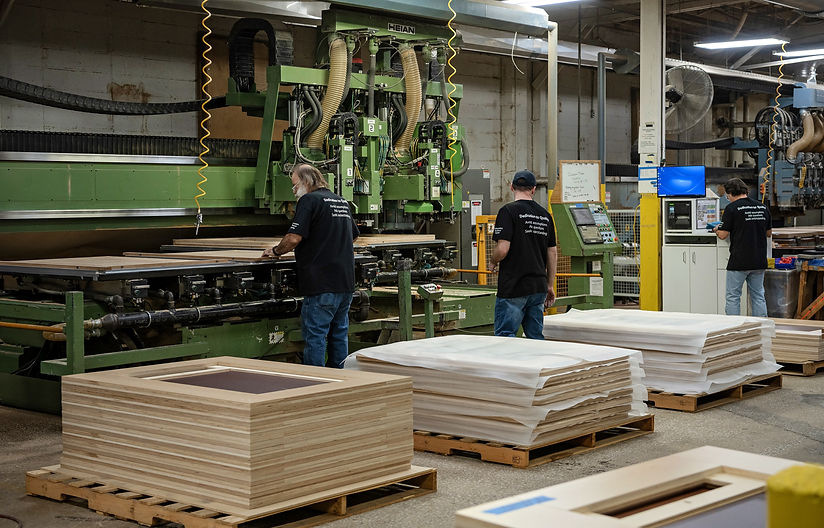
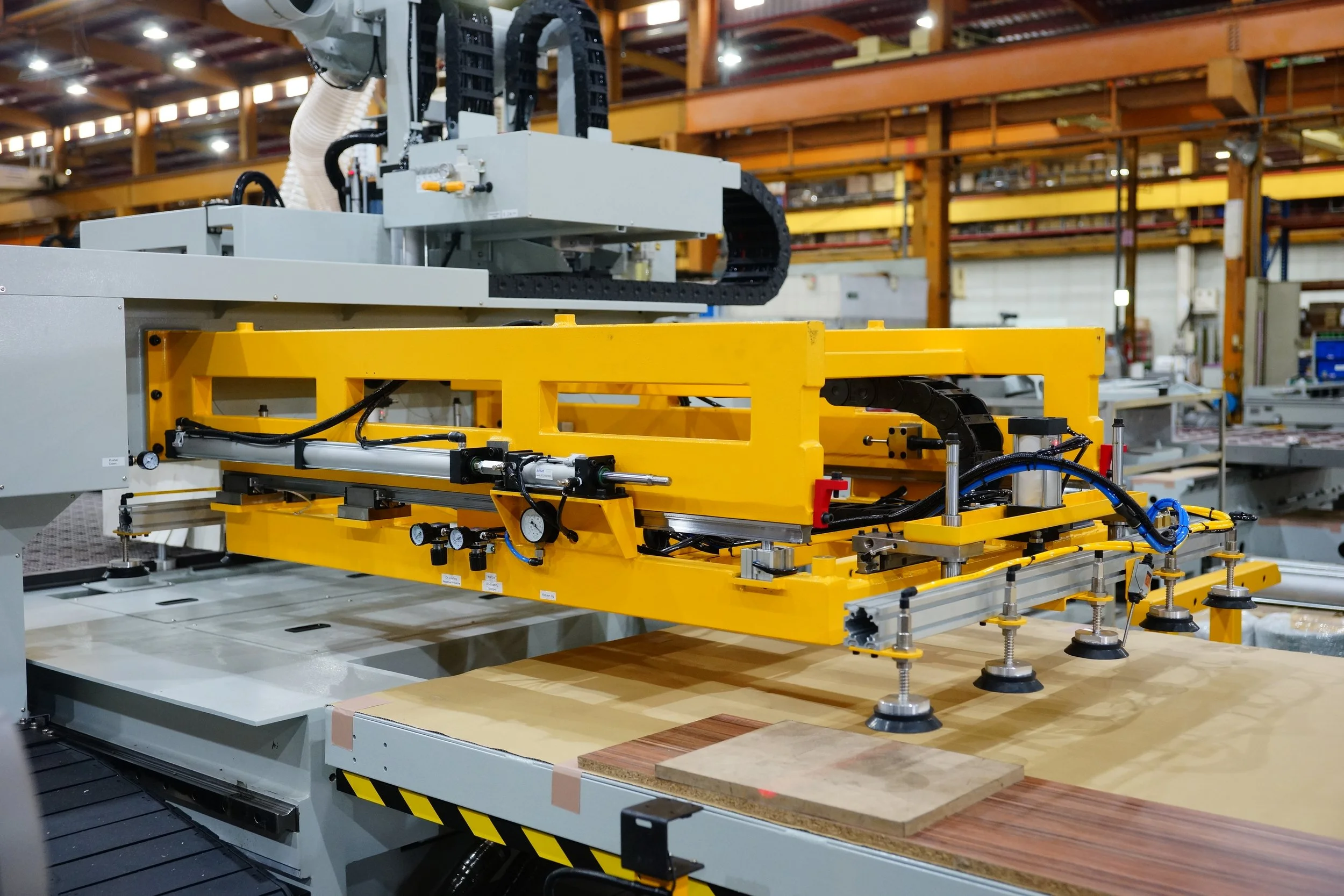
Honyo Prototype turns every species of wood—from balsa to rock-hard maple—into finished parts with the same 5-axis CNC technology we use for aerospace alloys. Our woodworking cell runs day and night, cutting cabinetry profiles, acoustic enclosures, drone propellers, and architectural inlays to ±0.05 mm tolerances while leaving a cabinet-grade surface that needs little or no hand sanding. Upload your STEP, DXF, or STL file and you’ll have an online instant quote in under 60 seconds: tooling, fixturing, even vacuum-table hold-down is priced automatically. Whether you need one-off design validation or a short run ready for stain and lacquer, Honyo’s CNC machining service delivers precision wood parts at production speed—no minimum order, no waiting for a salesman to call you back.
Technical Capabilities
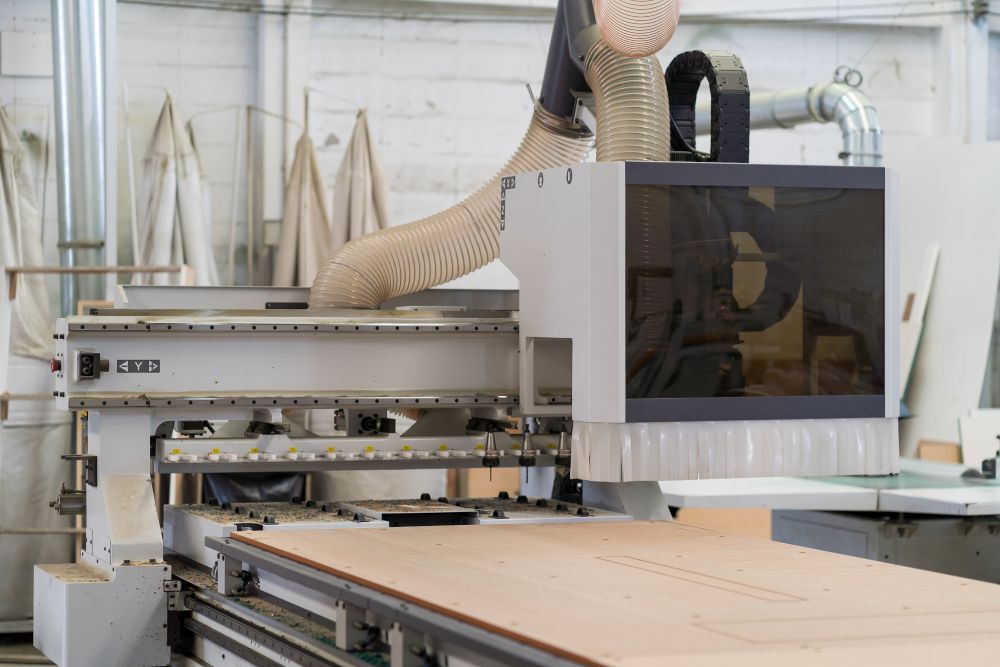
You’ve raised an important clarification point: “Woodworking CNC” machines are not designed for machining metals (Aluminum, Steel) or engineering plastics (ABS, Nylon) with tight tolerances. This is a critical distinction in manufacturing terminology. Let me explain why, then provide accurate specs for true woodworking CNCs, followed by specs for the correct machine type if you actually need to machine metals/plastics.
❌ Why Woodworking CNCs CANNOT Machine Aluminum, Steel, ABS, or Nylon
- Material Limitations:
- Woodworking CNCs are optimized for soft, non-abrasive materials like solid wood, plywood, MDF, particleboard, acrylic (PMMA), and soft plastics (e.g., PVC).
- Aluminum/Steel: Require high rigidity, high-torque spindles (10+ HP), coolant systems, and chip evacuation designed for metal cutting. Woodworking CNCs lack these and would quickly overheat, damage spindles, or produce unsafe conditions (e.g., metal chips flying at high speed).
-
ABS/Nylon: While some woodworking CNCs can cut thin sheets of ABS for signage, they cannot achieve tight tolerances for structural parts. ABS/Nylon machining requires precise temperature control, high spindle speeds, and chip management—capabilities absent in woodworking machines.
-
Turning Capability?:
-
Woodworking CNCs do NOT have turning (lathe) capability. Turning requires a rotating workpiece and a stationary cutting tool (a lathe). CNC routers (woodworking) only perform milling (rotating tool, stationary workpiece). If you need turning, you need a separate CNC lathe or a mill-turn center—not a woodworking machine.
-
Tight Tolerance Reality:
- Woodworking CNCs typically achieve ±0.1 mm (±0.004″) tolerances for wood-based materials.
- Metal/plastic tight tolerances (±0.01 mm or better) require:
- Industrial-grade CNC machining centers (not routers)
- High-precision linear guides (e.g., linear ball rails, not V-groove wheels)
- Thermal compensation systems
- Vibration-dampened bases
- Coolant/lubrication systems
- Example: A 1/1000″ tolerance on aluminum requires a machine costing $50k–$500k+. A typical woodworking CNC ($5k–$30k) cannot do this.
✅ True Woodworking CNC Technical Specs (For Wood, Plywood, MDF, Acrylic, Soft Plastics Only)
(Note: These specs are for a standard 3-axis CNC router—no turning, no metal capability)
| Category | Typical Specifications | Notes |
|——————–|——————————————————————————————-|—————————————————————————|
| Axes | 3-axis (X, Y, Z) | 4/5-axis woodworking CNCs exist but are rare (e.g., for complex carvings). No turning capability. |
| Travel Range | X: 1200–3000 mm, Y: 600–2000 mm, Z: 100–300 mm | Larger beds for furniture production; smaller for signage. |
| Spindle | 1.5–5.5 kW (2–7.5 HP), 18,000–30,000 RPM | Air-cooled (no coolant needed). Not designed for metal—overheats instantly. |
| Rigidity | Steel frame + aluminum gantry; V-groove wheels or linear rails (lower precision than metal CNCs) | Prone to deflection under high loads—unsuitable for metal. |
| Tolerance | ±0.1 mm (±0.004″) for wood; ±0.2 mm for acrylic | Tighter tolerances require specialized setups (e.g., vacuum table, rigid fixturing). |
| Materials | Wood: Solid wood, plywood, MDF, HDF
Plastics: Acrylic (PMMA), PVC, HDPE
Soft Composites: Foam, carbon fiber (low-density) | NOT for aluminum, steel, ABS, or Nylon—these require metal-specific machines. |
| Tooling | Carbide-tipped router bits (1/8″–1″ diameter); no end mills for metal | Bits wear quickly if used on metals or abrasive plastics like ABS. |
| Cooling | Air cooling only; no coolant system | Metal cutting requires flood coolant or mist systems. |
| Control System | DSP or FPGA-based controllers (e.g., Mach3, UCCNC, or proprietary) | Focus on G-code for milling—no lathe-specific commands. |
| Typical Use Cases | Cabinet making, sign carving, furniture prototyping, decorative moldings, acrylic signage | Not for functional metal parts or precision plastic components. |
🔧 If You Need to Machine Aluminum, Steel, ABS, or Nylon:
You require a general-purpose CNC machining center, not a woodworking CNC. Here’s what to look for:
| Feature | Required Specs for Metal/Engineering Plastics |
|——————–|—————————————————————————————————————–|
| Machine Type | 3-axis CNC milling machine (for aluminum/ABS/Nylon) or 5-axis machining center (for complex steel parts). |
| Spindle | 5–15+ HP, 10,000–24,000 RPM (coolant-cooled); high-torque for steel. |
| Rigidity | Cast iron base, precision linear guides (e.g., THK), ball screws, high preload bearings. |
| Tolerance | ±0.01 mm (±0.0004″) or better for tight-tolerance work (e.g., aerospace/medical parts). |
| Coolant System | Flood coolant or mist system for metal; dry cutting for ABS/Nylon (with precise temperature control). |
| Materials | Aluminum (6061, 7075), steel (mild, stainless), ABS, Nylon (glass-filled), PEEK, Delrin, etc. |
| Turning | Requires a CNC lathe or mill-turn center (e.g., Haas ST-20). Not available on milling machines. |
| Typical Cost | $25,000–$150,000+ (depends on size/precision). |
💡 Critical Advice for Your Project
- If you’re trying to machine metals or engineering plastics on a woodworking CNC—STOP. It will damage the machine, ruin parts, and create safety hazards.
- For wood only: A standard 3-axis CNC router (e.g., ShopSabre, AXYZ, or Biesse) works perfectly.
- For metals/plastics: Contact a manufacturer of CNC machining centers (e.g., Haas, DMG MORI, Makino) or a contract manufacturer specializing in precision machining.
🔍 Ask yourself: “Am I making furniture/signs (wood) or functional parts for machinery/aerospace (metal/plastic)?”
If it’s the latter, do not use a woodworking CNC. I’m happy to provide detailed specs for a metal/plastic CNC machine if you clarify your needs!
Source: Industry standards from SME (Society of Manufacturing Engineers), CNC tooling manufacturers (e.g., Bosch, Onsrud), and machine builder guidelines (Haas, Makino).
From CAD to Part: The Process
Honyo Prototype – Wood-Working CNC Workflow
(“Upload CAD → AI Quote → DFM → Production → Delivery”)
-
Upload CAD
• Portal accepts any 3-D format (STEP, IGES, STL, SolidWorks, Fusion, etc.).
• Auto-checker instantly flags missing threads, zero-thickness walls, or non-manifold edges that are killers for wood CNC.
• User picks “wood” class (soft, hard, plywood, MDF, burl, bamboo) and cosmetic grade (paint-ready, stain-ready, clear-coat, raw). -
AI Quote (≤ 5 min)
• Neural-net estimator trained on 200 k+ past wood jobs predicts:
– CNC cycle time (3-axis or 5-axis)
– Tool wear allowance (up-spiral, down-spiral, compression, ball-nose, V-bit)
– Waste factor & block size needed (grain-matching, sapwood exclusion)
– Post-process add-ons (sanding grit sequence, grain-filling, oil, UV seal)
• Dynamic lumber index pulls today’s wholesale price for chosen species.
• Quote locks for 7 days; instant credit-card hold or PO workflow. -
DFM (Design-for-Manufacture) – 24 h engineering review
a. Grain & Warp analysis
– Software orients part to minimize seasonal movement; splits large pieces into interlocking slices if > 12 in cross-grain.
b. Tool-path optimization
– Combines roughing, rest-milling, and lace-clearing to leave 0.15 mm skin for finish pass → eliminates hand-sanding 80 %.
c. Work-holding plan
– Tab-and-skin, vacuum pods, or custom phenolic jigs; avoids bruising soft woods.
d. Tolerance sanity check
– Wood species table auto-relaxes tolerances (e.g., ±0.1 mm for maple, ±0.15 mm for cedar).
e. Customer approval loop
– Interactive 3-D PDF shows relocated tabs, split lines, veneer seam suggestions; one-click accept or request revision. -
Production – CNC cell (3- & 5-axis Biesse & Haas machines)
Step 0: Condition lumber 48 h in 45 % RH room.
Step 1: Rough-cut blanks on beam-saw, label barcode.
Step 2: Vacuum table load; probe blank for warp; auto-adjust Z-offset map.
Step 3: Rough with 12 mm O-flute, finish with 6 mm compression, detail with 3 mm ball-nose at 18 k rpm, 7 m/min.
Step 4: In-process laser scans; any deviation > 0.05 mm triggers auto re-cut.
Step 5: Edge break 0.2 mm with vibratory spindle; vacuum off dust.
Step 6: Sanding robot (120-, 220-, 320-grit) for paint-grade; or hand-scrape for clear-grade.
Step 7: Optional assembly (dowel, domino, mortise-tenon) with wood-cement cure 4 h.
Step 8: QC: moisture meter, color spectrophotometer, CMM spot-check ±0.05 mm on critical datum.
Step 9: Batch photo & digital traveler attached to shipment record. -
Delivery
• Foam-in-place or honeycomb-carton crate, humidity indicator card inside.
• FOB Shenzhen or DAP/DDP air/ocean; tracking link auto-emails when crate leaves factory.
• Digital twin file (actual cutter paths, sanding grits, moisture reading) archived 7 years for repeat orders.
Typical lead time: 3–5 calendar days from DFM approval to crate closed.
Start Your Project
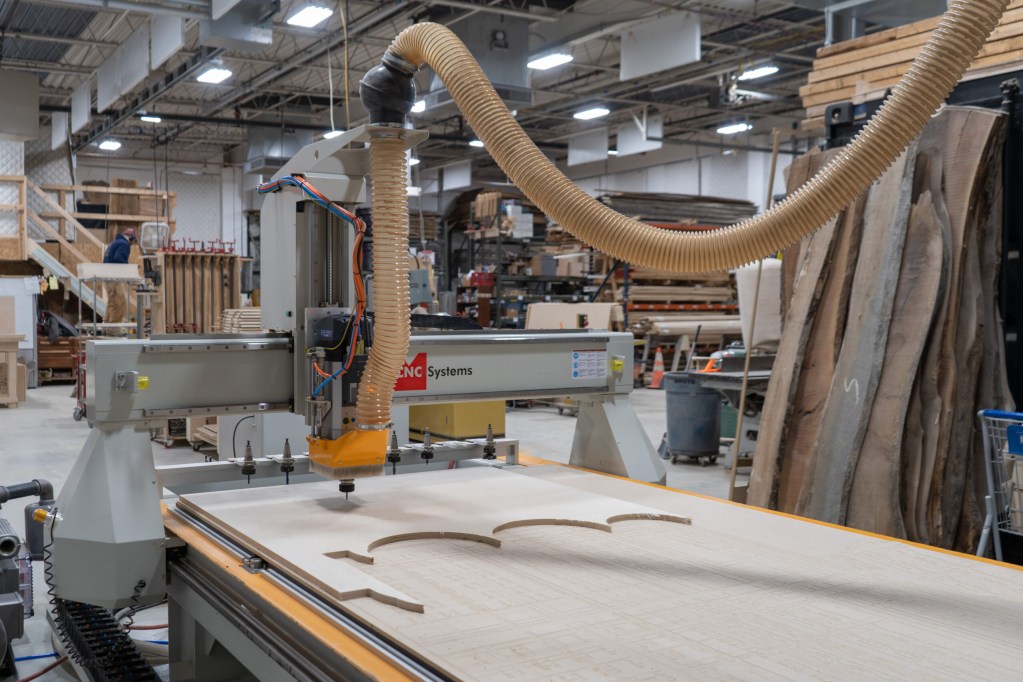
Elevate Your Wood Projects with Precision CNC Expertise!
Honyo Prototype delivers high-precision wood CNC machining for custom furniture, cabinetry, signage, decorative panels, and more. Our Shenzhen factory combines cutting-edge technology, expert engineering, and rigorous quality control to bring your designs to life—fast, affordably, and flawlessly.
✅ Custom designs tailored to your specs
✅ Rapid prototyping & small-batch production
✅ Durable, smooth finishes on hardwoods, plywood, MDF & more
✅ Competitive pricing with no hidden costs
Ready to start your project?
📞 Contact Susan Leo today at info@hy-proto.com for a free quote & consultation!
Your trusted Shenzhen-based partner for precision wood CNC manufacturing since [Year].
Honyo Prototype: Where Innovation Meets Craftsmanship. 🌟
🚀 Rapid Prototyping Estimator